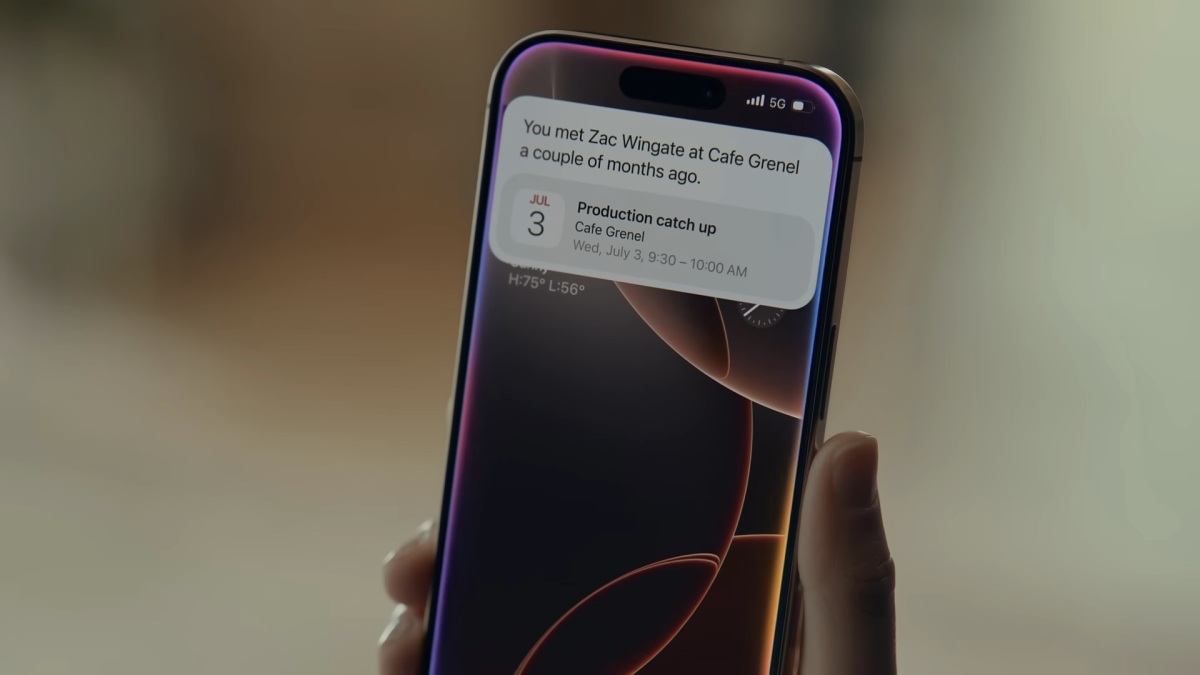
Siri has been promising to get smarter for so long that many iPhone users have developed a survival skill: asking Siri one question, then immediately opening Safari to ask the same question again. Apple knows this. That is why its Apple Intelligence announcement at WWDC 2024 sounded so exciting. Siri was not just getting a new glow around the screen. It was supposed to become more personal, more context-aware, and more capable of taking action across apps.
Then came the plot twist. The most ambitious Siri Apple Intelligence upgrades appear to be taking longer than expected, and the likely destination for many of those features is no longer the early iOS 18 cycle. Instead, the smarter Siri experience has been widely understood as slipping into the next major software generation, commonly discussed as iOS 19 at the time of the delay reporting.
For users, this delay is annoying but not shocking. Apple is trying to build a digital assistant that can understand personal context, see what is happening on the screen, and act inside apps without turning your private life into a confetti cannon of data. That is not a small software patch. That is a major renovation, and Siri is apparently not ready to host guests yet.
What Apple Originally Promised for Siri and Apple Intelligence
At WWDC 2024, Apple introduced Apple Intelligence as a privacy-focused personal intelligence system for iPhone, iPad, and Mac. The pitch was classic Apple: artificial intelligence, but dressed in a black turtleneck, promising to be useful without being creepy.
The biggest star of the announcement was Siri. Apple described a future version of Siri that could understand more natural language, maintain context between requests, and help users complete actions across apps. Instead of simply setting timers or mishearing “call Mom” as “call plumber,” Siri was supposed to become a genuine assistant.
The three headline Siri upgrades
The delayed Siri Apple Intelligence features generally fall into three major categories:
- Personal context awareness: Siri would understand information stored on your device, such as messages, emails, notes, calendar details, photos, and files.
- On-screen awareness: Siri would understand what you are looking at and perform relevant actions based on what is visible.
- Deeper app actions: Siri would be able to complete tasks across Apple apps and supported third-party apps.
These features sounded practical because they were not just “AI for AI’s sake.” A personal Siri could help answer questions like, “What time is Mom’s flight landing?” by checking messages, email, and flight details. It could add an address from Messages to a contact card. It could pull up a file you vaguely remember but cannot name. In other words, it could finally become the assistant Siri was always advertised to be.
Why the Siri Upgrade Delay Matters
The delay matters because Siri is not a side feature. Siri is one of Apple’s most recognizable products, even if users often talk about it the way people discuss a printer: useful when it works, emotionally dangerous when it does not.
Apple has spent years positioning Siri as the voice interface for its ecosystem. It lives on iPhone, iPad, Mac, Apple Watch, HomePod, AirPods, CarPlay, and even Apple TV. If Apple Intelligence is supposed to become the brain of Apple devices, Siri is supposed to be the voice, hands, and occasionally the therapist.
When the most important Siri upgrades are delayed, it affects more than one app. It affects how convincing Apple’s entire AI strategy feels. Google, Microsoft, OpenAI, Anthropic, Meta, and Samsung have all moved aggressively into generative AI. Apple’s advantage is not usually being first. Apple’s advantage is making technology feel polished, private, and integrated. But when the polish takes too long, users start wondering whether Apple is being careful or simply late.
What “Delayed Until iOS 19” Really Means
When people say Siri’s Apple Intelligence upgrades are likely delayed until iOS 19, they are not usually talking about a tiny cosmetic update. They are talking about Apple’s more personalized Siri features missing the expected iOS 18 rollout window and moving into a later operating system cycle.
Apple’s software calendar typically works in large annual waves. New iOS versions are previewed at WWDC in June, tested through summer betas, and released publicly in the fall with new iPhones. Smaller point releases arrive throughout the year. Apple Intelligence itself was already staggered, with some features arriving later than the initial iOS 18 release.
The problem is that the most advanced Siri features are deeply connected to the operating system. Personal context, screen awareness, and cross-app actions are not the kind of features Apple can easily bolt on like a new wallpaper pack. They require system-level permissions, developer frameworks, privacy protections, language models, app intents, and reliability testing.
That is why iOS 19 became the logical target in early delay discussions. If Siri could not reliably ship in the iOS 18 cycle, the next full software generation was the cleanest place to land it.
Why Apple May Be Taking So Long
Apple has not built its brand on “move fast and break your aunt’s calendar.” The company prefers controlled rollouts, tight integration, and features that feel safe enough for mainstream users. That cautious approach is part of the reason people trust Apple with personal data. It is also part of the reason Siri can feel behind competitors in the AI race.
1. Personal context is powerful, but risky
A Siri that understands your personal context is useful only if it can access sensitive information. That may include emails, text messages, photos, reminders, calendar events, location-related clues, contacts, and files. This is exactly what makes the feature valuable. It is also exactly what makes it difficult.
If Siri is going to answer, “When is my dinner with Sarah?” it needs to know which Sarah, which dinner, and whether the answer came from a message, email, calendar event, or note. If Siri gets it wrong, the mistake is not just embarrassing. It could create real confusion. Nobody wants Siri confidently sending them to the wrong restaurant like a tiny digital chaos goblin.
2. On-screen awareness must be accurate
On-screen awareness sounds simple, but it is a complicated technical challenge. If you are looking at an address in Messages and say, “Add this to his contact card,” Siri has to identify what “this” means, who “his” refers to, which contact card should be updated, and whether the action is safe to complete.
That requires visual understanding, app context, natural language processing, and permission handling. It also requires restraint. A smart assistant should help, not rummage around like it found the spare key under the doormat.
3. Cross-app actions need developer support
Apple’s plan for Siri includes actions in and across apps. That could mean editing a photo, sending it in a message, adding details to a note, creating a reminder, or finding information buried in a third-party app.
For this to work well, developers need frameworks that let Siri understand app capabilities. Apple already has technologies like App Intents, but turning those into a smooth AI assistant experience across millions of apps is a bigger job. The assistant cannot simply guess what every app does. It needs structured ways to act correctly.
4. Apple has to balance AI with privacy
Apple’s AI strategy emphasizes on-device processing and Private Cloud Compute for more complex requests. That privacy-first approach is central to Apple Intelligence. It is also technically demanding.
Many rival AI products rely heavily on cloud models. Apple wants as much intelligence as possible to happen on the device, with cloud processing used in carefully controlled ways when needed. That is good for user trust, but it can slow development because the company has to meet privacy, performance, battery, and reliability goals at the same time.
What Siri Already Got Before the Big Upgrade
It is important to be fair: Siri did receive some Apple Intelligence-related improvements before the delayed features. Apple introduced a refreshed Siri design, better natural language understanding, Type to Siri, product knowledge for Apple devices, and ChatGPT integration for certain requests.
Those upgrades are useful, especially Type to Siri. Many users prefer typing to a voice assistant when they are in public, in bed, or sitting next to someone who will absolutely judge them for asking their phone how long to boil an egg.
ChatGPT integration also gives Siri a way to handle broader knowledge questions when users choose to send a request outside Apple’s own system. But this is not the same as the promised personal Siri. The real transformation is supposed to happen when Siri understands your device context and completes actions for you.
How the Delay Affects iPhone Users
For everyday iPhone users, the delay means expectations should be adjusted. If you bought a newer iPhone partly because of Apple Intelligence, you may already have access to features like writing tools, notification summaries, image tools, and ChatGPT-assisted requests. But the most futuristic Siri abilities are not fully here yet.
That means Siri still functions more like an improved voice command system than a truly proactive AI assistant. It can help with reminders, alarms, weather, messages, calls, app launches, smart home controls, and basic questions. It can be useful. But it is not yet the “handle this for me across my phone” assistant that Apple previewed.
Should you upgrade your iPhone for Siri right now?
If your main reason for buying a new iPhone is the fully upgraded Siri, patience may be wise. Apple Intelligence features require newer hardware, such as recent iPhone Pro models and later compatible devices, but the delayed Siri features are still the key attraction for many users.
If you need better cameras, battery life, performance, USB-C, display improvements, or other hardware upgrades, a new iPhone can still make sense. But if your buying decision is based only on the dream of a dramatically smarter Siri, you may want to wait until Apple clearly ships the feature set.
How This Changes Apple’s AI Story
Apple’s AI story is now more complicated. The company still has major advantages: enormous hardware scale, tight software integration, custom chips, a loyal user base, and a strong privacy brand. But AI moves fast. Users are now comparing Siri not only with Alexa or Google Assistant, but with ChatGPT, Gemini, Claude, and other tools that can write, summarize, code, brainstorm, and reason across complex prompts.
Siri does not need to become a chatbot clone. In fact, Apple’s best opportunity is different. Siri could become the AI layer for the Apple ecosystem: a personal operator that knows your apps, respects your privacy, and gets small tasks done quickly. That would be more useful than another generic bot that can write a pirate-themed resignation letter but cannot find the PDF you downloaded yesterday.
The delay suggests Apple understands the stakes. A bad Siri AI launch would damage trust. If an assistant has access to personal context and app actions, it must be dependable. A wrong answer is one thing. A wrong action is another. Nobody wants Siri sending the unfinished email, deleting the wrong note, or adding “buy 400 bananas” to a shared grocery list.
What to Expect from Siri in iOS 19
If the major Siri Apple Intelligence upgrades arrive with iOS 19 or a related later release, users should expect Apple to focus on practical examples rather than abstract AI demos. The best Siri upgrade will not be the one that sounds most futuristic. It will be the one that saves users time without requiring a manual.
Likely improvements users will care about
- Finding personal information faster: Siri could locate details from Mail, Messages, Notes, Calendar, and Photos.
- Understanding what is on screen: Siri could act on visible content, such as addresses, dates, files, photos, or messages.
- Completing multi-step tasks: Siri could perform actions across apps with fewer taps.
- Better follow-up requests: Siri could understand context across a short conversation.
- More natural language: Users could speak casually instead of memorizing specific commands.
The big question is reliability. Apple does not need Siri to answer every philosophical question about the universe. It needs Siri to correctly understand, “Send this to Jamie,” “Add that date to my calendar,” and “Find the document Mark sent last week.” If Siri can do that consistently, the upgrade will feel meaningful.
Why Users Are Frustrated
User frustration is understandable because Apple promoted the smarter Siri as a major part of Apple Intelligence. Many people saw the demos, heard the examples, and expected the features to arrive during the iOS 18 era. When a company shows a feature on stage, users naturally assume it is close to ready.
The delay also comes after years of Siri criticism. Siri was early to voice assistants, but it has often felt limited compared with newer AI systems. People want Siri to stop saying, “Here’s what I found on the web,” with the emotional energy of a student who did not read the book.
Still, there is a practical argument for delay. If Apple released a personal-context Siri that worked only sometimes, the backlash could be worse. A flaky AI assistant is funny for about ten minutes. After that, it becomes another feature people turn off.
Why the Delay Could Actually Help Siri
Delays are not always disasters. Sometimes they are boring gifts wrapped in bad news. If Apple uses the extra time to improve reliability, expand app support, strengthen privacy systems, and reduce embarrassing mistakes, the wait could make Siri better.
Apple’s best products usually arrive when hardware, software, and services work together. Siri’s next era depends on exactly that combination. The assistant must understand language, respect user privacy, run efficiently on Apple silicon, communicate with apps, and provide answers that feel trustworthy.
That is a lot to ask from a feature most people still use to set pasta timers. But if Apple pulls it off, Siri could move from “occasionally useful” to “quietly essential.”
Real-World Experience: Living With Siri While Waiting for the Smarter Version
Using Siri today is a mixed experience, and that is exactly why the Apple Intelligence upgrade matters. In daily life, Siri can still be genuinely helpful. It sets alarms while your hands are covered in flour. It starts workouts. It sends quick texts while driving. It turns off smart lights when you are already comfortable and refuse to leave the blanket kingdom. For these simple commands, Siri is often fast and convenient.
The trouble starts when requests become slightly more human. Ask Siri to “remind me about this later” while looking at certain content, and the result may depend on the app, context, and phrasing. Ask a layered question that requires personal knowledge, and Siri often becomes less assistant and more polite shrug. It may search the web, ask you to unlock your device, or misunderstand the key part of the request.
This gap is what Apple Intelligence is supposed to close. Imagine planning a weekend trip. You have a hotel confirmation in Mail, restaurant ideas in Messages, a saved note with packing items, and photos of a passport that you definitely should organize better. A truly upgraded Siri could help connect those dots. You might ask, “What time should I leave for the airport?” and Siri could consider your flight, traffic, calendar, and location. Today, that kind of request often requires bouncing between apps like a tiny office worker trapped inside your own phone.
Another realistic example is managing photos. People take thousands of pictures and then spend years scrolling through them like archaeologists searching for one receipt, one dog photo, or one screenshot of a Wi-Fi password. A smarter Siri with personal context could make photo retrieval more natural. Instead of remembering dates or album names, you could ask for “the pictures from the barbecue at Daniel’s house last summer” or “the photo of the blue sofa I saved when we were shopping.” That would be useful, not just flashy.
Email and messaging are even better examples. Most users do not need Siri to write a novel. They need help finding the one detail buried in a conversation: a gate code, a meeting room, a restaurant name, a tracking number, or a friend’s new address. This is where personal context becomes powerful. The assistant that can find small facts quickly will earn more loyalty than the assistant that can generate a poem about spreadsheets.
There is also a trust factor. Users may forgive Siri for failing to answer a trivia question. They will not forgive it for sending the wrong file or misunderstanding a private instruction. That is why Apple’s delay, while frustrating, makes sense from a user-experience perspective. Personal AI must be boringly reliable. It should feel like a careful assistant, not a caffeinated intern with administrator privileges.
From a user’s point of view, the ideal iOS 19 Siri upgrade would not need constant explanation. It would simply reduce friction. Fewer taps. Less searching. Better follow-through. More accurate context. If Apple can deliver that, the delay will become a footnote. If not, Siri will remain the assistant everyone knows, many people tolerate, and some people only summon when their hands are wet.
The smartest path forward is patience with accountability. Apple should not ship a half-finished Siri just to win an AI headline. But it also cannot keep selling the future while asking users to wait indefinitely at the loading screen. The next major Siri release needs to be clear, capable, and honest about what it can do.
Conclusion
Siri’s Apple Intelligence upgrades being likely delayed until iOS 19 is more than a schedule change. It is a reality check for Apple’s AI ambitions. The company promised a more personal, more aware, more capable Siri, but the hardest parts of that vision appear to need more time.
That delay may frustrate iPhone users, especially those who expected the full Apple Intelligence experience sooner. However, the caution is understandable. A personal AI assistant must be accurate, private, and reliable. If Siri is going to understand your messages, see what is on your screen, and take action across apps, it cannot behave like a beta feature wearing sunglasses and pretending to be finished.
If Apple gets this right, iOS 19 could mark the moment Siri finally grows from a voice command tool into a true personal assistant. If Apple gets it wrong, users will keep doing what they have done for years: asking Siri, waiting two seconds, then opening another app to finish the job themselves.
Note: This article is based on synthesized, publicly reported information from reputable technology and business sources, including Apple announcements and major U.S. technology reporting. It is rewritten in original language for web publication and does not include source-link markup or citation placeholders.