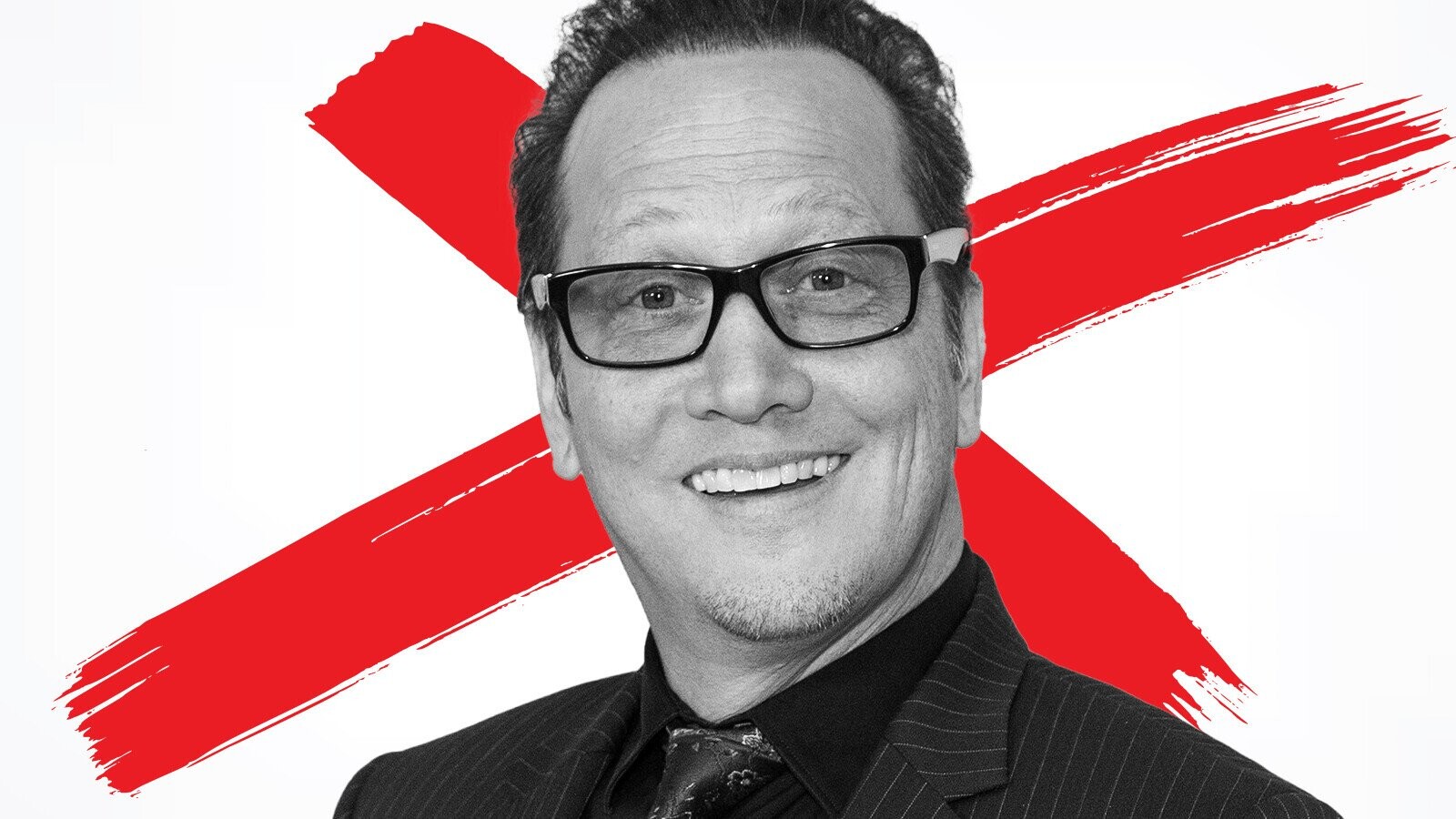
Cancel culture has a funny way of wandering into the wrong conference room. For years, Rob Schneider has warned that comedians are being squeezed by humorless political correctness, left-wing scolds, and audiences who arrive at jokes wearing emotional bubble wrap. Then, in a twist so tidy it practically came with a sitcom laugh track, Schneider reportedly ran into a crowd that did not want his material either: prominent Republicans.
The controversy centers on a late-2023 holiday event connected to the Senate Working Group, a Republican networking organization attended by senior GOP staffers, alumni, and political insiders. Schneider, the former Saturday Night Live cast member known for Deuce Bigalow, The Hot Chick, and his long association with Adam Sandler movies, was hired to perform comedy. According to multiple reports, the set did not simply land poorly. It reportedly landed like a folding chair dropped from a balcony.
Republican Senator Cindy Hyde-Smith of Mississippi reportedly walked out, and the performance was said to have been cut short after organizers found the material too off-color for the room. Schneider denied that version, insisting he performed the full set he was paid to deliver. That disagreement is the heart of the story: was this a cancellation, a misunderstanding, or just a comedy booking that failed the most basic rule of event planning know your audience before handing someone a microphone?
Who Is Rob Schneider, And Why Does This Story Matter?
Rob Schneider is not some unknown open-mic act who accidentally wandered into a political dinner while looking for the dessert table. He is a recognizable American comedian, actor, writer, and director whose career stretches from stand-up clubs to network television to mainstream Hollywood comedies. He joined Saturday Night Live during the early 1990s, sharing an era with names such as Adam Sandler, Chris Farley, David Spade, and Chris Rock. His recurring characters and catchphrases helped make him a familiar face to comedy fans long before social media turned every joke into a courtroom exhibit.
After SNL, Schneider built a film career around broad, goofy, often deliberately ridiculous comedy. His most famous starring vehicle, Deuce Bigalow: Male Gigolo, was never mistaken for delicate chamber theater. His brand has usually leaned loud, silly, and proudly lowbrow. That is important context. Nobody books Rob Schneider expecting a whispered lecture on municipal zoning reform.
In recent years, however, Schneider has become just as visible for his politics as for his comedy. He has criticized vaccine mandates, attacked what he sees as woke culture, supported Robert F. Kennedy Jr., and later urged Kennedy supporters to back Donald Trump after Kennedy suspended his campaign. He has appeared in conservative media spaces and built part of his modern identity around the argument that free speech is under threat. In other words, Schneider has positioned himself as a comedian willing to say what others supposedly fear to say.
The Reported GOP Event Backlash
The Republican event at the center of the controversy reportedly took place at the Waldorf Astoria and included an audience of GOP figures and senior Senate staffers. Schneider was reportedly booked for a comedy set expected to run around 30 minutes. According to reports based on people familiar with the event, the routine became uncomfortable quickly, with jokes described as raunchy, inappropriate, and aimed partly at Asian people.
The most repeated detail from the coverage is that Senator Cindy Hyde-Smith left the room. Her reported reaction became the headline because it punctured the usual partisan script. This was not a liberal college audience protesting a conservative comic. It was not a Hollywood studio pulling a project after a social media pile-on. It was a Republican senator and a room of Republican insiders deciding that the entertainment had gone too far for their event.
Organizers reportedly sent an apology email to attendees afterward, saying the entertainment had fallen short of the professional and appropriate standard they wanted for the program. That is corporate-dinner language for, “Well, that certainly did not go the way the brochure suggested.”
Schneider’s Denial: “I Did 50 Minutes”
Schneider strongly disputed the claim that he was removed after 10 minutes. He told TMZ that he performed 50 minutes because that was what he was paid to do, and said nobody forced him off the stage. He also argued that the material should not have surprised anyone because some of the jokes had appeared in his prior specials.
His response was very on-brand. Schneider did not soften the controversy with a gentle “sorry if anyone was offended.” Instead, he framed the reports as another example of oversensitivity and said he would not change his material or apologize for his jokes. That refusal fits the persona he has cultivated: the comedian as free-speech brawler, swinging a punchline at polite society and then blaming polite society for ducking.
Still, the denial does not erase the broader point. Even if Schneider completed more time than some reports suggested, the event still produced an unusually public backlash from Republican circles. The audience reaction, Hyde-Smith’s reported walkout, and the apology to attendees all show that the performance was not received as harmless edgy comedy by everyone in the room.
Why This Was Not A Typical “Cancel Culture” Story
The phrase “cancel culture” is often used so broadly that it now means everything from losing a job to getting ratioed by strangers who type like they are trying to break the keyboard. In Schneider’s case, the irony is sharper because the alleged pushback came from the kind of audience many people assume would welcome anti-woke comedy.
But politics does not automatically override taste, context, or manners. A Republican audience may oppose progressive speech codes and still dislike crude jokes at a professional holiday gathering. A conservative donor may laugh at edgy humor in a comedy club and still prefer a cleaner routine at a networking event where senators, chiefs of staff, and institutional reputations are present. The issue is not simply left versus right. It is setting, expectations, and whether the performer understands the room.
That distinction matters for SEO readers searching terms like “Rob Schneider canceled,” “Rob Schneider Republican event,” or “Rob Schneider GOP controversy.” The story is not that Schneider was banished from comedy. He continues to perform, speak, and attract audiences. The more precise story is that one reported Republican event rejected his material strongly enough to generate headlines. That is not lifetime exile. It is a very public mismatch between comic persona and event decorum.
The Comedy Club Rule Versus The Gala Rule
Comedy clubs are built for risk. People buy tickets, sit in the dark, order overpriced drinks, and accept that the performer may try something sharp. A political holiday gala is different. A gala is where everyone pretends tiny chicken appetizers are dinner and tries not to create tomorrow’s scandal before the valet line opens.
That gap may explain why Schneider’s routine became controversial. Material that can work in a club, especially for fans who bought tickets knowing the performer’s style, can feel wildly out of place at a professional political function. The same joke can be “edgy” in one room and “Who approved this?” in another.
Event comedy is not just about bravery. It is also about calibration. The performer has to understand whether the audience came to be challenged, roasted, entertained, or simply allowed to get through dessert without drafting an apology email. Schneider’s modern act appears to thrive on provocation. The Senate Working Group event, according to the reported reaction, may have wanted entertainment with fewer cultural land mines.
How Schneider Became A Culture-War Comedian
Schneider’s evolution from goofy movie regular to culture-war figure did not happen overnight. Over the past decade, he has increasingly commented on vaccines, government mandates, free speech, Hollywood politics, and gender issues. His critics accuse him of punching down and spreading harmful claims. His supporters see him as a comedian refusing to bend to fashionable opinion.
That divide is central to his current public image. To fans, Schneider is proof that comedy should not need permission slips. To critics, he is proof that “just joking” can become a shield for stale or mean-spirited material. To event planners, he may now be proof that booking talent without watching recent material is like buying fireworks and being shocked when something explodes.
His special Woke Up in America leaned into culture-war themes. His interviews often return to free speech and the idea that audiences need to be challenged. That can be a viable brand. Many comedians sell tickets by being blunt, offensive, or proudly unfiltered. The business problem is that not every paying client wants the same level of heat.
Another Incident Added Fuel To The Narrative
The GOP event was not the only time Schneider’s stand-up generated headlines. In June 2024, a hospital fundraiser in Regina, Saskatchewan, also ended in controversy after attendees objected to jokes reportedly involving vaccines, women, and transgender people. The Hospitals of Regina Foundation issued an apology and said the content did not align with the organization’s values.
That second incident made the Republican event look less like a one-off misunderstanding and more like a pattern: Schneider brings the culture-war set, some audiences recoil, organizers apologize, and Schneider or his defenders frame the backlash as evidence that free speech is under siege. It is a tidy cycle, but not necessarily a healthy one for comedy.
The audience is not always a censor. Sometimes the audience is simply not laughing. And in comedy, that remains the oldest review system in the business.
Was Rob Schneider Actually “Canceled”?
Technically, Schneider has not been canceled in the totalizing way the internet often imagines. He still tours. He still appears in media. He still has fans. He still gets coverage. A person who can publicly complain about being silenced on major platforms is, at minimum, experiencing a very noisy form of silence.
But in the narrower sense, yes, the title has a point. Schneider was reportedly rejected, interrupted, or rebuked by a group of prominent Republicans who decided his routine did not fit their event. That is a form of cancellation, even if it came wrapped in a polite apology email rather than a hashtag campaign.
The more interesting lesson is that “cancel culture” is not owned by one political tribe. Every group has boundaries. Every institution protects its image. Every audience has a line between edgy and embarrassing. Conservatives may object to progressive speech policing, but they still police tone in their own rooms when the stakes involve donors, senators, staffers, and headlines.
The Irony Of Anti-Woke Comedy Meeting Conservative Decorum
The Schneider episode is funny in the way politics is often funny: nobody gets exactly what they ordered. The comedian who rails against cancel culture reportedly found himself too much for a Republican gathering. The party that often mocks liberal sensitivity suddenly had to explain why its own event entertainment required cleanup. Somewhere, an event planner probably updated a spreadsheet titled “Comedians To Research More Carefully Next Time.”
That does not mean Republicans became “woke” overnight. It means public life is more complicated than slogans. People may defend free speech in theory and dislike a particular performance in practice. They may oppose censorship and still walk out of a room. They may believe comedians should push limits and still prefer those limits not be pushed while they are wearing name tags.
Schneider’s defenders can reasonably argue that comedy should be allowed to offend. His critics can reasonably answer that audiences are allowed to react. Free speech protects the right to tell a joke; it does not guarantee laughter, applause, or a second invitation.
Why The Story Keeps Spreading
This controversy keeps attracting attention because it collapses several internet arguments into one neat package: celebrity politics, free speech, anti-woke branding, Republican respectability, and the awkward business of paid comedy. It is also easy to understand. A comedian famous for mocking sensitivity reportedly offended the people assumed to be his safest audience. That is not just news; that is narrative candy.
For readers searching “Rob Schneider canceled by Republicans,” the answer is not a simple yes or no. The best answer is: reportedly, a prominent GOP-connected event reacted badly enough to his performance that it became a public controversy, and Schneider denied key parts of the account. The story is real, but the interpretation depends on what one means by canceled.
In the modern media ecosystem, cancellation is often less about disappearance and more about repositioning. Schneider did not vanish; he used the backlash to reinforce his brand. The controversy gave him another chance to tell supporters that he is being punished for telling forbidden truths. Critics, meanwhile, used it as evidence that “anti-woke” comedy can still bomb when the jokes feel lazy, crude, or poorly matched to the room.
Experience Section: What This Controversy Teaches About Comedy, Audiences, And Public Events
Anyone who has ever attended a corporate dinner, charity gala, political fundraiser, or professional networking event knows the strange energy in those rooms. People want entertainment, but not too much entertainment. They want personality, but not chaos. They want laughter, but preferably the kind that does not require a communications director to send a statement before breakfast.
The Rob Schneider controversy is a useful experience-based lesson for organizers, performers, and audiences. The first lesson is that context changes everything. A joke is not a floating object in space. It lives inside a room, a moment, a guest list, and a set of expectations. A paying fan at a comedy club may want the wildest version of a performer. A senator at a holiday function may want something closer to clever, topical, and safe enough to survive the ride home.
The second lesson is that “edgy” is not a complete artistic strategy. Good edgy comedy usually has surprise, precision, timing, and a target that feels worth hitting. Bad edgy comedy can feel like someone dragging a metal chair across a tile floor and calling the noise brave. Audiences can tell the difference. They may not agree on politics, but they often know when a joke has more shock than craft.
The third lesson is for public figures who build a brand around never apologizing. That posture can energize loyal fans, but it can also trap the performer. Once a comedian’s identity becomes “I refuse to back down,” every criticism becomes a battlefield. There is little room left for the ordinary professional response: “That was not the right room for that material.” Not every correction is censorship. Not every walkout is tyranny. Sometimes a joke just misses, and the ceiling does not fall in.
The fourth lesson belongs to event planners. Do not book a comedian based on nostalgia alone. A performer’s 1990s sitcom persona may not match the 2020s version of their act. Watch recent material. Check interviews. Understand the themes. Ask whether the audience wants political provocation or a clean 25 minutes before dessert. Booking comedy without doing that homework is like hiring a magician and acting surprised when your watch disappears.
Finally, the audience experience matters. People in a room are not props in a free-speech debate. They are participants. They can laugh, groan, leave, complain, or shrug. That feedback is not automatically censorship; it is the marketplace Schneider often says he supports. If comedy is free to challenge audiences, audiences are free to challenge comedy right back. The Schneider story is memorable because it shows that cultural boundaries exist everywhere, including in rooms filled with people who campaign against boundaries.
Conclusion
Rob Schneider’s reported clash with prominent Republicans is less a simple cancellation story than a mirror held up to America’s exhausted culture-war comedy machine. The incident shows that political alignment does not guarantee audience approval, and anti-woke branding does not magically transform every joke into a winner. Schneider remains free to perform, defend himself, and court fans who like his unfiltered approach. Republican insiders remain free to decide that his material was not right for their event.
The real punchline is that cancel culture, as a phrase, often hides the more ordinary truth: audiences have standards, institutions have reputations, and comedians have to read the room. Schneider may see the backlash as proof that people are too sensitive. Others may see it as proof that provocation without calibration can backfire. Either way, the episode gave the internet a rare bipartisan spectacle: a culture-war comedian discovering that even his presumed allies can reach for the exit.
Note: This article is based on widely reported public information, including coverage of the Senate Working Group controversy, Schneider’s public denial, his recent political positioning, and later reporting on related performance backlash. No source links are included so the HTML remains clean for web publishing.