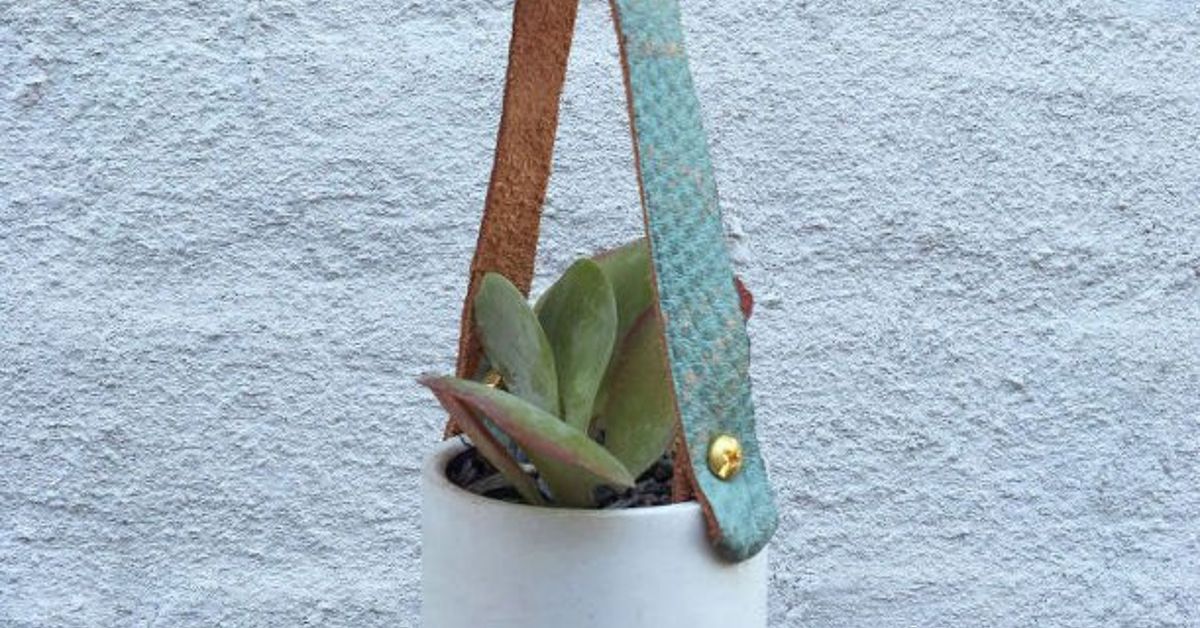
If you’ve ever stared at a sunny window and thought, “This needs plants…
but also, I’m out of shelf space,” a PVC and leather hanging planter might be
your new favorite DIY obsession. Inspired by the clever PVC cap and leather
strap planter that’s made the rounds on Hometalk, this project combines
hardware-store basics with warm, modern materials to create a tiny, stylish
home for your succulents, herbs, or air plants.
In this guide, you’ll learn why PVC and leather are such a good match, how
to build your own hanging planter step by step, what plants actually thrive
in a small hanging container, and how to keep the whole setup looking chic
instead of shabby. We’ll finish with some real-life experience and ideas so
you can customize your planter to fit your space and your style.
Why PVC and Leather Make Such a Good Team
At first glance, PVC pipe and leather sound like the start of a very strange
fashion show, but together they actually check all the boxes for a compact,
modern hanging planter:
-
Affordable and accessible: PVC caps are inexpensive and
easy to find at any home center. Leather scraps or straps are also widely
available, especially online or at craft stores. -
Surprisingly stylish: White or painted PVC gives a clean,
minimal base, while leather adds warmth and texture. The contrast feels
high-end, even though the materials are budget-friendly. -
Lightweight but sturdy: PVC is light enough to hang from
a simple ceiling hook, but strong enough to handle soil, a small plant,
and the occasional enthusiastic watering. -
Customizable: You can adjust strap length, planter size,
and color finish to match everything from boho to Scandinavian decor.
The original PVC cap planter on Hometalk uses a small PVC end cap paired
with simple leather straps to cradle a tiny plant. You can keep that
minimalist look or expand the idea into a whole set of window planters.
Materials and Tools You’ll Need
Core Components
- 1 PVC end cap (about 3–4 inches in diameter works well)
- Scrap leather or leather straps, 1/2–1 inch wide
- Small plant: succulent, air plant, or compact trailing plant
- Well-draining potting mix (cactus mix for succulents)
- Gravel or small stones for drainage (optional but helpful)
- Ceiling hook, wall bracket, or curtain rod for hanging
- Optional: interior-safe spray paint or acrylic paint for PVC
Tools
- Drill with small and medium bits (for drainage and strap holes)
- Fine grit sandpaper for smoothing PVC edges
- Sharp scissors or utility knife for cutting leather
- Leather hole punch or small punch tool
- Rivets, Chicago screws, or strong knots for joining straps
- Measuring tape and pencil or marker
- Safety glasses and a dust mask for drilling and sanding
Safety Tips Before You Start
- Always wear eye protection when drilling PVC.
- Work in a ventilated area if you’re using spray paint or glue.
-
Support the PVC cap while drilling so it doesn’t spin, wobble, or become
a surprise projectile.
Step-by-Step: How to Make a PVC and Leather Hanging Planter
1. Plan Your Size and Strap Layout
Decide how big you want your planter to be and where it will hang. A
windowsill or narrow kitchen window usually works best with a cap in the
3–4 inch range. Measure the diameter of the PVC cap; that will help you cut
the leather straps long enough to wrap under and up both sides of the
planter with extra length for hanging.
A simple starting point is one leather strap that cradles the planter from
two sides, or two straps arranged in a cross shape underneath for more
support. Give yourself at least 6 inches of extra strap on each end so you
can create loops or knots for hanging.
2. Prep the PVC Cap
-
Drill drainage holes: Flip the PVC cap upside down and
drill 2–3 small holes in the bottom so excess water can escape. If you’re
using succulents, good drainage is critical. -
Drill strap holes (if using hardware): Mark small points
on the side of the cap where your straps will attach. Drill carefully so
you don’t crack the plastic. -
Sand the edges: Use sandpaper to smooth any rough or
sharp PVC edges, especially near drilled areas. -
Paint, if desired: Wipe off dust and spray the outside
with paint designed for plastic. White, charcoal, or soft pastels all look
great with natural leather.
3. Cut and Prep the Leather Straps
Measure from one side of the cap, underneath, and up the opposite side, then
add that extra 6 inches for loops. Cut your strap to this length. If you’re
using two straps in a cross, cut two identical pieces.
Use a leather punch to create holes near each end of the strap where they
will meet at the top. If you’re attaching the straps directly to the PVC
with rivets or screws, punch holes where the straps will line up with the
drilled holes in the cap.
For a cleaner look, you can round the ends of the straps or trim them into
simple points. A bit of leather conditioner rubbed in at this stage also
helps prevent cracking over time.
4. Assemble the Strap Cradle
-
Place the PVC cap: Set the cap in the center of your
workspace. -
Position the straps: If you’re using two straps, lay them
in a plus sign (+) shape and center the cap on top. If you’re using one
strap, slide it under the cap so it cradles the bottom. -
Attach to the cap: Feed hardware through the leather and
PVC holes and secure with rivets or screws, or simply let the straps
cradle the cap and rely on the top connection (a common minimalist
approach for small, lightweight planters). -
Join the top ends: Bring the strap ends together at the
top and either:- Join them with a rivet or Chicago screw through punched holes.
- Thread them through a metal or wooden ring and secure with knots.
- Simply tie a strong knot, leaving a loop for hanging.
5. Plant and Hang
-
Sprinkle a thin layer of gravel or small stones into the bottom of the
PVC cap to assist drainage. -
Add potting mix, leaving enough space so the plant’s root ball sits just
below the top edge. -
Gently loosen the roots of your plant and tuck it into the soil. Fill in
around the edges and press lightly. -
Water lightly and let any excess drip out before bringing the planter
inside. -
Hang the planter from a sturdy hook, bracket, or curtain rod, making sure
the strap cradle is balanced and the planter sits level.
Best Plants for a PVC and Leather Hanging Planter
Because this planter is relatively small, choose compact plants with modest
root systems and reasonable water needs. A few reliable options:
Succulents and Cacti
- String of pearls (for a cascading look)
- Small echeverias or haworthias
- Mini cacti collections (watch the spines when you water!)
Air Plants
If you want the planter mostly for aesthetics, air plants are perfect.
They don’t need soil at alljust a decorative layer of stones, moss, or
sand. Mist or soak them weekly depending on your indoor humidity.
Compact Herbs
For a kitchen window, try small thyme or oregano plants. Just remember that
herbs usually prefer more consistent watering than succulents, so choose a
deeper cap or PVC cup if you want to grow culinary plants.
Low-Light Options
If your window isn’t super bright, small pothos, peperomia, or philodendron
varieties work incredibly well. They tolerate indirect light and don’t mind
a bit of neglect.
Styling Ideas for Your Home or Patio
Once you’ve built one PVC and leather hanging planter, it’s very hard to
stop at just one. Here are some ways to style them:
-
In the kitchen: Hang a trio of planters in front of a
sunny windowone for herbs, one for a trailing plant, and one purely for
decoration. -
In a bathroom: Use faux plants or low-maintenance
trailing varieties near a frosted window for spa-like vibes. -
Over a desk: A single small succulent in a leather strap
planter adds life without taking up precious workspace. -
On a covered porch: Group several planters at different
heights for a layered, greenhouse-inspired look.
Care and Maintenance Tips
-
Water carefully: Because there isn’t a saucer under the
PVC cap, water slowly and let extra drip into a sink or outside before
rehanging. -
Protect the leather: Keep leather straps out of direct,
harsh sunlight and away from heavy splashes. Occasionally wipe them down
and condition with a leather balm if they look dry. -
Watch for salt and mineral buildup: White crust on the
soil surface or near drainage holes is a sign to flush the soil or repot
the plant. -
Rotate the planter: Turn the planter every week or two so
the plant grows evenly toward the light.
Common Mistakes and Easy Fixes
-
Planter tilts to one side: Double-check that your strap
lengths are equal and that the PVC cap is centered in the cradle. -
Plant seems soggy or droopy: Reduce watering, make sure
drainage holes aren’t blocked, and consider switching to a grittier soil
mix. -
Leather stretching over time: Leather will relax a bit.
If your planter sits too low, shorten the straps, add an extra knot, or
reinforce with rivets. -
Scuffed or stained PVC: Lightly sand and repaint with a
fresh coat; it’s one of the perks of using PVC instead of ceramic.
Real-Life Experience: Living With a PVC and Leather Hanging Planter
The first time you hang a PVC and leather planter in a window, you’ll
probably spend a few minutes just admiring how strangely grown-up it looks
for something made out of a plumbing part. The most common reaction from
guests is, “Wait… that’s PVC?” followed immediately by, “Can you make one
for me?”
In everyday use, this type of planter shines in small spaces. If you live
in an apartment or have limited counter space, moving plants into the air is
a game changer. The PVC cap is shallow enough that even small windows or
narrow ledges can host one, but deep enough to keep soil from spilling out
every time you open the window.
One practical lesson you quickly learn is that plant choice matters more
than the styling. A thirsty plant with huge leaves will outgrow a small PVC
cap in weeks and sulk dramatically between waterings. But a compact
succulent or trailing pothos will happily hang out (literally) for months
with very little drama. If you’re unsure, start with a plant you’ve already
had good luck with in a regular pot and “promote” it to hanging status.
Another real-world perk is how flexible the design is when you want to
rearrange your space. Because PVC and leather are both light, you can move
the planter from a ceiling hook to a curtain rod or a wall-mounted bracket
without worrying about cracking a ceramic pot. If you’re decorating for a
party, it’s easy to cluster several planters over a buffet table or reading
nook and then redistribute them around the house afterward.
Over time, the leather straps develop a soft patina and slightly darker
tone, especially if you chose natural, undyed leather. Instead of looking
worn-out, the planter gains that “well-loved, I totally bought this at a
fancy boutique” look. PVC, on the other hand, stays quietly in the
background, doing its job without demanding attention.
Seasonally, these planters are fun to refresh. In spring, plant herbs for
quick snipping over the stove. In summer, switch to trailing succulents for
a desert-inspired vibe. Around the holidays, you can tuck in faux greenery,
tiny ornaments, or battery-operated fairy lights around the base of the
plant for a festive touch. The core structure stays the sameyou just
change the plant and accessories.
If you share your projects online or in communities like Hometalk, this
type of planter also makes a great “gateway DIY.” The steps are simple, the
materials forgiving, and the finished piece looks more advanced than it
actually is. Once you’ve mastered one PVC and leather planter, it’s an easy
jump to longer trough-style PVC window planters or multi-tiered leather
hangers that hold several caps at different heights.
In short, a PVC and leather hanging planter isn’t just a cute decor idea;
it’s a flexible, budget-friendly way to bring more greenery into your home,
experiment with small-space gardening, and flex your DIY musclesall
without needing a workshop full of fancy tools.
Final Thoughts
PVC and leather might not be the first materials you think of when you
picture a stylish planter, but that’s exactly what makes this project so
fun. A simple PVC cap, a couple of leather straps, and a small plant can
transform a blank window into a curated little garden moment. Whether
you’re duplicating the classic Hometalk version or putting your own spin
on it with color, hardware, and plant choices, this project is quick,
customizable, and incredibly satisfying.