Portugal recently gave the world a clean-energy headline so satisfying it almost sounds like a typo: the country ran entirely on renewable energy for 149 consecutive hours. That is more than six full days of electricity demand covered by renewable sources, which is the kind of achievement that makes fossil fuels look like the guest who stayed too long after dinner.
But let’s be precise, because clean energy deserves facts, not fireworks. Portugal did not magically turn every car, airplane, stove, and industrial furnace into a tiny sunbeam. The milestone refers to electricity: for 149 straight hours, renewable power generation exceeded the country’s household and industrial electricity consumption. That is still a very big deal. In fact, it is exactly the kind of real-world proof that modern grids can handle much higher levels of wind, hydro, solar, and other renewable energy when planning, infrastructure, and policy stop tripping over each other’s shoelaces.
The record ran from 4 a.m. on October 31 to 9 a.m. on November 6, 2023. During that stretch, Portugal generated about 1,102 gigawatt-hours of renewable electricity while national consumption reached about 840 gigawatt-hours. In simple terms, the country produced roughly 262 gigawatt-hours more renewable electricity than it needed. Not bad for a nation of about 10 million people that once relied heavily on imported fossil fuels.
What Actually Happened During Portugal’s 149-Hour Renewable Energy Run?
The phrase “Portugal ran entirely on renewable energy” is catchy, and frankly, it earns its applause. Still, the accurate version is even more interesting: Portugal’s renewable electricity production exceeded national electricity demand for 149 consecutive hours.
That means wind farms, hydropower plants, solar panels, and other renewable sources produced enough power to cover Portugal’s homes, factories, offices, schools, streetlights, refrigerators, espresso machines, and phone chargers. Yes, even the sacred espresso machines. A renewable grid that cannot protect coffee culture is no grid at all.
Portugal also broke related records during the same period. For 131 consecutive hours, renewable electricity met the needs of the entire National Electric System without relying on conventional thermal power generation, especially natural gas combined-cycle plants. For 95 consecutive hours, Portugal had enough renewable electricity to export power to neighboring Spain. That turns the achievement from “we covered our own needs” into “we had leftovers and sent a clean-energy care package next door.”
The previous Portuguese record for renewable generation exceeding consumption had been 131 hours in 2019. The new 149-hour mark shows that the country’s energy transition is not a one-hit wonder. It is more like a band that keeps releasing better albums.
Why Portugal Could Pull This Off
Portugal’s clean-energy success did not happen because one technology carried the whole grid on its back like an overworked intern. The country benefits from a diversified renewable energy mix, and that diversity matters. Wind, hydro, solar, and biomass each behave differently. When combined well, they can balance one another and reduce the grid’s dependence on natural gas.
Wind Power Did a Lot of Heavy Lifting
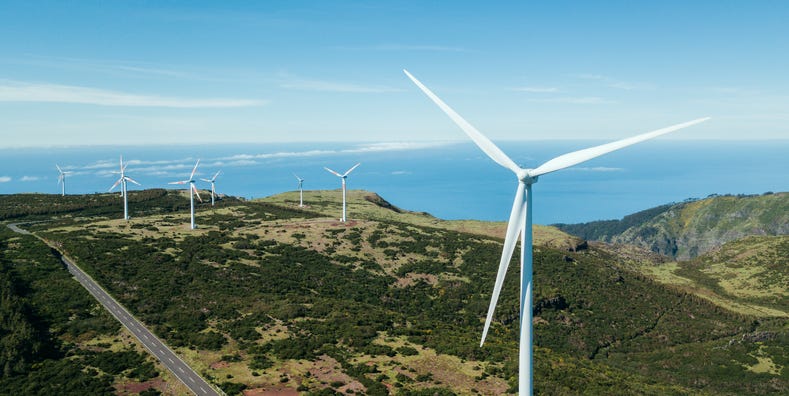
Portugal has long been one of Europe’s more serious wind-energy players. Strong Atlantic winds give the country a natural advantage, especially when weather systems line up just right. During the 149-hour streak, wind power played a major role because windy periods often occur when solar output is lower, such as at night or during cloudy weather.
This is a key lesson for countries trying to copy Portugal’s renewable energy strategy: do not build a grid that depends on only one clean-energy source. Solar is wonderful when the sun shines. Wind is powerful when weather systems cooperate. Hydropower can add flexibility. Storage can smooth the edges. The magic is not one technology. The magic is the orchestra.
Hydropower Was the Quiet Hero
Hydropower is not as glamorous as solar panels glinting in the sun or giant wind turbines spinning over dramatic hillsides. But in Portugal, hydro is the dependable friend who shows up early, brings snacks, and knows where the extension cord is.
Hydropower can help balance the grid because operators can increase or decrease output more quickly than many fossil fuel plants. Portugal’s hydro resources, supported by periods of rain, helped provide the flexibility needed during the record-breaking run. Pumped-storage hydropower is especially valuable because it can act like a giant rechargeable battery: when there is extra electricity, water can be pumped uphill; when electricity is needed, water flows back down through turbines.
Solar Is Growing Fast
Solar power was not the only star of the 149-hour event, but it is becoming increasingly important in Portugal’s energy future. The country has excellent sunlight, expanding solar capacity, and ambitious plans to build much more. Solar is especially useful during daytime demand peaks and can pair well with hydro reservoirs, batteries, and flexible demand.
Portugal has also explored floating solar projects, including installations on reservoirs. Floating solar can reduce land-use conflicts, make use of existing electrical infrastructure near dams, and potentially reduce evaporation from reservoirs. It is not a universal solution, but it is a clever onelike putting solar panels where the sun already has a waterfront view.
What “Entirely Renewable” Does Not Mean
Because headlines can sprint faster than nuance, it is important to explain what this milestone does not mean. Portugal did not eliminate all fossil fuel use for six days. Transportation, aviation, shipping, some heating, and certain industrial processes still depend on fossil fuels. Even within electricity systems, some conventional plants may remain available for reliability, reserves, or technical balancing.
The better takeaway is this: renewable electricity can meet and exceed national demand for extended periods in a modern economy. That matters because electricity is becoming the backbone of decarbonization. As more cars become electric, more buildings use heat pumps, and more industries electrify, a cleaner power grid makes the rest of the economy cleaner too.
In other words, Portugal’s achievement is not the finish line. It is a very bright signpost pointing toward the road ahead.
Why the 149-Hour Record Matters for the World
Portugal’s renewable energy record is important because it turns a policy debate into a working example. For years, skeptics have asked whether countries can rely heavily on renewable electricity without making the grid unstable. Portugal’s answer was not a speech, a slogan, or a glossy brochure. It was six days of operation.
That does not mean every country can copy Portugal overnight. Geography matters. Portugal has Atlantic wind, hydropower resources, cross-border electricity links with Spain, and a relatively small power system compared with giants like the United States, China, or India. But the principles are widely useful: diversify renewable sources, improve forecasting, build transmission, use storage wisely, and design electricity markets that reward flexibility.
The milestone also highlights energy security. Renewable energy reduces dependence on imported fossil fuels, which can fluctuate in price because of wars, supply shocks, shipping disruptions, or market panic. When a country produces more power from its own wind, water, and sun, it gains a measure of control. The sun does not send invoices in dollars. The wind does not threaten to close a pipeline.
Portugal’s Bigger Clean Energy Strategy
Portugal’s 149-hour renewable run fits into a longer national strategy. The country phased out coal-fired power generation in 2021, years ahead of many larger economies. It has expanded wind power, invested in hydropower and pumped storage, encouraged solar deployment, and pursued stronger grid interconnections with the rest of Europe.
In 2023, renewable power supplied about 61% of Portugal’s electricity consumption, up from 49% in 2022. Wind accounted for roughly a quarter of electricity usage, hydropower about 23%, solar around 7%, and biomass about 6%. Those figures show why Portugal’s record was possible: the country had already built a renewable foundation strong enough to turn a good weather week into a historic energy week.
Portugal’s goals are even more ambitious. The country has discussed raising the renewable share of electricity consumption to 93% by 2030, while also targeting carbon neutrality by 2045. That means the 149-hour record is not just a celebratory statistic. It is a preview of the system Portugal wants to make normal.
Lessons for the United States and Other Countries
Build a Portfolio, Not a Favorite Child
One major lesson from Portugal is that clean-energy systems work best when they are diversified. A grid built only on solar will struggle after sunset. A grid built only on wind will complain when the air gets lazy. A grid built only on hydro can suffer during drought. But a grid that combines wind, solar, hydro, storage, demand response, and regional power trading is much harder to knock off balance.
Transmission Is Climate Infrastructure
Renewable energy is often abundant in places where people do not live in huge numbers. That means transmission lines are essential. Without them, clean power can get trapped like a brilliant idea in a meeting with no agenda. Portugal’s ability to export electricity to Spain during part of the record shows why regional cooperation matters. Surplus power should not be wasted if a neighbor can use it.
Storage Is Not Optional
High-renewable grids need flexibility. That can come from pumped hydropower, batteries, demand response, interconnections, smart charging for electric vehicles, and flexible industrial loads. Storage does not merely save extra electricity for later; it gives grid operators breathing room. It helps turn renewable energy from “available when nature feels generous” into “available when society needs it.”
Policy Consistency Beats Energy Whiplash
Portugal’s progress was built over years, not one lucky weekend. Renewable auctions, grid planning, coal retirement, energy-efficiency efforts, and investment signals all helped create the conditions for the 149-hour streak. Countries that change energy policy every election cycle make investors nervous. Nervous investors are expensive investors. Expensive investors slow everything down.
The Hard Parts Still Ahead
Portugal’s record is impressive, but it does not mean the country has solved every clean-energy challenge. Drought can reduce hydropower output. Grid congestion can delay renewable projects. Permitting can frustrate developers and communities. Electricity prices still need careful management so the energy transition benefits households, not just balance sheets.
There is also the challenge of electrifying the rest of the economy. Clean electricity is powerful, but transportation, buildings, and industry must actually use it. Electric vehicles, heat pumps, green hydrogen, industrial electrification, and smarter public transportation all become more valuable when the grid is cleaner. The cleaner the electricity, the more climate benefit each electric technology delivers.
Portugal’s renewable record should therefore be read as a challenge, not a victory lap. The country has shown what is possible for electricity. The next task is making that clean electricity more common, more affordable, more reliable, and more deeply connected to everyday life.
Experiences Related to Portugal’s 149-Hour Renewable Energy Moment
To understand why this event matters beyond energy statistics, imagine the experience from the ground. You wake up in Lisbon, make coffee, charge your phone, ride an electric train, pass office buildings humming with computers, and watch streetlights blink off after sunrise. Nothing feels different. That is the point. The best clean-energy milestone is not dramatic. It does not require citizens to sit in the dark wearing three sweaters and congratulating themselves for suffering heroically. It simply works.
That normality is powerful. For many people, renewable energy still sounds like a future promise, something that belongs in government plans, climate conferences, or optimistic architecture renderings with too many trees on the roof. Portugal’s 149-hour run makes the idea feel practical. The lights stayed on. Businesses operated. Families cooked dinner. Hospitals, shops, apartments, schools, and factories continued using electricity while renewable generation exceeded demand.
There is also a psychological experience here: confidence. Energy transitions often feel abstract because the grid is invisible until it fails. Most of us do not think about electrons while microwaving soup. We only notice power systems when a storm knocks them out or a bill arrives looking like it trained for a heavyweight fight. A record like Portugal’s gives people a more concrete image of what clean power can do. It says, “This is not theory. This happened.”
For travelers, Portugal’s renewable progress adds another layer to the country’s appeal. Visitors already come for Porto’s tiled streets, Lisbon’s hills, the Algarve’s beaches, Douro Valley vineyards, and pastries that can defeat even the strongest diet plan. Now the country also offers a living example of energy modernization. A train ride, a hotel stay, or an evening walk under city lights can be connectedquietly and indirectlyto a grid increasingly powered by domestic renewable resources.
For homeowners and small businesses, the experience is more practical. Portugal’s success suggests that rooftop solar, efficient appliances, heat pumps, electric mobility, and smart meters are not isolated gadgets. They are pieces of a larger puzzle. When the national grid becomes cleaner, every efficient device becomes more meaningful. A heat pump running on renewable electricity is not just a machine; it is part of a cleaner energy chain.
For policymakers, the experience is humbling. Portugal’s record was not created by one heroic law or one shiny project. It came from years of infrastructure, market design, renewable deployment, and grid operation. That is less glamorous than cutting a ribbon in front of a giant solar farm, but it is more important. Clean-energy progress is often a thousand boring decisions that eventually add up to one historic headline.
For the rest of the world, the experience is encouraging but not effortless. Portugal’s geography, size, weather, and grid connections are not identical to those of Texas, California, New York, Vietnam, Brazil, or Japan. Still, the emotional lesson travels well: people do not need energy systems to be romantic. They need them to be reliable, affordable, and increasingly clean. Portugal showed that renewable electricity can cover national demand for days without turning modern life into a science experiment.
That may be the most important experience of all. The energy transition is often framed as sacrifice, but Portugal’s record hints at a better story. Clean power can be ordinary. It can be boring in the best possible way. It can run in the background while people live their lives, drink their coffee, complain about traffic, open shops, send emails, and forget, for a moment, that history is moving through the wall socket.
Conclusion: Portugal Turned a Clean Energy Goal Into a Real-World Demonstration
Portugal’s 149-hour renewable energy record is not the final chapter in the global energy transition, but it is a chapter worth bookmarking. The country showed that a modern electricity system can operate for days with renewable generation exceeding national demand. It also showed that the future of clean power is not built on one miracle technology. It is built on diversity, planning, storage, flexible grids, regional cooperation, and steady political commitment.
The headline is exciting, but the deeper lesson is practical: renewable energy works best when countries stop treating it as an accessory and start treating it as the backbone of the power system. Portugal still faces challenges, from drought risk to grid expansion and broader electrification. Yet its record proves that ambitious clean-energy goals can move from press releases into daily life. For six days, Portugal did not just talk about the future. It plugged into it.
Note: This article is written for web publication and is based on real public energy data and reporting available at the time of writing. Before publishing, editors should verify any live policy targets or updated electricity statistics:.