Note: Spoilers are handled carefully below. You will get gentle hints first, a stronger clue after that, and the final NYT Wordle answer only after the spoiler warning.
Some Wordle days feel like a friendly handshake. Others feel like the game looked directly at your streak, smiled politely, and hid the answer under the couch. The NYT Wordle for 11-December-2025 sits in that wonderfully mischievous middle ground: familiar, simple, and somehow still capable of making smart people stare at five blank squares as if they are decoding ancient runes.
Today’s puzzle is Wordle #1636, and the answer has been verified by public Wordle answer archives and puzzle coverage for Thursday, December 11, 2025. The confirmed solution is GUESS. TechRadar’s historical Wordle archive lists game #1636 for Thursday, December 11, 2025 as GUESS, and Parade’s daily Wordle coverage also identifies the same answer.
Before jumping straight to the solution, though, let’s treat this like a proper Wordle guide. That means no answer ambush, no chaotic spoilers in the first paragraph, and absolutely no “well, obviously” energy. If you solved it in three, congratulations. If you needed six, congratulations with dramatic lighting. If you missed it, congratulations on being human.
NYT Wordle Hints for 11-December-2025
Here are your clues for today’s Wordle. They are designed to help without ruining the fun too quickly.
Hint 1: Today’s Wordle Has One Vowel
The answer contains one traditional vowel, but that vowel appears more than once. This is one of the reasons today’s puzzle can be trickier than it looks. Repeated letters often make Wordle feel like a polite trap, because the game never announces, “Hey, you may need to use that letter again.” It just lets you wander around confidently with the wrong assumption.
Hint 2: The Word Starts With G
The first letter is G. That is useful, but not necessarily enough to finish the puzzle. Once you know the first letter, the challenge becomes narrowing down the middle and ending. Wordle players often get stuck when they know the opening sound but cannot decide whether the word is common, weird, slangy, or something they last saw in a third-grade spelling list.
Hint 3: The Word Ends With S
The final letter is S. Be careful here: words ending in S can make players think of plurals, but Wordle answer words are not usually simple plural nouns. Today’s answer is not just “things,” “items,” or “objects” wearing an S at the end. The S is part of the base word.
Hint 4: There Is a Double Letter
Today’s Wordle contains a repeated consonant. This is the part where the puzzle turns from a normal word game into a tiny psychological exam. Many players avoid repeated letters until late because they want to test as many new letters as possible. That is often smart, but when the answer actually contains a double letter, waiting too long can cost you precious guesses.
Hint 5: It Means to Estimate Without Certainty
The word can mean to form an answer or opinion without having complete information. You might do it when solving Wordle, choosing a mystery flavor jelly bean, or trying to figure out why your phone charger only works at one extremely specific angle.
Spoiler Warning: Today’s Wordle Answer Is Below
Stop here if you still want to solve the puzzle on your own. Take a breath, look at your remaining letters, and maybe try not to enter a panic word just because it “feels right.” Wordle respects confidence, but it also punishes vibes-only strategy.
NYT Wordle Answer for 11-December-2025
The answer to NYT Wordle #1636 for Thursday, December 11, 2025 is:
GUESS
Yes, the answer is GUESS. A Wordle answer about guessing is almost too perfect. It is the kind of solution that makes the game feel like it is winking at you through the screen. If you lost today, you did not just fail to guess the answer. You failed to guess “guess.” That is not a puzzle result; that is a tiny comedy sketch.
Why “GUESS” Was a Sneaky Wordle Answer
At first glance, GUESS looks easy. It is a common word. It has no obscure letters like Q, Z, or X. It is not some dusty dictionary relic that sounds like a medieval farming tool. But its simplicity is exactly why it can catch players off guard.
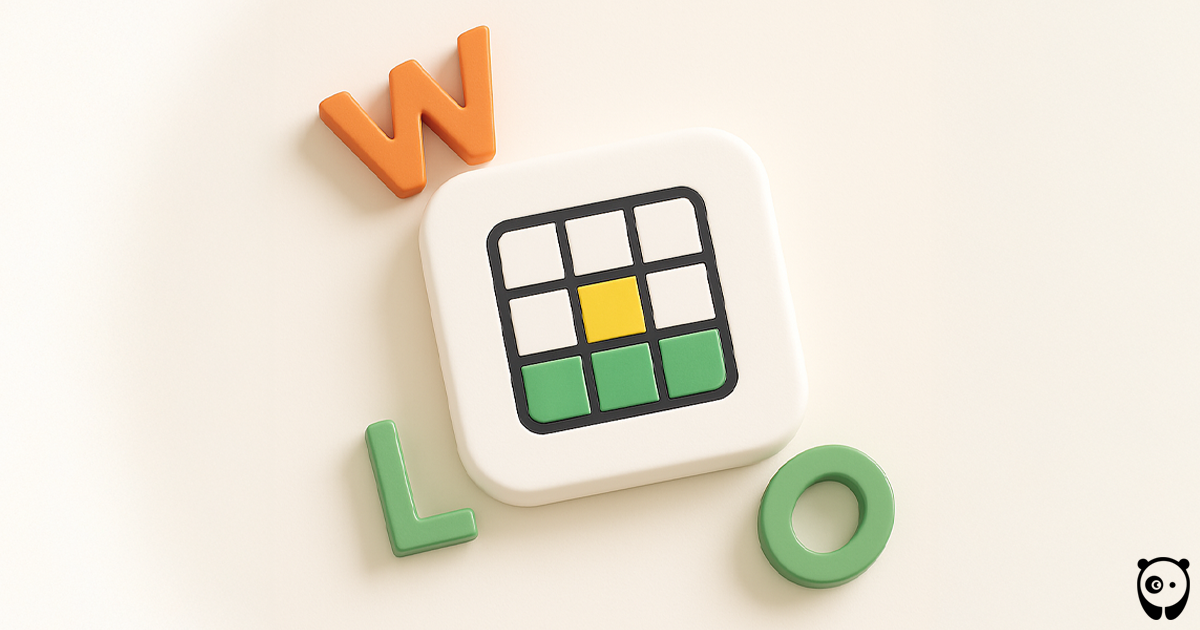
The biggest challenge is the repeated S. Wordle’s color feedback tells you whether letters are correct, present, or absent, but it does not always make repeated letters obvious early. Britannica’s explanation of Wordle’s color system notes that green marks a correct letter in the correct place, gold marks a correct letter in the wrong place, and gray marks a letter not in that day’s answer, with players getting six tries to solve the five-letter word.
With GUESS, a player might discover G, U, E, or S, but still miss the second S until late. That creates a classic Wordle problem: you think you have most of the information, but the board is quietly holding back the most annoying part. A single S may point you toward words like GUEST, GUSHY, GUMMY, or GUISE, depending on your earlier guesses. But the double-S ending requires a shift in thinking.
Another reason GUESS works well as a daily puzzle is that it is a common word with a flexible meaning. It does not belong to one narrow category like botany, architecture, or obscure sports equipment. Everyone knows the word, but knowing the word exists is not the same as seeing it under pressure with only six attempts. Wordle is full of these “of course!” answers that feel obvious only after the reveal.
Best Starting Words for This Puzzle
A good starting word for today’s puzzle would test common letters while leaving room to identify the repeated S. Words such as SLATE, CRANE, TRACE, RAISE, and SALET are often discussed by Wordle players because they test frequent vowels and consonants. TechRadar’s starting-word analysis has noted that WordleBot has favored strong openers such as SLATE, while other statistically strong options also perform well depending on the solving style.
For GUESS specifically, an opener like SLATE would be helpful because it checks S and E immediately. If S appears but not in the first position, and E appears but not where expected, you have valuable early information. A second guess could then test G and U while checking whether S belongs near the end.
The mistake many players make is spending too many guesses on brand-new letters after already finding strong clues. Wordle rewards exploration early, but once the board starts talking, you need to listen. If you have confirmed an S and an E, do not keep throwing random consonants at the wall just because the keyboard still has letters left. The game is not asking you to audition the alphabet.
Smart Solving Path for Wordle #1636
Here is a sample solving path that could lead toward GUESS without needing a miracle:
First guess: SLATE. This checks S, L, A, T, and E. If S and E show up, you already know two important letters.
Second guess: CRUDE or GRUEL. A word like this can test U and G while exploring possible placements. You do not need to use these exact words, but the goal is to move from broad testing to targeted solving.
Third guess: GUEST. This is a very tempting guess if you have G, U, E, and S. In fact, many players likely fell into the GUEST trap because it is such a natural word. If GUEST fails but confirms the first four letters, the final step becomes much clearer.
Fourth guess: GUESS. Once the T is ruled out and a second S becomes plausible, GUESS is the clean solution.
This is why repeated letters matter so much. The answer can look almost solved, yet the final move depends on allowing yourself to reuse a letter. If your brain refuses to consider doubles, Wordle will happily sit there in silence while your streak sweats.
What Makes Repeated Letters So Difficult in Wordle?
Repeated letters are among the most common reasons players stumble. They break one of the informal habits many solvers develop: “Try five different letters each time.” That approach is useful early, but it becomes less useful once the puzzle narrows.
Research and strategy discussions around Wordle often focus on information gain, letter frequency, and reducing the possible answer pool. Academic work on Wordle strategies has explored how probabilistic and information-based approaches can improve solving efficiency, while still noting that human players cannot realistically perform perfect calculations every turn.
In plain English: good Wordle solving is part math, part vocabulary, part pattern recognition, and part not yelling at your phone. The repeated S in GUESS is not unfair. It is simply one of those features that tests whether you are playing the board in front of you or clinging to a generic strategy that worked yesterday.
A Quick Background on Wordle and the NYT
Wordle was created by Josh Wardle and became a viral sensation before The New York Times acquired it in January 2022. Multiple U.S. outlets reported that the acquisition price was in the low seven figures, and The Times kept the game as part of its growing digital games ecosystem.
The magic of Wordle has always been its restraint. One puzzle per day. Six guesses. Five letters. No flashing casino lights, no twenty-seven daily bonuses, no cartoon dragon asking you to buy gems. It is just you, the grid, and a word that may or may not ruin your morning coffee.
That simplicity is also why daily Wordle hint pages remain popular. Players do not always want the answer immediately. Sometimes they want a small nudge: the first letter, the number of vowels, whether there is a double letter, or a clue that points them in the right direction. A good hint respects the game. A bad hint walks in wearing a sandwich board that says the solution.
How to Use Today’s Hints Without Spoiling the Fun
If you are using hints, try taking them one at a time. Start with the vowel clue. If that is not enough, move to the first letter. Then the ending letter. Save the meaning clue for last, because semantic hints can make the answer click very quickly.
For GUESS, the best spoiler-free approach is to think about action words related to uncertainty. What do you do when you do not know? You infer. You assume. You estimate. You take a shot. You guess. Once that idea enters your head, the double-S structure becomes easier to accept.
Also, do not be embarrassed if you missed it. Common words can be more frustrating than rare ones because they feel obvious afterward. When the answer is something like MYRRH, everyone accepts chaos. When the answer is GUESS, players start questioning their entire education.
Experience Section: Playing the December 11, 2025 Wordle
There is something especially funny about a Wordle answer like GUESS because it describes the entire activity. Every Wordle solve begins as a guess, then slowly becomes less of a guess as the grid reveals information. On a good day, you feel like a detective. On a bad day, you feel like you are throwing refrigerator magnets at a wall and hoping grammar happens.
When approaching this puzzle, the first emotional stage is confidence. GUESS is a normal word, so surely it should be easy. The second stage is suspicion. You may find a G or an E and think, “Great, I’m close.” Then the board refuses to cooperate. The third stage is bargaining. Maybe it is GUEST. Maybe it is GUISE. Maybe it is some word you have never said aloud but are suddenly willing to defend in court. Finally, the answer appears, and the whole thing feels obvious in the most annoying way.
My favorite thing about this puzzle is that it rewards humility. You cannot solve GUESS by showing off. You solve it by paying attention to small signals. If the board tells you one S is present but your likely word does not fit, you have to ask the uncomfortable question: could there be another S? That moment is where many Wordle games are won or lost. The solution is not hidden behind a rare vocabulary word. It is hidden behind a simple assumption.
This puzzle also reminds players that a strong opener is useful, but it is not a magic spell. Starting with a statistically efficient word can reduce the field, but you still have to interpret the results. A player who starts with SLATE may get useful information, but if they refuse to consider repeated letters, they can still wander into trouble. Meanwhile, someone with a less “optimal” opener might solve quickly because they follow the clues more flexibly.
That is the charm of Wordle. It makes room for both strategy and personality. Some players use the same opener every day like it is a family heirloom. Others rotate words based on mood, weather, breakfast, or whether their cat looked at them judgmentally. Some people chase the perfect three-guess solve. Others just want to protect the streak and leave with their dignity mostly intact.
GUESS is a satisfying answer because it feels playful without being cheap. It is not obscure. It is not overly technical. It does not depend on regional slang. But it still has enough structure to challenge players: one vowel repeated, a double consonant, and a tempting near-miss in GUEST. That near-miss is important because Wordle is often hardest when the wrong answer looks beautifully correct.
If you played this puzzle and got it in four, that feels like a clean result. Three is excellent. Two probably required either a brilliant opener or the kind of luck that makes other players narrow their eyes. Five or six is still perfectly respectable because repeated letters tend to stretch the solve. Missing it entirely is painful, yes, but also understandable. Sometimes the answer is sitting in plain sight, waving politely, while your brain insists on checking every other chair in the room.
The best lesson from the December 11, 2025 Wordle is simple: once you have enough information, stop collecting random letters and start testing patterns. Wordle is not only about what letters are in the word. It is about where they can go, whether they can appear twice, and which familiar word fits all the evidence. In other words, make better guesses. The puzzle basically said so itself.
Final Thoughts on NYT Wordle #1636
The NYT Wordle answer for 11-December-2025 was GUESS, a wonderfully self-aware solution that captures the whole spirit of the game. It was common enough to feel fair, tricky enough to slow players down, and amusing enough to make the reveal memorable.
If today’s puzzle taught one lesson, it is this: repeated letters deserve respect. Do not save them only for emergencies. When the clue pattern points toward a double letter, trust the grid. Wordle is a game of deduction, but sometimes deduction means admitting that the same letter has RSVP’d twice.