If you want to understand why astronomers get that wild look in their eyes whenever someone says infrared observatory, just spend a minute with the James Webb Space Telescope. Webb was built to do something wonderfully ambitious: look deeper into cosmic history, see through dusty stellar nurseries, and sniff the atmospheres of planets circling distant suns. In other words, it was designed to be less “nice camera” and more “time machine with a PhD.”
The headline “NASA’s Next Big Telescope Draws One Step Closer to the Stars” originally captured a very real turning point in Webb’s long journey. In early 2016, engineers completed installation of the telescope’s final primary mirror segment, transforming Webb from a spectacular engineering concept into something that unmistakably looked like the future of astronomy. It was one of those rare moments when a project stopped feeling theoretical and started feeling inevitable.
That milestone mattered then, and it matters even more now. Because when people called Webb NASA’s next big telescope, they were not kidding. This observatory was built to follow Hubble, extend humanity’s reach into the infrared universe, and answer some of the biggest questions science can ask: How did the first galaxies form? How do stars and planets come together? Could distant worlds have the chemical ingredients for life?
And yes, it also happens to look like a gold-plated sci-fi flower unfolding in space, which certainly does not hurt its public image.
The Moment Webb Became Real
In February 2016, NASA’s team installed the 18th and final segment of Webb’s giant primary mirror. That single event was not the finish line, but it was a dramatic leap forward. Suddenly, the telescope’s signature face was complete: 18 hexagonal mirror segments arranged into a shimmering honeycomb that would one day act as one perfectly aligned optical surface.
This was a huge deal for several reasons. First, Webb’s mirror was enormous by space standards. At 6.5 meters across, it was far larger than Hubble’s 2.4-meter mirror. Second, it had to be segmented because no rocket fairing could accommodate a rigid mirror of that size. Engineers had to design a mirror that could fold for launch, survive the violence of liftoff, travel to deep space, and then unfold and align itself with extraordinary precision. That is the kind of challenge that makes aerospace engineers reach for coffee and very large whiteboards.
Webb’s scale also became part of its legend. Unfolded, the observatory is roughly the size of a tennis court, and the overall structure towers several stories high during ground assembly. It was never going to be a modest little telescope quietly minding its own business. Webb was built to be bold.
Why NASA Needed a Telescope After Hubble
Hubble changed astronomy by giving humanity crisp, transformative views of the universe in visible and ultraviolet light. It made distant galaxies feel intimate and nebulae look like cosmic works of art. But Hubble was not designed to do everything. Light from the earliest galaxies has been stretched by the expansion of the universe into infrared wavelengths. Dusty stellar nurseries also hide much of their activity from visible-light telescopes.
That is where Webb comes in. Webb was engineered primarily as an infrared observatory, which means it can detect faint heat signatures and long-wavelength light that visible telescopes often miss. Instead of merely looking at what the universe shows us, Webb looks at what the universe has been trying to hide behind dust, distance, and time.
Infrared Light Is the Universe’s Backstage Pass
Infrared astronomy is incredibly powerful because it lets scientists do three things especially well. First, it allows them to study the early universe, where ancient light has been redshifted into infrared wavelengths over billions of years. Second, it helps them peer through clouds of gas and dust to observe star birth and planet formation. Third, it makes it possible to analyze the chemical makeup of exoplanet atmospheres by studying how starlight changes as it passes through them.
So while Hubble gave us unforgettable portraits, Webb was built to ask tougher questions. It is less about taking a pretty yearbook photo of the cosmos and more about interrogating the universe like a very polite detective.
What Makes Webb So Different
The 18-Segment Gold Mirror
Webb’s iconic mirror is made of 18 hexagonal segments coated in a microscopically thin layer of gold. Gold was chosen not because NASA wanted the telescope to look fancy at parties, but because gold reflects infrared light extremely well. Each mirror segment can be adjusted with tiny actuators, allowing engineers to shape and align the full mirror after launch so the telescope behaves like one giant, unified eye.
This design was essential. A single giant mirror would have been impractical to launch, but a segmented mirror made Webb possible. It also introduced a new level of complexity. After launch, the mirror segments had to be aligned so precisely that the observatory could focus faint light from galaxies born not long after the big bang. Missing that alignment by even a tiny amount would have compromised the mission. No pressure.
A Sunshield the Size of a Tennis Court
Because Webb observes in infrared, heat is the enemy. Even the warmth from the Sun, Earth, Moon, or the observatory itself could overwhelm the faint signals Webb was built to detect. That is why it carries a five-layer sunshield the size of a tennis court. The shield blocks light and heat so effectively that the telescope and its instruments can remain incredibly cold.
Without that shield, Webb would be like trying to spot a firefly next to a stadium floodlight. With it, the observatory can detect dim, distant sources that would otherwise vanish into thermal noise.
Four Instruments, One Ambitious Mission
Webb’s scientific toolkit is just as impressive as its hardware. Its four major instruments include NIRCam, NIRSpec, MIRI, and the Fine Guidance Sensor paired with NIRISS. Together, they allow Webb to image distant galaxies, study the chemistry of exoplanet atmospheres, investigate how stars are born, and observe structures that formed when the universe was still young.
NIRCam serves as the observatory’s primary near-infrared imager. NIRSpec is the spectroscopic workhorse, able to break light into its component wavelengths so scientists can identify chemicals and physical conditions. MIRI expands Webb’s reach into the mid-infrared, and FGS/NIRISS helps guide the telescope while also contributing powerful imaging and spectroscopic capabilities. In plain English: Webb does not just take pictures. It reads cosmic fingerprints.
The Engineering Marathon Behind the Milestone
Completing the mirror assembly in 2016 was thrilling, but it was only one chapter in a very long engineering story. Webb had to endure years of testing, because unlike Hubble, it was never meant to be serviced by astronauts. Hubble orbits Earth close enough for repair missions. Webb operates around the Sun-Earth L2 point, roughly a million miles from Earth. That is far beyond the reach of a handy shuttle fix-up crew with toolkits and heroic music.
As a result, Webb had to be tested obsessively. Its instruments were exposed to extreme cold, vibration, vacuum conditions, and deployment rehearsals. Engineers had to prove not only that the telescope could survive launch, but that it could unfold properly and function in deep space with little room for error. Every hinge, membrane, latch, motor, and mirror had to behave the first time.
This is one reason Webb became known as a mission of astonishing complexity. The telescope had hundreds of single-point failure risks during deployment. Its success depended on a sequence of carefully choreographed steps, each one performed millions of miles from the nearest repair shop. The fact that scientists and engineers pulled this off remains one of modern spaceflight’s most impressive achievements.
From “One Step Closer” to Actually Launching
The 2016 mirror milestone did not mean Webb was ready to fly, but it did mean the observatory’s most recognizable feature was in place. More testing, integration, folding, deployment checks, and schedule patience followed. Finally, on December 25, 2021, Webb launched aboard an Ariane 5 rocket from French Guiana.
That launch felt like the emotional payoff for decades of work. It was not simply the departure of another spacecraft. It was the release of a scientific dream people had been building, debating, redesigning, and occasionally worrying about for years. And after launch came the nerve-racking deployment period, followed by months of cooling, mirror alignment, and instrument commissioning.
Then, in July 2022, Webb released its first full-color images and spectra. The payoff was immediate. The observatory delivered a deep infrared view packed with galaxies, a detailed water signature in an exoplanet atmosphere, a sharper look at galaxy interactions, and spectacular scenes of stellar birth and death. In one swoop, Webb proved it was not just a triumph of engineering. It was a scientific powerhouse.
Did the Telescope Deliver? Oh, Absolutely
Webb’s science record has made the old excitement around that 2016 milestone feel fully justified. The telescope has examined the early universe with a reach astronomers once hoped for but could not guarantee. It has studied galaxies from only a few hundred million years after the big bang, pushing observations deeper into cosmic history and challenging some expectations about how quickly galaxies formed.
It has also transformed exoplanet research. Webb detected carbon dioxide in the atmosphere of WASP-39 b, giving astronomers a powerful demonstration of what precision infrared spectroscopy can do. It identified water signatures, haze, and clouds in other distant worlds, showing that this observatory is not just about ancient galaxies. It is also about understanding planets, chemistry, and the broader story of how planetary systems evolve.
And then there are the images. Webb’s “Cosmic Cliffs” view of a star-forming region in the Carina Nebula pulled back dusty curtains to reveal newborn stars. Its observations of the Southern Ring Nebula exposed details of stellar death that had been hidden before. Its deep field image showed a sky crowded with galaxies in a patch no bigger than a grain of sand held at arm’s length. Webb has a rare talent for doing rigorous science while also making everyone stop scrolling and say, “Okay, wow.”
Why This Telescope Still Matters for the Future
Webb is not just a mission. It is a proof of concept for the future of large space observatories. It demonstrated that a segmented mirror, giant deployable sunshield, and ultra-sensitive infrared instruments could work together in deep space. That matters for the next generation of telescopes, including future NASA missions that will build on Webb’s technical lessons and scientific momentum.
More importantly, Webb changed expectations. Astronomers now know they can ask harder questions and expect better answers. The observatory is helping scientists refine models of galaxy formation, investigate the chemistry of alien atmospheres, and probe dark matter and cosmic structure with greater clarity. It has become one of those rare scientific tools that does not merely collect data. It reshapes the questions themselves.
So yes, the phrase “one step closer to the stars” turned out to be accurate in more ways than one. In 2016, it described a key assembly milestone. Today, it reads like a summary of what Webb has done for all of us: moved humanity a little closer to understanding where we came from, what is out there, and how much more there is left to discover.
Final Thoughts
When NASA completed Webb’s mirror assembly, the moment was easy to celebrate as an engineering milestone. But in hindsight, it represented something bigger. It was the moment a daring scientific vision began to look inevitable. The gold mirror was no longer just a plan in slides and schematics. It was real, physical, and inching toward launch.
Years later, Webb has more than justified the anticipation. It has shown us some of the universe’s earliest structures, revealed hidden details in star-forming regions, and opened a new era in the study of exoplanet atmospheres. For a telescope once described as NASA’s next big observatory, it has become something even better: a working reminder that when human beings decide to build impossible-seeming tools, the universe has a habit of rewarding the effort.
And honestly, that may be the best part of the story. The stars were never getting any closer. We just finally built something brilliant enough to meet them halfway.
Experiences Related to “NASA’s Next Big Telescope Draws One Step Closer to the Stars”
Following Webb’s story has felt, for many people, less like tracking a machine and more like participating in a very long, very emotional relay race. One generation of scientists imagined it. Another designed it. Another tested it, worried over it, defended it, delayed it, folded it, unfolded it, and finally launched it. If you have ever watched a major scientific project grow over years, you know the strange experience: the hardware becomes real, but so does your relationship to it.
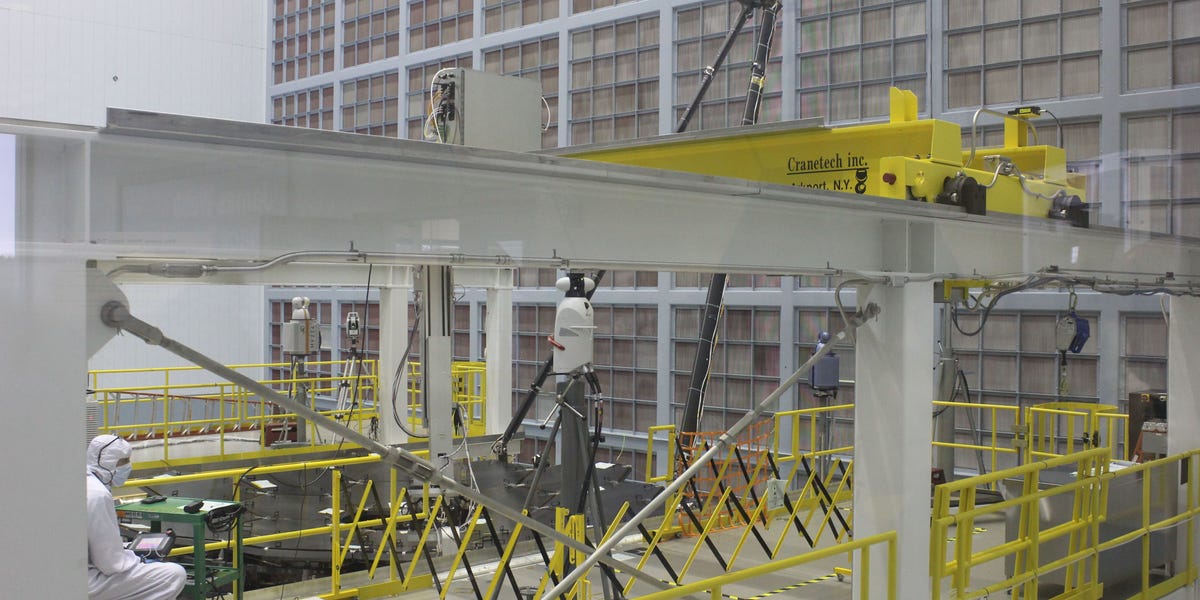
There is a particular thrill in seeing a milestone photo from a clean room. At first glance, it is just engineers in protective suits standing near metal, mirrors, and machinery. But then your brain catches up. You realize you are looking at a device meant to read ancient light from the edge of time. Suddenly, the room feels less like a lab and more like the backstage area of human curiosity.
For students, Webb has been the kind of mission that turns abstract science into something vivid. A textbook might explain redshift, infrared wavelengths, or exoplanet atmospheres. Webb gives those ideas texture. It lets people connect formulas to actual images, spectra, and discoveries. A teenager who sees a spectrum showing carbon dioxide on a distant world is no longer just memorizing terms. That student is watching chemistry happen across interstellar distance. Science stops being a chapter and starts being an event.
For teachers and parents, the telescope offers something equally powerful: a way to show that patience matters. Webb was not built overnight. It took years of revisions, setbacks, testing, and teamwork. In a culture that likes instant results, there is something deeply refreshing about a mission that succeeded through persistence. It reminds people that meaningful discovery often takes time, and that big achievements are usually made of thousands of smaller, less glamorous steps.
For the general public, the experience of seeing Webb’s images has been almost cinematic. People do not need advanced degrees to feel awe when they look at the “Cosmic Cliffs” or a deep field packed with galaxies. The emotional response comes first. The science follows. That is one of Webb’s quiet strengths. It invites people in with beauty, then rewards them with substance.
And for astronomers, Webb has delivered a rarer experience still: surprise. The early universe appears richer and more complicated than expected. Planetary atmospheres are revealing new layers of information. Structures hidden by dust now emerge in detail. Scientists love being right, of course, but history suggests they also love being intriguingly wrong. Webb has supplied both wonder and productive confusion, which is often where the best science begins.
In that sense, the experience surrounding Webb is not only about space. It is about what people feel when a difficult, intelligent, hopeful project actually works. Relief. Pride. Curiosity. Joy. A renewed sense that exploration still matters. That may be why the telescope’s story resonates so strongly. It is not just about looking farther into the universe. It is about seeing what human collaboration can do when it aims high enough.