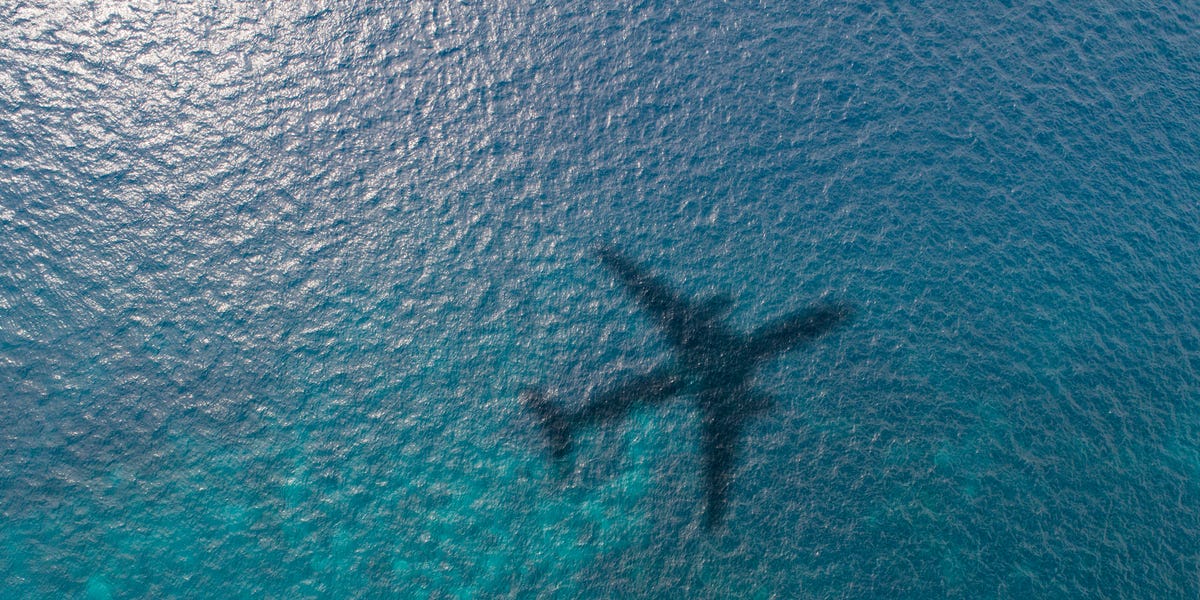
Malaysia Airlines Flight MH370 is the aviation mystery that refuses to sit quietly in the back row. On March 8, 2014, a Boeing 777-200ER departed Kuala Lumpur for Beijing with 239 people on board. It should have been a routine overnight flight: passengers sleeping, crew working, coffee brewing, seat-back screens glowing. Instead, the aircraft vanished from civilian radar, turned away from its planned route, and became one of the most studied, debated, and emotionally painful mysteries in modern aviation.
More than a decade later, the main wreckage has still not been recovered. Investigators have pieces of evidence: radar traces, satellite data, ocean drift analysis, and confirmed debris. What they do not have is the cockpit voice recorder, the flight data recorder, or the fuselage resting on the seabed with answers tucked inside. That gap is exactly where conspiracy theories grow. Nature hates a vacuum; the internet fills it with aliens, secret military bases, rogue pilots, cyberattacks, and occasionally ideas so strange they sound like rejected movie pitches.
This article looks at what is known, what is possible, what is wildly unsupported, and why MH370 continues to haunt aviation experts, families, journalists, and curious readers who have spent too many nights falling into “just one more article” rabbit holes.
What Happened to Flight MH370?
MH370 left Kuala Lumpur International Airport shortly after midnight, bound for Beijing. The aircraft carried 227 passengers and 12 crew members. Less than an hour later, after the final routine radio communication, the plane disappeared from civilian air traffic control screens near the boundary between Malaysian and Vietnamese airspace.
The mystery deepened when military radar later suggested the aircraft had turned back across the Malay Peninsula and flown west, not north toward China. After that, investigators relied heavily on satellite “handshake” data between the aircraft and an Inmarsat satellite system. These signals did not show the plane’s exact location, but they helped experts estimate that MH370 continued flying for hours and likely ended in the southern Indian Ocean.
That conclusion shaped the largest and most expensive underwater aviation search in history. Australia, Malaysia, China, and private search teams mapped huge sections of remote seabed west of Australia. The ocean there is not exactly a friendly swimming pool. It is deep, rough, isolated, and full of underwater mountains, ridges, and terrain that makes search technology work for every inch.
The Evidence We Actually Have
Satellite Data
The satellite data remains one of the strongest clues. Although MH370’s communication systems stopped transmitting normal aircraft data, the plane continued exchanging automated signals with a satellite system. Analysts used timing and frequency changes in these signals to estimate possible flight paths. The most accepted interpretation places the aircraft along a southern route into the Indian Ocean.
Radar Tracking
Military radar data indicated that the aircraft likely turned back from its planned route and crossed Malaysia. This suggests the disappearance was not a simple case of a plane instantly falling from the sky after losing contact. Something caused, or coincided with, a major route deviation.
Debris Findings
In 2015, a wing part known as a flaperon washed ashore on Réunion Island in the western Indian Ocean and was identified as coming from MH370. Additional debris pieces found along the coasts of East Africa and nearby islands were later assessed as confirmed or highly likely to have come from the aircraft. These discoveries strongly support the conclusion that MH370 ended in the Indian Ocean, not in a hidden hangar, secret runway, or underground volcano lair.
The Missing Black Boxes
The biggest missing evidence remains the flight data recorder and cockpit voice recorder. Without them, investigators cannot fully reconstruct cockpit activity, aircraft systems, crew decisions, or the final minutes. In aviation investigations, black boxes are not magic truth machines, but they are usually the closest thing to a narrator. In the MH370 story, the narrator is still missing.
Why MH370 Created So Many Conspiracy Theories
Conspiracy theories thrive when three ingredients mix: tragedy, uncertainty, and distrust. MH370 had all three in industrial quantities. Families were desperate for answers. Governments released confusing or delayed information. Search areas shifted dramatically. Early media coverage sometimes treated speculation like breaking news. Social media then did what social media does best: poured gasoline on the fog machine.
When people hear that a modern Boeing 777 can disappear in an age of smartphones, GPS, satellites, and global surveillance, they naturally ask, “How is that even possible?” That question is valid. The problem begins when “How is that possible?” becomes “Therefore, secret space lasers.”
The Pilot Suicide Theory
One of the most discussed theories is that the aircraft was deliberately diverted by someone in the cockpit, often with focus on Captain Zaharie Ahmad Shah. Supporters point to the aircraft’s apparent turnback, the lack of distress call, and reported flight simulator data found at the captain’s home. Some aviation analysts argue that the route and timing appear consistent with intentional action.
However, this theory remains unproven. The official Malaysian investigation did not conclude that the captain intentionally crashed the aircraft. Investigators found no confirmed motive, no suicide note, and no definitive evidence proving deliberate murder-suicide. The simulator data has been debated heavily, but simulation files alone do not equal a confession. Plenty of pilots practice unusual routes because pilots are aviation nerds with better equipment than the rest of us.
The pilot theory is not absurd, but it is not settled fact. It belongs in the category of plausible but unconfirmed explanations.
The Hijacking Theory
Another possibility is hijacking or unlawful interference by someone on board. This theory attempts to explain the deliberate-looking route change, the silence from the cockpit, and the long flight after communication was lost.
The challenge is evidence. No group credibly claimed responsibility. No passenger has been publicly identified as having the clear motive, training, and opportunity to carry out such an operation. The passenger manifest was investigated, and while rumors spread quickly, no solid public evidence has proved a hijacking plot.
Hijacking remains possible in a broad sense because investigators could not rule out unlawful interference entirely. But “possible” is doing a lot of work here. A theory needs more than a dramatic soundtrack.
The Fire or Mechanical Failure Theory
Some analysts have suggested that a fire, electrical failure, or decompression event may have disabled communications and incapacitated the crew and passengers. In this scenario, the aircraft might have flown on autopilot until fuel exhaustion.
This theory has one major advantage: it does not require a villain. Aviation history includes cases where crews faced smoke, fire, oxygen problems, or electrical failures that quickly overwhelmed them. A “ghost flight” scenario is technically possible.
But MH370’s apparent route changes are difficult to explain through mechanical failure alone. The aircraft did not simply continue along its planned path. It appears to have turned, crossed Malaysia, and flown into a remote ocean. That does not rule out a complex emergency, but it makes a simple accident explanation less satisfying.
The Diego Garcia Theory
One of the most persistent conspiracy theories claims MH370 was flown to Diego Garcia, a U.S. military facility in the Indian Ocean. Depending on the version, the plane was supposedly captured, hidden, or diverted for reasons involving secret cargo, intelligence operations, or geopolitical drama.
The problem is that evidence does not support it. Satellite data, debris locations, and ocean drift studies point toward the southern Indian Ocean. Landing a Boeing 777 full of passengers at a heavily monitored military facility without credible leaks, radar confirmation, passenger evidence, or physical proof would require a cover-up of cartoonishly large proportions. Real governments struggle to keep lunch meetings secret. Hiding a vanished wide-body aircraft forever is a different league.
The Shootdown Theory
Some theories suggest MH370 was accidentally or deliberately shot down, then covered up. This idea gained attention partly because civilian aircraft have been shot down in history, including Malaysia Airlines Flight MH17 just months later over Ukraine.
But for MH370, there is no credible public evidence of a missile strike, military engagement, explosion debris field, or government admission. The confirmed debris found years later is more consistent with an aircraft ending in the Indian Ocean than with a known shootdown site near the early flight path. The shootdown theory remains dramatic, but drama is not data.
The Cyberattack or Remote-Control Theory
Because MH370 was a modern aircraft, some people proposed that hackers remotely took control of it. This theory sounds irresistible in a world where refrigerators can connect to Wi-Fi and somehow still cannot keep lettuce crisp.
Yet there is no public evidence that MH370 was remotely hijacked. Boeing 777 systems are complex, but “complex” does not automatically mean “hackable from a laptop in a basement.” Aviation cybersecurity is a real field, and aircraft systems deserve serious protection, but MH370 has not been shown to be a cyberattack case.
The Cargo Theory
MH370 carried cargo, including lithium-ion batteries, which led to speculation about a cargo fire. Lithium batteries can be dangerous under certain conditions, and aviation regulators take them seriously. A cargo fire could potentially cause smoke, electrical problems, or crew incapacitation.
However, investigators did not find proof that cargo caused the disappearance. Cargo theories are more technically grounded than alien theories, but they still face the same obstacle: the aircraft’s apparent deliberate route changes.
The Wild Theories: Aliens, Black Holes, Cloaking, and Other Internet Fireworks
Some MH370 theories are less “aviation analysis” and more “midnight snack for the algorithm.” Claims about aliens, black holes, invisibility technology, fake debris, or the plane being swapped with MH17 have circulated online for years. These theories are memorable, clickable, and almost always unsupported.
They also reveal something important about human psychology. When a tragedy feels too large and too cruel to be random or unresolved, people search for a story with intention. A secret plot can feel emotionally easier than a blank space. At least a conspiracy has characters, motives, and an ending. The real MH370 story offers something colder: uncertainty.
What the Official Investigation Concluded
The official investigation did not deliver the final answer many hoped for. It confirmed that MH370 diverted from its filed flight plan and that the changes after waypoint IGARI were difficult to explain by aircraft system failures alone. It also criticized air traffic control responses and communication delays. But the report did not identify a definitive cause.
That is frustrating, but it is also honest. Investigators cannot responsibly declare a cause without enough evidence. Aviation safety depends on discipline, not vibes. The absence of a final answer is painful, but inventing one would be worse.
The Search: Why Finding MH370 Is So Hard
People sometimes ask, “How can we map Mars but not find one airplane?” Fair question. The answer is that the ocean is rude. The suspected crash area is vast, remote, deep, and rugged. Search teams must operate sonar equipment across enormous seabed regions, often in harsh weather. Even advanced autonomous underwater vehicles need time, precision, and a good target area.
The early search covered large areas based on the best available data at the time. Later analysis refined possible locations. Ocean Infinity, a marine robotics company, conducted a private search in 2018 and later returned under a “no find, no fee” arrangement. Renewed efforts in 2025 and 2026 focused on high-probability areas, but as of the latest public updates, the main wreckage had still not been found.
Why Debris Matters
The debris is not just a collection of sad objects. It is evidence. Oceanographers used drift modeling to estimate where floating pieces could have traveled from. Barnacles and marine growth on debris have also attracted scientific attention because they may reveal clues about how long wreckage drifted and through what waters.
Debris helped move MH370 away from pure speculation and toward a likely ocean-ending scenario. It did not solve the mystery, but it narrowed the universe of realistic possibilities. That matters. In a case this foggy, even a small piece of wing can be a lighthouse.
How MH370 Changed Aviation Thinking
MH370 exposed a shocking weakness in global aviation tracking. Before the disappearance, most passengers assumed commercial aircraft were tracked continuously everywhere. In reality, aircraft over remote oceans could be far less visible than many people imagined.
The tragedy accelerated global conversations about aircraft tracking, distress monitoring, satellite communication, and emergency response coordination. Airlines, regulators, and technology companies pushed for better ways to follow aircraft in remote regions. MH370 did not create every reform by itself, but it became the case everyone pointed to when asking, “How do we make sure this never happens again?”
Why the Mystery Still Matters
For casual observers, MH370 is a mystery. For families, it is a wound that has never closed. The lack of wreckage means no final resting place, no complete explanation, and no full accountability. Every renewed search brings hope, but also emotional risk. Hope is powerful, but after twelve years, it can also hurt.
That is why responsible discussion matters. It is fine to analyze theories. It is fair to criticize official mistakes. It is reasonable to ask hard questions. But treating real passengers and crew as props in an internet puzzle is not curiosity; it is carelessness wearing a detective hat.
Experiences and Reflections: What Following MH370 Feels Like
Following the MH370 story over the years feels different from reading about most aviation incidents. Usually, air crash investigations move through a familiar rhythm: shock, recovery, black box analysis, report, recommendations, closure. MH370 broke that rhythm. It left people stuck in the middle chapter, turning pages that never quite arrive.
One common experience for readers is the sudden realization that modern technology is not as all-seeing as we assume. Before MH370, many people believed every commercial aircraft was tracked like a rideshare car on a map. The idea that a Boeing 777 could fly into uncertainty felt almost impossible. That disbelief became part of the mystery. People were not only asking where the plane went; they were asking how the world could lose it.
Another experience is the emotional tug-of-war between logic and imagination. The logical side studies satellite arcs, radar returns, fuel endurance, drift modeling, and debris identification. The imaginative side wonders about secret landings, hidden motives, and shadowy operations. MH370 sits exactly where those two instincts collide. It rewards careful thinking, but it also tempts the mind to sprint into the fog wearing roller skates.
For families, the experience is far heavier. Public curiosity comes and goes with documentaries, anniversaries, and headlines. Grief does not follow a news cycle. Imagine hearing new theories every year, some thoughtful and some cruel, while still not having the aircraft, the recorders, or the full truth. That is why the language around MH370 should remain human. Behind every theory are parents, children, spouses, friends, and colleagues who boarded a plane and never came home.
There is also a strange educational experience in MH370. It has taught the public about aviation systems most people never knew existed: ACARS, transponders, primary radar, satellite handshakes, underwater locator beacons, drift analysis, and autonomous search vehicles. In a grim way, MH370 turned millions of ordinary readers into amateur students of aviation investigation. The internet may not have solved the case, but it did learn a lot of vocabulary.
Perhaps the most lasting experience is humility. MH370 reminds us that facts can be incomplete, experts can disagree, technology has limits, and mystery can survive even intense global attention. The honest answer is not always satisfying. Sometimes the truth is not hidden by a mastermind; it is hidden by depth, distance, time, and the brutal mathematics of the ocean.
That humility should shape how we talk about MH370. The best approach is neither blind trust nor wild suspicion. It is disciplined curiosity: follow the evidence, question weak claims, respect uncertainty, and remember the people at the center of the story. The mystery of MH370 is not just about a missing aircraft. It is about how humans search for truth when the truth is scattered across radar screens, satellite logs, ocean currents, and grief.
Conclusion
Malaysia Airlines Flight MH370 remains one of the most haunting aviation mysteries of the modern era. The strongest available evidence points toward a flight that deviated from its route and likely ended in the southern Indian Ocean. Confirmed debris supports that conclusion, while the missing black boxes prevent investigators from giving the final answer the world wants.
Conspiracy theories will continue because uncertainty is uncomfortable. Some theories, such as deliberate cockpit action, hijacking, mechanical failure, or cargo fire, deserve careful discussion because they intersect with real aviation questions. Others, like black holes and secret cloaking devices, belong in the entertainment aisle next to popcorn and low-budget sci-fi.
The real story is serious enough without decoration. MH370 is about technology’s limits, official communication failures, ocean science, aviation safety, and families still waiting for answers. Until the wreckage is found, the mystery will remain open. But the best way to honor it is not to believe every theory. It is to keep asking better questions.