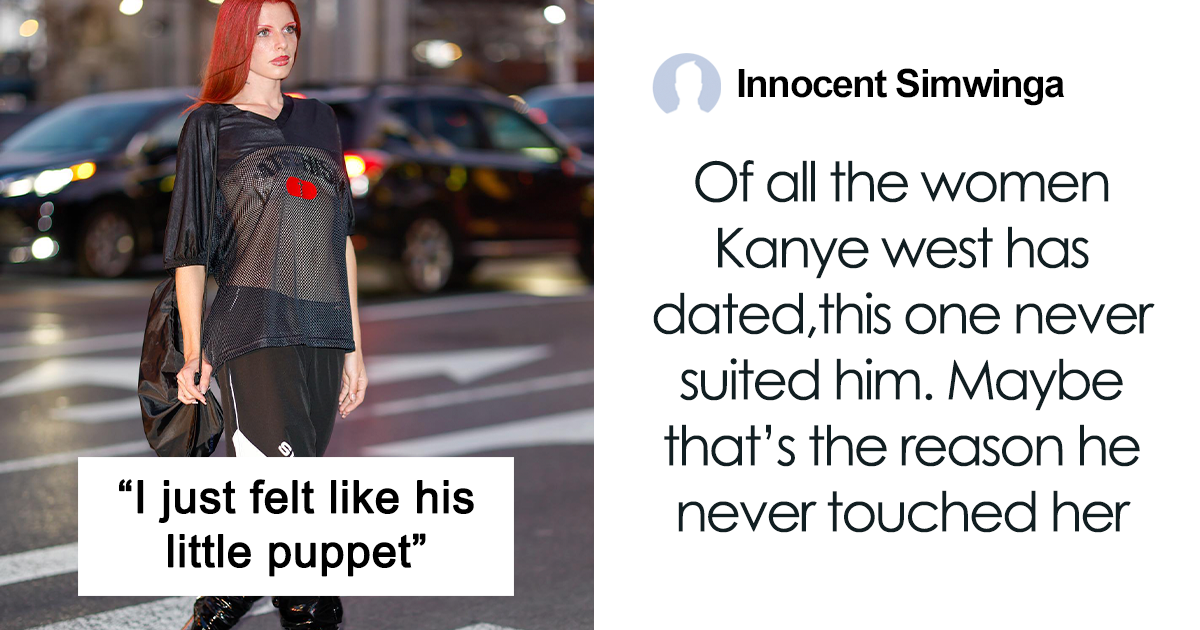
Editor’s note: This article is based on publicly reported interviews, Julia Fox’s memoir Down the Drain, and Fox’s own descriptions of her brief relationship with Kanye West, now legally known as Ye. Allegations and personal interpretations are attributed to Fox’s account where appropriate.
Julia Fox has never been the kind of celebrity who quietly enters a room, adjusts the curtains, and waits for someone to notice her. She arrives like a headline wearing eyeliner, leather, and a look that says, “Yes, I meant to do that.” But even for someone as bold, self-aware, and media-savvy as Fox, her short-lived relationship with Kanye West became a spectacle that she later described as uncomfortable, regrettable, and, in many ways, humiliating.
The romance moved fast enough to give gossip editors whiplash. Fox and West met on New Year’s Eve in Miami at the end of 2021. Within days, they were photographed together, styled together, written about together, and analyzed like a pop-culture emergency drill. To the public, it looked like a glittery celebrity rebound with couture boots. To Fox, looking back, it became something more complicated: a relationship that felt less like romance and more like a staged performance in which she did not fully control the script.
In her memoir Down the Drain and later interviews, Fox offered inside information about the whirlwind relationship, including how quickly it became public, how much styling and image-making surrounded it, and why she now says she regrets it. The result is not just another celebrity breakup story. It is a sharp little case study in fame, power, fashion, control, and what can happen when a private connection becomes public property before anyone has had time to ask, “Wait, are we actually dating, or is this a campaign?”
Who Is Julia Fox Beyond the Kanye West Headlines?
Before the world started attaching her name to Kanye West, Julia Fox had already built a strange, fascinating, and very Julia Fox-shaped career. She became widely known for her breakout role in the 2019 film Uncut Gems, where she starred opposite Adam Sandler and delivered the kind of performance that made viewers wonder whether Hollywood had discovered an actress or accidentally opened a portal to downtown New York.
Fox is also an artist, writer, fashion figure, model, mother, and memoirist. Her public image is chaotic in the best possible way: experimental outfits, unfiltered interviews, bleached brows, sharp humor, and a refusal to sand down her personality for mass consumption. In Down the Drain, she writes about far more than celebrity dating. The book covers her childhood, addiction, survival, motherhood, grief, sexuality, sex work, art, trauma, and ambition.
That context matters because Fox has repeatedly pushed back against being remembered as “Kanye West’s ex-girlfriend.” To her, the relationship was a small chapter in a much larger life. Unfortunately, celebrity culture loves reducing women to a famous man’s accessory, especially when there are paparazzi photos and designer handbags involved. Fox’s later comments show how frustrating that label became.
The Fast Timeline: From Miami Spark to Valentine’s Day Split
Fox and West’s relationship began around New Year’s Eve 2021, when they met in Miami. At the time, West was still heavily discussed in connection with his divorce from Kim Kardashian, while Kardashian’s relationship with Pete Davidson was also dominating entertainment news. In other words, the media environment was already a flaming fondue pot before Fox walked into it.
By early January 2022, Fox and West were in New York together. The relationship appeared to accelerate almost immediately. They attended the Broadway play Slave Play, went to dinner at Carbone, and appeared in a highly stylized feature for Interview magazine. Fox wrote at the time that the connection felt instant and that West’s energy was fun to be around. The piece included details about a photo shoot at dinner and a hotel suite filled with clothes.
At first glance, it sounded like a fantasy: a famous artist, a sudden romantic connection, a glamorous New York night, and a room full of designer fashion. It had all the ingredients of a modern celebrity fairy tale, though admittedly one with more paparazzi flashes and fewer woodland animals.
But the relationship ended quickly. By Valentine’s Day 2022, Fox’s representative confirmed that she and West had split. The romance had lasted only weeks, but its media footprint was enormous. Years later, Fox made it clear that the short timeline did not make the experience emotionally insignificant. In fact, she suggested the speed and intensity were part of what made it so overwhelming.
The “Cinderella Moment” That Later Looked Different
One of the most talked-about episodes in the relationship was the hotel suite full of clothes. In the early days, Fox described it as a surreal, dreamlike surprise. West had arranged racks of clothing for her after their date, and the moment became a symbol of the romance: extravagant, cinematic, and almost suspiciously ready for publication.
At the time, Fox framed it as glamorous. Later, the same moment was reinterpreted through a more complicated lens. A wardrobe can be a gift, but it can also be a signal. In celebrity relationships, styling often becomes language. Clothes say who belongs to whom, who is being introduced to which world, and who is shaping the image.
Fox has said that being styled by West and his team made her feel as if her public image was being managed. The outfits were striking, of course. No one involved was aiming for “casual errand run at Target.” But when the woman wearing the clothes later says the experience felt controlling, the story changes. Suddenly, the hotel suite looks less like a romantic comedy scene and more like a branding meeting with better boots.
Why Julia Fox Says the Relationship Felt Humiliating
Fox’s later comments about the relationship are blunt. She has said she regrets it, hated how it affected her image, and felt she was being used as a “pawn.” That word is important. A pawn is not the player. A pawn is moved.
According to Fox’s account, she did not want the relationship to become public so quickly. She has suggested that the public rollout happened before she was comfortable with it. She has also said she came to believe the romance was connected to West’s public dynamic with Kim Kardashian, making her feel as though she had been pulled into someone else’s emotional chessboard.
That is where the humiliation enters the story. It was not simply that a brief relationship ended. Most adults survive awkward dating choices; if embarrassment were fatal, half the planet would have disappeared after texting an ex at 1:17 a.m. The problem was scale. Fox’s relationship became global entertainment. Every outfit, dinner, quote, and photo was treated like evidence in a courtroom of gossip.
For Fox, the humiliation appears to come from realizing that the public narrative may not have matched the private reality. She was presented as a muse, girlfriend, style partner, and tabloid fascination. But afterward, she described feeling uncomfortable and used. That gap between image and experience is the real story.
The Alleged NDA and the Question of Control
One of the most revealing details Fox has discussed is the alleged request for her to sign a nondisclosure agreement. In celebrity circles, NDAs are common. They protect privacy, business interests, and sometimes messy personal behavior. But in a romantic situation, being asked to sign one can change the emotional temperature in the room very quickly.
Fox has said she did not sign an NDA. That detail matters because it reinforces one of the central themes of her public identity: she wants to speak for herself. Her memoir is built on radical candor. She does not write like someone asking permission to exist. She writes like someone clearing her throat before setting the table on fire.
The alleged NDA also adds to the broader conversation about control. If one person in a relationship has far more fame, money, staff, lawyers, stylists, and media influence, the balance can become uneven. Fox’s account suggests that she felt swept into a machine that moved faster than she could process. The relationship was brief, but the machinery around it was industrial strength.
Was It Romance, Rebound, or Publicity?
One of the big questions surrounding the Julia Fox and Kanye West relationship has always been whether it was a real romance or a publicity spectacle. The honest answer may be: it can be both, but not equally for both people.
Fox has said she initially thought there could be something real. That makes the story more human. It is easy to look back at the photos, the outfits, and the magazine feature and call the whole thing manufactured. But people can feel genuine excitement inside situations that are also being packaged for public consumption. A moment can be sincere and staged at the same time. Celebrity culture specializes in that weird emotional smoothie.
West, one of the most famous and controversial artists of his generation, has long used fashion, performance, publicity, and personal life as overlapping forms of expression. Fox, with her background in art and fashion, may have seemed like a natural match for that world. But according to her later reflections, the experience became less empowering than it first appeared.
That shift is important for readers who follow celebrity news. Public images are edited. Early comments are often made under pressure, excitement, or confusion. A person can describe something as magical in January and later decide it was unhealthy by October. That is not necessarily contradiction. Sometimes it is perspective arriving late, wearing sensible shoes.
Kim Kardashian’s Shadow Over the Relationship
No discussion of Fox and West’s relationship is complete without acknowledging the Kim Kardashian context. West and Kardashian’s marriage, separation, and divorce were major entertainment stories. When West appeared publicly with Fox, many observers immediately interpreted the relationship through that lens.
Fox later suggested that she felt used in connection with West’s feelings about Kardashian. She has said she believed she was being positioned as part of a larger message. Whether every detail of that interpretation is knowable from the outside is not the point. The point is that Fox experienced the relationship as something that was not fully about her.
That is a deeply uncomfortable position: to be visible everywhere and yet feel invisible inside the actual story. Fox was photographed, styled, discussed, and memed, but she later indicated that her own feelings were not centered. That contradiction sits at the heart of why the relationship became such a humiliating memory for her.
How Fashion Became Part of the Story
Julia Fox’s fashion transformation during the relationship was impossible to ignore. She and West appeared in coordinated, high-concept looks that drew attention from fashion media and social platforms. Her style became sharper, darker, and more theatrical. The “muse” narrative practically wrote itself.
But the muse label can be tricky. It sounds flattering until you ask who gets to be the artist. If a woman is constantly described as someone else’s inspiration, she risks being treated as material rather than a creator. Fox has always been visually inventive on her own, so the idea that she needed a powerful man to “create” her image was limiting.
In hindsight, the styling became part of Fox’s complaint about the relationship. She has described feeling controlled by the way she was dressed and presented. That does not mean every outfit was forced or that she lacked agency entirely. It means the public version of the relationship may have emphasized fantasy while hiding discomfort.
The Memoir Changed the Conversation
When Down the Drain was released, Fox gained a new kind of control over the narrative. Instead of being a supporting character in someone else’s tabloid arc, she became the author of her own story. The Kanye West chapter attracted attention, naturally, because celebrity gossip is a powerful magnet and the internet is made of metal. But the memoir also reminded readers that Fox’s life cannot be reduced to one famous relationship.
The book’s power lies in its refusal to be polished into a neat redemption tale. Fox writes about chaos, survival, bad decisions, abuse, motherhood, and ambition without asking readers to find her adorable. That honesty gives her comments about West more weight. She is not presenting herself as perfect. She is presenting herself as someone who has lived through spectacle and learned to name what it cost.
Why the Story Still Matters
The relationship between Julia Fox and Kanye West lasted only a few weeks, but people still talk about it because it reveals something bigger than celebrity dating. It shows how quickly a woman can become a symbol in someone else’s story. It shows how fashion can blur the line between self-expression and control. It shows how public attention can turn a confusing private experience into a permanent search result.
Fox’s reflections also connect to a wider cultural shift. Audiences are becoming more skeptical of glossy celebrity narratives. A hotel room full of clothes may still look glamorous, but now people also ask who arranged it, who photographed it, who benefited, and whether the person at the center actually felt good.
That skepticism is healthy. Fame is not always freedom. Sometimes fame is a room full of beautiful clothes with no clear exit.
Related Experiences: What Julia Fox’s Story Can Teach About Public Relationships, Image, and Self-Respect
Most people will never date a globally famous rapper, get dressed by a celebrity styling team, or find themselves trending because a hotel suite has suddenly become a luxury closet. Still, Julia Fox’s story feels oddly relatable because the emotional patterns are familiar. Many people have had relationships where the beginning felt exciting, flattering, and cinematic, only to realize later that the situation was moving too fast and serving someone else’s needs more than their own.
One common experience is the rush of being chosen by someone powerful, charismatic, or socially admired. At first, that attention can feel validating. The person may introduce you to new places, new people, and a version of yourself that seems more glamorous than your ordinary routine. Maybe they help pick your clothes. Maybe they post you online. Maybe they bring you into rooms you once only watched from the outside. It can feel like a door opening. The danger is that the door may lead into a room where you are admired mainly as decoration.
Another relatable part of Fox’s experience is the pressure to go public before you are ready. In normal life, that might mean being posted on Instagram too soon, introduced to family too quickly, or pulled into someone’s unresolved drama with an ex. In celebrity life, the same thing happens with paparazzi, magazine features, and millions of strangers commenting before breakfast. Different scale, same stomachache.
Fox’s story also highlights the importance of listening to discomfort early. Many people ignore small warning signs because the situation looks good from the outside. Friends may be impressed. Social media may approve. The photos may look incredible. But a relationship should not require you to abandon your own pace, voice, or instincts. If you feel like a prop in someone else’s performance, that feeling deserves attention.
There is also a lesson about gifts. Expensive gestures can be generous, but they can also create pressure. A beautiful wardrobe, a lavish trip, or a dramatic surprise may come with invisible expectations. The question is not whether the gift is impressive. The question is whether you still feel free after receiving it.
Finally, Fox’s experience is a reminder that embarrassment can become clarity. Looking back and saying, “I regret that” is not weakness. It is evidence that you have updated your standards. Everyone has a chapter they would revise with a red pen and a strong coffee. The goal is not to avoid every humiliating moment. The goal is to learn from it before it becomes your whole book.
Conclusion
Julia Fox’s inside information about her relationship with Kanye West turns a brief celebrity romance into a deeper conversation about power, publicity, and personal agency. What first looked like a glamorous whirlwind later appeared, through Fox’s own words, to be uncomfortable and humiliating. Her account suggests that the relationship became public too quickly, involved intense image-making, and left her feeling used in a larger drama that was not truly about her.
The most important part of the story is not the designer clothes, the famous restaurants, or the paparazzi photos. It is Fox’s effort to reclaim her identity after being flattened into a headline. She is not merely someone’s ex. She is an actress, writer, artist, mother, and provocateur with her own messy, vivid, unforgettable story. And if there is one lesson in the whole spectacle, it is this: never confuse being displayed with being valued.