Note: This article is based on verified public information from official show materials, ABC program details, entertainment reporting, contestant profiles, tournament tracking pages, and fan-statistical recaps available through June 2026.
If regular Jeopardy! is a brisk jog for your brain, Jeopardy! Masters is the Olympic final where everyone remembered to stretch, hydrate, and memorize nineteenth-century opera librettos before breakfast. Season 3 of Jeopardy! Masters brought the franchise’s elite primetime tournament back with a bigger field, a sharper competitive structure, and enough buzzer drama to make your living room feel like a sports bar for people who argue lovingly about Daily Double strategy.
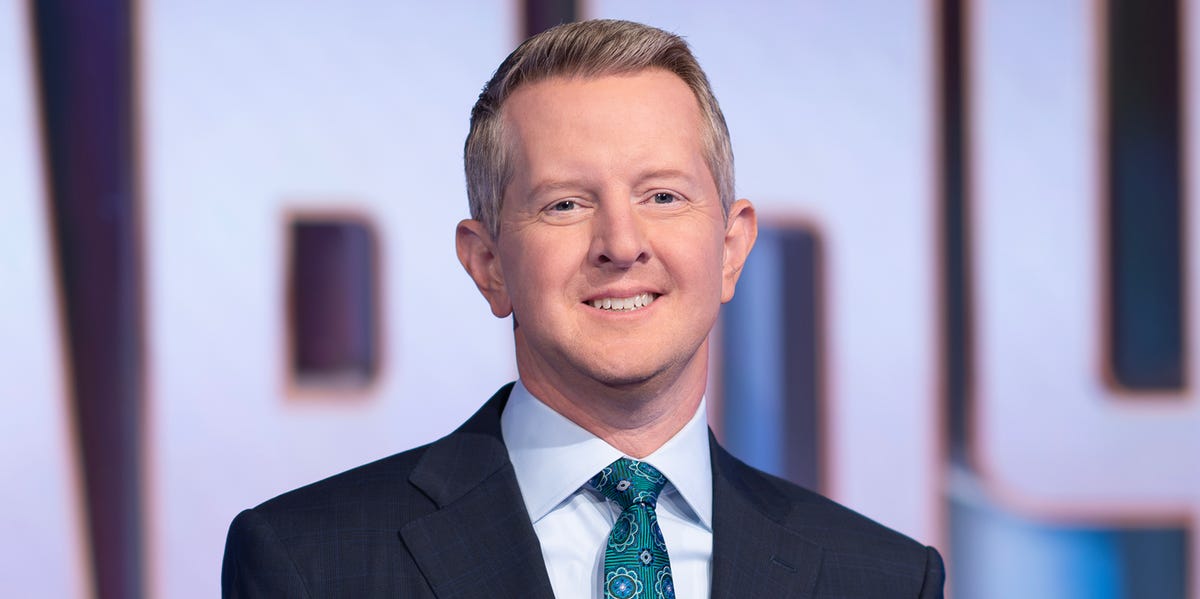
The third season, also known as the 2025 Jeopardy! Masters tournament, premiered on ABC on April 30, 2025, with Ken Jennings returning as host. The season expanded the format from six competitors to nine, giving fans a broader mix of modern super-champions, tournament veterans, and one very famous returning legend: Brad Rutter. The top prize was $500,000, the Trebek Trophy, and the title of 2025 Jeopardy! Masters Champion. In other words, not exactly a casual Tuesday night trivia league where the prize is a gift card and bragging rights over Gary from accounting.
What Is ‘Jeopardy! Masters’ Season 3?
Jeopardy! Masters is the franchise’s high-level tournament series that gathers some of the strongest players from recent Jeopardy! history. Instead of three new contestants competing in a single episode, the Masters format turns the show into a league-style event. Players return across multiple games, collect points, survive eliminations, and eventually battle through a finals format that rewards consistency as much as one spectacular Final Jeopardy wager.
Season 3 raised the stakes by expanding the field to nine contestants. That change mattered. With more players in the mix, the tournament became less predictable on paper, even if some viewers quickly developed strong opinions about who seemed unstoppable. The season unfolded across nine hour-long episodes, each containing two half-hour games, moving through knockouts, quarterfinals, semifinals, and a two-game final.
The format kept the familiar bones of Jeopardy!: Jeopardy round, Double Jeopardy, Daily Doubles, and Final Jeopardy. But the scoreboard had an extra layer. Before the finals, contestants earned match points: three points for winning a game, one point for finishing second, and zero points for third place. Those points determined who advanced and who went home. It made every second-place finish matter, which is both thrilling and mildly cruel, the way only great game shows can be.
When Did ‘Jeopardy! Masters’ Season 3 Premiere?
Jeopardy! Masters Season 3 premiered on Wednesday, April 30, 2025, on ABC. At the time of its run, episodes were also made available to stream through Hulu. The tournament continued through early June, with the finale airing on June 4, 2025.
The schedule was compact but intense. The early rounds began with knockout games, moved into quarterfinal matches in late May, and wrapped with semifinals and finals on June 4. For fans, that meant several weeks of primetime brain combat, sudden leaderboard shifts, and the kind of wagering discussions that make the phrase “cover bet” sound like a secret government program.
Who Hosted Season 3?
Ken Jennings hosted Jeopardy! Masters Season 3, continuing his role as the face of the franchise’s highest-level tournament play. Jennings is uniquely suited for this particular job because he is not just reading clues from a podium; he knows what it feels like to stand behind one. As a former 74-game champion and winner of Jeopardy! The Greatest of All Time, Jennings brings both authority and a sly understanding of the pressure contestants face.
That background gives the show a special texture. When a player makes an aggressive Daily Double wager, Jennings understands the calculation. When someone narrowly misses a clue, he knows the tiny heartbreak of knowing the answer two seconds too late. And when Brad Rutter walks back onto the Alex Trebek Stage, the host-contestant history adds a little extra sparkle.
The Season 3 Contestants: A Truly Stacked Field
The Season 3 lineup included nine major Jeopardy! names: Victoria Groce, Yogesh Raut, Brad Rutter, Neilesh Vinjamuri, Adriana Harmeyer, Isaac Hirsch, Matt Amodio, Roger Craig, and Juveria Zaheer. That is not a contestant list; that is a warning label.
Victoria Groce
Victoria Groce entered Season 3 as the reigning Jeopardy! Masters champion after winning Season 2. Longtime fans remembered her first big Jeopardy! moment in 2005, when she ended David Madden’s 19-game winning streak. Her return gave Season 3 a defending-champion storyline with real weight. Groce is calm, precise, and dangerous in the way a locked library door is dangerous: you know there is something powerful behind it.
Yogesh Raut
Yogesh Raut came into the season as the previous Masters runner-up and 2024 Tournament of Champions winner. His reputation was already enormous, but Season 3 made it even bigger. Raut’s combination of deep knowledge, buzzer timing, and strategic aggression turned him into the central force of the season. Fans debated his style, but nobody could seriously question the results.
Brad Rutter
Brad Rutter’s return was one of the season’s biggest headlines. As one of the most successful contestants in Jeopardy! history, Rutter brought legacy, nostalgia, and a fascinating question: could a titan from earlier eras still dominate against today’s modern, data-savvy champions? His appearance gave Season 3 a bridge between classic Jeopardy! greatness and the current ultra-competitive tournament ecosystem.
Matt Amodio
Matt Amodio, famous for his 38-game winning streak, returned as the 2025 Jeopardy! Invitational Tournament winner. His calm demeanor, broad knowledge base, and “What’s…” answering style made him one of the most recognizable modern champions. He entered the tournament with major fan interest and the kind of résumé that makes opponents pretend not to sweat.
Juveria Zaheer
Juveria Zaheer became one of Season 3’s most compelling stories. A psychiatrist from Canada and a fan favorite from earlier tournament appearances, she combined warmth with fierce competitiveness. Her path through the tournament showed that Masters success is not only about raw trivia recall; it is also about composure, timing, and being brave enough to swing when the board demands it.
Roger Craig
Roger Craig brought old-school tournament credibility and a reputation for powerful play. A former Tournament of Champions winner and once the holder of the single-game winnings record, Craig’s return added another layer of historical depth. His presence reminded fans that Jeopardy! excellence is not a one-generation sport.
Isaac Hirsch
Isaac Hirsch represented the newer wave of standout champions. A nine-game winner and Tournament of Champions finalist, Hirsch had already shown the ability to win under pressure. His mix of humor, speed, and competitive clarity made him one of the season’s most watchable players.
Adriana Harmeyer
Adriana Harmeyer entered as a 15-game champion and one of the most successful players from Season 40 of the syndicated show. Her regular-season dominance made her a natural fit for Masters, and her inclusion helped make Season 3 feel like a true meeting of recent heavyweights.
Neilesh Vinjamuri
Neilesh Vinjamuri arrived as the 2025 Tournament of Champions winner. Known for aggressive Daily Double wagering, he represented the modern, analytics-aware style of Jeopardy! play. His presence added volatility to the field because players who bet boldly can change a game faster than your uncle can shout the wrong answer from the couch.
How the Season 3 Format Worked
The tournament began with a knockout stage featuring all nine players. Over three episodes and six games, contestants collected match points, and the bottom three were eliminated. That structure immediately created tension. A single bad game did not necessarily destroy a player’s season, but repeated third-place finishes were deadly.
The quarterfinal round reduced the field to six players. Again, the contestants played six games across three episodes, with the bottom two eliminated. By this point, every clue felt more expensive. A Daily Double miss could ripple through the standings. A second-place finish could be a lifeline. A runaway win could feel like a player had just slammed a dictionary on the table and said, “Any questions?”
The semifinals featured four players across four games. Only three advanced to the finals, which meant one elite player had to leave just before the final stage. The finals then used a two-game total-point format among the three remaining contestants. That final structure is important because it rewards sustained performance across both games rather than one isolated win.
Who Won ‘Jeopardy! Masters’ Season 3?
Yogesh Raut won Jeopardy! Masters Season 3, taking home the $500,000 top prize and the Trebek Trophy. Juveria Zaheer finished second with $250,000, and Victoria Groce placed third with $150,000. Isaac Hirsch finished fourth, Matt Amodio fifth, Roger Craig sixth, Brad Rutter seventh, Adriana Harmeyer eighth, and Neilesh Vinjamuri ninth.
Raut’s victory was built on consistency, accuracy, and an ability to control games before they could become chaotic. One of the season’s defining early performances came when he posted a stunningly clean game against Victoria Groce and Brad Rutter, finishing with 24 correct responses and no incorrect responses. That kind of box score makes other contestants look at the buzzer like it personally betrayed them.
Still, the season was not a one-person story. Zaheer’s run to second place gave fans a powerful underdog-to-finalist arc, while Groce’s third-place finish reinforced her status as one of the strongest tournament players of the modern era. Isaac Hirsch’s fourth-place result also stood out, especially given the depth of the field.
Why Season 3 Felt Different
Season 3 felt bigger because it was bigger. Expanding to nine players gave the tournament a broader roster and created more opportunities for different matchups. It also made the early rounds more brutal. In a six-player field, viewers can quickly track everyone’s path. In a nine-player field, the leaderboard feels more like a playoff table, complete with bubble spots, tiebreakers, and fans doing mental math they did not sign up for.
The season also carried a noticeable tension between nostalgia and the modern game. Brad Rutter’s return invited comparisons between eras. Meanwhile, players like Raut, Vinjamuri, Hirsch, and Harmeyer reflected how contemporary Jeopardy! has become faster, more strategic, and more statistically examined. Today’s top contestants often study not just facts but wagering theory, board selection, buzzer rhythm, and category probability. Basically, they are playing chess while most of us are still proud we remembered that Oslo is in Norway.
The James Holzhauer Question
One of the biggest fan conversations surrounding Season 3 involved James Holzhauer’s absence. Holzhauer won the first season of Jeopardy! Masters and remains one of the most famous modern contestants thanks to his aggressive wagering and record-breaking regular-season play. His absence changed the flavor of the tournament.
Without Holzhauer, Season 3 lost one of its most theatrical personalities, but it gained a different kind of intrigue. The field had more room for new rivalries, and Raut’s dominance became a major storyline. Some fans missed Holzhauer’s showmanship; others enjoyed seeing the spotlight shift. Either way, his absence proved how much one contestant can shape the personality of a tournament even when he is not on the stage.
Where Fans Could Watch Season 3
During its original 2025 run, Jeopardy! Masters Season 3 aired on ABC and was available through Hulu streaming. Viewers looking for episodes after the original broadcast window generally needed to check current availability through ABC, Hulu, or official Jeopardy! viewing options, since streaming rights and episode libraries can change over time.
For future seasons, the safest fan move is simple: check official Jeopardy! channels, ABC listings, and streaming platforms close to premiere time. Game shows may be timeless, but streaming availability is a mischievous little gremlin wearing a licensing contract.
Why Fans Loved, Debated, and Occasionally Argued About Season 3
Jeopardy! Masters Season 3 gave fans plenty to discuss. The positives were obvious: a deeper field, high-level clue play, memorable performances, and a finale featuring three excellent competitors. For trivia fans, watching players of this caliber is like watching master chefs cook with ingredients you cannot pronounce but still want to eat.
At the same time, the season stirred debate. Some viewers felt the tournament became too predictable when certain players dominated. Others questioned scheduling choices, the density of tournament programming, or whether the expanded field made the show more exciting or more complicated. That debate is not necessarily bad. In fact, it shows that Jeopardy! still inspires passionate investment. Nobody complains this intensely about a show they do not care about.
What Season 3 Means for the Future of ‘Jeopardy! Masters’
Season 3 confirmed that Jeopardy! Masters is more than a novelty spinoff. It is becoming the franchise’s annual championship showcase, a place where the best players can return, develop rivalries, and build long-term legacies. The format now feels closer to a sports playoff than a standard game show tournament, and that may be exactly where the franchise wants to go.
The final three contestants from Season 3 also strengthened their cases as central figures in the modern Jeopardy! era. Raut’s win moved him into an even more elite tier. Zaheer’s runner-up finish raised her profile significantly. Groce remained a major force despite not repeating as champion. Together, they gave the season a final act worthy of the Masters name.
Fan Experience: Watching ‘Jeopardy! Masters’ Season 3 Like a True Trivia Nerd
Watching Jeopardy! Masters Season 3 was a different experience from watching regular episodes. With the syndicated show, you can casually tune in, make dinner, answer a few clues, and feel clever because you knew one Shakespeare category answer before the contestants did. Masters does not allow that kind of relaxed confidence. Masters looks directly at your ego, presses the buzzer, and says, “Not today.”
The best way to enjoy Season 3 was to treat it like a sporting event. Before each episode, fans could check the standings, note who needed points, and predict which matchups would create chaos. A contestant sitting near the bottom of the leaderboard could not simply play safely. They needed wins. That changed the emotional temperature of every Daily Double. A normal Daily Double is exciting; a Masters Daily Double with elimination pressure feels like a tiny academic skydiving trip.
Another enjoyable experience was watching with friends or family and assigning everyone a contestant to root for. Someone might pick Victoria Groce because they admire her calm precision. Someone else might choose Brad Rutter for nostalgia. Another person might back Juveria Zaheer because she brought such an appealing mix of intelligence and warmth. And then there is always the person who roots for Yogesh Raut because they enjoy watching the room slowly realize resistance may be futile.
Season 3 also rewarded viewers who paid attention to strategy rather than just correct responses. Board control mattered. Daily Double hunting mattered. Final Jeopardy wagering mattered. Sometimes the most interesting moment was not whether a contestant knew the clue, but whether they chose to risk enough to change the game. That is where Masters becomes fascinating: the contestants are not just answering trivia; they are managing probability, pressure, and timing in front of a national audience.
For fans at home, the season was also a reminder that Jeopardy! knowledge is wonderfully strange. One minute you are dealing with literature, the next you are in geography, then chemistry, then Broadway, then a category title pun that clearly made the writers giggle. Watching elite contestants handle that range can be inspiring. It can also make you want to buy a stack of flashcards, download a world capitals app, and finally learn the difference between Monet and Manet so you can stop guessing “the water-lily guy” with suspicious confidence.
The emotional rhythm of the season was part of the fun. Early episodes brought curiosity: How would the expanded lineup work? Could Rutter return to dominant form? Would Groce defend the crown? Would newer champions adjust quickly? By the middle rounds, the conversations shifted to standings and survival. By the finale, every clue felt loaded. That slow build gave Season 3 a real tournament arc, which is exactly what primetime Jeopardy! needs to justify its bigger stage.
Ultimately, the best fan experience came from appreciating both the competition and the community around it. Jeopardy! fans love details. They discuss buzzer percentages, wagering choices, category difficulty, clue wording, and whether a contestant’s anecdote was charming, awkward, or secretly iconic. Season 3 gave that community a feast. It had elite play, surprising exits, a major champion, a beloved finalist, and enough debate to keep message boards, group chats, and living-room analysts busy long after the final music ended.
Conclusion
Jeopardy! Masters Season 3 delivered a larger, sharper, and more ambitious version of the franchise’s elite tournament. With nine contestants, a layered match-points format, and a finals showdown that crowned Yogesh Raut as champion, the season gave fans plenty to celebrate and plenty to debate. Ken Jennings remained a steady host, Brad Rutter’s return added historic flavor, and players like Juveria Zaheer, Victoria Groce, Isaac Hirsch, and Matt Amodio helped make the field feel genuinely prestigious.
For casual viewers, Season 3 was a fun primetime event. For serious fans, it was a strategic chess match with Daily Doubles. For everyone else, it was a humbling reminder that somewhere out there, a person can identify a French poet, a moon of Saturn, and a nineteenth-century treaty before most of us find the remote. And honestly, that is why Jeopardy! still works. It celebrates knowledge, speed, nerve, and the delightful human habit of shouting answers at the TV even when nobody asked us.