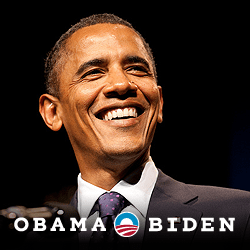
President Barack Obama’s victory created one of those classic Wall Street moments when investors wanted certainty, got partial certainty, and immediately started worrying about the next problem. In other words, democracy worked, the confetti fell, and the markets reached for the antacid.
The economic outlook after Obama’s win was not simply a story about one man, one party, or one election night speech. It was a story about a country still healing from the Great Recession, a stock market that had recovered faster than many households, a labor market improving but not fully healthy, and a federal government staring at a budget showdown known as the “fiscal cliff.” For investors, the real question was not, “Did Obama win?” It was, “What happens next to taxes, spending, interest rates, health care, energy, housing, and corporate profits?”
This article takes a practical, plain-English look at the investment and economic outlook after President Obama’s victory, focusing on the risks, opportunities, policy signals, and lessons that mattered most for long-term investors.
The Economic Backdrop: A Recovery Still Wearing a Bandage
When Obama won re-election in 2012, the U.S. economy was no longer in free fall. That was the good news. The bad news was that the recovery still felt like a car that had made it out of the ditch but was driving with one spare tire, a cracked windshield, and a suspicious rattle under the hood.
The economy had been through a historic shock. The financial crisis of 2008 damaged banks, crushed housing wealth, froze credit markets, and sent unemployment sharply higher. By 2012, real GDP was growing again, but not at a roaring pace. The Bureau of Economic Analysis reported that real GDP increased 2.2% in 2012, an improvement from the previous year but hardly a champagne-spraying boom.
The labor market also showed progress, but the unemployment rate remained elevated compared with pre-crisis levels. Job growth had resumed, consumers were slowly repairing their balance sheets, and corporate America had become leaner, more profitable, and more careful. That combination mattered for investors because stock prices often recover before everyday confidence does. Main Street can still feel gloomy while Wall Street is already pricing in better earnings six to twelve months ahead.
Why Investors Focused Immediately on the Fiscal Cliff
The phrase “fiscal cliff” sounds like something a cartoon coyote discovers two seconds too late, but it described a serious policy problem. At the end of 2012, a combination of expiring tax cuts and automatic spending cuts threatened to hit the economy at once. If Congress and the White House failed to reach a deal, the economy risked a sharp fiscal drag.
For investors, this was the central post-election issue. Obama’s victory meant continuity in the White House, but it did not remove gridlock. Republicans still had major influence in Congress, and both sides had very different views on taxes, spending, entitlement reform, and deficit reduction.
What the Fiscal Cliff Meant for Markets
The market’s concern was simple: if taxes rose too quickly and federal spending fell too sharply, consumers might spend less, businesses might delay investment, and economic growth could stall. Stocks generally dislike sudden uncertainty, and this was uncertainty wearing tap shoes.
Investors were especially focused on dividend taxes, capital gains taxes, estate taxes, defense spending, and government programs tied to health care and infrastructure. A messy fiscal-cliff outcome could pressure corporate earnings and reduce investor appetite for risk. A compromise, even an imperfect one, could give markets enough clarity to move forward.
Monetary Policy: The Federal Reserve Was Still the Main Character
While Washington argued over taxes and spending, the Federal Reserve remained one of the most powerful forces in the investment outlook. Interest rates were extremely low, and the Fed was using unconventional tools, including large-scale bond purchases, to support the economy.
In September 2012, the Fed announced additional purchases of agency mortgage-backed securities at a pace of about $40 billion per month. This policy supported mortgage markets, lowered borrowing costs, and helped keep financial conditions loose. For investors, this mattered because low rates often push money toward stocks, real estate, corporate bonds, and other risk assets.
Low Rates Changed the Investment Math
When savings accounts and Treasury yields offer tiny returns, investors start looking elsewhere. Dividend-paying stocks become more attractive. Real estate investment trusts get attention. Corporate bonds draw inflows. Growth stocks can command higher valuations because future earnings are discounted at lower rates.
But there was a catch. Low interest rates can support asset prices, but they can also tempt investors to take risks they do not fully understand. In the post-Obama-victory environment, smart investors needed to balance optimism with discipline. Chasing yield without understanding risk was like ordering the spiciest thing on the menu because it was discounted. Exciting? Yes. Regrettable? Also possible.
Stock Market Outlook: Volatility First, Opportunity Later
The stock market reaction after Obama’s victory was uneasy. Investors worried about the fiscal cliff, tax policy, and the possibility of continued political gridlock. But short-term market reactions after elections can be misleading. The first few trading days are often noisy, emotional, and packed with people pretending their political opinions are investment models.
Longer term, the key drivers were earnings, interest rates, consumer spending, housing stabilization, and global demand. U.S. corporations had already spent years cutting costs and rebuilding margins. Many companies entered Obama’s second term with strong balance sheets, high cash levels, and global revenue streams.
Sectors That Deserved Attention
Several sectors stood out in the post-election investment outlook:
- Health care: Obama’s victory increased confidence that the Affordable Care Act would continue moving forward. Hospitals, insurers, medical technology companies, and Medicaid-related businesses faced both opportunity and regulatory complexity.
- Housing: Low mortgage rates and improving affordability supported a housing recovery. Homebuilders, building-material suppliers, banks, and consumer-durable companies could benefit if housing continued to heal.
- Technology: The tech sector remained a long-term growth engine, supported by cloud computing, mobile adoption, enterprise software, and digital advertising.
- Financials: Banks were recovering, but Dodd-Frank regulation and low interest rates created a mixed outlook. Stronger balance sheets helped, while compliance costs and narrow lending margins remained headwinds.
- Energy: Domestic oil and gas production was rising, creating opportunities in energy infrastructure, services, and transportation, even as environmental policy created uncertainty for some fossil-fuel industries.
Taxes and Capital Gains: The Investor’s Fine Print
One of the biggest investor concerns after Obama’s victory was tax policy. High-income investors expected higher tax rates on capital gains, dividends, and ordinary income. That did not mean investing suddenly stopped making sense. It meant after-tax returns mattered more.
Investors needed to think carefully about asset location, tax-loss harvesting, retirement accounts, municipal bonds, and long-term holding periods. A strong investment strategy is not just about what you earn; it is about what you keep after taxes, fees, inflation, and the occasional emotional decision made after reading scary headlines at midnight.
Tax-Aware Investing Became More Important
Tax-aware investing does not mean letting taxes control every decision. It means avoiding unnecessary tax mistakes. For example, long-term investors might prefer broad index funds with low turnover. Income-focused investors might compare municipal bonds with taxable bonds on an after-tax basis. Business owners might review retirement plan contributions. Families might revisit estate planning and charitable giving strategies.
The practical takeaway was clear: Obama’s victory did not end investment opportunity, but it made planning more valuable.
Health Care and the Affordable Care Act: Policy Becomes Market Reality
Obama’s re-election gave the Affordable Care Act a clearer path forward. For investors, this was not just a political headline; it was a sector-wide business event. The law affected insurance coverage, hospital reimbursements, Medicaid expansion, medical-device rules, and the long-term structure of U.S. health care spending.
Hospitals had reason to expect fewer uninsured patients over time, which could reduce uncompensated care. Insurers faced new rules but also new customers. Pharmaceutical and medical-device companies watched closely for changes in demand, pricing pressure, and regulatory costs.
The health care sector was not a simple “buy everything” story. It was a “read the details before you buy the ticker symbol” story. Companies with scale, strong balance sheets, and the ability to adapt to reimbursement changes were better positioned than firms relying on one fragile business model.
Dodd-Frank and Financial Regulation: Banks in a New Era
The post-victory outlook also included continued implementation of the Dodd-Frank Act. The law was designed to reduce systemic risk, increase oversight, and prevent another financial crisis. For large banks, that meant more capital requirements, stress tests, compliance costs, and limits on certain risk-taking activities.
From an investor perspective, regulation created both safety and friction. Better-capitalized banks were less likely to collapse, which helped long-term financial stability. But stricter rules could limit returns on equity and slow certain profit engines. The smartest view was balanced: regulation was neither a magic shield nor a permanent curse. It was a new operating environment.
Housing: The Quiet Engine of Recovery
Housing was one of the most important parts of the economic outlook after Obama’s victory. The crash in home prices had damaged household wealth and confidence. By 2012, housing was beginning to show signs of stabilization in many markets.
Low mortgage rates helped buyers. Falling inventories supported prices. Construction activity began to recover from extremely depressed levels. A healthier housing market could boost consumer confidence, support local tax revenues, create construction jobs, and lift demand for furniture, appliances, flooring, paint, and home improvement products.
For investors, housing recovery did not only mean buying homebuilder stocks. It also affected banks, mortgage lenders, retailers, materials companies, railroads, and even local economies in states hit hard by the crash.
Global Risks: Europe, China, and the Strong Dollar Question
The U.S. outlook after Obama’s victory could not be viewed in isolation. Europe was still dealing with debt problems, banking stress, and weak growth. China’s economy was slowing from its earlier breakneck pace. Global demand mattered for U.S. exporters, commodity prices, multinational earnings, and investor sentiment.
A stronger dollar could help U.S. consumers by making imports cheaper, but it could hurt multinational companies when foreign earnings were translated back into dollars. A weaker global economy could pressure industrials, materials, and energy companies. At the same time, the U.S. looked relatively attractive compared with many developed markets because its banking system was healthier, its housing market was stabilizing, and its central bank remained highly supportive.
What Smart Investors Could Do After Obama’s Victory
The best investment response to an election is rarely panic. It is usually a portfolio review. Elections matter, but they are only one input among many. Corporate profits, interest rates, valuations, productivity, inflation, consumer behavior, and global conditions also matter.
Practical Portfolio Moves
Investors could consider several sensible steps:
- Stay diversified: Avoid betting the entire portfolio on one political outcome, sector, or forecast.
- Review taxes: Understand how dividend, capital gains, and income-tax changes could affect after-tax returns.
- Watch interest-rate exposure: Low rates supported bonds, but long-duration bonds carried risk if rates eventually rose.
- Focus on quality: Companies with strong cash flow, manageable debt, and pricing power were better positioned for uncertainty.
- Do not confuse headlines with strategy: A scary headline is not an asset-allocation plan.
Economic Outlook: Slow Growth, Low Rates, and Policy Drama
The broad economic outlook after President Obama’s victory could be summarized in three words: slow, supported, and political. Growth was slow but positive. The Federal Reserve was supportive. Washington politics remained a major source of drama.
Consumers were healing. Banks were stronger. Housing was improving. Corporate America was profitable. But unemployment remained too high, wage growth was uneven, and fiscal policy uncertainty created real risks. This was not an economy ready to sprint; it was an economy trying to build endurance.
For long-term investors, that environment favored patience, selectivity, and realistic expectations. The post-election market did not require blind optimism, but it also did not justify hiding all your money under the mattress, especially since mattresses do not pay dividends and are terrible at compounding wealth.
Experiences and Lessons From the Post-Obama Victory Investment Climate
One of the most useful experiences from the period after Obama’s victory is that markets often dislike uncertainty more than they dislike a specific political outcome. Many investors entered the election season with strong opinions. Some believed an Obama victory would hurt business confidence. Others believed continuity would support recovery. In reality, the market cared most about whether policymakers could avoid a self-inflicted economic wound through the fiscal cliff.
A practical investor watching this period learned that political emotion can be expensive. Selling a diversified portfolio simply because your preferred candidate lost can turn a temporary mood into a permanent financial mistake. The same is true in reverse: buying aggressively just because your preferred candidate won can lead to overconfidence. Markets are not campaign rallies. They do not hand out returns based on applause volume.
Another important experience was the value of understanding policy transmission. Obama’s victory did not automatically make health care stocks rise or bank stocks fall. The real issue was how specific policies affected revenue, costs, regulation, and investor expectations. The Affordable Care Act created potential new demand for hospitals and insurers, but also introduced rules and margin pressures. Dodd-Frank made the financial system safer in some ways, but it also changed profitability for banks. Federal Reserve policy supported housing and risk assets, but it also made traditional income investing more difficult.
Investors who did well in this environment tended to avoid simple slogans. They asked better questions: Which companies benefit from more insured patients? Which banks can earn strong returns despite regulation? Which homebuilders have land in recovering markets? Which dividend stocks can grow payouts rather than merely offer a tempting yield? Which bonds are vulnerable if rates rise later?
The period also taught patience. The economy did not recover evenly. Some households saw job opportunities improve, while others struggled with stagnant wages or underwater mortgages. Some regions recovered quickly, while others lagged. Investors had to accept that macroeconomic recovery is not a light switch. It is more like reheating leftovers in a microwave: parts get hot quickly, parts stay cold, and you should probably stir before making a decision.
Another lesson involved the relationship between the stock market and the real economy. Stocks can rise even when many people still feel financial pain. That does not mean the market is “fake.” It means investors price future earnings, future policy, and future liquidity. In 2012, companies had already improved margins, reduced costs, and benefited from low interest rates. Households, meanwhile, were still repairing balance sheets. Understanding that difference helped investors avoid confusion.
Finally, the post-Obama victory period reminded investors that the best strategy is usually built before the drama begins. A well-diversified portfolio, a cash reserve, a tax plan, and a long-term allocation can survive election cycles better than a portfolio rebuilt every time cable news changes its background music. The smartest investors did not ignore politics, but they refused to let politics become their entire investment process.
The experience remains useful today. Elections matter. Policy matters. Taxes, regulation, deficits, health care, energy, and the Federal Reserve all matter. But successful investing requires turning big public events into calm private decisions. After Obama’s victory, the investors with the clearest heads were not the loudest people in the room. They were the ones who understood that uncertainty is normal, discipline is rare, and compounding rewards patience more often than panic.
Conclusion
The investment and economic outlook after President Obama’s victory was shaped by recovery, risk, and policy negotiation. The U.S. economy was improving, but it was not fully healed. The Federal Reserve remained highly supportive, but low rates created both opportunity and distortion. The fiscal cliff represented a real threat, while sectors such as health care, housing, technology, and selected financials offered potential for investors willing to study the details.
The central lesson is timeless: elections can move markets, but they do not replace investment discipline. A president can influence the economic environment, but long-term returns still depend on earnings, valuation, innovation, productivity, and investor behavior. After Obama’s victory, the best outlook was neither doom nor euphoria. It was cautious optimism with a calculator, a diversified portfolio, and perhaps a small sense of humor.
Note: This article is written for general educational and editorial purposes. It does not provide personal financial advice, investment recommendations, or tax guidance.