Some comics make you laugh. Some make you stare quietly at the wall like you just received emotional damage from a drawing with tiny eyes. Xibang’s comics somehow do both. In the collection titled “I Often Draw Stuff About How Short And Important Life Is”: 24 New Comics By Xibang, the Singapore-based artist returns with the kind of webcomics that look simple at first glance but leave a surprisingly large footprint on your heart.
Xibang, also known online through the See Bang universe, has built a recognizable style around humor, tenderness, animals, family life, mortality, and the weirdly poetic chaos of being alive. His comics are not loud. They do not need explosions, capes, or a villain monologuing from a rooftop. Instead, they often begin with an everyday situationa pet, a parent, a child, a quiet thought, a little jokeand then gently turn the emotional dial until the reader is laughing, sighing, or blinking suspiciously fast.
That is the magic of Xibang comics: they understand that life is short, absurd, sweet, unfair, ridiculous, and important all at once. Basically, they are the emotional equivalent of finding a fortune cookie that says, “Call your mom, pet your dog, and maybe stop doomscrolling.”
Who Is Xibang?
Xibang is a comic artist from Singapore who has been described as a full-time dad and part-time comic artist. That detail matters because his work often feels shaped by the perspective of someone who has stared at ordinary life long enough to notice how extraordinary it is. Parenthood, pets, aging, love, death, social awkwardness, and tiny daily misunderstandings all become material for his panels.
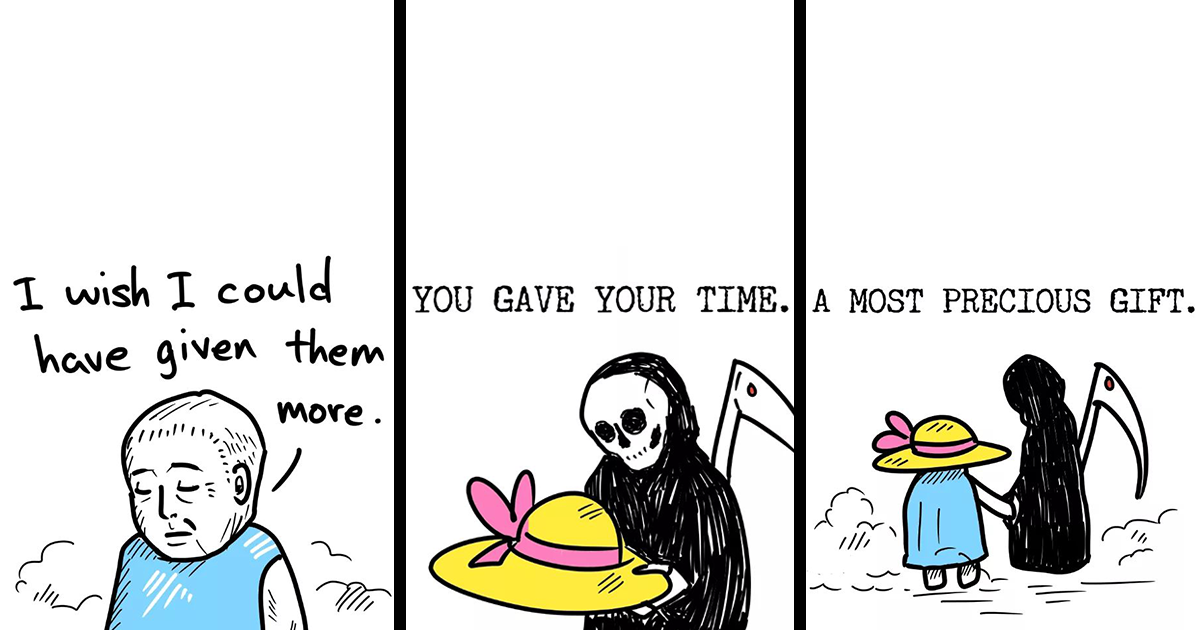
His comics gained wider attention online through emotionally sharp strips such as “Death and the Dog,” a short comic that became memorable because it treated death not only as an ending, but as a strangely gentle character. Instead of turning mortality into something cold and distant, Xibang often gives it a face, a dry sense of humor, and occasionally the emotional timing of a professional heart thief.
Across his work, the artwork is usually clean, accessible, and expressive. Characters are not overloaded with detail, which gives the jokes and feelings room to breathe. This is important. When a comic is about grief, love, or the panic of being human, too much visual noise can get in the way. Xibang keeps things simple enough for readers to enter quickly, then uses that simplicity to land surprisingly deep ideas.
Why These 24 New Comics Hit So Hard
The latest selection of 24 comics works because it understands one of the oldest rules of storytelling: small things become powerful when they reveal big truths. A short strip about a pet can become a meditation on loyalty. A joke about parenting can become a reminder that children turn adults into emotional philosophers with snack bags. A casual conversation with Death can become a surprisingly comforting thought about what it means to have lived well.
Xibang’s comics often begin with a familiar emotional setup. You think you know where the strip is going. Then comes the turn: a punchline, a soft twist, or a quiet final panel that changes the meaning of everything before it. It is not the kind of twist that shouts, “Surprise!” It is more like a small hand tapping your shoulder and whispering, “Hey, remember that you are alive.” Rude, but effective.
Humor With a Soft Landing
One reason Xibang’s comics are so shareable is that the humor rarely feels cruel. Many modern internet jokes rely on sarcasm, embarrassment, or total emotional collapse with a funny caption. Xibang can be dark, but his darkness usually comes with warmth. Death may appear, but Death is often less of a monster and more of a strange coworker who has seen too much and still has manners.
This balance gives readers permission to laugh at serious things without feeling like the seriousness has been dismissed. The jokes do not erase sadness. They make room for it. That is why his comics can move from funny to sentimental without feeling manipulative. The humor opens the door; the emotion walks in wearing socks so you do not hear it coming.
Mortality Without the Doom
Many artists explore mortality, but Xibang’s approach is distinct because it is not obsessed with despair. His work often suggests that thinking about life’s brevity can make ordinary moments brighter. A pet sleeping beside you, a child asking a strange question, a quiet morning coffee, a silly misunderstandingthese moments matter precisely because they do not last forever.
That idea sits at the center of the title. Xibang’s interest in how short and important life is does not turn his comics into lectures. Nobody wants a webcomic that feels like a motivational poster trapped in a philosophy class. Instead, he uses lightness. He lets a goofy drawing carry a serious feeling, which is why the emotional impact can sneak up on readers.
The Main Themes in Xibang’s New Comics
The 24 new comics continue several themes that longtime fans will recognize. These themes are broad enough to feel universal but specific enough to feel personal. That combination is a major reason his work connects with readers across different cultures, ages, and life experiences.
1. Life Is Short, So Pay Attention
Xibang often returns to the idea that time is limited. But rather than turning that into panic, his comics frame it as an invitation. Look closer. Be kinder. Notice the little rituals. Appreciate the people and animals who make life less ridiculousor at least ridiculous in a better way.
The best strips in this style do not need dramatic events. Sometimes the emotional weight comes from recognizing a simple truth: we spend so much time waiting for life to become meaningful that we miss the meaningful parts already happening in the corner of the room, probably next to a cat knocking something off a table.
2. Pets Are Tiny Emotional Landmines
Animals appear frequently in Xibang’s comics, especially cats and dogs. That makes sense because pets are excellent comic characters. They are dramatic, loyal, weird, selfish, affectionate, and frequently convinced that furniture belongs to them. In Xibang’s hands, pets also become symbols of unconditional love and inevitable goodbye.
His animal comics work because they capture both the comedy and heartbreak of loving a creature with a shorter lifespan. A dog’s sincerity can become hilarious in one panel and devastating in the next. A cat’s indifference can be funny until the comic reveals that even aloof love is still love. Xibang understands that pet owners are basically people who voluntarily install future grief in their homes because the cuddles are worth it.
3. Parenthood Changes the Emotional Weather
Parenthood is another major influence in Xibang’s creative world. Becoming a parent has a way of making time feel louder. Days can be long, nights can be longer, and years somehow vanish between one school shoe and the next. Xibang’s comics often reflect that strange tension: parenting is exhausting, funny, terrifying, and meaningful in a way that resists clean explanation.
Rather than presenting parenthood as perfect, his comics lean into the messy tenderness of it. Children ask odd questions. Parents become tired experts in improvisation. Love shows up not as grand speeches, but as snacks packed, monsters checked under beds, and the quiet hope that you are doing enough.
4. Death as a Character, Not Just an Ending
One of Xibang’s most memorable creative choices is the recurring use of Death as a character. This is not new in literature or comics, but his version often feels disarmingly gentle. By personifying death, Xibang makes an intimidating subject easier to approach. Readers can look at mortality sideways, through humor and image, instead of being forced to stare directly into the existential sun. Wear sunscreen for the soul.
When Death appears in a Xibang comic, the result is not always tragic. Sometimes it is funny. Sometimes it is comforting. Sometimes it is both, which is a very rude but impressive emotional trick. This approach helps explain why his comics are often described as wholesome even when they deal with dark subjects.
Why Simple Art Can Carry Big Feelings
Xibang’s visual style is effective because it understands economy. In comics, every line matters. A raised eyebrow, a tiny pause, or a silent final panel can do more than a paragraph of explanation. The simplicity invites readers to project their own feelings into the scene.
This is one of the strengths of visual storytelling. Comics combine image, text, timing, and empty space. The reader does not simply receive the story; the reader completes it. The space between panels becomes a place where emotion happens. Xibang uses this beautifully. He does not over-explain the feeling. He sets up the moment, leaves just enough room, and lets the reader walk into the emotional trap like a cartoon character following a pie smell.
Why Readers Love Xibang’s Comics
Readers connect with Xibang because his comics feel honest without being heavy-handed. They acknowledge that life can be painful, but they also insist that it can be funny, tender, and deeply weird. That mixture is close to real life. Most people do not experience emotions in tidy categories. We laugh at funerals, cry during commercials, and feel genuine affection for fictional skeletons if they are written well enough.
Xibang’s comics also work well online because they are short, readable, and emotionally complete. In a crowded feed, a comic has only a few seconds to earn attention. His panels do that quickly, but they also reward a slower read. The best ones stay with you after you scroll away. They are snack-sized stories with full-meal feelings.
SEO Analysis: Why This Topic Performs Well Online
From an SEO perspective, the title “I Often Draw Stuff About How Short And Important Life Is”: 24 New Comics By Xibang has several strong ingredients. It includes the artist’s name, a clear content format, an emotional hook, and a number. Readers know what they are getting: 24 new comics. Search engines also understand the topic quickly because the title includes relevant terms such as “comics,” “Xibang,” and “life.”
Related search intent is likely driven by people looking for Xibang comics, wholesome comics, dark humor comics, relatable webcomics, comics about life and death, and funny sentimental comics. The emotional quote in the title also adds personality, making it more clickable than a plain headline like “New Comics by Xibang.” That headline would be accurate, yes, but it has the flavor profile of unsalted cardboard.
The topic also benefits from evergreen appeal. Comics about life, death, pets, and family do not expire quickly. A news story may lose relevance in a week, but a comic about loving your dog too much is basically internet oxygen. This makes Xibang’s work valuable for long-term search traffic and social sharing.
What Makes Xibang Different From Other Webcomic Artists?
The webcomic world is full of talented artists, from absurd gag creators to deeply personal autobiographical cartoonists. Xibang stands out because he blends several tones that are difficult to balance: cute, dark, sentimental, and funny. Too much cuteness can become sugary. Too much darkness can become exhausting. Too much sentiment can feel forced. Too much humor can flatten the emotion. Xibang’s best comics keep all four elements in conversation.
His work also feels unusually patient for internet art. Even when the comic is short, it often contains a pause. That pause matters. It gives the reader time to feel the shift between joke and meaning. In an online culture that constantly demands faster reactions, Xibang’s comics quietly say, “Slow down for three panels. Your existential crisis can wait until the punchline.”
Experiences Related to Xibang’s Comics and the Feeling of Life Being Short
Reading Xibang’s comics can feel like opening a small window in a noisy room. You may arrive expecting a quick laugh, but then one panel reminds you of your childhood dog, your parents getting older, your kid asking questions you are not emotionally prepared to answer, or the way ordinary mornings become precious only after they are gone. That is the experience many readers have with comics like these: the art is simple, but the emotional memory it unlocks is not.
There is something especially powerful about encountering a comic about mortality during an ordinary day. Maybe you are scrolling during lunch. Maybe you are waiting for coffee. Maybe you are avoiding a task with the dedication of a professional procrastination athlete. Then a short comic appears, and suddenly you are thinking about how fast time moves. A tiny drawing can interrupt the autopilot of daily life.
That interruption is useful. Most of us know life is short, but we do not live with that knowledge at the front of our minds. We push it aside because groceries need buying, emails need answering, and someone has to figure out why the Wi-Fi is acting like a haunted Victorian child. Xibang’s comics bring the thought back gently. They do not shout, “Change your life immediately!” They simply place a small emotional mirror in front of you.
For pet owners, the experience can be even stronger. A comic about a dog meeting Death or a cat showing affection in its own strange way can feel personal because pets teach people about love in concentrated form. They live beside us, depend on us, annoy us, comfort us, and leave too soon. Xibang’s animal comics understand that loving a pet is both silly and sacred. One minute you are laughing because a cat is acting like a tiny landlord; the next, you are remembering that the little creature has become part of your emotional architecture.
Parents may also find a familiar ache in Xibang’s work. Parenthood makes time visible. Children grow in ways that are measurable: shoes, height marks, school photos, new words, new independence. A comic about a child can remind readers that the exhausting stage they are in will not last forever. That is comforting on hard days and heartbreaking on good ones. Xibang captures that contradiction well. He knows that love often feels like wanting time to move forward and stop completely at the same time.
Even readers who are not parents or pet owners can relate to the broader experience. Everyone has moments they wish they had noticed more carefully. Everyone has people they should text back. Everyone has memories that seem small until they suddenly become important. Xibang’s comics turn those feelings into images that are easy to understand and difficult to forget.
The best experience these comics offer is not sadness, though sadness is sometimes part of it. The real gift is attention. They remind readers to notice life while it is happening. Laugh at the joke. Hug the dog. Call the friend. Save the drawing. Take the photo. Say the kind thing now, not later. Later is a useful word, but it is also very sneaky.
That is why “I Often Draw Stuff About How Short And Important Life Is”: 24 New Comics By Xibang is more than a collection of amusing webcomics. It is a compact reminder that humor and meaning are not opposites. Sometimes the funniest drawings are funny because they are true, and sometimes the truest drawings need humor so we can bear to look at them.
Conclusion
Xibang’s 24 new comics continue to prove that webcomics can be small in format and huge in feeling. With clean artwork, gentle humor, emotional timing, and recurring themes of mortality, parenthood, pets, and everyday life, Xibang creates comics that are easy to read but hard to shake off.
The title says it all: life is short, and life is important. Xibang does not treat that idea as a gloomy warning. He treats it as creative fuel. His comics encourage readers to laugh at the absurdity of being alive while also appreciating the tenderness hidden in ordinary days. In a digital world full of noise, that kind of quiet emotional clarity is rareand very much worth sharing.