Editorial note: This first-person feature is designed to accompany an original 30-image gallery. Pair each numbered section with its matching artwork before publication.
Animals are everywhere in human life. They sleep at the foot of our beds, appear on cereal boxes, get turned into mascots, become dinner, cross highways at the worst possible moment, and somehow manage to judge us without saying a single word. We call them family, food, pests, symbols, workers, wildlife, and “the reason I am late again.”
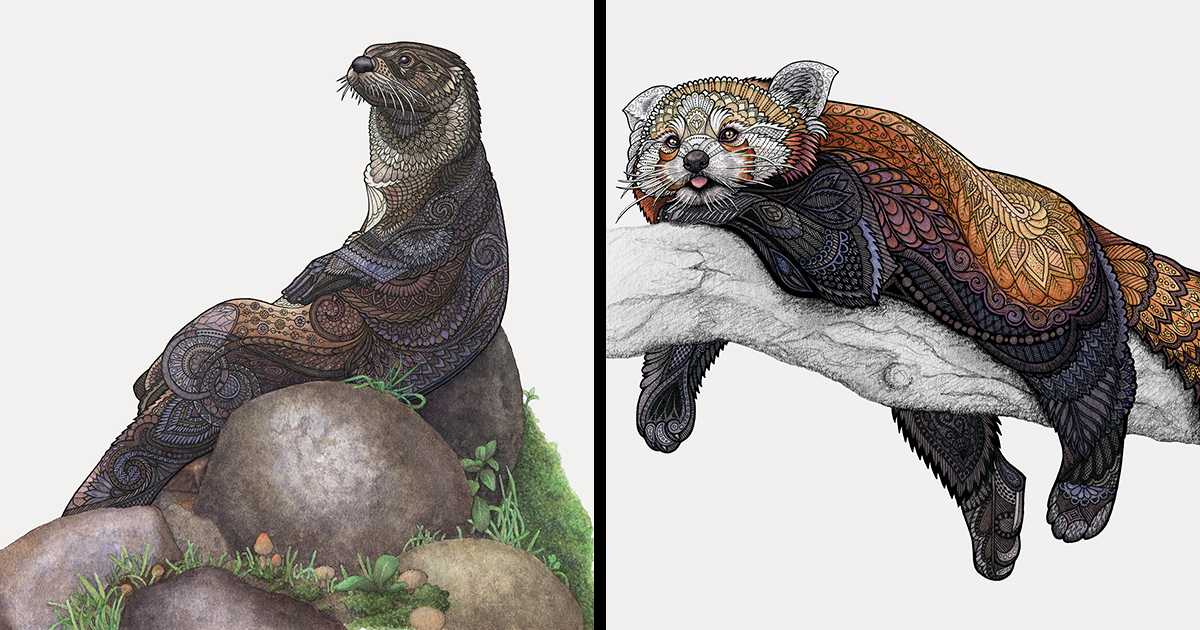
That complicated mess is where my art begins. I create images that question the relationship between human beings and animalsnot to hand viewers a guilt sandwich with a side of panic, but to invite them to pause. I want people to notice the contradictions we usually walk past: we adore some animals while ignoring others, protect wildlife while shrinking its habitat, and describe animals as “free” while deciding where they may live.
This new collection includes 30 pieces about closeness, control, tenderness, fear, consumption, care, and coexistence. Some works are funny. Some are uncomfortable. A few may make you look at your pet and wonder whether it has been quietly running the household all along.
Why I Make Human-Animal Relationship Art
For thousands of years, animals have appeared in art as spiritual figures, companions, warnings, trophies, protectors, and reflections of human emotion. A bird can suggest freedom, a wolf can represent danger, a horse can signal power, and a cat can communicate nearly anything depending on its facial expressionwhich, to be fair, is usually mild disappointment.
But I am interested in moving beyond animal symbolism. I do not want animals in my work to function only as decorative metaphors for human feelings. A fox is not merely cleverness. A cow is not simply food. A pigeon is not just “the city bird nobody invited.” Each animal has its own behavior, needs, territory, instincts, and way of experiencing the world.
My work asks a simple but slippery question: what happens when we stop placing humans at the center of every story? The answer is not always comfortable. We begin to see that the human-animal relationship contains affection and exploitation, wonder and control, responsibility and denial. It is a relationship filled with love, but it is also full of locked gates, plastic packaging, shrinking habitats, leashes, cages, veterinary bills, and decisions made by people who may never meet the animals affected by them.
30 New Pictures About People, Animals, and the Space Between Us
-
1. The Dinner Guest
A deer sits at a formal dining table while the human guests stand behind it, uncertain whether they are hosts, intruders, or tomorrow’s landscaping problem. The piece questions who gets to belong in a place humans have claimed.
-
2. Apartment for One Human and Three Pigeons
This image imagines pigeons as leaseholders in a cramped city apartment. It is playful, but it also asks why urban animals are tolerated only when they stay invisible and do not leave evidence of their existence on our windowsills.
-
3. The Dog Who Knows Too Much
A dog watches its owner scrolling through bad news on a phone. The animal cannot read the headlines, but it can read the room. This work explores the quiet emotional labor companion animals often perform without receiving a thank-you card.
-
4. Plastic Ocean, Paper Fish
Fish made from grocery receipts float through a sea constructed from transparent packaging. The artwork looks delicate from a distance, then becomes increasingly irritating once viewers recognize familiar everyday waste.
-
5. The Cat’s Portrait of Me
In this reversed portrait, a human appears tiny, distracted, and permanently attached to a glowing rectangle. The cat becomes the observer, reminding us that animals probably have their own opinions about our strange habits.
-
6. A Horse in the Elevator
A horse stands calmly in a modern office elevator while commuters stare at the floor numbers. The absurd scene asks why some animals feel natural in open fields but shocking in spaces designed entirely by humans.
-
7. Lost Habitat, Found Parking
A fox pauses beside a parking lot painted with the faint outline of a forest beneath it. The image is not subtle, but neither is a giant slab of asphalt where a meadow used to be.
-
8. The Goldfish Bowl Economy
A goldfish swims through a miniature office filled with tiny desks, calendars, and unpaid bills. This piece uses humor to question how easily people confuse a controlled environment with a fulfilling life.
-
9. The Last Bee Has a Schedule
A single bee flies through a calendar made of flowers, deadlines, and weather alerts. The work explores the way human productivity culture can make even nature feel like it needs a color-coded planner.
-
10. Wildlife Crossing
In this piece, animals wait at a pedestrian crossing while humans rush across a strip of grass between two highways. The roles are flipped, but the message is direct: our infrastructure decides who moves safely and who must take a risk.
-
11. The Family Photo
A family poses for a holiday portrait with their dog centered in the frame and everyone else slightly out of focus. The picture celebrates the real place animals hold in many homes: not accessories, but personalities with schedules and opinions.
-
12. Birdwatcher, Bird-Watched
A human hides behind binoculars while a flock of birds studies the person from a tree branch. I made this work because observation is never as one-sided as we like to believe.
-
13. The Cow in the Mirror
A cow looks into a mirror and sees a supermarket aisle reflected back. The image asks viewers to think about distance: how easily a living animal can disappear behind a label, a logo, or a neatly sealed package.
-
14. Nature Reserve, Human Exhibit
People stand behind glass while animals walk freely outside. The scene imagines a world where humans are the ones being watched for their unusual migration patterns, loud calls, and addiction to takeout coffee.
-
15. Borrowed Fur
A person wears a coat made of painted shadows rather than animal material. The work examines fashion, status, consumption, and the uncomfortable ways we sometimes turn animal bodies into proof that we can afford something.
-
16. The Stray Map
A dog’s route through a city becomes a map of closed doors, food bowls, warm sidewalks, loud traffic, and small acts of kindness. It is a portrait of urban survival from an animal’s point of view.
-
17. Zoo of Everyday Objects
A collection of cages contains shopping carts, smartphones, office chairs, and car keys. The animals are outside, watching. The image asks whether captivity always looks like bars.
-
18. The Whale Heard Everything
A whale drifts beneath a sea of speech bubbles, engines, sonar waves, and music playlists. The work explores noise, communication, and the human assumption that the ocean is empty simply because we cannot see beneath its surface.
-
19. Backyard Kingdom
Raccoons, squirrels, insects, and neighborhood cats gather around a suburban trash bin like royalty at a banquet. This piece celebrates the small wild worlds that survive in places people often call ordinary.
-
20. The Pet Shop Window
A child looks through a window at animals looking back. There is no villain in the picture, only a question: when does affection become ownership, and how can care be more important than possession?
-
21. Manual for a Perfect Pet
A fake instruction booklet lists impossible requirements: never bark, never shed, never age, never cost money, never need attention. The work pokes fun at the unrealistic expectations people sometimes bring into relationships with animals.
-
22. The Wolf at the Edge of Town
A wolf stands where a forest fades into streetlights and housing developments. It is neither monster nor mascot. It is simply an animal trying to exist near people who have strong opinions about where it should not be.
-
23. Unpaid Therapist
A dog sits on a couch while a human talks into a tissue box. The title is funny, but the image honors the comfort animals can provide when life is difficult and words are not enough.
-
24. The Chicken’s Window Seat
A chicken looks out from a kitchen window at a billboard advertising “farm fresh” products. This picture confronts the gap between cheerful food marketing and the real animals hidden behind it.
-
25. Museum of Extinct Things
An empty gallery displays labels for animals that are no longer there. Visitors photograph the blank spaces. I made this piece to ask whether awareness alone is enough when remembrance arrives after loss.
-
26. Leash, Lead, Lifeline
A single leash becomes three different lines across the image: a restraint, a guide, and a connection. The work avoids easy answers because human care can be protective and controlling at the same time.
-
27. Night Shift at the Animal Hospital
This work shows tired veterinary staff, worried pet guardians, and animals resting under soft light. It is a reminder that love is not always sentimental; sometimes it is waiting, paying, cleaning, learning, and showing up again tomorrow.
-
28. The Insect City
A city block is viewed from the perspective of ants moving through cracks in the sidewalk. The giant human world becomes strange, noisy, and full of discarded crumbs. Tiny lives are still lives, even when we barely notice them.
-
29. The Animal That Refused to Symbolize Anything
A crow stands in the center of a bright, theatrical scene while labels such as “death,” “mystery,” and “bad luck” fall away around it. Sometimes an animal is not a message. Sometimes it is just a crow having a perfectly normal crow day.
-
30. Shared Planet, Shared Mess
The final work gathers people and animals around a cracked globe repaired with thread, leaves, bandages, and small human hands. It is not a perfect ending, because perfect endings belong to cartoons. It is a hopeful question about what responsibility could look like.
Animals Are Not Props in These Images
One of the biggest challenges in making animal-centered art is resisting the urge to make every creature adorable, tragic, noble, or conveniently meaningful. Real animals are more complicated than that. They are not here to decorate a human story. They make decisions, form attachments, avoid danger, find food, communicate, rest, play, defend themselves, and sometimes do things that make absolutely no sense to us.
That is part of what makes them powerful subjects for contemporary art. Animals force us to confront the limits of human understanding. We can study them, care for them, live beside them, and build entire industries around them, yet we still cannot fully experience the world from inside their bodies or minds.
My artwork tries to leave room for that mystery. I use familiar settingsapartments, grocery stores, parking lots, family kitchens, hospitals, highways, gardensbecause the human-animal relationship does not exist only in forests or nature documentaries. It exists in the ordinary places where choices are made every day.
What These Works Taught Me: Experiences From Making the Series
Creating this collection changed the way I move through ordinary spaces. Before starting it, I thought I paid attention to animals. I noticed dogs on walks, birds on wires, cats in windows, and the occasional squirrel making a suspiciously confident decision near traffic. But making art about human-animal relationships taught me that noticing is not the same as seeing.
I began carrying a small notebook whenever I left home. I wrote down moments that would usually disappear before I reached the next block: a pigeon tugging at a french fry twice its size, a tired delivery driver stopping to greet a dog, a child kneeling beside an ant trail, a crow opening a snack wrapper with more determination than some people bring to Monday morning. These small scenes became the emotional foundation of the series.
One experience that stayed with me happened in a neighborhood park. I saw a woman carefully moving a turtle out of a busy walking path and toward the grass near a pond. It was a small act, quiet enough that most people never noticed it. Nobody applauded. Nobody filmed it. The turtle did not send a thank-you email. Yet the moment made me think about how responsibility often looks ordinary. It is not always a grand rescue or a dramatic speech. Sometimes it is slowing down long enough to make space for another creature.
I also learned that people bring their own histories into animal art. When I showed early sketches to friends, one person saw comfort in the image of a dog beside a crying human. Another person saw grief because it reminded them of a pet they had lost. Someone else focused on the leash and immediately started talking about control. The same drawing became a different story for every viewer.
That reaction helped me understand that art does not need to lecture people into caring. It can create a space where they recognize something they already feel but have not yet named. A person may see a fox near a housing development and remember a childhood backyard. Another may see a chicken near a grocery display and reconsider how disconnected food can become from the living world. Someone else may simply laugh at a cat judging a human from the couch, which is also a valid and probably accurate response.
The hardest part of the series was balancing sadness with possibility. There are many painful realities in the relationship between humans and animals, including habitat loss, neglect, overconsumption, cruelty, and indifference. But I did not want every image to feel hopeless. Hopelessness can make people turn away. Curiosity can keep them looking.
So I allowed humor into the work. Humor is not an escape from serious ideas; sometimes it is the doorway into them. A goldfish with an office job can make someone smile before they begin thinking about confinement. A bird studying a human through binoculars can make viewers laugh before they notice how strange human observation can be. Comedy loosens the lock on a difficult subject.
Most of all, this project reminded me that relationships with animals are not fixed. They are shaped by our choices, our cities, our homes, our habits, and the stories we tell. I cannot solve every problem with a picture. No artist can. But I can make a viewer pause in front of an animal they might otherwise ignore. I can make a familiar creature feel unfamiliar again. And sometimes, that pause is where a better question begins.
Final Thoughts: Art Can Make Us Look Again
This 30-piece collection is not about pretending humans and animals are the same. We are not. It is about recognizing that difference does not erase responsibility. Animals share our neighborhoods, homes, food systems, ecosystems, memories, and future. The relationship between people and animals is full of contradictions, but it is also full of opportunities for compassion, curiosity, and better choices.
My hope is that these pictures make viewers look twice: at the animal in the street, the bird outside the window, the pet asleep nearby, the food on the table, and the wild spaces that remain. Art cannot speak for animals, but it can make it harder for us to pretend they are not part of the conversation.