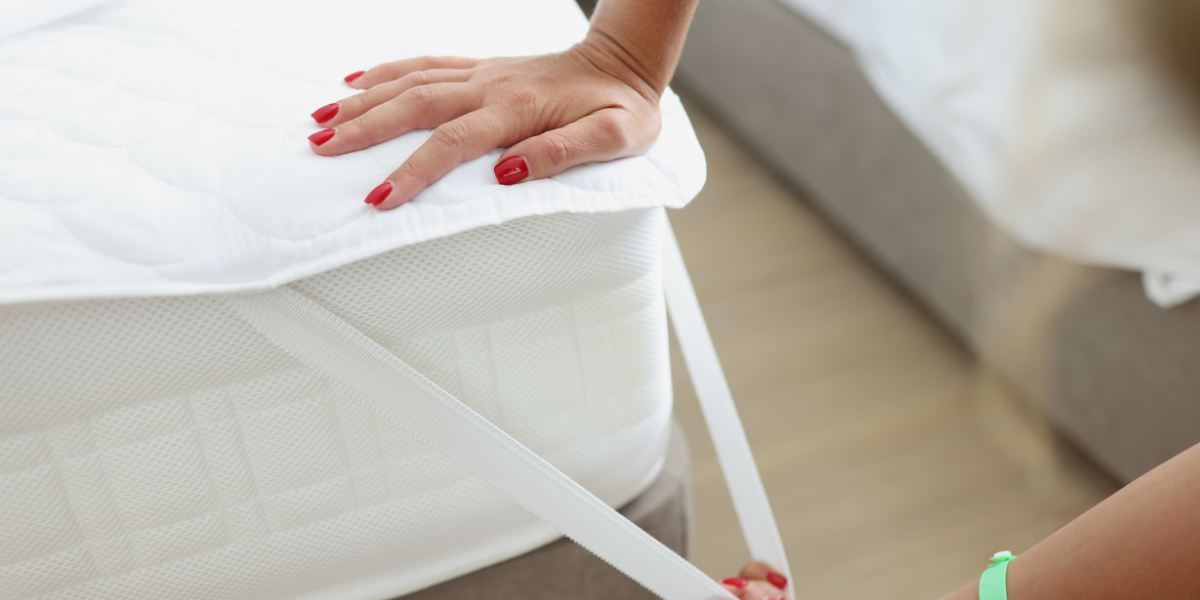
A mattress topper is supposed to make your bed feel like a cloud, not a runaway raft. Yet many people wake up to find the topper halfway off the mattress, bunched under one shoulder, or creeping toward the foot of the bed like it has vacation plans. The good news is that learning how to stop your mattress topper from sliding does not require a new bedroom set, a power tool collection, or negotiations with gravity.
Most mattress topper sliding problems come from one simple issue: not enough friction. Smooth mattress covers, loose fitted sheets, slick memory foam, the wrong topper size, or a bed frame without support can all let the topper shift during the night. If you toss, turn, sit on the edge of the bed, share the mattress with a partner, or have a pet that launches onto the bed like a furry cannonball, the movement becomes even more noticeable.
This guide covers practical, affordable, and renter-friendly ways to keep a mattress topper in place. We will look at fitted sheets, sheet straps, non-slip mats, Velcro, mattress protectors, safety pins, bed frames, and when it might be time to replace the topper altogether. By the end, your topper should stay where it belongs: under you, not on a midnight tour of the bedroom.
Why Does a Mattress Topper Slide?
Before fixing the problem, it helps to know what is causing it. A mattress topper can slide for several reasons, and sometimes more than one is guilty. Think of it like a mystery novel, except the villain is usually a slippery polyester cover.
1. The Topper and Mattress Surfaces Are Too Smooth
Many modern mattresses have soft, sleek covers. Many memory foam and latex toppers also come wrapped in smooth fabric. Smooth surface plus smooth surface equals very little grip. Add body movement overnight, and the topper slowly shifts out of place.
2. Your Fitted Sheet Is Too Loose
A fitted sheet that is too large, stretched out, or too shallow for the combined height of the mattress and topper can allow the topper to move. If your sheet wrinkles, pops off the corners, or looks like it borrowed fabric from a parachute, it is not holding the topper tightly enough.
3. The Topper Is the Wrong Size
A queen topper on a queen mattress sounds simple, but sizes can still vary slightly by brand. If the topper is smaller than the mattress, it may drift because the fitted sheet cannot hold it evenly. If it is larger, the edges may curl or bunch.
4. The Mattress Topper Is Too Light
Thin toppers, especially lightweight foam or fiberfill models, are easier to move. Heavier latex or dense memory foam toppers often stay put better, although even they can slide if the mattress cover is slick.
5. Your Bed Frame Lacks Barriers
A platform bed without a headboard, footboard, or raised edges offers fewer physical barriers. If the entire mattress shifts, the topper will likely shift too. In that case, you may need to secure both the mattress and the topper.
Best Ways to Stop a Mattress Topper From Sliding
Start with the easiest fixes first. In many cases, one small adjustment solves the problem. If your topper behaves like it is training for a luge event, combine two or three methods for a stronger hold.
1. Use a Tight Fitted Sheet With Deep Pockets
The simplest solution is often the best: use a snug fitted sheet that covers both the mattress and the topper. The sheet should fit tightly over the full height of your sleep setup. That means you need to measure the mattress and topper together.
For example, if your mattress is 12 inches thick and your topper is 3 inches thick, your fitted sheet needs to handle at least 15 inches of depth. A deep-pocket sheet designed for 15 to 18 inches is usually a better choice than a standard fitted sheet. The goal is a smooth, firm fit with no loose corners.
To make the bed properly, center the topper first. Pull the fitted sheet over the top two corners, then stretch it down over the bottom corners. Smooth the surface with your hands. If the topper moves while you make the bed, it will definitely move while you sleep.
2. Add Sheet Straps or Sheet Suspenders
Sheet straps, also called sheet suspenders, are elastic bands with clips that attach beneath the mattress. They pull the sheet tight and prevent the corners from popping off. They are inexpensive, easy to install, and excellent for people who move around a lot at night.
For a sliding mattress topper, sheet straps work best when the fitted sheet already covers both the mattress and topper. Clip one end of the strap to one side of the fitted sheet, run the strap underneath the mattress, and clip the other end to the opposite side. Some designs attach diagonally across corners; others form a full band around the mattress.
If your sheet is almost right but not quite tight enough, sheet suspenders can make it feel custom-fitted. It is like giving your bed a belt, except far more socially acceptable.
3. Place a Non-Slip Mat Under the Topper
A non-slip mat is one of the most reliable ways to keep a mattress topper from sliding. These mats are similar to rug grippers and are placed between the mattress and the topper. Their textured surface adds friction without changing the feel of the bed much.
Choose a mat that is close to the size of your mattress. If needed, trim it with scissors so it does not hang over the edges. Place the mat directly on top of the mattress, then center the topper over it. Add your mattress protector or fitted sheet as usual.
This method is especially useful for memory foam toppers, latex toppers, and smooth mattress covers. It is also renter-friendly because it does not require glue, nails, or permanent changes.
4. Try Velcro Strips for a Stronger Grip
Velcro strips can create a secure connection between the mattress and topper. Place one side of the Velcro on the mattress surface or mattress protector and the matching side on the bottom of the topper. Focus on the corners and edges, where movement usually begins.
Use caution with adhesive-backed Velcro. Some adhesives may leave residue or damage delicate fabrics. If you have an expensive mattress, a removable cover, or a topper under warranty, check the care instructions before sticking anything to it. For a safer approach, attach Velcro to a washable mattress protector instead of directly to the mattress.
Velcro is a good option for stubborn toppers that slide even with deep-pocket sheets. It is less ideal if you frequently remove the topper or rotate bedding, because separating and reattaching the strips can become annoying.
5. Use a Mattress Protector or Encasement
A mattress protector can help hold the topper and mattress together, especially if it fits tightly over both layers. A full mattress encasement is even more secure because it zips around the entire setup.
This method has an extra benefit: it protects against spills, sweat, dust, and allergens. If your topper slides because the fitted sheet is not doing enough, a protector can add an extra layer of structure and friction.
Make sure the protector is deep enough. If it compresses the topper too much, your bed may feel firmer than expected. If it is too loose, it may wrinkle and make the sliding worse.
6. Use Safety Pins Carefully
Safety pins can work as a quick fix, but they should be used carefully. Large safety pins can attach the topper cover to the mattress protector or fitted sheet at the corners. This can stop light movement, especially on thin toppers.
However, safety pins are not the best choice for delicate fabrics, waterproof protectors, or foam that tears easily. They may also create small holes. If you use them, pin fabric to fabric rather than foam to fabric, and make sure the pins are closed securely. Nobody wants to discover a loose pin at 2 a.m. That is not a sleep hack; that is a tiny medieval weapon.
7. Add Corner Straps to the Topper
Some mattress toppers come with built-in elastic corner straps. These loop under the mattress corners and help keep the topper in place. If your topper does not have straps, you may be able to sew elastic straps onto a removable topper cover.
This works best for people who are comfortable with basic sewing. Use wide elastic rather than thin elastic, because it distributes tension better and is less likely to twist. Attach the straps firmly to the topper cover, not directly into exposed foam.
If you are shopping for a new topper, built-in straps are worth considering. They are not glamorous, but neither is waking up with your topper folded like a taco.
8. Check the Bed Frame and Mattress Support
Sometimes the topper is not the only thing sliding. If your mattress shifts on the bed frame, the topper will move with it. Check whether the mattress is stable on the foundation, box spring, or platform.
A rubber mattress pad or non-slip grip mat between the mattress and foundation can help. A bed frame with raised side rails, a headboard, or a footboard can also reduce movement. If your bed frame has wide slats, make sure the mattress is properly supported and not sagging between them.
When the entire sleep system is stable, the topper has a much better chance of staying centered.
9. Rotate or Reposition the Topper
Some toppers develop compressed areas over time. If one side is flatter or softer than the other, it may shift more easily. Rotating the topper 180 degrees can even out wear and improve stability.
Not every topper should be flipped, especially if it has a specific comfort layer on top. Check the product label or care instructions. If the topper has a textured bottom or cooling top layer, keep the correct side facing up.
10. Replace a Worn-Out Topper
If your topper is old, torn, flattened, or permanently stretched, no trick may keep it perfectly in place. Foam can lose resilience. Covers can stretch. Elastic straps can wear out. At that point, replacement may be the most practical solution.
Look for a topper that matches your mattress size, has a removable cover, includes corner straps, and has a bottom surface with some grip. A slightly heavier topper may also stay in place better than a very thin one.
Which Method Works Best for Different Mattress Topper Types?
Memory Foam Mattress Toppers
Memory foam toppers often slide because the bottom surface is smooth and the topper slowly shifts with body heat and pressure. A non-slip mat plus a deep-pocket fitted sheet is usually the best combination. If the topper is thick and heavy, sheet straps may be enough.
Latex Mattress Toppers
Latex toppers are often heavier and more responsive than memory foam, but they can still slide on slick mattress covers. Try a non-slip mat first. Avoid harsh adhesives directly on latex, because they may damage the material or leave residue.
Feather and Down Mattress Toppers
Featherbeds and down toppers can bunch rather than slide as one solid piece. A fitted sheet, mattress protector, or encasement works well because it compresses the topper slightly and keeps the fill evenly spread. Fluff the topper regularly to prevent lumps.
Fiberfill Mattress Toppers
Fiberfill toppers are lightweight, which makes them prone to shifting. Sheet straps and a snug fitted sheet are usually effective. If the topper has corner loops, use them every time you make the bed.
Common Mistakes That Make Topper Sliding Worse
One common mistake is using sheets with pockets that are too deep. Deep-pocket sheets are helpful only when they fit the total height of the mattress and topper. If the pockets are much larger than needed, the extra fabric creates room for movement.
Another mistake is placing a topper over a wrinkled mattress protector. Wrinkles reduce contact and create slippery ridges. Smooth every layer before adding the next one.
People also sometimes use duct tape directly on foam. While it may work briefly, it can tear foam, leave sticky residue, and make cleaning difficult. If you need tape, use it sparingly and place it on removable fabric layers, not directly on the mattress core or topper foam.
Finally, do not ignore the bed frame. If the mattress itself slides, fixing only the topper is like putting a seatbelt on a shopping cart rolling downhill. Stabilize the base first.
A Simple Step-by-Step Fix Plan
Step 1: Strip the Bed
Remove all bedding and place the topper flat on the mattress. Check whether it matches the mattress size and whether the corners line up.
Step 2: Smooth Every Layer
Make sure the mattress protector, topper, and sheets are smooth. Wrinkles can encourage movement.
Step 3: Add Friction
If the topper still slides, place a non-slip mat between the mattress and topper. This is the best first upgrade for most beds.
Step 4: Tighten the Bedding
Use a fitted sheet with the right pocket depth. Add sheet straps if the corners lift or the sheet feels loose.
Step 5: Secure Stubborn Corners
If the topper keeps shifting, add Velcro strips, corner straps, or carefully placed safety pins. Choose the least permanent option that works.
Step 6: Recheck After One Week
Sleep on the setup for several nights. If the topper stays centered, you are done. If it moves again, combine methods: non-slip mat plus sheet straps is a strong, affordable pairing.
Extra Real-Life Experience: What Actually Works After a Few Nights
Here is the honest, lived-in truth about stopping a mattress topper from sliding: the perfect fix depends on how your bed behaves when real humans use it. A bed can look beautifully made at 9 p.m. and resemble a laundry landslide by morning. That is why testing matters.
In many bedrooms, the first noticeable improvement comes from using the correct fitted sheet. People often underestimate pocket depth. A sheet may technically fit over the mattress and topper, but if it is stretched to its absolute limit, the corners slowly creep upward. Once one corner loosens, the topper starts moving. Switching to a properly sized deep-pocket sheet can make the bed feel instantly more stable.
For restless sleepers, sheet straps are a game changer. They are especially helpful for couples because two people create movement in different directions. One person turns left, the other pulls the blanket right, and the topper ends up negotiating custody of the mattress. Sheet straps keep tension under the bed, so the fitted sheet acts like a firm lid over the topper.
For slick memory foam toppers, a non-slip mat is usually the most satisfying solution. It is simple, hidden, and does not change the look of the bed. The best part is that it addresses the real cause: low friction between the topper and mattress. After adding a grip mat, many people notice that the topper no longer needs daily adjustment. That small change can make the bed feel less fussy and more like a proper sleep setup.
Velcro works well, but it feels more committed. It is great for a guest room, an RV bed, or a topper that never gets removed. In a primary bedroom where bedding is washed often, Velcro can become mildly irritating because it catches on fabric. Use it when easier methods fail, not as the first move.
Safety pins are best treated as an emergency fix. They can help before guests arrive or while waiting for sheet straps to be delivered. However, they are not ideal as a long-term solution for expensive bedding. A small hole in a protector or topper cover may not seem like a big deal until it grows.
The most overlooked experience-based tip is to remake the bed with intention. Center the topper before adding the sheet. Pull fabric evenly from all sides. Do not yank one corner so hard that the topper shifts underneath. A neat bed is not just about appearances; it creates balanced pressure that helps everything stay put.
Another practical lesson: pets matter. A dog that jumps onto the same corner every night can move a lightweight topper faster than a human sleeper. In that case, secure the side where the pet lands with extra sheet tension or a larger non-slip mat. The pet will not apologize, so the bedding must adapt.
Finally, if you have tried a snug sheet, straps, a non-slip mat, and careful bed-making, but the topper still slides every night, the topper may simply be the wrong match for your mattress. A very light topper on a silky mattress cover is a slippery partnership. Replacing it with a topper that has built-in straps, a grippy bottom, or a better-fitting cover may save more frustration than adding more fixes.
Conclusion
Stopping a mattress topper from sliding usually comes down to three ideas: improve friction, tighten the bedding, and stabilize the bed. Start with a properly sized fitted sheet, then add sheet straps or a non-slip mat if needed. For stubborn setups, Velcro strips, corner straps, a mattress encasement, or careful safety pinning can help.
The best solution is the one that fits your bed, your topper, and your sleeping habits. A lightweight fiberfill topper may only need sheet suspenders. A thick memory foam topper on a slick mattress may need a grip mat. A mattress that slides on the frame needs support underneath before you worry about the topper.
Once your topper stays in place, your bed becomes what it was supposed to be all along: comfortable, supportive, and drama-free. No more nightly tug-of-war. No more waking up on a foam peninsula. Just a smoother, calmer sleep setup that stays put until morning.