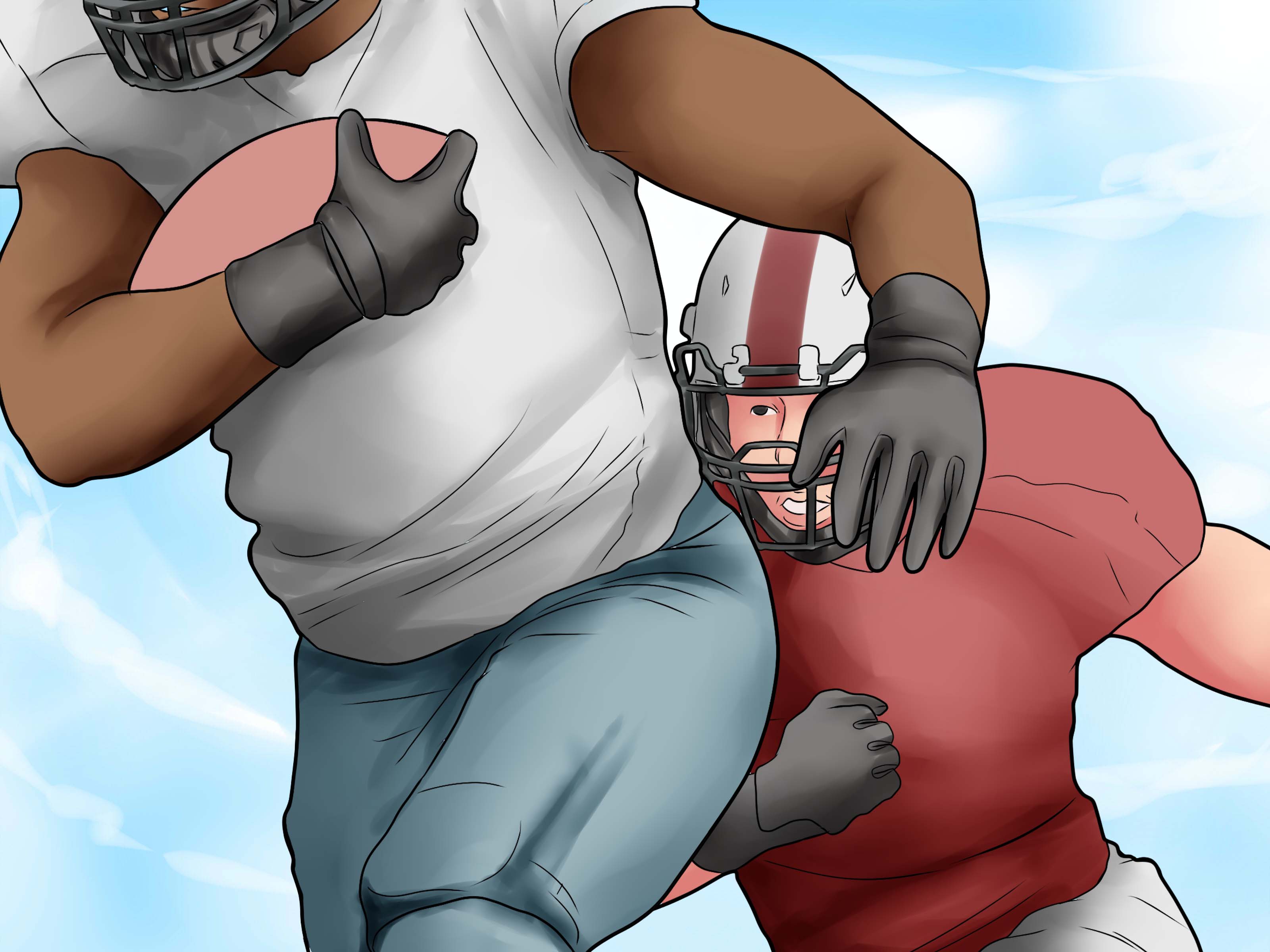
Playing outside linebacker is one of football’s best jobs. You get to set the edge against the run, chase quarterbacks, cover receivers, make open-field tackles, and occasionally ruin an offensive coordinator’s afternoon. The catch? You must do all of that while processing the play in roughly the time it takes someone to say, “Wait, where did the ball go?”
Whether you play a 3-4 edge linebacker, a 4-3 Sam linebacker, or a hybrid overhang role in a modern high school defense, success starts with understanding your team’s system. An outside linebacker is not simply “the fast guy near the sideline.” You are a problem solver with shoulder pads.
What Does an Outside Linebacker Do?
The outside linebacker position changes depending on the defensive front. In a 3-4 defense, an outside linebacker often lines up near the line of scrimmage and becomes a major pass-rush threat. In a 4-3 defense, the strong-side outside linebacker may align farther off the ball and handle tight ends, running backs, and short-zone coverage. In a 4-2-5 or 3-3-5 defense, the role may resemble a hybrid linebacker-safety position.
The common thread is versatility. A good outside linebacker can defend the run, contain mobile quarterbacks, cover space, communicate adjustments, defeat blocks, and tackle in the open field. Think of the position as a defensive Swiss Army knife, except this one wears cleats and gets yelled at for lining up two feet too wide.
Step 1: Learn Your Assignment Before the Ball Is Snapped
Great outside linebackers do not begin a play by guessing. They begin with a clear assignment. Before every snap, know your alignment, gap responsibility, coverage call, pass-rush responsibility, and who has quarterback contain. Your coach may use terms such as force, spill, box, curl-flat, hook, contain, or green dog. Learn exactly what each term means in your defense.
Start With the Defensive Call
A defensive call tells you more than where to stand. It tells you how aggressively to play. For example, you may be asked to rush off the edge, set the edge against an outside run, drop into the flat, cover a tight end in man coverage, or spy a scrambling quarterback. The same formation can produce a completely different job depending on the coverage and pressure package.
Use a Simple Pre-Snap Checklist
- What front are we in?
- Who is the offensive strength: tight end, extra receiver, or running back alignment?
- Am I responsible for the run, pass, quarterback, or a specific receiver?
- Where is my help if the ball gets outside?
The best answer is never “I thought somebody else had that.” That sentence has launched approximately one million film-room lectures.
Step 2: Build a Balanced Outside Linebacker Stance
Your stance should allow you to move in any direction without announcing your intentions. If you lean too far forward, you may get caught by play action or a quick pass. If you stand too tall, you may lose the first two steps against an outside zone run or a speedy slot receiver.
Start with feet slightly wider than shoulder width, knees bent, chest over your thighs, and weight balanced on the balls of your feet. Keep your hands relaxed but ready. Your eyes should be up, not staring at the grass as if it owes you money.
Align With Purpose
Your alignment depends on the formation and call. Against a tight end, you may align outside shade, head-up, or slightly inside depending on whether your job is to contain, box the run, or cover the tight end. Against a spread formation, you may line up closer to the slot receiver or farther outside the tackle box.
Ask your coach where you should align against common formations, then practice getting there quickly. A correct assignment from the wrong location can still create a huge running lane.
Step 3: Read the Right Keys Instead of Chasing the Ball
Outside linebacker play is a reading contest. The offense wants to distract you with motion, play fakes, jet sweeps, RPO looks, and enough window dressing to make a department store jealous. Your goal is to read dependable clues rather than sprint toward the first thing that moves.
Use a Key Progression
A common outside linebacker progression begins with the end man on the line of scrimmage, then moves to the backfield. If the offensive tackle or tight end blocks down, pulls, releases, or reaches outside, that movement gives you information. Then check the running back’s path and the quarterback’s posture.
For example, if the tight end blocks down and a pulling guard appears, you may be seeing power or counter. If the tackle reaches outside and the running back stretches laterally, outside zone may be coming. If a receiver releases immediately and the offensive line sets up in pass protection, do not crash into the line just because the quarterback briefly waved the ball near a running back.
Play Action Is Designed to Make You Wrong
The job is not to ignore the run. The job is to avoid selling out before the play confirms itself. Take disciplined read steps, keep your shoulders square as long as possible, and maintain enough depth to react. A linebacker who bites hard on every fake is not aggressive; he is simply helping the offense decorate the highlight reel.
Step 4: Set the Edge and Win Your Run Fit
One of the most important outside linebacker responsibilities is setting the edge. On outside runs, sweeps, bootlegs, and quarterback keepers, you often become the defender who prevents the ball carrier from turning the corner. Your job may be to make the tackle or force the runner back toward teammates waiting inside.
Understand Contain, Force, and Leverage
Contain means keeping the ball carrier from escaping outside your position. Force means using leverage to send the runner toward help. Your exact technique depends on the defensive call. Some defenses want you to keep outside leverage and turn the ball inside. Others may ask you to spill the runner wider toward a support defender.
Never invent your own run-fit philosophy in the middle of a game. Football already has enough chaos without a linebacker freelancing like he is auditioning for an action movie.
Keep Your Outside Arm and Outside Foot Free When Needed
When you are responsible for the edge, avoid letting blockers hook you inside. Strike with your hands, maintain a strong base, and work to keep your body between the ball carrier and the sideline. If you lose outside leverage, a routine run can become a long gain before the safety has time to locate the ball.
Stay patient against read-option plays. The quarterback may read your movement. If you crash too hard on the running back, the quarterback can pull the ball and race outside. If you drift too wide, the running back may cut inside. Read the mesh point, trust your assignment, and close under control.
Step 5: Defeat Blocks Without Losing Your Balance
Outside linebackers face tight ends, tackles, fullbacks, pulling linemen, wide receivers on crack blocks, and running backs trying to slow them down in protection. You do not need to flatten every blocker. You need to stay alive in the play.
Use Your Hands First
Strike with your hands, keep your eyes up, and create separation. Good hand placement helps you control the blocker instead of letting the blocker control your chest. Work on simple techniques before trying fancy moves: shock-and-shed, rip, swim, club, and arm-over movements can all be useful when taught by a qualified coach.
Do Not Run Yourself Out of the Play
A common mistake is sprinting too far upfield against a blocker. That may look energetic, but it can open a giant cutback lane underneath you. Against the run, squeeze space carefully, stay square when possible, and keep your eyes on the ball. Against a pass, rush with a plan instead of running in a wide circle that gives the quarterback time to order lunch.
Expect Crack Blocks and Replace the Edge
When a receiver blocks down on you, communicate loudly and react according to your team’s crack-replace rules. Often, another defender must replace you outside to preserve contain. Communication turns a dangerous block into a manageable adjustment.
Step 6: Become a Smarter Pass Rusher
In many defenses, the outside linebacker is an edge rusher. Speed matters, but a productive pass rush is more than sprinting toward the quarterback. It requires get-off, hand use, leverage, a rush lane, and a counter move when the first plan fails.
Win the First Three Steps
Your first steps should be explosive and controlled. React to the snap, accelerate toward your rush landmark, and force the offensive tackle to move his feet. The faster you threaten the blocker’s edge, the less comfortable the blocker becomes.
Rush With a Plan
Before the snap, decide whether you have an outside speed rush, inside counter, bull rush, stunt, or contain responsibility. You do not need five pass-rush moves. You need one dependable primary move and one useful counter.
For instance, you may threaten outside with speed, then use an inside counter if the tackle oversets. Or you may convert speed to power by getting your hands inside and driving through the blocker’s near shoulder. The exact move matters less than balance, timing, and knowing where the quarterback is likely to step up.
Protect the Rush Lane
A sack is great. Letting a mobile quarterback escape through your lane is less great. Keep the quarterback contained when the call requires it, avoid flying past the pocket, and understand whether a teammate is rushing inside or looping outside on a stunt.
Step 7: Cover, Tackle, Communicate, and Finish
The modern outside linebacker must handle coverage. You may cover a tight end, match a running back, drop into the flat, carry a receiver through a zone, or defend a quick screen. Coverage is not “rest time” between blitzes. It is part of your job description.
Play Your Zone With Vision
In zone coverage, keep your eyes active. See the quarterback, feel nearby receivers, and protect the area your defense assigned to you. In curl-flat coverage, for example, you may need to expand toward the flat while staying ready to react to a receiver settling behind you in the curl area.
Do not drift aimlessly. Gain depth with purpose, keep your shoulders ready to break, and communicate route combinations to teammates. A linebacker who can recognize flood concepts, crossing routes, screens, and wheel routes becomes much harder to attack.
Tackle With Control
In open space, break down before contact. Track the near hip of the ball carrier, keep your eyes up, use your shoulder and arms rather than your helmet, wrap securely, and keep driving your feet after contact. Do not launch, lead with the crown of the helmet, or try to create a highlight hit at the expense of a safe, legal tackle.
The best tackle is the one that ends the play and allows everyone to line up again. Coaches love big hits, but they love third-and-long even more.
Outside Linebacker Drills That Actually Transfer to Games
The most useful drills teach you to see, move, and react like you must in a real game. Pure cone drills can improve body control, but outside linebackers also need decision-making reps.
- Read-step drill: React to tight-end, tackle, and running-back movement without crossing your feet.
- Edge-set drill: Practice maintaining outside leverage while taking on a blocker and forcing the ball inside.
- Block-shed drill: Work hand placement, separation, and escaping from a blocker without losing vision on the ball.
- Open-field tracking drill: Practice closing space, breaking down, and tackling under control.
- Pass-rush progression: Train get-off, hand speed, one primary move, and one counter move.
- Coverage-reaction drill: Drop into your zone, read the quarterback, and break on a throw.
Start drills at a controlled pace, especially when learning contact fundamentals. Build from movement to controlled contact, then to game-like competition only under qualified supervision.
Common Outside Linebacker Mistakes to Avoid
- Overrunning the ball carrier and losing contain.
- Staring into the backfield and ignoring blocking keys.
- Trying to beat every block with speed instead of leverage.
- Blitzing when the call requires coverage.
- Dropping into coverage without enough depth or awareness.
- Attempting unsafe tackles with the head down.
- Failing to communicate motion, trips formations, crack blocks, or quarterback changes.
The fastest way to improve is to study film with a notebook. Write down the offensive formations that caused confusion, the blocks that beat you, and the situations where you guessed instead of read. Then turn those notes into specific practice goals.
Experience-Based Lessons: What Outside Linebackers Learn After Enough Reps
Outside linebacker experience teaches one big lesson early: playing fast is not the same as playing rushed. New players often believe the position is about charging toward the football on every snap. That works for about three plays, until an offense notices and starts using play action, bootlegs, counters, and quick passes. Experienced linebackers learn that the fastest player on the field is often the one who diagnoses the play correctly first.
Another lesson is that the edge can feel lonely. When an offense runs wide, you may be the last clean defender between the ball carrier and open grass. That responsibility can make players panic, especially when a fast runner is heading toward the sideline. The answer is not to dive recklessly. It is to close space under control, maintain leverage, and trust that your teammates are pursuing from inside-out. A disciplined force player often makes the tackle easier for everyone else, even when the stat sheet gives the credit to somebody else.
Players also learn that offensive tackles are excellent teachers. Every time a tackle reaches, sets vertically, oversets, lunges, or sits back against power, he is revealing something about how to attack him. Early in a game, a smart outside linebacker pays attention to the tackle’s habits instead of using the same pass-rush move repeatedly. If the blocker fears speed, an inside counter may become available. If he sits heavily inside, an outside rush may open. The goal is not to look flashy; it is to become inconvenient.
Coverage brings another reality check. Many young edge players love rushing the passer until a coach asks them to cover a tight end or carry a running back into the flat. Suddenly, the position becomes a test of footwork, patience, and awareness. Those reps matter because offenses will hunt linebackers who cannot cover. Even a reliable pass rusher becomes more valuable when the offense cannot predict whether he is coming after the quarterback or dropping into space.
Film study becomes more useful as players gain experience. At first, film looks like a blur of helmets and bodies. Over time, the patterns become clearer: a certain formation creates a favorite run, a tight end’s split hints at a block, or the backfield alignment signals a screen possibility. The best outside linebackers do not memorize every play in the opponent’s playbook. They learn tendencies, recognize clues, and prepare themselves to react calmly.
Finally, experienced players learn that toughness is not reckless behavior. Real toughness means taking coaching, practicing the small details, communicating when you are tired, and using safe technique even when the game gets chaotic. It means reporting symptoms after a hard hit instead of pretending everything is fine. It means helping teammates understand an adjustment rather than blaming them after a missed assignment. The outside linebacker who combines effort, discipline, and communication becomes the kind of player every defense trusts on third down, near the goal line, and when the game gets loud.
Final Thoughts
Learning how to play outside linebacker starts with assignments, but it grows through repetition. Master your stance, read your keys, set the edge, defeat blocks, rush with a plan, cover with awareness, and tackle safely. The position rewards players who can think quickly without panicking, play physically without losing technique, and communicate even when everyone else is busy yelling.
You do not need to become a superhero overnight. Become reliable first. Once coaches trust you to be in the right place, the big tackles, sacks, pass breakups, and game-changing plays have a funny way of finding you.