Flat irons and curling irons can transform bedhead into polished hair before your coffee has finished brewing. Unfortunately, these tools are not tiny spa treatments. They work by exposing the hair shaft to intense heat, and repeated exposure can gradually leave strands dry, rough, faded, brittle, or prone to splitting.
That does not mean you must immediately place your straightener in a ceremonial box and say goodbye. It does mean your technique matters. No routine can make daily heat styling completely harmless, but smart preparation, controlled temperatures, fewer passes, and consistent conditioning can substantially reduce unnecessary damage.
The following ten steps explain how to keep hair healthy when using irons daily, whether you straighten fine hair, create loose waves, refresh a silk press, or wrestle thick hair into cooperation before work.
Why Daily Iron Use Can Damage Hair
Each strand of hair has an outer protective layer called the cuticle. Its overlapping cells help protect the inner cortex, preserve moisture, and create a smooth surface that reflects light. Repeated heat can disturb this protective layer, making the strand more porous and less resistant to friction.
Laboratory research has found that visible surface damage generally increases as heat exposure rises. Very high temperatures can cause structural changes that are difficult or impossible to reverse. Dermatologists therefore recommend using flat irons only on dry hair and choosing low or medium settings whenever possible.
Heat-damaged hair may look frizzy even after styling because the raised cuticle no longer lies smoothly. You may also notice dullness, faded color, rough ends, increased tangling, short broken pieces, or curls that refuse to return after washing. Hair cannot biologically heal once it leaves the scalp, so damaged sections must be temporarily reinforced with conditioning products or eventually trimmed away.
How to Keep Hair Healthy When Using Irons Daily
1. Begin With an Honest Hair Assessment
Before switching on the iron, look at the condition of your hair rather than following a fixed routine on autopilot. Fine, bleached, relaxed, highlighted, weathered, or already brittle hair usually tolerates less heat than dense, coarse, untreated hair.
Examine the areas that receive the most attention, especially the front pieces, crown, and ends. If they feel rough, snap easily, develop white dots, or appear noticeably thinner, daily ironing is probably exceeding their tolerance.
Adjust the routine before the damage becomes dramatic. Use a lower setting, straighten larger sections less aggressively, skip the most fragile ends, or replace a full styling session with a quick touch-up. Think of your hair as a fabric: silk and denim should not be ironed with exactly the same enthusiasm.
2. Never Use a Traditional Iron on Damp Hair
Hair should be completely dry before it touches a conventional flat iron or curling iron. Not “mostly dry.” Not “dry except for that mysterious section near the neck.” Completely dry.
Water trapped inside damp hair can heat rapidly when clamped between hot plates. In severe cases, this contributes to bubble-like cavities within the shaft, a condition appropriately called bubble hair. The affected strands become weak and may break with very little tension.
After washing, blot hair gently with a microfiber towel or soft cotton T-shirt. Avoid rubbing it as though you are trying to start a campfire. Allow it to air-dry partially, or use a blow-dryer at a controlled temperature and reasonable distance. Wait until the roots, middle lengths, and hidden underneath sections are dry before ironing.
Wet-to-dry tools specifically designed to use controlled airflow are a separate category. Do not assume that an ordinary flat iron can perform the same job simply because both products have a cord and make noise.
3. Choose an Iron With Adjustable Temperature Controls
A styling iron should give you control over the temperature. A device with only one mysterious settingsomewhere between “warm toast” and “surface of Mercury”makes it difficult to match the heat to your hair’s condition.
Look for an iron that maintains a stable temperature, glides smoothly, and has plates without chips, scratches, or gaps. Uneven or damaged plates can snag strands and force you to repeat sections. Consumer testing organizations also emphasize temperature consistency, adjustable controls, and smooth performance when evaluating styling tools.
Ceramic plates are often popular for fine or damage-prone hair because they tend to heat evenly and can offer a controlled glide. Titanium tools heat quickly and may work efficiently on thick or resistant hair, but their speed and intensity require careful temperature selection. Plate material matters less than using a reliable tool correctly.
Clean the plates after they have cooled and the tool is unplugged. Residue from oils, sprays, and conditioners can create sticky patches that interfere with smooth movement.
4. Use the Lowest Temperature That Produces the Result
The maximum setting is not a challenge issued by the manufacturer. You do not win a trophy for reaching 450 degrees Fahrenheit before breakfast.
Begin at a low setting and increase it only when the hair does not straighten or curl with one controlled pass. Fine, fragile, chemically treated, or color-treated hair should remain at the lower end of the tool’s range. Coarser or denser hair may require more heat, but the goal is still the lowest effective temperature.
Pay attention to what happens during styling. Smoke, a scorched odor, immediate stiffness, rapid color changes, or crackling sounds are warnings, not special effects. Stop and allow the hair and tool to cool. Product vapor can occasionally resemble smoke, but it is still sensible to reduce product buildup and reassess the temperature.
The American Academy of Dermatology advises using low or medium heat and limiting exposure because excessive heat can weaken hair regardless of texture.
5. Apply Heat Protectant Evenlyand Let It Dry
A heat protectant creates a temporary film that can improve slip, reduce friction, distribute heat more evenly, and slow moisture loss. It is protective equipment, not a force field. Hair coated with protectant can still be damaged by excessive temperature or repeated passes.
Choose a product labeled for heat styling and appropriate for your hair type. Lightweight sprays may suit fine hair, while creams or smoothing serums may work better for coarse, curly, or very dry hair. Some leave-in conditioners also provide heat protection, but the packaging should specifically say so.
Apply the product in sections rather than spraying only the visible surface. Concentrate on the middle lengths and ends, which are older and usually more weathered than the roots. Comb through gently to distribute the formula.
Most importantly, allow a water-based spray to dry before using a traditional iron. If the hair feels wet from product, give it another minute or use cool airflow. The protectant should reduce risk, not return your hair to the damp condition you carefully avoided in Step 2.
6. Work in Clean, Manageable Sections
Trying to straighten one enormous handful of hair often causes an inefficient cycle: the outer strands overheat, the inner strands stay wavy, and the iron makes several increasingly irritated return trips.
Divide hair into manageable sections using clips. Each subsection should be small enough for the plates to contact the hair evenly without requiring a painfully slow pass. Detangle the section before applying heat so the iron can move smoothly from top to bottom.
For straightening, keep gentle tension with a comb or brush positioned ahead of the iron. Do not pull hard. The purpose is to align the strands, not negotiate a hostage release with your scalp.
Sectioning also helps you remember where you have already worked. Randomly ironing the same front piece six times while ignoring the back is not a styling strategy; it is how bangs become significantly shorter without scissors.
7. Use One Smooth Pass Instead of Repeated Clamping
A single controlled pass at an effective temperature is generally preferable to repeatedly clamping the same section. Begin near the roots without touching the scalp, close the plates gently, and move continuously toward the ends.
Do not pause halfway down the strand. Holding an iron in one place concentrates heat and can create bends, weak spots, or burns. Curling irons should also remain in contact with hair for only the time needed to form the curl.
If one pass does not work, first ask why. The section may be too large, the hair may not be fully dry, buildup may be blocking smooth contact, or the tool may not be maintaining its temperature. Solving the cause is healthier than repeating the same pass until the strand waves a tiny white flag.
Consider leaving the final inch of the ends out of routine touch-ups. Ends are the oldest part of the hair and often receive more cumulative heat than necessary.
8. Build Moisture and Conditioning Into Wash Day
Daily heat users need a dependable cleansing and conditioning routine. Shampoo the scalp as needed to remove oil, sweat, and buildup, but avoid repeatedly scrubbing the lengths. Let the lather move through them while rinsing.
Apply rinse-out conditioner after every shampoo unless a dermatologist has advised otherwise. Conditioner reduces friction, improves manageability, and temporarily smooths the cuticle. Research on hair-conditioning science shows that conditioning agents can improve surface properties and reduce the forces involved in combing and styling.
A weekly moisturizing mask may help hair that feels dry, while a protein-containing or bond-supporting treatment may temporarily strengthen some types of chemically processed hair. More is not automatically better. Excessive layers of heavy products can make hair stiff, greasy, or difficult to style, encouraging higher heat and additional passes.
Use a wide-tooth comb on wet hair and begin at the ends. Wet strands are easier to stretch and break, so aggressive detangling can add mechanical damage before the iron even enters the room.
9. Create Recovery Time, Even If You Style Daily
The safest way to reduce heat damage is to use hot tools less often. Dermatologists routinely recommend limiting flat irons, curling irons, hot combs, and blow-dryers whenever possible. Frequent heat styling can wear down the hair shaft and contribute to breakage.
If your job, routine, or preferred style makes daily use difficult to avoid, reduce the amount of hair exposed each day. Preserve Monday’s style overnight and refresh only the sections that actually need help on Tuesday. Use a satin or silk scarf, bonnet, or smooth pillowcase to reduce friction and flattening while you sleep.
Alternate full styling days with heatless options such as loose braids, buns, wraps, rollers, flexi rods, or a polished ponytail. Avoid pulling these styles tightly, since replacing heat damage with traction damage would be a disappointing plot twist.
Even one or two heat-free days each week can reduce cumulative exposure. When possible, schedule longer breaks after coloring, bleaching, relaxing, or other chemical services.
10. Trim Damage and Know When to Seek Professional Help
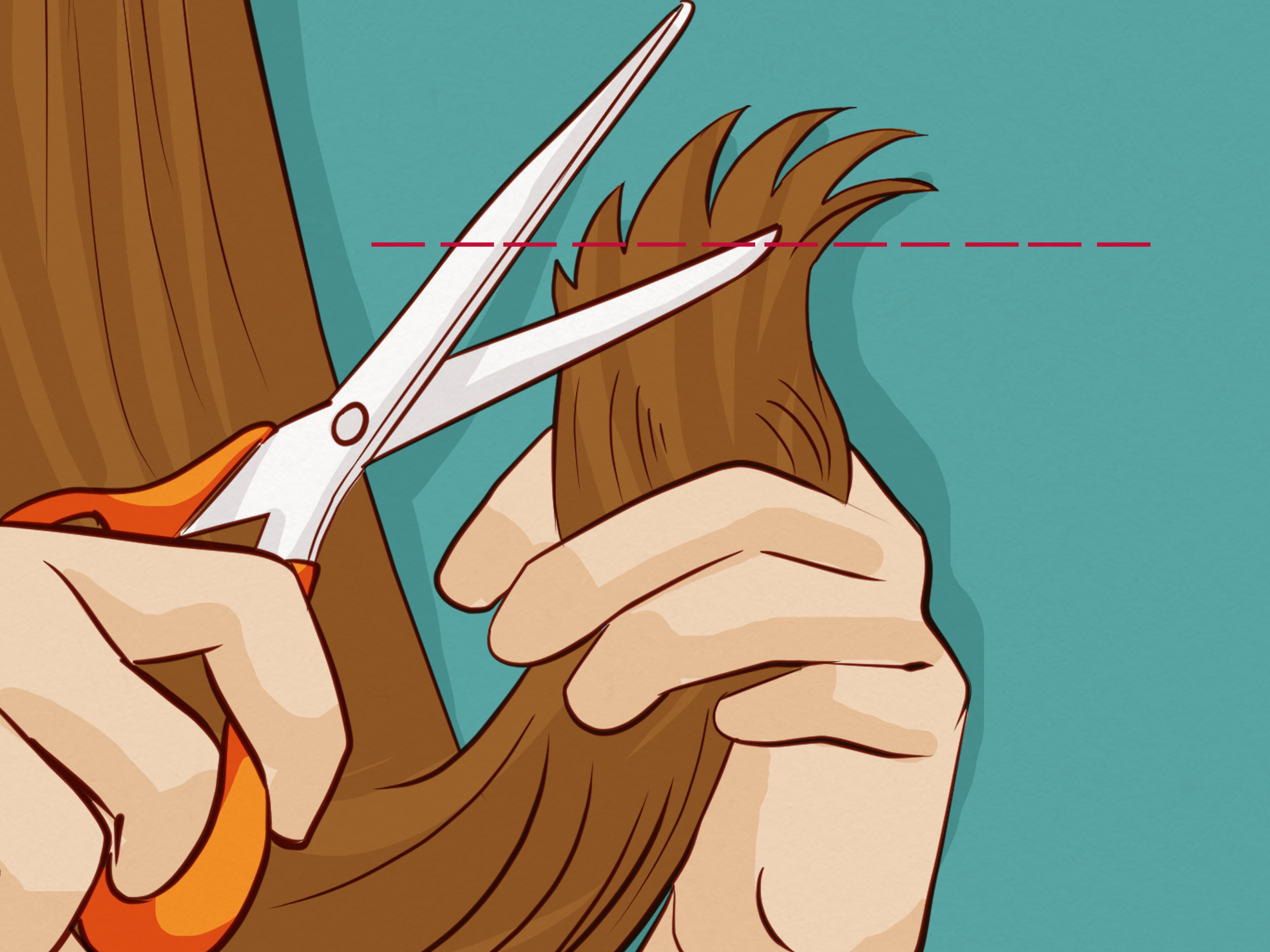
Split ends cannot be permanently glued back together. Serums may make them look smoother for a while, but trimming is the reliable way to stop severely split sections from continuing to fray.
Ask a stylist to remove damaged ends on a schedule appropriate for your cut, length goals, and level of breakage. Small, regular trims can help the hair look denser and more polished without requiring a dramatic haircut every few months.
See a board-certified dermatologist if you notice excessive shedding, widening areas of visible scalp, bald patches, scalp pain, sores, persistent itching, or breakage close to the roots. Heat styling can cause shaft damage, but not every hair problem is caused by an iron. Thyroid disorders, nutritional deficiencies, inflammatory scalp conditions, hormonal changes, medication effects, and several forms of alopecia can produce similar concerns.
Early evaluation matters because some causes of hair loss respond better when treated promptly.
A Simple Daily Iron Routine
- Check the hair for damp spots, tangles, or obvious breakage.
- Apply an appropriate heat protectant in sections.
- Wait until the product and hair are completely dry.
- Set the iron to the lowest temperature that usually works.
- Clip the hair into manageable sections.
- Make one smooth pass through each section.
- Touch up only stubborn areas instead of restarting the entire head.
- Finish with a small amount of serum or lightweight oil on the ends if needed.
- Clean the cooled plates when residue becomes visible.
- Protect the finished style overnight to reduce tomorrow’s heat exposure.
Common Mistakes That Quietly Increase Heat Damage
Using Oil as the Only Heat Protectant
Some oils improve shine and reduce friction, but not every oil is formulated or tested for direct high-temperature styling. Use a product specifically labeled as a heat protectant. Apply finishing oil afterward unless its instructions clearly approve pre-heat use.
Turning Up the Temperature to Save Time
A higher setting may appear faster, but it can remove the margin for error. Better sectioning, complete drying, and a clean iron often improve efficiency without increasing the heat.
Ironing Over Hairspray
Strong-hold hairspray can make hair stiff and sticky. Passing a hot iron over heavy residue may increase drag and create a scorched odor. Style first, then apply finishing spray unless the product is specifically designed for use before heat.
Ignoring the Ends
The ends may have survived years of washing, sunlight, coloring, brushing, and styling. Treat them as senior employees, not disposable interns. Use less heat, more conditioner, and regular trims.
Believing Heat Protectant Makes Temperature Irrelevant
Protectant reduces risk; it does not cancel physics. A seat belt is important, but it is not permission to drive through the garage door.
Experience-Based Lessons From a Month of Safer Daily Styling
Consider a realistic example: someone with shoulder-length, color-treated hair straightens it every morning. The routine begins with the iron at its maximum setting because that seems quicker. The hair is divided into three giant sections, each one receiving four or five passes. A little serum is added afterward, and the entire operation takes approximately fifteen minutes.
At first, the result looks sleek. After several weeks, however, the ends feel rough before styling and strangely stiff afterward. The front sections develop short broken hairs, while the color appears duller. More heat is then used to control the new frizz, creating a loop in which damage produces texture and the texture invites additional damage.
The first useful change is not buying twelve expensive bottles. It is lowering the temperature and making smaller sections. Styling initially takes a few minutes longer because the technique is unfamiliar, but each section needs only one deliberate pass. Within a week, the routine becomes faster because there is less stopping, re-clamping, and hunting for missed waves.
The next change is applying heat protectant evenly. Previously, two quick sprays landed mostly on the top layer. Now the hair is divided into four sections, lightly misted, combed through, and allowed to dry. The product no longer leaves random damp patches that hiss when the iron closes.
Nighttime preservation produces the biggest surprise. Instead of sleeping with loose, freshly straightened hair, it is gently wrapped or secured and protected with a smooth scarf. The next morning, only the hairline and two face-framing pieces need attention. “Daily iron use” changes from reheating every strand seven days a week to performing small, strategic touch-ups on most days.
Wash day also becomes less chaotic. Conditioner is applied generously to the lengths, and a weekly mask replaces the previous habit of using extra oil on already-dry ends. The hair is blotted rather than scrubbed with a bath towel. It is detangled from the ends upward, partially air-dried, and then finished with controlled airflow.
By the end of the month, the existing split ends have not magically repaired themselves. Hair products are talented, but they have not yet completed medical school. Those ends still need trimming. The meaningful improvement is that fewer new broken pieces appear, the hair tangles less, and the finished style lasts longer because the surface is smoother.
The most important lesson is that healthy heat styling depends more on repeated small decisions than on one miracle product. A slightly lower temperature, one fewer pass, a dry section, a clean plate, and a protected night may seem insignificant individually. Repeated hundreds of times, they determine whether long-term styling remains manageable or gradually turns the ends into decorative straw.
Another useful lesson is to respond to the hair you have today. After bleaching, illness, hormonal changes, a dry winter, or weeks of swimming, the same temperature may suddenly be too aggressive. A routine should be adjustable. When the hair becomes more fragile, reduce the heat, simplify the style, and introduce recovery days rather than insisting that last year’s settings remain correct forever.
Finally, daily styling becomes healthier when perfection is redefined. Every strand does not need to be pressed perfectly flat, and every curl does not need identical geometry. A polished result with a little natural texture is often far kinder to the hair than chasing glass-like smoothness through repeated passes. Your coworkers are unlikely to inspect the back of your head with laboratory equipment. Anyone who does may have misunderstood the meeting.
Conclusion
Learning how to keep hair healthy when using irons daily is largely an exercise in controlling cumulative damage. Always begin with completely dry hair, use a true heat protectant, select the lowest effective temperature, work in sections, and avoid repeated passes. Support the routine with conditioning, gentle detangling, clean tools, nighttime protection, regular trims, and as many heat-free breaks as your schedule allows.
Daily heat styling will never be risk-free, especially for bleached, relaxed, fine, or already damaged hair. However, careful technique can make the difference between hair that remains manageable and hair that gradually becomes brittle. Let the iron do enough work to create the stylenot so much work that your next hairstyle becomes “unexpected bob.”