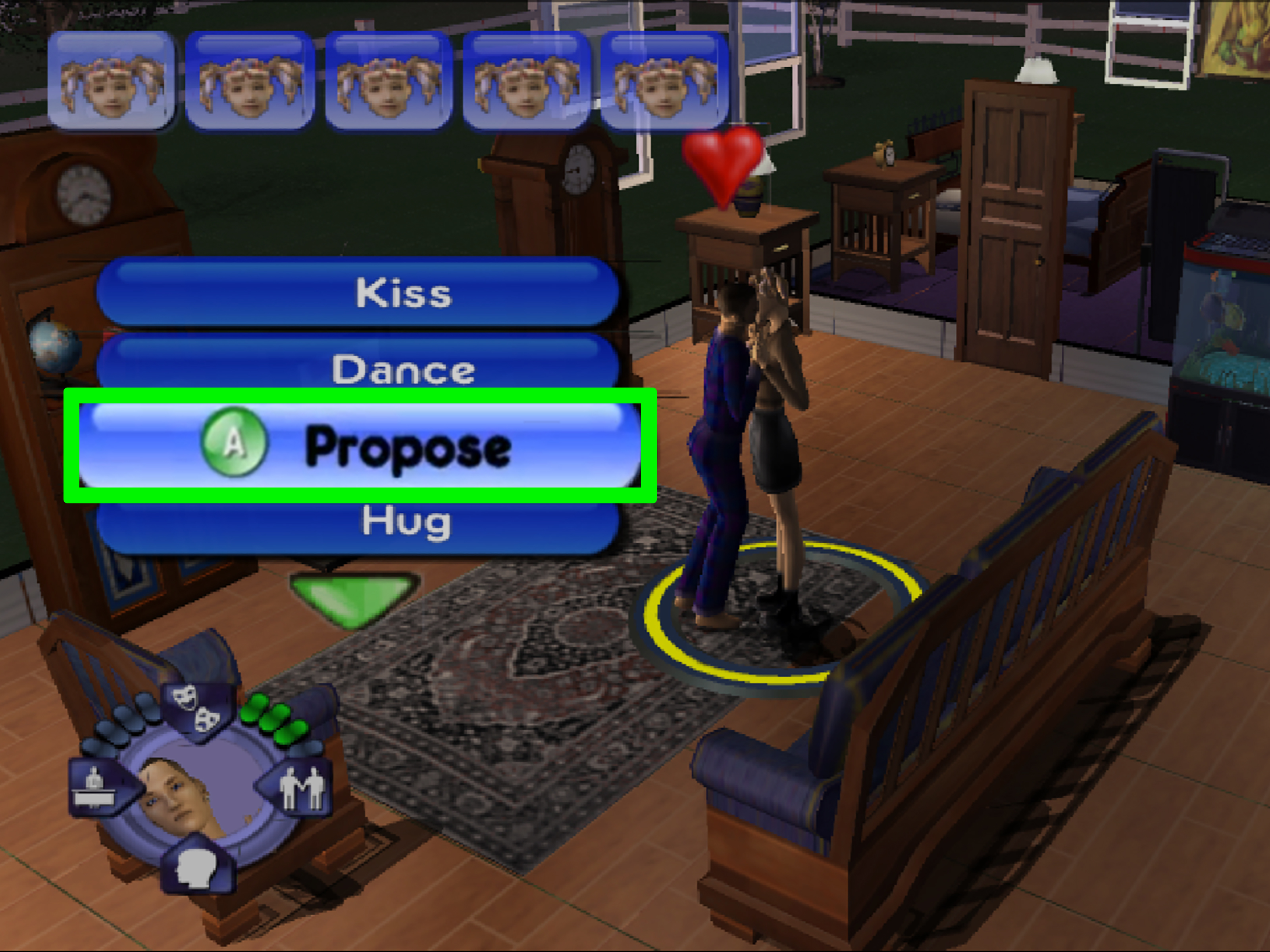
Note: This guide is written for the PS2 console version of The Sims Bustin’ Out and focuses on the classic Bust Out marriage route, with a few useful Free Street tips mixed in for players who want fewer proposal disasters and fewer digital heartbreak speeches.
Getting married in The Sims Bustin’ Out on PS2 is not hard once you understand the game’s secret language. Unfortunately, that language is not English. It is a strange mix of romance points, full stomachs, bathroom timing, couch placement, and one very moody Sim who will absolutely reject your heartfelt proposal because they are hungry, uncomfortable, or suddenly remember they have never truly sat down before.
That is what makes this old-school console Sims game so charming. Marriage is not just a menu option you click when a pink bar gets high enough. It is a tiny strategy puzzle. You need the right person, the right house setup, the right mood, and the right moment. Miss one piece, and your Sim gets denied like they proposed with a grilled cheese sandwich instead of a ring.
This guide breaks the process into 15 easy steps, explains why certain proposal tricks work better than others, and helps you avoid the classic mistake of trying to marry someone the game never intended to let you keep. If you want the wedding, the spouse, and the sweet little victory of finally checking off that marriage goal, here is how to make it happen.
Before You Start: Know the Marriage Rules
In The Sims Bustin’ Out, you cannot marry just anyone you flirt with. That is the first trap. In Bust Out mode, the safest marriage candidates are Sims from Free Street or Sims you created there yourself. Story-mode residents and many house occupants can be romanced, but they are not valid long-term marriage options. So if you are dreaming of marrying every stylish, chaotic, or suspiciously unavailable Sim in SimValley, the game may politely laugh in your face.
The second rule is that romance alone is not enough. Your target should be in love with your Sim, usually represented by the heart icon, and your relationship should be comfortably high. Some guides suggest the relationship can work around 70 or 80 if the mood is great, but in practice, aiming for 90 to 100 is much safer. Think of it as over-preparing for a boss fight, except the boss wears casual clothes and complains about bladder needs.
How to Get Married in The Sims Bustin’ Out (PS2): 15 Steps
Step 1: Decide whether you want to marry now or later
If you are in Bust Out mode, marriage can be completed at several later homes, and some players prefer waiting until they have more money, better objects, and less household chaos. That is a smart move. A spouse becomes another controllable Sim, which is useful, but it also means more needs, more mess, and more little digital emergencies. If your house currently looks like a raccoon hosted a casserole party, maybe do a little cleanup first.
Step 2: Pick a valid spouse from Free Street
This step matters more than most guides admit. If the person does not live on Free Street, or is not a created Free Street Sim, do not waste your evening trying to force destiny. The game is picky. You can romance story characters, but marriage usually requires an eligible Sim tied to Free Street. If you want total control, create your own future spouse in Free Play and place them in a Free Street house. Congratulations, you are now the casting director of your own soap opera.
Step 3: Build friendship before forcing the romance
Do not go from “hello” to “please share my surname” in ten minutes. Start with easy socials: chat, joke, compliment, maybe a friendly interaction or two. A strong friendship makes romantic actions land better and fail less often. In old console Sims games, momentum matters. If every other interaction is awkward, romance will feel like trying to start a campfire in a swimming pool.
Step 4: Create real romance and get the heart icon
Once friendship is solid, begin romantic interactions. Hugging, flirting, kissing, dancing, and other affection-based socials help push the relationship into romance territory. Your goal is not just a higher number. Your goal is the moment the game effectively says, “Fine, these two weirdos are in love now.” Watch for the heart icon and keep the good mood rolling. No heart, no wedding. It is that simple.
Step 5: Push the relationship into the safe zone
Technically, some players report success around 70-plus relationship with a heart icon. Realistically, if you want fewer rejections, push it close to 100. The higher the relationship, the more room you have for one badly timed interaction, one weird pathfinding issue, or one mood drop because somebody decided to stand instead of sit. Safe-zone romance is boring, but successful weddings are beautiful.
Step 6: Save at least 1,000 Simoleons
Marriage is romantic, but The Sims Bustin’ Out still sends a bill. The wedding costs 1,000 Simoleons, so make sure you have enough money before you try to propose. Nothing kills the vibe like realizing you can afford a lamp, a cheap toilet, and maybe half a wedding. If cash is tight, work another shift, sell an extra item, or stop impulse-buying furniture that looks like it belongs in a sci-fi dentist office.
Step 7: Prepare your house like a date venue, not a disaster zone
Before your future spouse arrives, tidy up the house and improve the environment. Good lighting, enough seating, working plumbing, and a decent kitchen all help. Marriage proposals in this game are weirdly practical. If your guest arrives to dirty plates, broken fixtures, and a room with all the charm of a storage unit, they may not be in the mood for lifelong commitment. Fair enough, honestly.
Step 8: Max out your own needs first
Make sure your Sim is in a good mood before making the call. Hunger, bladder, comfort, fun, and energy should all be in good shape. A miserable Sim tends to produce miserable outcomes. You do not want your character passing out, wetting themselves, or picking a fight five minutes before proposal time. The best wedding planning strategy in this game is deeply unglamorous: eat, shower, sit down, and behave.
Step 9: Cook a group meal before inviting your lover over
This is one of the oldest and most consistent marriage tricks for the PS2 version. Make breakfast, lunch, or dinner before or right as your love interest arrives. Food solves one of the most common reasons for rejection: hunger. A group meal also creates a natural flow for the visit. Your guest arrives, greets you, eats, and settles in instead of wandering around the lot like a confused raccoon at a yard sale.
Step 10: Invite them over at a sensible time
Morning or daytime often works better than very late at night. You want enough time for the food, the bathroom break, the fun activity, and the romantic interactions without the visit collapsing into exhaustion. If you are attempting this after midnight with low energy and a nearly broken toilet, you are not planning a wedding. You are setting up a sitcom.
Step 11: Let them eat and use the bathroom
Do not rush the proposal the moment they walk in. That is how you get the classic “not on an empty stomach” style rejection. Let your guest sit down, eat, and handle their bathroom needs. This step is not glamorous, but it is ridiculously effective. The game checks mood and comfort more than your Sim’s dramatic intentions. In other words, romance begins where bladder urgency ends.
Step 12: Fill fun and comfort with a shared activity
After the meal and bathroom break, do something that raises fun and comfort. Watching TV together, playing a video game while seated, or using a hot tub are classic proposal setups because they handle two needs at once. Many veteran players swear by getting both Sims settled on a couch or loveseat before using the next social. That seated, relaxed moment is often the difference between “yes” and “please stop embarrassing yourself.”
Step 13: Stack a few affectionate interactions
Now that moods are good, add a few romantic socials. A kiss, a flirt, maybe a gift if you want extra insurance. Do not overdo it until the interaction queue turns into chaos, but do confirm the relationship still feels hot and positive. This is the game’s version of checking the weather before a road trip. You are looking for clear skies, no drama, and absolutely no random slapping.
Step 14: Use “Propose” at the right moment
When the relationship is high, the heart is there, needs are filled, and the vibe is good, choose Propose. If you are following the classic route with an opposite-sex couple, this triggers the marriage sequence. In some same-gender pairings on the console version, the interaction may appear as Move In instead. Either way, the important lesson is timing. Proposal success in The Sims Bustin’ Out is less about passion and more about whether your future spouse recently had lunch and enough fun.
Step 15: Adjust to married life after the wedding
Once the proposal succeeds, your spouse moves in and becomes part of your household. That can be fantastic. A spouse can help with chores, skill-building, social networking, and keeping the home from collapsing into total nonsense. In Bust Out mode, they also travel with you as you move through the game, which is both useful and mildly chaotic. Married life in The Sims Bustin’ Out is not just romance. It is logistics with kissing.
Common Reasons Your Proposal Fails
If your Sim keeps getting rejected, the problem is usually one of five things: you picked a non-eligible story Sim, the romance is not high enough, your target is hungry, your target is uncomfortable, or you proposed too early in the visit. Sometimes players assume the relationship meter is everything, but this game loves mood checks. A Sim can adore you and still reject you because the room is dirty and they have not sat down in an hour.
Another common issue is bad pacing. If you spam romantic socials too fast, things can backfire. If you wait too long, moods start falling apart. The sweet spot is simple: meal first, bathroom second, fun and comfort third, romance fourth, proposal fifth. It sounds less like courtship and more like a theme park ride safety checklist, but it works.
Why Marriage Is Actually Useful in Bustin’ Out
Marriage is not just there to check off a goal. It can make the rest of the game easier. A spouse brings another set of hands, another social web, and another controllable character who can build skills or keep the house functioning while your main Sim works. Some long-time players even use spouses strategically because a spouse’s friendships are easier to maintain, which helps with career requirements later on.
So yes, marriage is romantic. It is also efficient. It is the rare PS2 life-sim event that doubles as both a love story and a management upgrade. Truly, nothing says commitment like shared chores and optimized friend maintenance.
Conclusion
If you want to get married in The Sims Bustin’ Out on PS2, the formula is straightforward once you know the game’s hidden rules. Pick an eligible Free Street Sim, build the relationship until love is obvious, keep both Sims in a great mood, serve food, raise fun and comfort, and only then hit Propose. The process feels hilariously fussy by modern standards, but that is part of the charm. This game does not hand out weddings for free. It makes you earn them with dinner, timing, and a well-placed couch.
Follow the 15 steps above, and your Sim should go from awkward flirting to wedding bells without too many emotional crater moments. And if it still goes wrong, do what every veteran player eventually learns to do: clean the house, make another meal, and try again tomorrow. Even digital love needs snacks.
Extra Experience and Player Perspective
One reason this topic still gets searched years later is that getting married in The Sims Bustin’ Out feels very different from getting married in newer Sims games. Modern entries are usually smoother, clearer, and more forgiving. This one is a little crankier, a little stranger, and somehow more memorable because of it. The PS2 version has that old-console charm where the game rarely explains itself fully, so players end up learning through trial, error, rumor, and one oddly specific tip about making sure a guest uses the bathroom before proposing.
That weirdness becomes part of the experience. You do not just remember that your Sim got married. You remember the road to getting there. You remember trying to flirt with the wrong character for far too long before discovering they were not marriage-eligible. You remember saving up your Simoleons, rearranging furniture, and treating a television session like it was a major tactical operation. You remember how funny it was when everything seemed perfect, only for the target Sim to reject the proposal over something absurdly practical. It is frustrating in the moment, but hilarious in hindsight.
There is also something satisfying about how physical the process feels in this version of the game. Room layout matters. Seating matters. Timing matters. Objects matter. In some life sims, romance lives entirely in dialogue trees and invisible stat bars. In The Sims Bustin’ Out, romance also lives in whether your loveseat is placed correctly, whether dinner was served on time, and whether your Sim’s future spouse got enough fun before you dropped the big question. That turns marriage into a tiny domestic puzzle, and for many players, that is exactly what makes it stick in memory.
Another interesting part of the experience is how marriage changes the rhythm of the game. Before the wedding, your Sim’s life is mostly about personal progress: job promotions, skill points, social climbing, and surviving whatever odd household you currently inhabit. After the wedding, the game suddenly feels more like shared management. Now there is another adult in the household, another personality to work around, and another schedule to balance. It creates a sense that your Sim’s story has actually moved into a new chapter instead of simply ticking another box on a checklist.
Players who revisit the game today often notice that the marriage mechanic reflects the era it came from. It is clunkier than modern systems, yes, but it is also more hands-on. There is less automation, fewer convenience features, and more player improvisation. That means every successful wedding feels a little personal. It feels like you solved something. You did not just watch a romance bar fill. You managed a whole little evening, overcame the game’s quirks, and landed the proposal when the stars, moods, and dining schedule finally aligned.
That may be why old guides and forum answers stayed popular for so long. People were not just looking for the answer to “Can my Sim get married?” They were looking for the secret handshake of the community. They wanted the practical wisdom that only another player could provide: feed them first, let them sit down, do something fun, and stop trying to marry the obviously unavailable cool person from the story house. Those details gave the game personality. They turned a simple objective into a shared memory among players who all discovered, one way or another, that love in SimValley is real, but only after dinner.