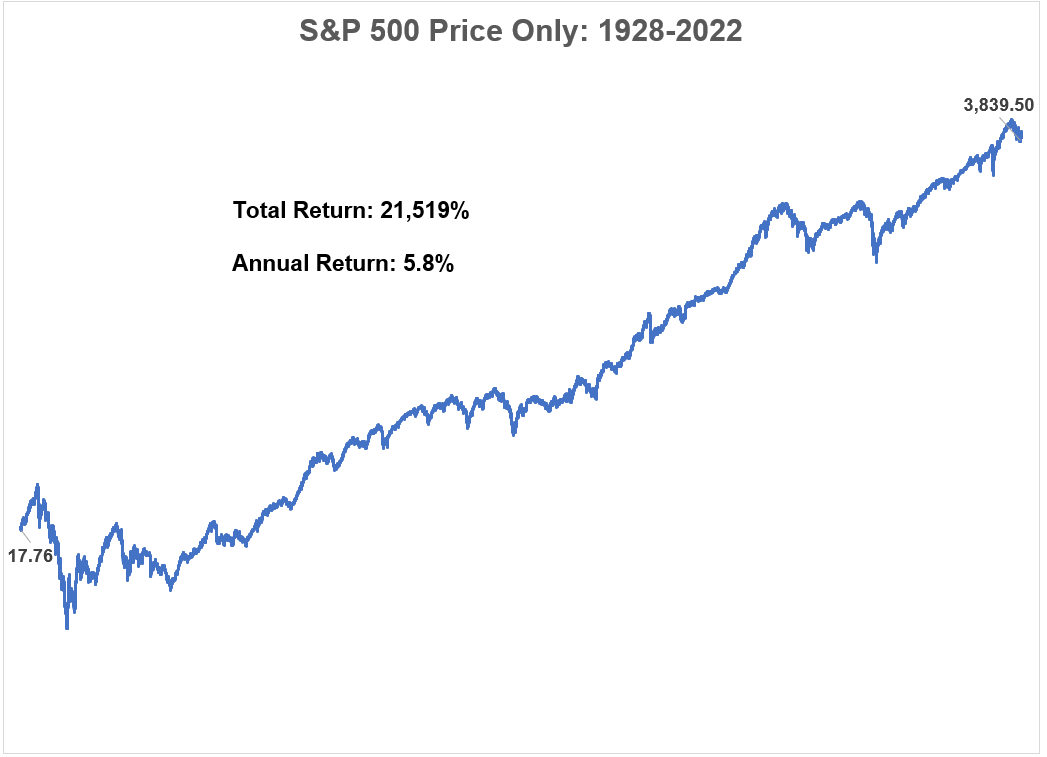
Stock market returns often get described as a simple game: buy a stock, wait for the price to rise, and eventually sell it for more money. That is certainly one way to make a profit. But it leaves out a quieter source of wealth that has been working behind the scenes for generations: dividends.
A dividend is a distribution that a company pays to its shareholders, usually from profits or accumulated earnings. Although a single quarterly payment may look about as exciting as finding loose change under the sofa, those payments can become remarkably powerful when they grow and are repeatedly reinvested.
The real magic is not merely receiving cash. It is using that cash to buy more shares, which may generate additional dividends, which purchase still more shares. That cycle can transform an ordinary investment into a compounding machineprovided the underlying businesses remain healthy.
Dividends Are Part of Your Total Return
Investors sometimes judge a stock solely by its price chart. If the price climbed from $50 to $55, they call the return 10%. That calculation is incomplete when the stock also paid dividends.
Total return combines the change in an investment’s market value with the income it produced. Vanguard describes total return as the price change plus income such as dividends or interest, divided by the original investment. In other words, the price chart tells only part of the story.
The basic formula is:
Total return = Price appreciation + Dividend income
Suppose you buy a stock for $100. One year later, it is worth $106 and has paid $3 in dividends. Your price return is 6%, but your total return is 9% before taxes and expenses.
That extra three percentage points may not look dramatic over a single year. Over several decades, however, small annual differences can produce very large differences in ending wealth. Compounding is not loud or flashy. It behaves more like a snowball rolling downhill while wearing sensible shoes.
The Historical Contribution of Dividends
Dividends have represented a meaningful portion of long-term U.S. stock market performance. S&P Dow Jones Indices reports that dividends contributed approximately 31% of the S&P 500’s total return from 1926 onward, with capital appreciation providing the remaining 69%. Another S&P analysis covering the period since 1936 places the dividend contribution at more than one-third of total equity return.
Those figures do not mean dividends will contribute exactly one-third of returns during every decade. Their importance changes with market valuations, corporate profits, interest rates, dividend policies, and economic conditions. The broader lesson is that ignoring dividends means ignoring a substantial component of historical stock returns.
How Dividend Reinvestment Accelerates Compounding
Investors can usually take dividends as cash or reinvest them. A dividend reinvestment plan, commonly called a DRIP, automatically uses dividend payments to purchase more shares of the same stock or fund. Many brokerages can also purchase fractional shares, allowing even a modest dividend payment to remain fully invested.
Reinvestment creates three connected engines of growth:
- The original shares may rise in value.
- The original shares generate dividend income.
- New shares purchased with dividends may generate their own future dividends.
The third engine is the one that often gets underestimated. Once reinvested shares begin producing income, your dividends can effectively earn dividends.
A Hypothetical 20-Year Example
Imagine investing $10,000 in a diversified stock portfolio that produces 5% annual price appreciation and a 3% annual dividend yield. To keep the illustration simple, assume the rates remain constant and ignore taxes, fees, and market fluctuations.
| Approach | Assumption | Approximate Value After 20 Years |
|---|---|---|
| Dividends reinvested | 8% annual total return compounded | $46,610 |
| Dividends taken as cash | 5% price growth plus dividends withdrawn | $26,533 in shares, plus about $9,920 in accumulated cash |
The reinvestment strategy finishes with roughly $10,000 more because each dividend payment remains inside the compounding process. This is a simplified illustration rather than a forecast, but it shows why reinvestment can have such a strong long-term effect.
Reinvesting dividends does not eliminate investment risk. The share price can fall, dividends can be reduced, and future returns may be lower than historical averages. Compounding amplifies whatever return the investment produces; it does not guarantee that the return will be positive.
Dividend Growth Can Matter More Than a High Starting Yield
Dividend yield measures annual dividends relative to the current share price:
Dividend yield = Annual dividend per share ÷ Current share price
For example, a company paying $2 per share annually while trading at $50 has a 4% dividend yield. Fidelity and Morningstar both define dividend yield as a ratio connecting a company’s dividend payments to its share price.
A higher yield appears attractive, but it is not automatically better. A company yielding 7% today might be less rewarding over time than a company yielding 2.5% that consistently increases its payment.
Consider two hypothetical companies:
- Company A yields 6% but has stagnant earnings and no dividend growth.
- Company B yields 2.5% but increases its dividend by 8% annually as earnings and cash flow expand.
Company A provides more immediate income. Company B may eventually deliver more income on the investor’s original purchase price, along with stronger potential for capital appreciation. The outcome depends on whether the growth actually occurs, but the comparison illustrates why dividend durability and growth deserve as much attention as the headline yield.
Yield on Cost
Yield on cost compares the current annual dividend with the investor’s original purchase price. Suppose you bought a stock for $50 when it paid a $1.50 annual dividend. Your initial yield was 3%. If the company eventually raises the annual dividend to $3, your yield on the original cost becomes 6%.
Yield on cost can help illustrate the effect of dividend growth, but it should not replace current analysis. The market does not care what you originally paid. Investors still need to evaluate the company’s current valuation, financial strength, risks, and future prospects.
Why Dividends Can Help During Difficult Markets
Stock prices can be moody. They may rise on strong earnings, fall on interest-rate fears, or bounce around because somebody on television used the word “uncertainty” six times before breakfast.
Dividend payments can provide a source of return even when share prices are flat or declining. Fidelity notes that dividend-paying stocks may continue producing income during rocky market periods when capital gains are difficult to achieve.
For investors who reinvest, market declines may allow each dividend payment to purchase more shares. If the company survives, continues paying dividends, and later recovers, those additional shares can participate in the rebound.
That does not mean dividend stocks are crash-proof. Dividend-paying companies can fall sharply, and management can reduce or eliminate a dividend whenever conditions demand it. Dividends may soften the experience of a weak market, but they do not install airbags on your brokerage account.
The Ex-Dividend Date Is Not Free-Money Day
Every declared dividend has several important dates, including the declaration date, ex-dividend date, record date, and payment date. The ex-dividend date determines whether a buyer is entitled to the upcoming payment. An investor who purchases shares on or after the ex-dividend date generally does not receive that dividend.
This sometimes inspires a strategy called dividend capture: buying immediately before the ex-dividend date, collecting the payment, and selling shortly afterward. Unfortunately, dividends do not materialize from a corporate money portal.
When a stock begins trading without the right to the dividend, its price may adjust downward by roughly the dividend amount, although regular market activity can hide or exaggerate that adjustment. FINRA rules also provide for certain open order prices to be adjusted for cash dividends.
Taxes, bid-ask spreads, commissions, price movements, and holding-period requirements can further weaken a dividend-capture trade. Long-term dividend investing is generally based on owning productive businesses, not trying to outsmart the calendar with a stopwatch.
How to Judge Whether a Dividend Is Sustainable
A dividend is valuable only if the company can afford it. Investors should examine the business rather than treating the current yield as a giant neon “BUY” sign.
1. Examine the Payout Ratio
The payout ratio measures the portion of earnings distributed as dividends. Morningstar defines it as dividends per share divided by diluted earnings per share over the relevant period. A lower payout ratio may provide a greater margin of safety, although appropriate levels vary significantly by industry and business structure.
A company distributing nearly all its earnings has less room for an economic slowdown, unexpected expenses, debt repayment, acquisitions, or reinvestment. However, a very low payout ratio is not automatically ideal either. Some companies can create more value by investing profits back into high-return projects.
2. Review Free Cash Flow
Accounting earnings matter, but dividends are paid with cash. Investors should compare dividend obligations with free cash flow over several years. A temporary shortfall may be manageable, but repeatedly borrowing money or selling assets to fund ordinary dividends is not a sustainable party trick.
3. Look at Debt and Interest Costs
A heavily indebted company may have to prioritize lenders over shareholders. Rising borrowing costs, maturing debt, or weakening credit quality can place pressure on dividend payments even when the company still reports a profit.
4. Study the Dividend Record
A long record of stable or rising payments can indicate disciplined capital allocation, but history is evidence rather than a promise. Schwab emphasizes examining payout ratios, dividend coverage, earnings trends, and the reasons a yield has risen.
5. Understand the Industry
Utilities, consumer staples, real estate companies, financial firms, energy producers, and technology businesses may have very different earnings patterns and capital requirements. A payout ratio that appears comfortable in one industry may be dangerous in another.
Beware of the Dividend Yield Trap
A dividend trap occurs when an unusually high yield attracts investors even though the company’s business or finances are deteriorating. Because yield is calculated by dividing the dividend by the share price, a collapsing stock price can make the yield rise dramatically.
For instance, a stock paying $4 annually has a 4% yield at $100. If the price falls to $50 while the quoted dividend remains unchanged, the yield jumps to 8%. That may represent an opportunityor the market may be predicting that the $4 payment will soon be reduced.
Morningstar and Schwab both warn investors to investigate whether a rising yield comes from genuine dividend growth or from a falling share price. Warning signs can include weakening cash flow, an excessive payout ratio, heavy debt, deteriorating earnings, asset sales, and an unsupported commitment to maintain the dividend.
When the dividend is cut, investors can suffer twice: income falls, and the share price may decline further. That is the financial equivalent of discovering that the “free dessert” was included because the restaurant is on fire.
Dividends, Taxes, and Cost Basis
In a taxable U.S. brokerage account, dividends generally create tax consequences even when they are automatically reinvested. Qualified dividends may receive the lower federal rates applied to long-term capital gains when applicable requirements are met, while nonqualified dividends are generally taxed as ordinary income.
Reinvested dividends also purchase new tax lots. Each purchase has its own cost basis and acquisition date. FINRA notes that reinvested dividends and capital-gain distributions are included when determining the cost basis of securities. Modern brokerages usually track this information, but investors should still review their records.
Tax-advantaged accounts may change when taxes are due, but their rules vary. Investors should consider account type, investment horizon, withdrawal needs, and personal tax circumstances. Tax treatment can change, so official IRS guidance or qualified professional advice should take priority over a clever comment posted beneath a finance video.
Individual Dividend Stocks Versus Dividend Funds
Investors can pursue dividend income through individual companies, mutual funds, or exchange-traded funds.
Individual stocks provide control over company selection and may allow investors to build a customized income stream. The trade-off is company-specific risk. A single dividend cut can materially reduce portfolio income when the position is large.
Dividend ETFs and mutual funds can spread investments across dozens or hundreds of businesses. Diversification reduces the damage caused by one company, but it does not remove market risk. Fund fees, index rules, turnover, sector concentration, and tax efficiency also matter.
Schwab notes that dividend ETFs can differ substantially in sector exposure because their underlying indexes use different selection and weighting rules. A fund labeled “dividend” may be heavily concentrated in financials, utilities, energy, or another market segment.
The highest-yielding fund is therefore not automatically the best choice. Investors should examine its holdings, methodology, expense ratio, payout history, diversification, and total-return record.
When Taking Dividends as Cash May Make Sense
Reinvestment is powerful, but it is not mandatory. Taking dividends as cash may be reasonable when an investor:
- Needs portfolio income for current expenses.
- Wants to rebalance by directing cash toward underweighted assets.
- Believes the dividend-paying investment has become overvalued.
- Wants to build a cash reserve without selling shares.
- Prefers to choose manually where each payment is invested.
The decision should match the investor’s goals. Someone accumulating wealth over several decades may favor automatic reinvestment. Someone funding current expenses may prefer cash. Vanguard similarly explains that reinvestment often suits long-term growth, while taking cash may fit investors with income or reallocation needs.
A Practical Dividend-Investing Checklist
Before purchasing a dividend stock or fund, consider the following questions:
- Is the company financially healthy?
- Are earnings and free cash flow sufficient to support the payment?
- Is the payout ratio appropriate for the industry?
- Has the dividend grown, remained flat, or been cut?
- Did the yield rise because the dividend increased or because the stock collapsed?
- How much debt does the business carry?
- Does the investment improve portfolio diversification?
- What are the tax consequences?
- Am I evaluating total return or staring lovingly at the yield alone?
Fidelity recommends reviewing a company’s dividend history, including its behavior during difficult markets, along with yield and payout ratio. That combination is far more informative than choosing whichever stock displays the largest percentage on a screening page.
Real-World Experiences and Lessons From Dividend Investing
The early experience of dividend investing can feel underwhelming. An investor buys several shares, waits three months, and receives a payment barely large enough to cover lunch. After hearing dramatic stories about compounding, a $14.72 dividend may seem less like a wealth-building engine and more like a mildly apologetic refund.
That reaction is understandable because the biggest benefit of reinvestment usually appears late rather than early. During the first few years, most portfolio growth comes from new contributions and market movement. Reinvested dividends add only a small number of shares. As the share count expands, however, each payment becomes larger, and the larger payment purchases more shares. Progress gradually begins feeding itself.
One useful lesson is to measure share ownership as well as account value. Market prices can make the portfolio value jump around from week to week. The number of shares accumulated through reinvestment usually moves in one direction. Watching the share count rise can make temporary market declines easier to tolerate, particularly when lower prices allow dividends to purchase more shares.
Another common lesson involves chasing yield. A beginner may see one company yielding 3% and another yielding 10% and assume the second investment is obviously superior. The larger yield feels like choosing a bigger slice of cake. Unfortunately, the cake may have been discounted because somebody dropped it.
After experiencing a dividend reduction, many investors begin focusing more heavily on cash flow, debt, payout ratios, competitive advantages, and management’s capital-allocation record. A reliable 3% yield from a financially strong business may prove more valuable than a fragile 10% payment that disappears six months later.
Dividend growth can also change how investors think about income. A stock with a modest initial yield may seem unimpressive, but repeated annual increases can build a meaningful income stream. The key is not simply whether a company pays a dividend today. It is whether the business can continue earning, investing, and expanding the payment without weakening its balance sheet.
Automatic reinvestment offers a behavioral advantage as well. It removes the need to decide what to do with every small payment. Without automation, cash can accumulate unnoticed, remain uninvested, or mysteriously transform into online purchases that seemed absolutely essential at 1:00 a.m. A DRIP keeps the process consistent.
However, automatic reinvestment can also continue purchasing an investment whose fundamentals have deteriorated. Experienced investors still review their holdings periodically. Automation should simplify execution, not replace judgment.
Another practical experience is learning that dividend income rarely arrives in a perfectly smooth monthly pattern. Many U.S. companies pay quarterly, and funds may follow different schedules. Investors who depend on portfolio income may need cash reserves and careful planning rather than assuming every month will produce the same amount.
Finally, dividend investing teaches patience. The strategy is usually less exciting than trading around headlines, but excitement is not the same as return. A diversified collection of profitable businesses, sensible valuations, sustainable payouts, and consistent reinvestment can quietly accomplish more than frequent activity.
The most useful mindset is to treat dividends as one component of a complete investment process. They can supply income, support compounding, and reduce dependence on selling shares, but they cannot rescue a failing business or make an overpriced security safe. Quality, valuation, diversification, taxes, and time still matter.
Conclusion
Dividends juice stock market returns by adding income to capital appreciation and creating additional compounding opportunities when reinvested. Their historical contribution to broad-market total return demonstrates why investors should evaluate more than price changes alone.
The strongest dividend strategies do not simply hunt for the highest available yield. They emphasize sustainable cash flow, manageable debt, reasonable payout ratios, dividend growth, diversification, and total return. A dividend should be viewed as evidence of a productive businessnot as free money falling from the financial sky.
Given enough time, even modest payments can purchase meaningful numbers of additional shares. Those shares may generate more dividends, which purchase still more shares. That is how dividends move from pocket change to a serious long-term return driver.
Note: This article is for educational purposes only and does not provide personalized investment, legal, or tax advice. Stock prices and dividend payments can decline, and companies are not required to maintain their dividends.