Note: This article is based on public reporting and official aviation-safety guidance. Because the passenger’s name, full route, and final legal outcome were not publicly confirmed, those details are not presented as facts.
A Viral Flight Exit With Perfectly Awkward Timing
Every so often, the internet delivers a moment so oddly cinematic that it feels like a scene was accidentally directed by a committee of exhausted travelers, airline employees, and one person with excellent comic timing. That is exactly why the story of a racist woman reportedly being removed from a United Airlines flight became such a viral spectacle. According to public reporting, the passenger allegedly made racist remarks, attempted to open an emergency door while the plane was in the air, and was later escorted off after the aircraft made an emergency landing.
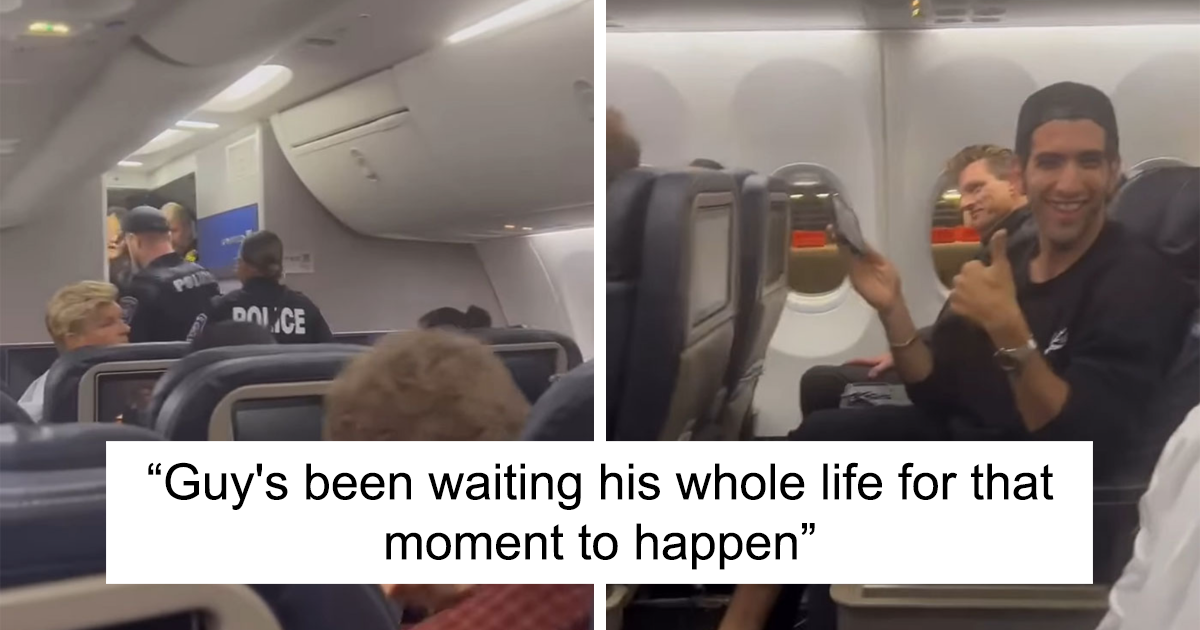
The twist? As authorities removed her from the plane, a first-class passenger reportedly played the famous Curb Your Enthusiasm theme. The cabin erupted in laughter, and the clip quickly became the kind of social media moment people replay not because the situation was safe or charming, but because the ending felt like instant public accountability with a tuba section.
American singer Rob Thomas shared the viral video on Instagram in September 2024, saying that his friend, Matchbox Twenty drummer Neal Daniels, had witnessed the incident and played the theme as the woman was escorted away. The full flight details were not publicly released, but the clip was widely discussed because it combined several modern internet magnets: airline chaos, alleged racism, passenger outrage, and a soundtrack that practically translates to, “Well, that didn’t go as planned.”
Why This Moment Spread So Quickly Online
The reason the video traveled so far is not hard to understand. Airline cabins are already pressure cookers with tray tables. People are tired, cramped, hungry, stressed about connections, and often one overhead-bin argument away from starring in someone’s TikTok. Add alleged racist behavior and a midair safety concern, and suddenly the entire cabin becomes a tiny flying courtroom where the verdict is delivered through nervous laughter.
The Curb Your Enthusiasm theme worked because it turned the moment into a familiar meme format. The music is widely associated with social embarrassment, bad decisions, and the type of awkward consequence that arrives exactly three seconds after someone insists they are completely right. In this case, the soundtrack did not make the reported behavior less serious. It made the ending feel absurdly precise.
Racism on a Plane Is Not “Just Being Rude”
It is tempting to treat viral travel clips like entertainment, but the reported behavior at the center of this story matters. Racist comments in a confined space are not merely impolite. They can create fear, humiliation, and a hostile environment for passengers who have nowhere to go. On the ground, someone can walk away from a bigot in the cereal aisle. At 35,000 feet, everyone is stuck in the same metal tube with recycled air and a shared desire to land without becoming a news headline.
Air travel depends on cooperation. Passengers do not need to become best friends. No one is asking seat 14C to join a book club with seat 14D. But basic respect is not optional. When someone targets others with racist comments, the cabin crew must decide whether the situation threatens safety, order, or passenger well-being. That decision can become urgent if the same person also appears to interfere with aircraft equipment or refuses crew instructions.
Attempting to Open an Emergency Door Changes Everything
The reported attempt to open an emergency door is the detail that pushes this story beyond “bad passenger behavior” and into serious aviation territory. Modern aircraft doors are designed so that opening one at cruising altitude is generally not realistic because cabin pressure holds the door in place. Still, an attempt to tamper with an exit is not treated casually. Crew members cannot simply shrug and say, “Well, physics has this one.”
Flight crews are trained to protect passengers, maintain order, and respond quickly when someone’s behavior threatens safety. A person who tries to open an exit, ignores instructions, or creates panic can distract the crew from their duties and force operational decisions, including diversion or emergency landing. That means delays, missed connections, extra fuel costs, law enforcement involvement, and an emotional hangover for everyone on board.
In other words, even if a door is not likely to open mid-flight, trying to open it is still a spectacularly bad idea. It is aviation’s version of pushing every button in an elevator during a fire drill while yelling at strangers. The consequences can be real, expensive, and legally serious.
What Federal Rules Say About Unruly Passengers
The Federal Aviation Administration has repeatedly warned travelers that disruptive behavior can lead to major penalties. Passengers who interfere with crew members may face civil fines, criminal prosecution, or both. The FAA’s current guidance says it can propose fines of up to $43,658 per violation in unruly passenger cases, and one incident may involve multiple violations.
The Department of Transportation has also noted that while unruly passenger reports have dropped significantly from the record highs seen in early 2021, unacceptable behavior continues. In 2024, airlines reported more than 1,240 unruly passenger cases by late August. Earlier that summer, the FAA reported 915 cases from January 1 to June 9, including 106 involving intoxication.
Federal law also treats assaulting, threatening, or intimidating flight crew members as a serious offense when it interferes with their duties. That matters because cabin crew are not onboard merely to hand out pretzels and demonstrate seat belts that somehow still confuse people. Their primary job is safety.
Why the Cabin Laughed
The laughter in the video does not necessarily mean passengers thought the alleged conduct was harmless. More likely, it was release laughter. People had reportedly experienced a frightening and disruptive situation, endured an emergency landing, and watched the source of the chaos walk past first class while the universe suddenly supplied theme music.
Humor often appears in tense public moments because it gives people a way to process stress. The cabin was not laughing at aviation safety. They were laughing at the contrast: a person accused of making racist comments and causing alarm was leaving the plane to a soundtrack famous for making bad judgment look ridiculous. It was not justice in the legal sense. It was social irony wearing noise-canceling headphones.
The Internet Loves Consequences With a Soundtrack
Viral culture has a soft spot for moments where consequences arrive neatly packaged. A person behaves badly. The crowd watches. Then something perfectly timed happens, and the internet says, “Yes, that will do.” This clip fits the formula because it had a beginning, middle, and punchline. The reported racist comments set the moral stakes. The emergency-door allegation raised the safety stakes. The escort off the plane delivered the consequence. The theme song added the cymbal crash.
Still, there is a line between laughing at accountability and turning serious incidents into pure entertainment. Racism is not funny. Passenger safety threats are not funny. Emergency landings are not funny for the crew, travelers, airline, or people waiting at the destination airport. What people found funny was the absurd ending, not the harm that made removal necessary.
How Flight Attendants Handle Disruptive Passenger Behavior
Flight attendants are trained to de-escalate, document, communicate with the cockpit, and protect the cabin. They often begin with calm verbal instructions. If a passenger refuses to comply, the crew may involve other crew members, reseat passengers, limit alcohol service, or request help after landing. In severe cases, the captain may choose to divert the flight so law enforcement can meet the aircraft.
That decision is never made lightly. Diversions are expensive and disruptive. They can delay hundreds of people, require rebooking, affect crew schedules, and create logistical headaches. But when safety is involved, convenience loses. The goal is not to punish the disruptive passenger for internet satisfaction. The goal is to keep everyone alive, orderly, and safely delivered to the ground.
What Passengers Should Do During an In-Flight Incident
If another passenger becomes abusive, racist, threatening, or physically disruptive, the smartest move is not to become the main character. Do not escalate. Do not crowd the aisle for a better video angle. Do not start a shouting match unless the cabin crew specifically needs help and it is safe to provide it. Alert a flight attendant if they are not already aware, follow crew instructions, and give them space to manage the situation.
Recording may help document what happened, but safety comes first. A useful video is steady, quiet, and respectful of victims. A bad video turns into a wrestling match with captions. Passengers should also remember that crew members may know details the rest of the cabin does not. What looks like “overreacting” from seat 22A may be part of a safety protocol based on repeated warnings, cockpit communication, or a passenger’s prior behavior.
The Bigger Issue: Flying Requires Shared Manners
Airplanes are one of the last places where strangers must cooperate intensely while having almost no personal space. There are babies, business travelers, nervous flyers, families, exhausted workers, and people who believe tuna salad is an acceptable cabin snack. Society survives this arrangement only because most people quietly agree to behave.
That agreement includes listening to crew instructions, respecting other passengers, keeping hateful comments out of public spaces, and not touching aircraft doors unless told to do so during an actual emergency. It also includes understanding that freedom of speech does not mean freedom from consequences when speech becomes harassment or helps create a safety problem.
Why This Story Resonates Beyond One Flight
The viral United Airlines incident resonated because it reflected a wider frustration with public misconduct. People are tired of seeing service workers abused, passengers threatened, and racist outbursts treated like quirky personality flaws. The theme song made people laugh, but the deeper satisfaction came from seeing a disruptive person removed from a shared environment.
In public spaces, consequences are often delayed or invisible. Someone cuts the line, screams at a cashier, insults a stranger, or makes everyone uncomfortable, and then simply walks away. On a plane, there is nowhere to disappear. When the behavior becomes serious enough, the entire system responds: crew, captain, ground staff, law enforcement, and occasionally one drummer with a perfectly timed playlist.
Experience Section: What Travelers Can Learn From This Viral Flight Moment
Anyone who flies often enough eventually learns that the cabin has its own strange social ecosystem. There is the passenger who boards with three “personal items” and the confidence of a magician. There is the person who reclines during meal service like they are launching a moon mission. There is the barefoot wanderer, the armrest diplomat, the loud video watcher, and the person who treats boarding group numbers as loose philosophical suggestions. Most of these behaviors are annoying but survivable. Racist harassment and safety interference are different. They are not travel quirks. They are threats to the shared peace that makes flying possible.
The biggest lesson from this incident is that passengers should treat the aircraft as a community, not a private living room with wings. Every action becomes bigger in a confined space. A rude comment can humiliate someone. A shouted insult can frighten a child. A refusal to follow instructions can distract trained professionals. A reckless grab at an emergency exit can turn a routine trip into a diversion that ruins hundreds of schedules.
Another useful lesson is that humor can help people cope, but it should not erase accountability. The theme song was funny because the timing was almost too perfect. But the reason it mattered was serious. The reported behavior had already crossed lines that no passenger should cross. Travelers watching similar situations should remember that laughing after the danger has passed is human; interfering while the crew is working is not helpful.
Frequent travelers also know that patience is a survival skill. Airports test everyone. Delays happen. Seats feel smaller. People get tired, hungry, and anxious. But stress does not excuse racism, threats, or unsafe behavior. A good traveler packs more than chargers and snacks; they pack self-control. That may not fit neatly into a carry-on, but it weighs less than a federal fine.
Finally, this story reminds passengers to appreciate flight crews. They deal with medical issues, anxious flyers, weather delays, family conflicts, intoxication, and occasionally someone trying to turn a commercial aircraft into their personal drama stage. The best thing passengers can do is follow instructions, speak up when safety is at risk, and resist the urge to make a bad situation worse. If the cabin needs a soundtrack, let it be after everyone is safe on the ground.
Conclusion
The viral moment of a racist woman reportedly being removed from a United Airlines flight while the Curb Your Enthusiasm theme played was funny because the timing was flawless. But beneath the internet comedy was a serious reminder: racism, harassment, and interference with flight safety do not belong in the sky or anywhere else. Air travel works only when passengers respect one another and trust the crew to keep order.
The woman’s reported removal became a meme, but the broader message is practical. Listen to flight attendants. Do not abuse fellow passengers. Do not create safety scares. And if your behavior causes an emergency landing, the internet may not give you sympathy. It may give you theme music.