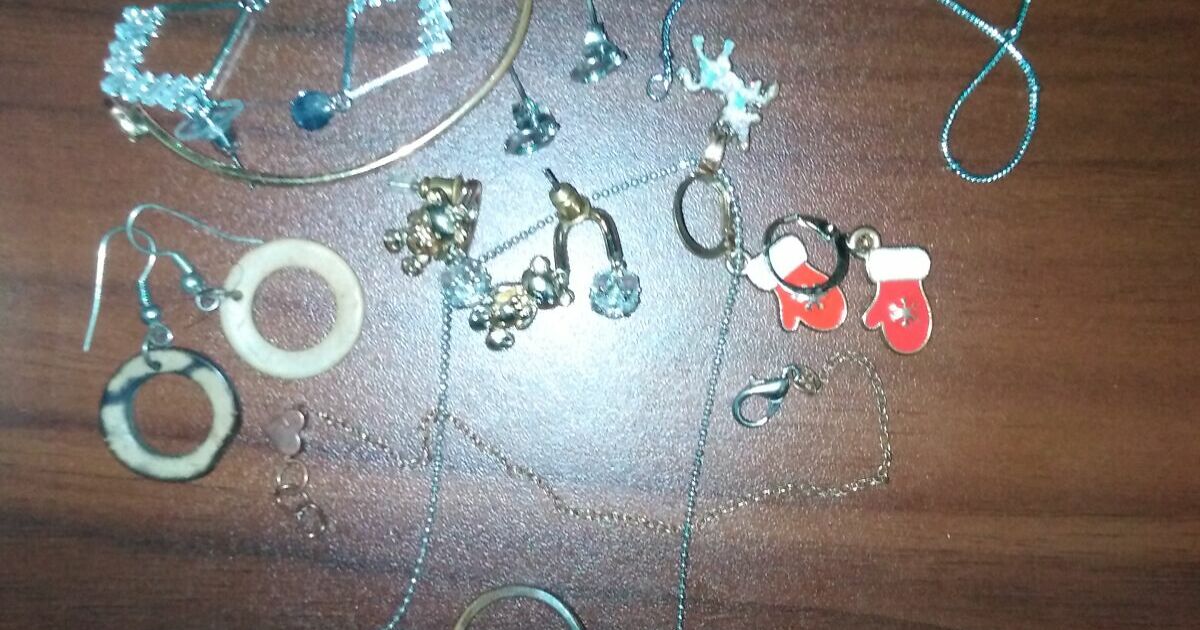
Open a jewelry box and you may find gold, silver, glass, beads, enamel, or a chain that has somehow tied itself into a knot worthy of an engineering degree. Look closer, though, and you will usually find something more interesting than materials: memories. A favorite piece of jewelry may celebrate a marriage, preserve a loved one’s handwriting, mark a hard-earned milestone, or simply make an ordinary Tuesday feel slightly more glamorous.
So, Pandas, this is your invitation to show us the ring, necklace, bracelet, brooch, watch, charm, earring, or delightfully mysterious trinket that means the most to you. It does not need to be expensive. It does not need to contain a gemstone with its own security detail. It only needs a story.
Why Favorite Jewelry Is Rarely Just Jewelry
Humans have used personal adornment to communicate identity, relationships, rank, belief, beauty, and belonging for thousands of years. Museums preserve jewelry not merely because it sparkles under display lights, but because it reveals how people saw themselves and how they wanted others to see them. The Metropolitan Museum of Art describes jewelry as an intimate art form connected to power, status, and identity, while Smithsonian collections document pieces that express family, culture, community, and personal symbolism.
That meaning continues in everyday life. A tiny pendant may become an anchor during a stressful day. A grandfather’s watch may feel like a portable conversation with the past. A handmade friendship bracelet may be objectively worth less than lunch, yet emotionally priceless. Research on possessions and identity also suggests that the things we own can become part of how we understand and present ourselves.
Sentimental Value Does Not Follow a Price Tag
Retail value is easy to print on a receipt. Sentimental value is gloriously uncooperative. It grows through anniversaries, awkward first dates, graduations, family traditions, and the occasional moment when a clasp survives being caught on a sweater.
Your favorite jewelry might be a diamond engagement ring, but it could just as easily be a plastic bead necklace made by your child, a stainless-steel band bought after your first paycheck, or a thrift-store brooch shaped like a judgmental cat. The important question is not, “How much did it cost?” It is, “What happens in your heart when you put it on?”
The Pieces People Treasure Most
Every jewelry collection is personal, but certain kinds of pieces tend to collect especially powerful stories. Consider these categories a friendly nudge while you decide what to share.
Family Heirlooms With a Past Life
Heirloom jewelry arrives carrying someone else’s history. It may have been worn to weddings, holiday dinners, job interviews, or grocery stores. That ordinary use often makes it more meaningful, not less. A slightly worn ring can show where another person’s hand met the world for decades.
Sometimes an inherited piece fits perfectly. Sometimes it resembles a chandelier designed during a fever dream. Both outcomes are valid. Gemological experts note that heirloom jewelry can be worn in a new way, reset, divided into several pieces, or redesigned while preserving important stones and emotional connections.
Milestone Jewelry You Earned Yourself
Not every treasured piece must come from another person. Self-purchased jewelry can represent independence, recovery, career success, a major birthday, or the day you finally stopped waiting for someone else to buy you something beautiful.
A ring purchased after completing a degree may carry more pride than a larger ring received casually. A modest necklace bought during a first solo trip can become a souvenir of courage. Jewelry can turn an invisible accomplishment into a physical reminder: you did the difficult thing, and now it has earrings.
Romantic Jewelry Without the Clichés
Engagement rings and anniversary bands naturally collect memories, but romantic jewelry does not have to follow a traditional script. It might feature a birthstone, coordinates of a meaningful place, a phrase in a partner’s handwriting, or a charm based on an inside joke that makes absolutely no sense to anyone else.
Historically, jewelry has often carried private messages. “Lover’s eye” jewelry from the late eighteenth century, for example, used miniature painted eyes in lockets, brooches, and rings as discreet keepsakes. Modern personalized jewelry continues the same basic idea: wear the story close, even when the rest of the world does not know the full plot.
Handmade Pieces With Beautiful Imperfections
Handmade jewelry often preserves the maker’s touch. A slightly uneven texture, hand-stamped letter, visible solder mark, or irregular bead arrangement can make a piece feel alive. Perfection is impressive, but personality is memorable.
This category includes artisan jewelry, children’s creations, DIY wirework, friendship bracelets, ceramic pendants, and repaired pieces that became more interesting after breaking. A necklace does not have to look like it belongs in a royal vault. Sometimes it only needs to look like someone cared while making it.
Fun Jewelry That Refuses to Be Serious
Let us also honor the lobster earrings, tiny sword necklaces, glow-in-the-dark rings, oversized costume brooches, and charms shaped like snacks. Jewelry can carry grief and legacy, but it can also carry a miniature croissant.
A favorite piece may be the one that reliably starts conversations or improves your mood. Wearable art has long blurred the line between accessory and sculpture, allowing the body to become a moving display space. In less museum-like terms, your earrings are allowed to be the main character.
How to Share Your Favorite Jewelry Story
A strong jewelry story does not require a dramatic family secret, although we will not complain if one appears. The most engaging submissions usually combine a clear photo with a few specific details.
Start With the Piece
Tell readers what they are looking at. Is it a silver locket, a turquoise ring, a gold-plated bracelet, a vintage watch, or a pair of earrings made from recycled guitar strings? Mention colors, materials, age, unusual markings, and any visible wear. Scratches are not automatically flaws; sometimes they are the piece’s travel log.
Explain How It Came to You
Was it inherited, gifted, found, traded, commissioned, made, or purchased during a meaningful moment? The origin often gives the object its emotional weight. Even a sentence such as, “I bought it with the first money I earned from my art,” can transform a pretty object into a complete story.
Describe Why You Still Wear or Keep It
Perhaps it makes you feel confident. Perhaps it reminds you of home. Perhaps you never wear it because it is fragile, but you open the box whenever you miss someone. Favorite jewelry does not have to be worn daily to matter daily.
Add One Tiny, Human Detail
The best stories often include something oddly specific: your grandmother hid the ring in a sugar bowl, your partner proposed while a dog stole the picnic, or the pendant always flips backward five minutes after you put it on. These details create warmth, humor, and authenticity.
Protecting the Jewelry You Love
Sentimental value cannot be replaced, which is an excellent reason not to clean every piece with whatever liquid happens to be under the kitchen sink. Jewelry materials respond differently to moisture, chemicals, heat, abrasion, and cleaning equipment.
Use Gentle Care and Know the Material
For many durable pieces, a soft cloth and careful cleaning can remove oils and dust. However, pearls, opals, turquoise, treated gemstones, plated metals, glued settings, and antique jewelry may need special handling. Pearls should generally be kept away from harsh chemicals and wiped with a soft cloth after wear, while opals can scratch or break more easily than many people expect. Ultrasonic cleaners are not suitable for every stone or setting.
When the material or treatment is unknown, ask a qualified jeweler before experimenting. The internet contains many cleaning “hacks,” and some of them have the energy of a person saying, “I wonder what happens if I microwave this.”
Store Pieces Separately
Chains tangle, hard gemstones scratch softer materials, and earrings have a supernatural ability to lose their partners. Use separate compartments, soft pouches, or lined boxes. Fasten necklaces before storage and keep delicate pieces away from rough surfaces.
Inspect Clasps, Prongs, and Settings
A loose stone rarely sends a calendar invitation before escaping. Check for movement, worn prongs, bent clasps, stretched stringing, and thinning links. Professional inspections and cleaning can help preserve fine jewelry, especially pieces worn frequently.
Document Valuable Pieces
For jewelry with significant financial value, keep photographs, receipts, grading reports, and appraisal records. Insurance coverage varies, and standard homeowners or renters policies may not cover every form of loss or damage. The Federal Trade Commission also advises consumers to pay attention to accurate descriptions and disclosures involving gemstones, laboratory-created stones, imitations, pearls, and precious metals.
When Favorite Jewelry Irritates Your Skin
A piece can be emotionally perfect and dermatologically rude. Nickel in jewelry is a common trigger of allergic contact dermatitis, which may cause itching, redness, dry patches, or a rash where the metal touches the skin. People with recurring reactions should stop wearing the suspected piece and consider medical evaluation rather than repeatedly negotiating with an angry earlobe.
Material labels matter, but so do alloys, plating, wear, and repairs. A jeweler may be able to identify the metal or discuss safer alternatives. For persistent or severe symptoms, a healthcare professional can assess the reaction and may use patch testing to identify an allergen.
What Your Favorite Piece Says About You
Choosing one favorite piece can reveal what you value. A family ring may show that continuity matters to you. A bold contemporary necklace may express creativity. A simple chain worn every day may reflect comfort, routine, or quiet loyalty. A novelty pin shaped like a possum wearing sunglasses may indicate excellent judgment.
Jewelry is unusually powerful because it sits at the meeting point of public style and private meaning. Other people see the object; you feel the story. That is why two nearly identical rings can have completely different emotional weight. One is an accessory. The other is the last birthday gift from your mother.
There is no correct choice for “favorite.” The winner does not need the highest carat weight, oldest hallmark, or most dramatic origin. It simply needs to be the piece you would reach for firstor rescue first, assuming every person and pet was already safe and nobody had left the oven on.
More Jewelry Experiences: Five Pieces, Five Very Different Stories
The following community-style experiences are illustrative composites based on the kinds of memories people commonly attach to jewelry. They are not presented as verified reader submissions, but they show how a small object can hold a remarkably large story.
The Bent Silver Ring
One favorite piece might be a narrow silver ring that no longer forms a perfect circle. Its owner bought it at a street market during the first trip she took alone. She was nervous, got lost twice, ordered a meal by pointing at a menu, and discovered that independence sometimes looks less like a movie montage and more like carrying the wrong train ticket for forty minutes.
The ring bent years later while she was moving furniture. A jeweler offered to reshape it, but she kept the slight curve. To her, it matched the trip: imperfect, uncomfortable in places, and still one of the best decisions she ever made.
Grandpa’s Watch That Runs Fast
Another treasured object could be an old mechanical watch inherited from a grandfather who believed arriving exactly on time was suspiciously close to being late. The watch gains several minutes each week. Its new owner could have it fully adjusted, but secretly enjoys the error. Every glance at the dial feels like a reminder to leave early, call family, and bring snacks.
The watch is not worn during sports or rainy weather. It comes out for weddings, interviews, and important dinnersthe occasions when a little borrowed confidence is useful.
The Tiny Gold Star
A small gold star pendant may look almost too simple to mention. Its story begins after a difficult year involving illness, job uncertainty, and the exhausting discovery that “taking things one day at a time” still requires getting through all the days.
The owner bought the pendant after receiving good news. It was not a grand reward, just a quiet marker that said, “You made it here.” Now she wears it whenever life becomes chaotic. The star does not solve problems, but it rests against her collarbone like a punctuation mark at the end of a hard sentence.
The Mismatched Earrings
A pair of favorite earrings may not technically be a pair. One is a blue glass drop; the other is a tiny brass moon. They belonged to two different sets, each of which lost a member during separate nights out. Instead of declaring both survivors useless, the owner began wearing them together.
Friends started associating the mismatched earrings with her style, and what began as an accident became a signature. The lesson is delightfully practical: losing one earring is a tragedy only until you find another lonely earring with compatible energy.
The Bracelet Made From a Handwritten Note
The final piece is a bracelet engraved with a short phrase copied from a parent’s handwriting. The original note was nothing ceremonialjust a reminder left on the kitchen counter. After the parent died, those ordinary words became extraordinary because they captured a voice, a habit, and a moment that once seemed too small to preserve.
The bracelet is worn with the engraving facing inward. Most people see only a plain band. The owner sees the message whenever she turns her wrist. That privacy is part of its beauty. Some jewelry announces itself across a room; some quietly speaks to one person.
Note: When sharing your own piece, protect personal information. Avoid showing identifying documents, precise locations, appraisal numbers, or security details alongside highly valuable jewelry.
Conclusion: Show Us the Jewelry You Would Never Replace
Favorite jewelry is wearable memory. It can connect generations, celebrate survival, express culture, mark love, or make an outfit approximately 37 percent more fabulous. Whether your treasure is a diamond ring, a hand-beaded necklace, a scratched watch, a thrifted brooch, or a charm that only you understand, its real value lives in the story attached to it.
Now it is your turn, Pandas. Show us your favorite piece of jewelry, tell us where it came from, and explain why it still matters. The shine may catch our attention, but the story is what we will remember.