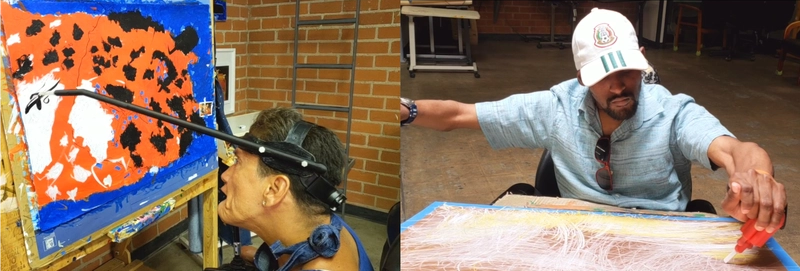
Assistive technology is where engineering stops showing off and starts showing up. It is the modified joystick that lets someone control a computer with less fatigue. It is the adaptive paintbrush holder that turns a tiny movement into a full canvas. It is the smart switch, the wheelchair add-on, the voice tool, the homemade mount, and the “wait, why does this cost $900?” gadget rebuilt by makers for a fraction of the price. That spirit is exactly why the collaboration between the Hackaday Prize and UCPLA has mattered so much.
The Hackaday Prize has long celebrated hardware projects that solve real problems, not just gadgets that look good on a workbench under dramatic lighting. UCPLA, known for supporting people with cerebral palsy and other developmental disabilities, brings the lived experience side of the equation. Together, they highlight a powerful truth: the best assistive technology is not designed for people; it is designed with people.
In a world where more than one in four U.S. adults lives with some type of disability, assistive technology is not a niche. It is infrastructure for independence. It helps people communicate, work, learn, cook, create art, travel, control their environment, and participate in community life. When open-source makers, nonprofit specialists, engineers, caregivers, and disabled users collaborate, the result is not just better technology. It is a better design culture.
Why the Hackaday Prize Matters in Assistive Technology
The Hackaday Prize is built around a simple but ambitious idea: use hardware innovation to improve the world. Unlike traditional product competitions, it is rooted in open documentation, community review, prototyping, and practical problem-solving. That makes it especially valuable for assistive technology, where the “perfect” solution is often personal, adjustable, and shaped by the details of someone’s daily routine.
Commercial assistive devices can be excellent, but they can also be expensive, hard to customize, slow to obtain, or too generic for a person’s specific movement pattern. A person may not need a sleek, mass-market device; they may need a reliable switch mounted at a precise angle on a chair tray. They may need a controller that works with one finger, a head movement, a cheek, or a foot. They may need something that survives daily life, spilled juice, enthusiastic pets, and the occasional gravity test.
This is where maker culture shines. Hackaday’s community includes engineers, designers, programmers, machinists, 3D-printing enthusiasts, students, and professional tinkerers who are comfortable asking, “Can we build this better, cheaper, and more openly?” For assistive technology, that question can change someone’s day, career, or creative life.
UCPLA Brings the Human Reality to the Design Table
UCPLA’s role is important because assistive technology cannot be judged only by clever circuitry. A device may be technically brilliant and still fail if it ignores comfort, fatigue, posture, dignity, setup time, or how a person naturally moves. UCPLA’s work with people who have developmental and physical disabilities helps makers focus on usability instead of novelty.
One of the strongest design lessons connected with UCPLA’s assistive technology work is the importance of natural movement. Instead of forcing a user to adapt to the device, the device should adapt to the user. That sounds obvious until you look at how many products assume everyone can grip, press, swipe, reach, sit, speak, or focus in the same way.
Designing for natural movement means observing what a person already does comfortably. Maybe they can rotate a wrist slightly but cannot press a standard button. Maybe they can use large arm movements but not fine finger control. Maybe they have strong visual attention but limited hand access. In each case, the best solution begins with the person’s actual abilities, not an imaginary “average user” who apparently lives in a product brochure.
What Assistive Technology Really Includes
Assistive technology is a broad category. It can include mobility tools, communication devices, adaptive utensils, environmental controls, computer access systems, hearing aids, screen readers, cognitive support apps, positioning equipment, smart-home switches, and customized mounts. In plain English, it includes tools that help people do what they want and need to do with more independence, safety, and participation.
Access to Computers and Communication
For many people, computer access is access to education, employment, friendship, entertainment, and self-expression. Adaptive keyboards, eye-tracking tools, switch interfaces, alternative mice, joystick controls, and voice-input systems can turn a computer from an inaccessible rectangle into a doorway.
The Hackaday community has shown special strength in this area because computer access can often be improved with microcontrollers, sensors, custom enclosures, and open-source software. A small board, a few switches, and thoughtful code can become a personalized interface that fits someone’s body and routine far better than a one-size-fits-all product.
Creative Tools for Art and Expression
Assistive technology is not only about basic survival tasks. It is also about joy. UCPLA’s work has included adaptive equipment that helps people create with paintbrushes, chalk, and other tools. That matters because creativity is not optional decoration in human life. It is identity, communication, confidence, and sometimes a much-needed way to tell the world, “I am here, and I have style.”
An adaptive art tool may look simple: a grip, a mount, a stabilizer, a longer handle, or a holder that positions a brush at the right angle. But simple does not mean small impact. A well-designed tool can transform art from something someone watches others do into something they actively create.
Everyday Independence at Home
Many assistive devices focus on daily living: opening doors, controlling lights, adjusting beds, operating appliances, using phones, or preparing food. These are ordinary tasks, which is exactly why they matter. Independence is often built from dozens of tiny moments that most people barely notice.
Open hardware can help by making devices more modular and repairable. A custom switch for a lamp, a low-cost remote control adapter, or a smart-home button with a large accessible surface can reduce reliance on caregivers for small actions. That does not remove the value of support; it gives people more choice over when they need it.
The Power of Open-Source Assistive Devices
Open-source design is one of the most exciting forces in modern assistive technology. When a project is documented openly, other makers can copy it, modify it, repair it, improve it, and adapt it for local needs. This is especially important because disability is diverse. Two people with the same diagnosis may need completely different interfaces.
Open-source assistive technology also lowers barriers. If a commercial device is too expensive or unavailable, a documented design may allow a local makerspace, school lab, rehabilitation engineer, or family member to build a version. Of course, safety and reliability still matter. A device that supports posture, mobility, or medical needs must be developed carefully. But for many access tools, open design can accelerate experimentation and reduce cost.
The Hackaday Prize encourages documentation, which is a quiet superpower. A beautiful prototype without instructions is a magic trick. A documented prototype is a seed. It can travel, improve, and help people the original creator may never meet.
Real Examples of Assistive Innovation
Assistive technology projects connected to Hackaday-style innovation often focus on practical barriers. Some teams have explored low-cost Braille tools, adaptive controllers, powered chair or bed controls, eye-tracking indicators, robotic gloves, accessible input devices, and mobility-related modifications. These projects vary in complexity, but they share a common mission: make daily tasks easier, more affordable, and more user-centered.
Adaptive Controllers
Adaptive controllers are a perfect example of why customization matters. A standard remote, keyboard, or game controller assumes a specific hand shape and movement range. Adaptive controllers can use larger buttons, switches, joysticks, sip-and-puff inputs, head movements, or other alternative access methods. For someone with limited fine motor control, the difference can be enormous.
Smart Chair and Bed Controls
Powered beds and recliners can support comfort, pressure relief, and independence, but their controls are not always accessible. A smart controller can allow a person to adjust position using a more suitable input method. That can mean less waiting, less discomfort, and more control over one’s own body and environment.
Low-Cost Tactile and Braille Tools
Braille displays and embossers can be costly. Maker-driven projects exploring lower-cost tactile output show how open hardware can challenge traditional pricing. Even when prototypes are not ready for mass use, they push the field forward by asking what can be simplified, shared, and rebuilt.
Why Co-Design Beats Guesswork
The most successful assistive technology begins with listening. Engineers may understand sensors, torque, software, and materials, but users understand the lived reality of fatigue, frustration, comfort, privacy, and social awkwardness. A device that takes five minutes to set up may be technically functional but practically abandoned. A tool that looks “medical” may work well but make the user feel singled out in public. A switch that requires too much pressure may be fine in a demo and exhausting by lunchtime.
Co-design means disabled users are not treated as testers at the end of the process. They are experts from the beginning. They help define the problem, evaluate prototypes, reject bad assumptions, and identify what actually matters. This approach produces better technology and better ethics.
It also prevents the classic inventor mistake: solving the wrong problem beautifully. Nobody needs a gold-plated robotic spoon if the real issue is that the handle is too narrow, slippery, or poorly angled. Sometimes the best solution is not futuristic. Sometimes it is foam, Velcro, a 3D-printed bracket, and humility.
Affordability Is Not a Bonus; It Is the Point
Assistive technology can be life-changing, but access remains uneven. Cost, insurance rules, limited availability, training gaps, and repair delays all create barriers. A device sitting in a catalog does not help someone who cannot afford it, obtain it, or customize it.
That is why affordability matters so much. Hackaday-style assistive tech projects often use accessible components: microcontrollers, 3D-printed parts, commodity sensors, open-source software, and standard hardware. These materials do not automatically make a device perfect, but they can make experimentation more realistic.
Affordability also includes maintenance. If a device breaks, can someone fix it locally? Are replacement parts available? Is the design understandable? A low-cost device that can be repaired with common tools may be more useful than an expensive product that becomes a paperweight when one proprietary cable disappears into the mysterious cable dimension.
The Role of Makerspaces, Schools, and Communities
Assistive technology development should not live only in corporate labs. Makerspaces, universities, rehabilitation centers, libraries, nonprofits, and community workshops can all contribute. These spaces bring together people with different skills: a caregiver who knows the daily routine, a user who knows the movement challenge, a student who can code, a machinist who can fabricate, and a designer who can make the device comfortable and attractive.
Community-based innovation is especially powerful because needs are local. A person may need a device adapted to a specific wheelchair, desk, kitchen, classroom, or job site. Local makers can iterate quickly and learn directly from the user. That kind of feedback loop is hard to beat.
Design Principles for Better Assistive Technology
Start With the User’s Goal
The goal is not “build a switch.” The goal is “help Maria turn on her music without waiting for someone.” The goal is not “make a robot arm.” The goal is “help Jordan pick up a cup safely.” Clear human goals lead to better technical decisions.
Design for Comfort and Fatigue
A motion that works once may not work 100 times a day. Good assistive technology accounts for fatigue, posture, pressure, and ease of repeated use.
Make It Adjustable
Human bodies change. Needs change. A useful device should allow adjustment in angle, pressure, position, sensitivity, or mounting whenever possible.
Document Everything
Open documentation allows others to reproduce, repair, and improve a design. Photos, parts lists, wiring diagrams, code, safety notes, and assembly steps can turn one good idea into many better versions.
Respect Dignity
Assistive devices should not make users feel like engineering projects on wheels. Aesthetics, privacy, and personal preference matter. A device can be functional and still look good.
How Hackaday Prize and UCPLA Push the Field Forward
The real value of the Hackaday Prize and UCPLA collaboration is not just a list of prototypes. It is the model. Hackaday brings a global community of builders and a culture of open innovation. UCPLA brings direct experience with disability support, adaptive equipment, and the day-to-day realities of independence. Together, they show how assistive technology can move faster when the right people are in the same conversation.
This model also reframes disability innovation. Instead of treating assistive devices as charity products, it treats them as serious design challenges worthy of talent, funding, iteration, and public attention. That matters. People with disabilities deserve more than leftovers from mainstream technology. They deserve thoughtful tools built around their lives.
The Future of Assistive Technology Is Personal, Open, and Practical
The next wave of assistive technology will likely combine open hardware, artificial intelligence, 3D printing, smart-home platforms, wearable sensors, robotics, and better accessibility standards. But the most important ingredient will still be listening. Technology should not chase novelty for its own sake. It should solve real problems in ways people can trust and use.
Imagine more open libraries of tested adaptive devices. Imagine local clinics connected with makerspaces. Imagine schools teaching students to design with disabled users instead of merely designing for imaginary customers. Imagine repairable assistive tools with shared parts, clear instructions, and community support. That future is possible, and efforts like the Hackaday Prize and UCPLA partnership help point the way.
Experience-Based Reflections: What Assistive Technology Teaches Us
When you spend time around assistive technology, one lesson appears quickly: the smallest improvements can feel enormous. A button moved two inches closer can reduce strain. A handle made thicker can turn a frustrating task into an easy one. A device that takes ten seconds less to set up can be the difference between using it daily and leaving it in a drawer next to old chargers and mysterious Allen keys.
People often imagine assistive technology as something dramatic, like robotic exoskeletons or brain-computer interfaces. Those tools are exciting, but much of the real magic happens in quieter places. It happens at a kitchen table when someone can prepare part of a meal independently. It happens in an art room when a person who has limited hand control paints with confidence. It happens at work when an accessible computer setup allows someone to complete tasks without unnecessary help. It happens when technology gives a person back a little privacy, speed, or spontaneity.
One of the most meaningful experiences related to this topic is watching how quickly assumptions fall apart during real-world testing. A maker may proudly present a prototype, only to discover that the switch is too stiff, the mount blocks a wheelchair tray, the cable gets caught, or the device requires a caregiver to reset it every few minutes. This is not failure. This is the design process doing its job. The user’s feedback turns a clever object into a useful tool.
Another important lesson is that independence does not mean doing everything alone. It means having choices. Assistive technology should expand options, not replace relationships or support. A well-designed device can let someone decide when to ask for help and when to act on their own. That choice is powerful because it restores control over ordinary moments.
There is also a cultural lesson here. Hackaday-style projects remind us that innovation does not have to come from a giant company with a glossy launch video and a soundtrack that sounds like a spaceship waking up. Innovation can come from a garage, a school lab, a nonprofit workshop, or a weekend build session. It can come from someone asking a friend, “What would make this easier for you?” and then actually listening to the answer.
The partnership between Hackaday Prize and UCPLA shows that assistive technology is strongest when it is practical, affordable, respectful, and open to revision. The future will not be built by technology alone. It will be built by communities that understand that access is not a special feature. It is a basic design requirement. And honestly, once you see the world that way, bad design becomes much harder to ignore.
Conclusion
Hackaday Prize and UCPLA are driving assistive technology forward by proving that meaningful innovation begins with real people and real needs. Their shared approach brings together open-source creativity, hands-on engineering, disability expertise, and a deep respect for independence. The result is more than a contest or a collection of prototypes. It is a roadmap for how communities can build tools that help people communicate, work, create, move, and live with greater freedom.
Assistive technology does not need to be cold, complicated, or wildly expensive to be powerful. Sometimes it needs to be adjustable, repairable, affordable, and designed around one person’s natural movement. That is the beauty of this work: it reminds us that good design is not about impressing everyone. It is about helping someone do something that matters.