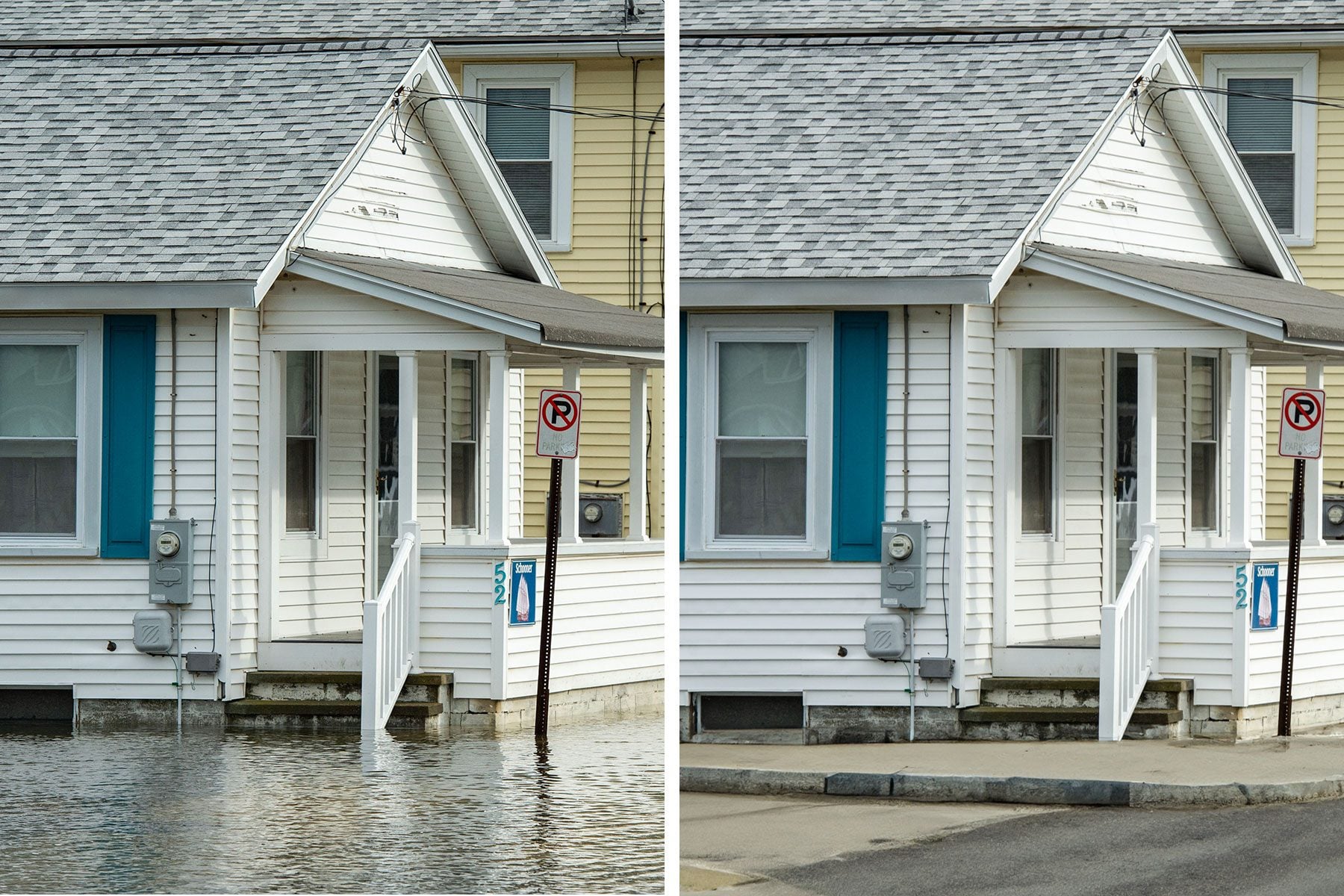
Your basement is filling with water, your couch is beginning an unauthorized swimming lesson, and you assume your homeowner’s insurance company will handle everything. Unfortunately, the answer may depend on one deceptively simple question: Where did the water come from?
Standard homeowner’s insurance and flood insurance protect against different causes of damage. A homeowner’s policy may cover water released suddenly from a broken pipe, while rejecting a claim for water that flowed through the front door after a creek overflowed. Flood insurance may cover the second event but not the first.
Understanding the difference before a storm arrives can help you avoid uncovered repairs, confusing claims, and the unpleasant discovery that “water damage” is not one universal insurance category.
The Basic Difference Between Flood and Homeowner’s Insurance
Homeowner’s insurance is a broad package of property and liability protection. It generally covers the house, personal belongings, certain detached structures, personal liability, and additional living expenses when a covered event makes the home temporarily uninhabitable.
Flood insurance is narrower. It is designed specifically to cover direct physical damage caused by flooding, such as overflowing rivers, storm surge, rapidly accumulating surface water, and certain mudflows.
The easiest way to remember the distinction is this:
- Water coming from inside or through storm-created damage: homeowner’s insurance may apply.
- Water rising from the ground or moving across normally dry land: flood insurance is usually required.
The exact wording of the policy always controls. Insurance contracts contain definitions, conditions, deductibles, exclusions, and endorsements that can change the outcome of an individual claim.
Research support:
What Does Homeowner’s Insurance Usually Cover?
A standard homeowner’s insurance policy protects against many sudden and accidental losses. Although coverage varies by insurer, state, and policy form, a typical policy includes several major categories.
Damage to the House
Dwelling coverage helps repair or rebuild the home after a covered peril such as fire, lightning, wind, hail, vandalism, or an explosion. Attached features, including an attached garage or built-in cabinets, are generally included in this coverage.
Detached Structures
Other-structures coverage may protect a detached garage, fence, gazebo, shed, or similar structure. The limit is commonly calculated as a percentage of the dwelling limit, although the actual amount appears on the policy’s declarations page.
Personal Belongings
Personal-property coverage can reimburse you for furniture, clothing, electronics, appliances, and other possessions damaged by a covered event. Policies may settle these claims using replacement cost or actual cash value, depending on the coverage selected.
Additional Living Expenses
When covered damage makes a home unlivable, loss-of-use coverage may pay reasonable additional costs, such as temporary lodging, restaurant meals, laundry, and increased transportation expenses. These benefits are typically subject to time and dollar limits.
Liability and Medical Payments
Homeowner’s insurance also commonly includes personal liability protection. It may help when a household member is legally responsible for another person’s injury or property damage. Limited medical-payments coverage may pay certain medical bills without requiring a lawsuit.
Sudden Internal Water Damage
Many policies cover resulting damage from a sudden plumbing failure, such as a burst pipe, ruptured water-heater tank, or broken washing-machine hose. The insurer may pay to repair wet drywall and flooring while declining to replace the worn-out appliance or pipe that caused the leak.
Long-term seepage, neglected maintenance, rot, corrosion, and gradual leaks are frequently excluded. Insurance is intended for unexpected losses, not for a pipe that has been quietly dripping since flip phones were fashionable.
Research support:
What Homeowner’s Insurance Usually Does Not Cover
Standard policies contain important exclusions. Flooding is one of the biggest, but it is not the only one. Commonly excluded or limited losses include:
- Flooding and storm surge
- Earthquakes and earth movement
- Routine wear and tear
- Termite or insect damage
- Gradual leaks and repeated seepage
- Damage caused by neglect
- Sewer or drain backup without an applicable endorsement
- Certain wind or hail losses in coastal markets
Some exclusions can be addressed through endorsements or separate policies. For example, insurers may offer water-backup coverage for damage caused by a backed-up sewer, drain, or sump pump. Coastal homeowners may also need a separate windstorm policy.
What Counts as a Flood?
In everyday conversation, people may say the dishwasher “flooded” the kitchen. Insurance policies use the word more precisely.
Flooding generally involves excess water covering land that is normally dry. It may result from heavy rainfall, an overflowing river, rapid snowmelt, storm surge, failed drainage systems, or water accumulating so quickly that it moves across neighboring properties.
A plumbing leak confined to one house is usually not considered a flood under a flood insurance policy. That event is more likely to be evaluated under homeowner’s insurance.
This distinction explains why two rooms containing equally soggy carpet can produce completely different claim decisions. Insurance companies focus on the cause of the loss, not simply the presence of water.
Research support:
What Does Flood Insurance Cover?
Flood insurance is available through the Federal Emergency Management Agency’s National Flood Insurance Program, commonly called the NFIP, and through private flood insurers. NFIP coverage may be purchased through participating insurance agents and companies even though the federal government backs the program.
Building Coverage
Flood building coverage can protect the structure and certain permanently installed components, including:
- The foundation and structural walls
- Electrical and plumbing systems
- Furnaces and water heaters
- Central air-conditioning equipment
- Permanently installed cabinets and bookcases
- Some built-in appliances
- Permanently installed carpeting
- Debris removal related to covered flood damage
Contents Coverage
Contents coverage protects eligible belongings inside the home, such as furniture, clothing, portable appliances, washers, dryers, freezers, and electronics. Under an NFIP policy, contents coverage is separate from building coverage rather than automatically bundled with it.
Homeowners should confirm that both categories appear on the quote. A building-only policy could repair flood-damaged drywall while leaving the owner responsible for replacing the sofa, television, and other possessions.
NFIP Residential Coverage Limits
For an eligible one-to-four-family residence, the NFIP generally offers up to $250,000 in building coverage and up to $100,000 in contents coverage. Private insurers may offer higher limits, broader benefits, or different deductibles.
Research support:
Important Flood Insurance Limitations
Additional Living Expenses May Not Be Included
A standard NFIP policy generally does not pay hotel bills or other additional living expenses while a flooded home is repaired. Some private flood policies offer loss-of-use coverage, making this an important comparison point when shopping.
Basement Coverage Is Limited
NFIP coverage below the lowest elevated floor is restricted. Essential equipment such as a furnace, water heater, electrical components, washer, or dryer may qualify, but furniture, finished flooring, entertainment systems, and many other basement contents may not.
A beautifully finished basement can therefore contain a surprisingly large uninsured investment. Review the policy before installing a home theater at the lowest point of the property.
Vehicles Are Not Covered
Neither homeowner’s insurance nor residential flood insurance normally covers a flooded car. Vehicle damage is generally handled by comprehensive auto coverage.
Outdoor Property Has Limited Protection
Landscaping, decks, patios, fences, swimming pools, hot tubs, currency, valuable papers, and property located outside an insured building may be excluded or restricted.
Mold and Moisture Claims Depend on Cause
Flood-related mold damage may be limited or excluded when it could have been prevented through reasonable cleanup. Policyholders should begin safe drying and mitigation as soon as possible, while documenting conditions before discarding damaged materials.
Research support:
Flood Insurance vs. Homeowner’s Insurance at a Glance
| Situation | Homeowner’s Insurance | Flood Insurance |
|---|---|---|
| A pipe suddenly bursts inside the wall | Often covers resulting damage | Generally does not apply |
| A river overflows into the house | Generally excluded | Generally covered, subject to policy terms |
| Storm surge enters a coastal home | Generally excluded as flood | Generally covered |
| Wind tears off shingles and rain enters | May be covered if wind is insured | Usually does not apply |
| A sewer backs up without area flooding | May require a water-backup endorsement | Generally not covered |
| Groundwater seeps through the foundation | Usually excluded | Depends on whether the event meets the policy’s flood definition |
| A flooded vehicle is damaged | Not covered | Not covered |
| Temporary lodging after covered damage | Often included for covered losses | Not included in a standard NFIP policy |
Tricky Water-Damage Scenarios
Wind-Driven Rain
Suppose a windstorm damages the roof and rain enters through the opening. If wind is covered, the homeowner’s policy may pay for resulting interior damage. If water rises from the street and enters through the same room’s doorway, the flood policy is the more likely source of coverage.
Storm Surge
Storm surge is treated as flooding, even when it accompanies a hurricane. Homeowner’s insurance may cover wind damage from the hurricane while flood insurance handles surge damage. After a major coastal storm, both insurers may need to investigate.
Sewer and Drain Backup
A sewer backup caused by a clogged municipal line may be covered only when the homeowner purchased a water-backup endorsement. When a widespread flood causes sewage to enter the home, the policy analysis becomes more complicated. Coverage depends on the wording of both policies and the primary cause of the loss.
Repeated Seepage
Water that slowly seeps through a cracked foundation over several months is commonly excluded as maintenance-related or gradual damage. Flood insurance is not a substitute for waterproofing, drainage improvements, or foundation repairs.
Research support:
Do You Need Flood Insurance Outside a High-Risk Zone?
A property does not need to sit beside an ocean or river to flood. Intense rainfall, clogged drainage systems, new construction, wildfire-altered terrain, rapid snowmelt, and overwhelmed storm sewers can affect homes far from a mapped shoreline.
Flood maps are valuable planning tools, but they do not guarantee that a property will remain dry. They also change as terrain, development, drainage patterns, and flood studies evolve.
Homes with mortgages in designated Special Flood Hazard Areas are generally required to carry flood insurance. Owners outside those areas may not face a lender requirement, but they can still purchase coverage. A lender’s decision not to require flood insurance is not the same as a professional promise that flooding cannot occur.
Research support:
NFIP vs. Private Flood Insurance
The NFIP provides standardized coverage backed by the federal government. It can be a dependable option for eligible properties in participating communities, but its residential limits and exclusions may leave gaps for expensive homes or households with substantial belongings.
Private flood insurance is issued by private companies. Depending on the carrier and location, a private policy may provide:
- Higher building and contents limits
- Additional living-expense coverage
- Coverage for basements or detached structures
- Shorter waiting periods
- Replacement-cost coverage for more belongings
- Broader protection for valuables
Broader coverage is not guaranteed. Private policies may use different definitions, deductibles, exclusions, renewal rules, and underwriting standards. Compare the complete contracts rather than choosing solely by premium.
Watch the Waiting Period
NFIP policies generally have a 30-day waiting period before coverage becomes effective, although certain exceptions apply, including some policies purchased in connection with a new loan or a lender’s insurance requirement.
Buying coverage when a hurricane appears on the weather map is usually too late. Insurance is designed for future uncertainty, not for a flood that has already begun sending a calendar invitation.
Private insurers may use shorter waiting periods, but their rules vary. Ask for the exact effective date in writing.
Research support:
How to Choose the Right Protection
Review the Source-of-Water Rules
Ask your agent how the policy handles rising surface water, storm surge, sewer backup, sump-pump overflow, groundwater seepage, burst pipes, roof leaks, and wind-driven rain. These scenarios sound similar after the carpet gets wet but may fall under different contracts.
Estimate Rebuilding Costs
Do not confuse the home’s market value with its rebuilding cost. Land value does not need to be insured, but labor, materials, demolition, debris removal, contractor demand, and building-code requirements can make reconstruction expensive.
Create a Home Inventory
Photograph rooms, closets, appliances, electronics, furniture, and valuable items. Record model and serial numbers when practical. Store copies of receipts and the inventory in secure cloud storage or another location outside the home.
Compare Deductibles Carefully
Flood policies may have separate deductibles for the building and contents. A loss affecting both categories could therefore trigger two deductibles. Homeowner’s policies may also carry special wind or hurricane deductibles calculated as a percentage of the dwelling limit.
Check Loss-of-Use Coverage
Determine who pays for temporary housing after a flood. A lower-priced policy may become considerably less charming when it leaves you responsible for months of rent and restaurant meals.
Review Coverage Annually
Renovations, finished basements, new appliances, rising construction costs, and major purchases can make old limits inadequate. Review both policies at renewal and after significant changes to the property.
What to Do After Water Damages Your Home
- Protect people first. Avoid moving water, contaminated floodwater, unstable structures, and electrical hazards.
- Notify every potentially applicable insurer. When wind and flood both contributed, report the event to both companies.
- Photograph before cleaning. Capture water lines, exterior conditions, damaged rooms, appliances, flooring, walls, and belongings.
- Prevent additional damage. Make safe temporary repairs, remove standing water when authorities say it is safe, and retain receipts.
- Do not discard everything immediately. Keep samples of damaged flooring, fabric, or building materials when safe and practical.
- Prepare an itemized inventory. Include descriptions, approximate ages, purchase prices, and replacement estimates.
- Track deadlines. NFIP claims generally require a signed proof of loss within 60 days unless FEMA extends the deadline for a particular event.
- Request written explanations. When coverage is denied or limited, ask the insurer to identify the policy language supporting its decision.
Research support:
Common Flood Insurance Mistakes
- Assuming homeowner’s insurance covers every type of water damage
- Waiting until a storm is approaching to buy coverage
- Buying building coverage but forgetting contents coverage
- Underestimating the value of belongings
- Assuming a low-risk flood zone means zero risk
- Expecting an NFIP policy to pay additional living expenses
- Storing expensive furniture and electronics in a basement
- Ignoring separate building and contents deductibles
- Relying on federal disaster assistance instead of insurance
- Discarding damaged property before documenting it
Real-World Experiences: Lessons Behind the Policy Language
The following composite experiences reflect common situations faced by U.S. homeowners. They illustrate how the source of water, selected endorsements, documentation, and policy limits can affect a claim.
Experience One: The Basement That Was “Not in a Flood Zone”
A family purchased a home several blocks from the nearest mapped high-risk flood area. Because the lender did not require flood insurance, the owners assumed the property was safe. Three years later, an intense thunderstorm overwhelmed neighborhood drains. Water moved across multiple yards and entered the basement through a window well.
The homeowner’s insurer denied the damage because it resulted from surface flooding. The family had no separate flood policy. Drywall, flooring, furniture, exercise equipment, and stored holiday decorations had to be replaced out of pocket.
The biggest lesson was that a lender requirement measures regulatory and financial risk; it does not predict whether an individual basement will remain dry. The family later purchased flood insurance, added window-well protection, moved valuable items upstairs, and installed water sensors.
Experience Two: One Storm, Two Insurance Claims
During a hurricane, wind damaged a coastal home’s roof before storm surge entered the first floor. The homeowner initially reported everything as a single hurricane loss. The insurer separated the damage by cause: the homeowner’s or windstorm policy evaluated the roof and rain entering through the wind-created opening, while the flood insurer evaluated damage caused by rising surge.
Photographs taken immediately after the storm helped show that ceiling damage began around the roof opening, while a visible water line supported the flood portion of the claim. Without documentation, separating wind damage from flood damage would have been much harder.
The practical lesson was simple: after a complex storm, notify every insurer that might apply. Let the adjusters evaluate causation rather than deciding on your own that only one policy is relevant.
Experience Three: The Covered Pipe and the Uncovered Repair
A supply line behind a bathroom wall suddenly ruptured while the owners were away for the weekend. Their homeowner’s policy covered damaged drywall, flooring, and a downstairs ceiling because the release of water was sudden and accidental.
However, the failed plumbing component itself was not paid in full. The insurer treated the worn part as the source of the loss rather than resulting damage. The homeowners were surprised, but the distinction reflected a common insurance principle: a policy may cover what a failed item damages without paying to replace the deteriorated item.
The experience also demonstrated why the word “flooded” can create confusion. The bathroom was certainly full of water, but the event was not a flood under a flood insurance contract.
Experience Four: The Finished Basement Coverage Gap
Another homeowner carried both homeowner’s and NFIP flood insurance and felt thoroughly protected. A flash flood entered the finished basement, damaging a furnace, washer, dryer, sectional sofa, television, flooring, and built-in entertainment area.
The flood policy paid for certain eligible equipment and structural components but provided limited protection for many improvements and belongings below the lowest elevated floor. The owner had insurance, yet still faced a substantial personal expense.
The lesson was not that flood insurance lacked value. Without it, the loss would have been significantly worse. The lesson was to understand basement restrictions, compare private alternatives, and avoid treating the lowest level of a home as a fully insured storage vault.
Conclusion: Two Policies, Two Different Jobs
Homeowner’s insurance and flood insurance are partners, not substitutes. Homeowner’s coverage generally protects against fire, theft, liability, wind, and certain sudden internal water losses. Flood insurance addresses rising water, overflowing waterways, storm surge, and qualifying surface flooding.
The difference becomes expensive only when it is discovered after the damage. Review the policies, ask detailed questions about water-related exclusions, compare NFIP and private flood options, and document your property before the weather forecast becomes alarming.
The goal is not to buy every insurance product ever invented. It is to identify the losses capable of disrupting your finances and make a deliberate decision about which risks to insure, reduce, or accept.