Editorial note: Apple AirTag deals move fast, especially during Prime Day, Prime Big Deal Days, Black Friday, Cyber Monday, and the “wait, is this sale somehow still going?” period afterward. Prices mentioned in this article are based on recent U.S. deal trends and historical sale coverage, not a guarantee of current availability.
Apple AirTags have become one of those tiny gadgets that make people wonder how they ever survived without them. Keys? Tagged. Backpack? Tagged. Luggage? Absolutely tagged, especially if you have ever stood at baggage claim watching everyone else leave while your suitcase apparently decided to tour Chicago without you.
That is why extended Prime Day Apple AirTag deals are worth paying attention to. AirTags are small, simple, and useful, but they are even better when you are not paying full price. During major Amazon sale events, the Apple AirTag 4-pack has repeatedly dropped well below its usual $99 list price, with recent deal coverage showing prices around the mid-$60 range during Prime Day and October Prime Day-style events. For shoppers who already know they want more than one tracker, the four-pack is usually the sweet spot.
This guide breaks down why AirTags remain one of the best Apple accessories to buy on sale, what deal prices are actually worth grabbing, who should buy the single AirTag versus the 4-pack, and how to use AirTags for travel, school, daily commuting, and family gear without turning your life into a detective show.
Why Apple AirTag Deals Are So Popular During Prime Day
Prime Day is famous for turning practical tech into impulse buys, but AirTags are not just another drawer-bound gadget. They solve a real, everyday problem: people lose things. Frequently. Sometimes loudly. Sometimes five minutes before leaving the house.
An AirTag works through Apple’s Find My network. It sends out a secure Bluetooth signal that can be detected by nearby Apple devices in the Find My network. The location is then shown in the Find My app, using an anonymous and encrypted process designed to protect privacy. In plain English, your AirTag does not need its own cellular plan or monthly subscription. It quietly relies on the massive Apple device ecosystem around it.
That is the magic behind the deal hype. When AirTags go on sale, shoppers are not just buying a tiny white disk. They are buying peace of mind for luggage, keys, wallets, backpacks, camera bags, instrument cases, work totes, and anything else that has a habit of vanishing when needed most.
What Is a Good Apple AirTag Prime Day Deal?
The standard Apple AirTag price has traditionally been about $29 for one tracker or $99 for a 4-pack. Good deals usually bring the single AirTag into the low-$20 range. Great deals push the 4-pack into the $60 to $70 range. When the 4-pack lands near $65, that works out to roughly $16 to $17 per AirTag, which is why deal editors tend to pounce on it like a cat spotting a laser pointer.
Best value: Apple AirTag 4-pack
For most shoppers, the 4-pack is the deal to watch. Even if you only think you need one AirTag now, the other three tend to find jobs quickly. One goes in your checked luggage. One attaches to your keys. One slips into a backpack. The fourth becomes the “future you will thank me” tracker for a camera bag, gym bag, purse, or family car keys.
Best starter option: Single Apple AirTag
The single AirTag makes sense if you are trying the product for the first time or only need to track one high-value item. It is also a good add-on purchase when the single-unit price falls meaningfully below its usual price. However, during big sale events, the 4-pack often provides better cost-per-tracker value.
Why AirTags Are Especially Useful for Travel
Travel is where AirTags go from “nice little accessory” to “why did I not buy this sooner?” A tracker in your suitcase can help you see whether your bag is still at your departure airport, sitting near the gate, resting in the cargo area, or somehow enjoying a solo vacation in another city.
Apple has also improved the travel story with Share Item Location, a Find My feature that lets users temporarily share the location of an AirTag or Find My network accessory with trusted third parties such as airlines. The shared link is designed to expire automatically, and airline support has expanded over time. For travelers, that can make communication with baggage teams much more productive than simply saying, “My suitcase is black, medium-sized, and emotionally important.”
AirTags are not GPS trackers and do not provide constant real-time tracking like a dedicated cellular tracker. Instead, they update when nearby Apple devices detect them. That limitation matters, but in airports, train stations, hotels, schools, malls, and city centers, Apple’s network density can make AirTags extremely helpful.
Key Features That Make AirTags Worth Buying
Precision Finding with compatible iPhones
AirTags include Apple’s Ultra Wideband technology for Precision Finding on compatible iPhone models. When you are close to a misplaced item, your iPhone can guide you with distance and direction. This is the feature that turns “I think my keys are somewhere in the house” into “they are under the couch cushion, next to three crumbs and one mysterious button.”
Replaceable battery
AirTags use a replaceable coin-cell battery designed to last about a year under typical use. That means you do not have to throw away the tracker when the battery runs low. You simply replace the battery and keep going.
Water and dust resistance
AirTag is rated IP67 for splash, water, and dust resistance. That does not mean you should take it scuba diving, but it does mean it can handle ordinary life better than many people handle Monday mornings.
Lost Mode and NFC
If you lose an item, you can put the AirTag into Lost Mode. If someone finds it, they can tap it with an NFC-capable smartphone and view a message or contact information you choose to share. This makes AirTags useful not only for finding something yourself but also for helping honest strangers help you.
Family sharing
Apple also supports sharing AirTag access with other people, which is helpful for shared items such as family luggage, car keys, equipment bags, and household gear. This makes AirTags more practical for families and roommates than they were at launch.
Where AirTags Make the Most Sense
AirTags are best for personal belongings, not people or pets. Apple explicitly states that AirTags and other Find My accessories should not be used to track people without consent. They are designed for belongings such as keys, wallets, bags, backpacks, and luggage.
Best items to track with AirTags
Some of the best AirTag uses are wonderfully ordinary. Put one in your carry-on. Add one to your keychain with an AirTag holder. Slip one into your laptop bag. Place one in a camera case before a trip. Attach one to a bike bag, sports bag, or stroller. AirTags are at their best when they protect items that are expensive, easy to forget, or painful to replace.
Items that may need an accessory
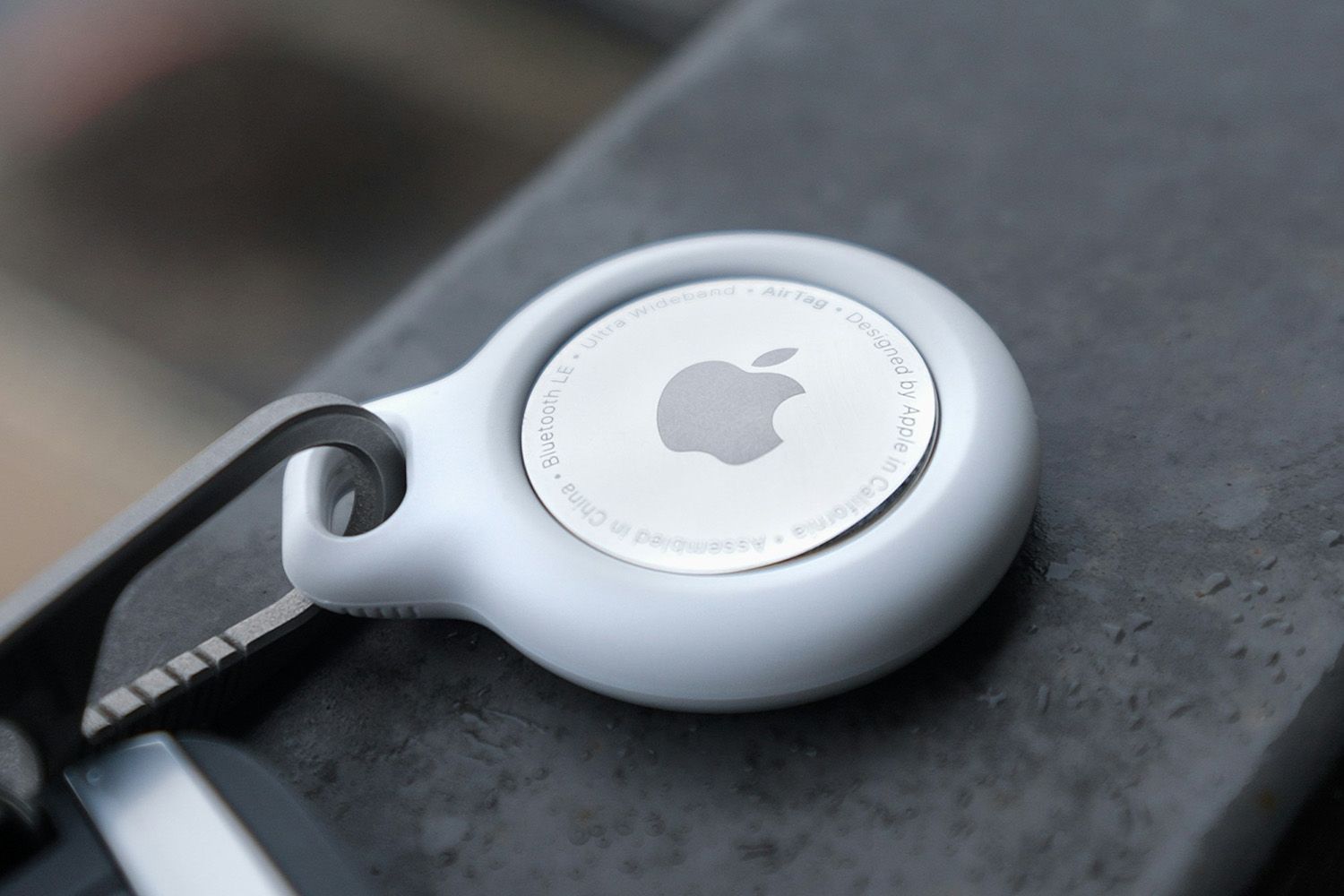
One funny thing about AirTags is that they do not have a built-in keyring hole. This is very Apple: beautiful, minimal, and then you immediately need an accessory. For keys, backpacks, luggage handles, and pet carriers, you will likely want a case, loop, luggage tag, adhesive mount, or keychain holder.
Extended Prime Day Buying Tips
1. Watch the 4-pack first
The 4-pack is usually where the most exciting discount appears. If the price drops into the $60s, it is typically one of the best Apple accessory deals of the event. The single AirTag is still useful, but the four-pack often wins on value.
2. Compare Amazon, Walmart, Best Buy, and Target
Amazon may lead the Prime Day conversation, but other major U.S. retailers often match or closely follow popular Apple accessory deals. During extended deal windows, it is smart to compare prices at Amazon, Walmart, Best Buy, and Target before checking out.
3. Check whether the deal requires Prime
Some Prime Day deals require an Amazon Prime membership, while others are open to everyone. If a retailer outside Amazon matches the price, non-Prime shoppers may be able to get the same discount without joining Prime.
4. Do not forget AirTag accessories
The tracker is only half the setup. If you are buying AirTags for luggage, keys, or backpacks, look for discounts on holders, loops, and luggage tags during the same sale. A discounted 4-pack plus a few affordable holders can fully outfit your travel setup.
5. Avoid sketchy third-party listings
Because Apple products are popular, deals can attract questionable listings. Stick with reputable retailers and carefully check seller information, return policies, and product condition. A bargain is less exciting when it arrives looking like it survived a washing machine and a courtroom drama.
Apple AirTag vs. Other Bluetooth Trackers
AirTags are strongest for iPhone users. Their biggest advantage is the Find My network, which can help locate items beyond Bluetooth range when other Apple devices pass nearby. For people deep in the Apple ecosystem, that convenience is hard to beat.
However, Android users should look elsewhere. AirTags are built for Apple devices, and the best setup and tracking features require an iPhone or iPad. Tile, Chipolo, Samsung SmartTag, and other trackers may make more sense depending on your phone, household devices, and tracking needs.
AirTags also are not perfect for every scenario. They do not offer built-in GPS, live location tracking, or a hole for direct attachment. Still, for Apple users who want a simple, subscription-free item tracker, AirTags remain one of the easiest recommendations in the tech accessory aisle.
Who Should Buy AirTags During Extended Prime Day?
AirTags are a smart buy for frequent travelers, students, commuters, parents, photographers, musicians, and anyone with a talent for misplacing important items. They are especially useful if you already use an iPhone and the Find My app.
Students can place one in a backpack or laptop sleeve. Parents can track shared family bags and travel gear. Photographers can place one in a camera bag. Musicians can tuck one into an instrument case. Commuters can attach one to keys or a work bag. Travelers can put one in checked luggage and another in a carry-on.
The 4-pack is ideal for households. Instead of arguing over who gets the one tracker, everyone can protect something important. Peace, at last, in the kingdom of lost keys.
Who Should Skip AirTags?
Skip AirTags if you do not use Apple devices, need live GPS tracking, or want a tracker designed specifically for pets, vehicles, or people. AirTags are for belongings, and they are most powerful when paired with Apple’s ecosystem.
You should also skip them if you are looking for a theft-recovery guarantee. An AirTag can help locate an item, but it cannot prevent theft, replace insurance, or magically make a missing bag roll back into your life while apologizing. Think of it as a helpful locator, not a security system.
Practical Setup Tips After You Buy
Setting up an AirTag is simple. Bring it close to your iPhone, follow the pairing prompt, name the item, and attach or place the tracker where it belongs. The hardest part is often deciding what to track first.
Use specific names
Name your AirTags clearly. “Black Samsonite Checked Bag” is better than “Bag.” “House Keys” is better than “Keys” if your household has multiple sets. Clear names make the Find My app more useful when you are rushed, tired, or standing in an airport with one shoe untied.
Place luggage AirTags inside the bag
For travel, put the AirTag inside your suitcase instead of attaching it outside. External tags can break off. Internal placement keeps the tracker safer and less visible.
Check batteries before big trips
Before a major trip, open the Find My app and check your AirTag status. Replacing a battery before departure is much easier than discovering a dead tracker while your luggage is somewhere between Terminal B and Narnia.
Experience Section: Real-Life Lessons From Using AirTags During Deal Season
The best thing about buying AirTags during an extended Prime Day sale is that you start finding uses for them almost immediately. At first, the purchase feels practical: one tracker for luggage, one for keys, one for a backpack, and one spare. Then real life happens, and the “spare” disappears into a camera bag, gym duffel, or family tote before the delivery box is even recycled.
One of the most relatable AirTag experiences happens at home. You are ready to leave, your coffee is dangerously close to becoming iced coffee against its will, and your keys are missing. Before AirTags, this became a full household emergency. Couch cushions were lifted. Jackets were interrogated. Someone said, “Where did you last have them?” and somehow survived. With an AirTag, you open Find My, play a sound, and follow the chirp. The keys are usually in a ridiculous place: under mail, inside yesterday’s hoodie, or beside the fridge because apparently keys enjoy snacks too.
Travel is where AirTags become genuinely comforting. There is something calming about landing, opening the Find My app, and seeing that your checked bag appears to be at the same airport as you. Even when the location is not perfectly real-time, it gives you more information than the usual baggage claim strategy of staring at the carousel and hoping. If your bag is delayed, having a tracker can help you describe the issue more clearly when speaking with airline staff, especially now that Apple’s Share Item Location feature can support temporary location sharing with participating airlines.
AirTags also change how you pack. Many travelers now treat them like passports, chargers, and medication: small essentials that go into the bag before anything else. A good routine is to place one AirTag in checked luggage, one in your carry-on, and one on your keys. If you travel with expensive gear, such as a camera kit, drone case, or work equipment, another AirTag can add an extra layer of reassurance.
Families may get even more value from a 4-pack. Shared items are the ones most likely to vanish because everyone assumes someone else put them away. Car keys, sports bags, school backpacks, stroller bags, and travel totes all become easier to manage when they show up in Find My. The feature that allows AirTag sharing with trusted people is especially useful here because multiple family members can help locate the same item without passing one phone around like a sacred artifact.
There are also small lessons you learn after a few weeks. First, buy holders that match the job. A luggage tag holder is better for suitcases, while a keychain case is better for keys. Second, do not hide an AirTag so well that you forget where you put it. Third, check the sound occasionally so you know what to listen for. Fourth, remember that AirTags are not magic. They help you find things, but they cannot fix poor packing habits, chaotic drawers, or that one backpack pocket nobody checks until three months later.
The biggest takeaway from extended Prime Day AirTag deals is simple: if you are already in Apple’s ecosystem, AirTags are one of the rare discounted gadgets that can become useful on day one. They are not flashy. They do not stream movies, brew coffee, or fold laundry. But they quietly prevent stress, save time, and make lost-item panic a little less dramatic. For a small tracker, that is a pretty big win.
Final Verdict: Are Extended Prime Day Apple AirTag Deals Worth It?
Yes, extended Prime Day Apple AirTag deals are absolutely worth watching if you use an iPhone and regularly misplace important belongings. The 4-pack is usually the best value, especially when it drops near historical low prices. The single AirTag is a fine choice for first-time buyers, but families, travelers, and students will probably get more mileage from a multi-pack.
AirTags are simple, reliable, and deeply convenient inside Apple’s ecosystem. They are best for tracking belongings, not people, pets, or anything that requires live GPS. Used properly, they can make daily life and travel feel a little more organized. And if you can buy them during an extended Prime Day sale, even better. Your keys may still hide from you, but at least now they have a harder time winning.