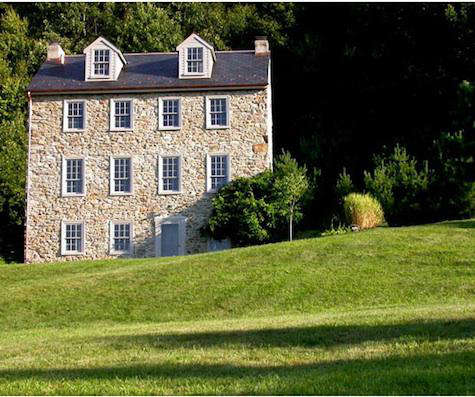
Some homes try to impress you in the first five seconds. They fling open the metaphorical fur coat, show off the chandelier, and wait for applause. Bibi Monnahan’s Pennsylvania house does something much smarter. It lowers its voice. It lets the stone walls, quiet palette, and deeply considered objects do the talking. And somehow, that whisper lands harder than a scream.
Monnahan’s home in Pennsylvania, known as Stonehare, is the kind of place that explains a designer better than any résumé ever could. Yes, the résumé is impressive. It stretches from fashion and photography to luxury retail and interiors, with stops in Paris and New York that sound suspiciously like the backstory for a very chic movie. But the Pennsylvania house is where the style becomes legible. It shows how Monnahan thinks, edits, collects, and resists the urge to decorate a room into exhaustion.
That is what makes a designer visit to Bibi Monnahan in Pennsylvania so interesting. This is not merely a pretty old house. It is a case study in restraint, atmosphere, and the idea that a home can feel both historically rooted and completely modern without turning into a themed costume party. No fake colonial drama. No farmhouse clichés wearing performative flannel. Just intelligence, mood, and a very confident understanding of what belongs.
Bibi Monnahan’s Road to Pennsylvania
Before Pennsylvania entered the picture, Monnahan built a career that moved across creative industries with unusual ease. Her background includes work in fashion, editorial, luxury retail, and design leadership. Her official biography places her in Paris as editor of the photography periodical Black+White, then in New York helping establish Furniture Co, later serving as creative director for Donna Karan’s flagship store on Madison Avenue, and then taking on a creative leadership role at Holly Hunt before launching her interior design practice in 2004.
That background matters because it explains why her interiors never feel one-note. Fashion taught her about silhouette and attitude. Editorial work sharpened the eye. Retail trained her in atmosphere and sequencing. A store, after all, must tell a story room by room, object by object, without losing the plot. In Monnahan’s interiors, that narrative control is obvious. She knows when a room needs tension, when it needs softness, and when it needs one weirdly perfect object to prevent the whole thing from becoming too well behaved.
Then came Pennsylvania, which sounds, on paper, like a plot twist. Local coverage described it as an unexpected place for someone whose life had run through global style capitals. But that is exactly why it works. A designer with a restless eye often benefits from a setting that refuses to compete. The landscape, the old stone construction, the slower rhythm, and the regional architectural history all gave Monnahan something powerful: boundaries. And boundaries, in the hands of a great designer, are often where the magic starts.
The House: Stonehare Near Easton
Stonehare is a 1760 stone house in the Easton area of Pennsylvania, set on a wooded parcel overlooking the Delaware River. It is not enormous. Reports put it at roughly 1,500 square feet, which is refreshing in an era when design coverage can sometimes feel like an Olympic event in square footage inflation. Stonehare proves that a home does not have to be huge to be layered, memorable, and deeply luxurious.
The name itself is telling. Monnahan reportedly named the property after the rabbits that populate the land, which is exactly the sort of detail that separates a real home from a brand statement wearing rain boots. The house has personality, but it is not trying too hard to show it off.
The structure’s age is not treated like a museum label. Monnahan does not freeze the house in amber or scrub it into sterile perfection. Instead, she works with its crookedness, patina, and inherited irregularities. The original fieldstone fireplace stays crooked. The millwork in the kitchen stays. The gravel and flagstone outside stay honest. This is preservation with taste, not nostalgia with a megaphone.
The Famous Gray Palette
If Stonehare has a headline act, it is the palette. Monnahan has described her attraction to gray in almost comic abundance, and the house shows why. Gray here is not shorthand for blandness. It is not developer gray, sad office gray, or “we ran out of ideas and picked greige” gray. It is layered gray: warm, cool, smoky, mineral, velvety, shadowy, and occasionally almost blue. In other words, gray with a pulse.
That choice makes perfect sense in a stone house. Pennsylvania’s vernacular farmhouses often grew through additions, modifications, and practical changes over time. The state’s historic preservation guidance notes that many farmhouses evolved incrementally and were shaped more by regional traditions than by strict stylistic purity. A restrained palette lets that kind of architectural history breathe. The walls do not need to perform when the structure already has centuries of character baked in.
Monnahan’s gray is also a tool of discipline. It creates continuity from room to room and turns texture into the main event. Stone, wood, cashmere, marble, old metal, painted cabinetry, and weathered objects all register more vividly because the color story is so controlled. The result is calm, yes, but not sleepy. The rooms have tension. They feel edited, not anesthetized.
A House Built on Editing, Not Excess
One of the great lessons of this Pennsylvania home is that luxury does not have to arrive wearing a monocle and announcing itself. Stonehare is full of specific, high-quality things, but it never reads like a showroom checklist. Monnahan’s approach blends artisan-made pieces, strong modern furniture, midcentury forms, and flea-market finds. That mix is central to her design philosophy and it keeps the house from becoming too polished to trust.
The kitchen is a perfect example. In published descriptions, Monnahan kept the original millwork while updating the room with new appliances and surfaces. A gray enamel Viking range, honed Jet Mist granite counters, and a Carrara marble backsplash sit beside painted cabinetry and older architectural bones. This is exactly the sort of move that sounds simple until you realize how often people get it wrong. Many renovations either erase the old house completely or romanticize it into dysfunction. Monnahan threads the needle. The kitchen still belongs to the house, but it also belongs to modern life.
Elsewhere, the furnishings reinforce that same philosophy. A wood-burning stove, Stickley pieces, a French industrial lamp, a black walnut bed, ceramics, antique jars, and idiosyncratic decorative objects create a home that feels collected rather than staged. Nothing seems selected because it matched a mood board in three seconds. Everything feels like it survived a test: is it useful, beautiful, or strange in the right way?
That kind of editing is harder than abundance. Anybody can keep buying things until a room looks “finished.” It takes real skill to stop at the point where the space still has oxygen.
Why Pennsylvania Was the Right Setting
Pennsylvania is not background scenery in this story. It is an active collaborator. Easton’s history is steeped in colonial-era buildings, river trade, stone construction, and layered civic architecture. The city still treats its historic stone structures as part of its identity. In that context, Monnahan’s house does not feel like an isolated design fantasy dropped into the countryside. It feels connected to a broader regional language of material honesty, sturdy forms, and lived-in endurance.
That regional backdrop also helps explain the emotional temperature of the house. Stonehare is quiet, but it is not cold. It has the seriousness of old walls and the intimacy of a home that understands weather, light, and season. A Pennsylvania stone house has to earn comfort. You cannot fake it with a scented candle and a giant basket labeled “blankets.” The architecture demands real solutions, real materials, and real patience. Monnahan seems to understand that instinctively.
And while Stonehare is the Pennsylvania project most associated with her name, her official portfolio also points to other work in the state, including Lake Wallenpaupack. That matters because it suggests Monnahan’s connection to Pennsylvania is not a one-house anecdote. It is part of her design geography.
The Twist: She Can Also Do Bold, Glamorous, and Joyfully Extra
If you only knew Monnahan through Stonehare, you might assume she is devoted exclusively to hushed, moody restraint. But that would miss half the story. Major design coverage of other projects shows that Monnahan is equally capable of embracing vivid color, rich pattern, and urban exuberance when the client and context call for it.
Architectural Digest’s coverage of John Demsey’s Manhattan townhouse shows Monnahan working in a completely different register: custom rugs, saturated blues, strong art, bold fabrics, and a highly orchestrated maximalist atmosphere. Vendome Press and 1stDibs describe the resulting interiors as a packed but controlled visual feast. ELLE Decor’s look at Alina Cho’s apartment shows another side of Monnahan’s talent: maintaining a client’s love of color while sharpening it with wit and elegance.
That range makes Stonehare even more impressive. The Pennsylvania house is not quiet because Monnahan lacks imagination. It is quiet because she knows exactly how much noise a room needs. Designers with real confidence can whisper or sing. Monnahan can do both.
What This House Teaches About Good Interior Design
First, old houses do not need to become historical reenactments. Stonehare respects age without becoming stiff. The old fireplace stays imperfect. The kitchen improves without cosplay. The house honors its bones while remaining fully alive.
Second, restraint is not the enemy of personality. In fact, restraint often reveals personality more clearly. Because the palette is so controlled, every object gets a chance to matter. The rabbit mascot, the framed keys, the handmade ceramics, the improvised light fixture, the mix of French flea-market spirit and American sturdinessthese details land because the rooms are not already yelling.
Third, atmosphere comes from consistency of judgment, not from one expensive purchase. Monnahan’s rooms feel coherent because the eye behind them is coherent. She understands scale, material conversation, and the pacing of visual surprise. A home like this does not depend on one “wow” moment. It builds trust slowly, then wins you over completely.
Finally, Stonehare argues for a more mature version of luxury. Not more. Better. More personal. More intentional. More grounded in how someone actually lives. In a digital culture that often rewards instantly legible design, Monnahan’s Pennsylvania house reminds us that the most memorable rooms are sometimes the ones that reveal themselves over time, like good books or slightly intimidating but excellent old professors.
Conclusion
“Designer Visit: Bibi Monnahan in Pennsylvania” endures as a compelling design story because it captures more than a beautiful house. It captures a point of view. Monnahan’s Pennsylvania home distills decades of experience in fashion, retail, editorial culture, collecting, and interiors into rooms that feel deeply settled without becoming static. Stonehare is moody but not gloomy, luxurious but not loud, historical but not trapped in the past.
In the end, the real triumph of this house is not that it looks good in photographs, though it certainly does. It is that it suggests a better way to live with design: keep the bones honest, keep the palette disciplined, buy fewer better things, leave room for mystery, and never underestimate the power of a smart gray wall in an old Pennsylvania stone house. Sometimes the quietest room in the region is the one with the most to say.
Extended Experience: Why a Visit Like This Stays With You
A designer visit to a house like Bibi Monnahan’s Pennsylvania home is memorable because the experience works on you gradually. It is not a fireworks display. It is more like stepping into a conversation that began long before you arrived and will continue after you leave. The first impression is usually architectural: thick stone walls, the sense of age, the quiet authority of a house that has already seen several centuries of weather and still does not feel the need to brag about it.
Then the smaller things start to take over. The paint colors do not read as one flat note; they shift with the light. Morning gray is not afternoon gray, and evening gray becomes something almost theatrical, as if the rooms are lowering the curtain one degree at a time. Materials that might seem humble in another setting suddenly feel precise. A worn object becomes poetic. A dark ceramic piece becomes punctuation. A single ribboned light fixture becomes the sort of detail that makes you mutter, “Well, that was annoyingly smart.”
There is also a particular pleasure in seeing how comfort is handled. Stonehare does not perform coziness in the obvious modern way. It does not throw ten fluffy things at a sofa and call it a lifestyle. The comfort is structural. It comes from proportion, from where furniture sits, from what is left visible, from the way old surfaces are allowed to keep their dignity. You get the feeling that the house would still feel compelling on a rainy weekday in February, which is the ultimate test. Any room can flirt on photo day. The good ones can also make soup season look glamorous.
And because Monnahan’s broader body of work includes glamorous city interiors and more saturated palettes, this Pennsylvania house feels even more intentional. It reads as a retreat, yes, but not as an escape from taste. It is taste with the volume adjusted. That is a different thing. The rooms are quieter, yet the mind behind them is still sharp, worldly, and deeply tuned to visual pleasure.
Perhaps that is why the house lingers. A visit like this leaves behind ideas, not just images. It makes you reconsider your own home. Do you need more things, or just better judgment? Do you need brighter color, or stronger materials? Do you need a renovation, or simply the courage to remove what is unnecessary? Monnahan’s Pennsylvania home does not hand out easy formulas, which is lucky, because most formulas age badly. Instead, it offers a mood, a method, and a reminder that style becomes more powerful when it is filtered through place. In this case, that place is Pennsylvania: stony, historic, quietly beautiful, and evidently very good at helping talented designers get to the point.