If you have ever looked at an original IBM PC and thought, “Nice beige box, but surely this thing was born to manage spreadsheets, not melt faces,” welcome to the strange, glorious rabbit hole of demoing an 8088. On paper, the Intel 8088 does not scream “digital fireworks.” It whispers “business machine,” then politely asks where the floppy disks are stored. And yet, over the years, programmers, pixel artists, and audio obsessives have turned this famously modest chip into the star of one of retro computing’s most impressive performance acts.
“Demoing an 8088” usually refers to creating or running demoscene productions on an Intel 8088-based IBM PC or compatible machine, especially the original IBM 5150. A demo is not a game, not a benchmark, and not a practical program. It is a real-time audiovisual showcase designed to squeeze beauty, motion, sound, and technical audacity out of hardware that was never supposed to do any of that. In other words, it is part engineering, part art, part magician yelling, “No, really, watch this.”
What “Demoing an 8088” Actually Means
In the demoscene, the point is not merely to make a machine do something. The point is to make it do something that feels wildly disproportionate to its hardware. That mindset is exactly why the 8088 became such a fascinating challenge. The original IBM PC was historically important, but it was not famous for luxurious multimedia. It had an Intel 8088 CPU, primitive graphics by later standards, and a one-bit internal speaker that could politely beep at you like a microwave with self-esteem issues.
That limitation is the entire appeal. Demo coders love hardware that appears boxed in. The smaller the box, the more satisfying it is to kick the lid off. On the 8088, every byte, every cycle, and every timing quirk matters. You are not coding on a comfortable modern platform with layers of abstraction cushioning every mistake. You are performing surgery while riding a bicycle down a staircase.
Meet the 8088: The Chip That Helped Launch the PC Era
The Intel 8088 arrived in 1979 as a close relative of the 8086. Internally, it kept the 16-bit architecture that would help define the x86 family, but it used an 8-bit external data bus. That compromise made it attractive for lower-cost systems because it could work with cheaper 8-bit support components. In plain English, it had big ambitions and a bargain-bin travel budget.
IBM chose the 8088 for the first mass-produced IBM Personal Computer, the Model 5150, introduced on August 12, 1981. The original PC ran at 4.77 MHz and helped legitimize personal computing for business and mainstream users. IBM’s decision to publish technical details and build around relatively open architecture helped create the compatible-PC boom that followed. So yes, the 8088 matters for two reasons: it powered a machine that changed computing history, and decades later it became the unsuspecting victim of some of the cleverest abuse in retro programming.
Why IBM’s Choice Mattered
The 8088 was not picked because it was the flashiest processor on the shelf. It was picked because it balanced cost, availability, and system design practicality. That choice sounds boring until you realize boring decisions often build giant industries. The IBM PC’s architecture, software ecosystem, and clone-friendly legacy turned the 8088 from “sensible chip selection” into “ancestor of the desktop world you know.”
For demo fans, that history adds flavor. You are not just pushing an old CPU. You are pushing one of the foundational chips of the PC standard, the machine equivalent of taking your grandparent’s station wagon to a drifting competition and somehow winning.
Why the Original IBM PC Seems Like a Terrible Demo Platform
If you were designing a dream demo machine from scratch, an early 8088-based IBM PC would not be your first choice. Or your second. Or your twelfth. The reasons are obvious once you look at the hardware.
First, the CPU is not merely slow by modern standards; it is slow in ways that matter. The 8088’s narrow external bus bottlenecks data fetches, and tight instruction timing becomes a central concern. Second, the graphics hardware is awkward. The Color Graphics Adapter, or CGA, is iconic, but “iconic” is doing a lot of emotional lifting there. Third, the internal PC speaker is not a proper music chip. It is fundamentally a speaker designed for simple tones and alerts, which is great if your artistic vision is “elevator arriving.”
And yet, those constraints created opportunity. Because the system is so limited, every visual trick feels earned. Every sound routine feels suspiciously illegal. Every effect becomes a tiny rebellion against the intended use of the machine.
CGA: The Card Everyone Mocked Until Coders Started Cheating
CGA has long had a reputation for being harsh, limited, and visually awkward. All fair. But its composite video output opened the door to artifact-color tricks that let clever programmers coax far more color out of the machine than its standard modes would suggest. That is where demoing an 8088 stops being a history lesson and starts becoming mischievous technical theater.
By exploiting NTSC composite behavior, carefully tuning CRTC values, and designing graphics around the quirks of old and new CGA revisions, coders found ways to generate visual results that looked absurdly advanced for the hardware. This is not normal programming. This is programming that has stared into the abyss and asked whether the abyss supports custom palettes.
The Demo That Changed the Conversation: 8088 MPH
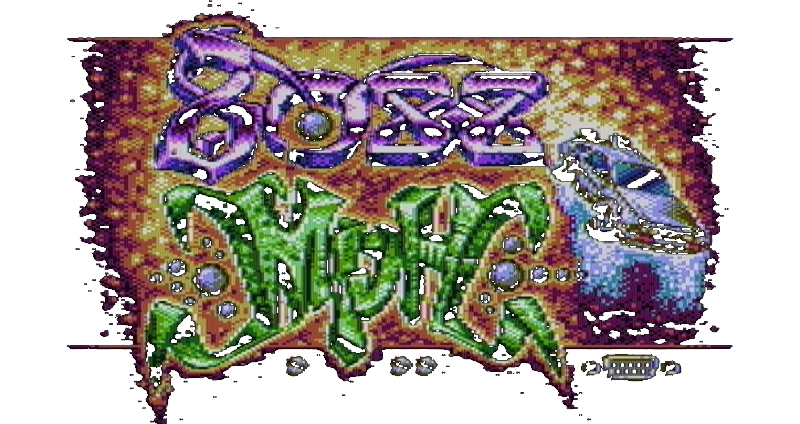
If one production defines modern discussion around demoing an 8088, it is 8088 MPH. Released in 2015, it targeted a 1981 IBM 5150 with 640 KB of RAM, an IBM CGA card, floppy drive, and internal speaker. That specification is important because it proved the effect set was not a fake modern reinterpretation. The demo was built around real, old hardware with all its gloriously inconvenient behavior.
What made 8088 MPH such a milestone was not just that it looked good. It looked impossibly good for the platform. It featured fast-moving effects, rich composite color tricks, smooth motion, and a famous 1024-color sequence created through extremely specific abuse of 80-column text mode and NTSC artifacting. It also pushed audio far beyond what most people assumed the PC speaker could handle.
Even better, the demo leaned so hard on real hardware timing that it exposed how inaccurate many emulators were. Hence the legendary “we break all your emulators” attitude. That was not empty swagger. It was a technical statement: if your emulator hand-waves the weird stuff, the demo falls apart. The production became a kind of benchmark for authenticity in retro PC emulation, which is a deeply niche honor and therefore one of the coolest kinds.
The Graphics Flex
The visual centerpiece of 8088 MPH was the color work. The demo’s team exploited composite output behavior and carefully massaged the CGA signal to create images that appeared to break the card’s normal limitations. The 1024-color effect, in particular, became the headline act because it felt like somebody had smuggled an entirely different graphics card into the room.
But the magic was not just about color count. It was about timing, calibration, and hardware specificity. Old-style and new-style CGA cards behaved differently, which meant the team had to account for both. In other words, even when you are already doing wizardry, retro hardware still finds a way to hand you paperwork.
The Audio Flex
The audio achievement deserves equal respect. The end section of 8088 MPH used a 4-channel Amiga MOD file played through the humble PC speaker. Read that again slowly. A machine famous for beeps was suddenly pretending, with surprising dignity, that it had musical ambitions. The trick relied on exquisitely controlled timing and clever sample output, showing that even the speaker could be pushed far above its presumed social class.
This is one of the reasons demoing an 8088 is so beloved: it reintroduces wonder into familiar hardware. You think you know what the machine can do. Then someone proves you wrong in public.
What Demoing an 8088 Teaches Modern Creators
It is easy to dismiss retro demo work as nostalgia, but that misses the point. Demoing an 8088 teaches lessons that still matter today.
First, constraints sharpen creativity. When you cannot brute-force your way through a problem, you start noticing structure, timing, memory layout, and hidden behaviors. Modern developers often have immense resources, but abundance can make software sloppy. The 8088 does not tolerate sloppiness. It sends it back with corrections in red ink.
Second, deep system knowledge matters. The coders behind the best 8088 demos do not just know a language. They know the machine. They understand buses, display timing, refresh behavior, peripheral quirks, and how tiny changes ripple outward. That is valuable knowledge whether you are writing firmware, optimizing graphics, or building emulators.
Third, old platforms are still valid artistic tools. A demo is not important because it is useful. It is important because it is expressive. The 8088 may be ancient, but it still supports surprise, style, rhythm, and spectacle. That makes it alive in the only way that matters to artists and hackers: it can still be made to do something new.
How People Get Into Demoing an 8088 Today
There are several ways enthusiasts approach the platform now. Some use original IBM 5150 or XT-class hardware. Some use compatible systems. Some use modern recreations, FPGA cores, or increasingly accurate emulators, though serious demo work still benefits from testing on real machines because the timing edge cases are the whole game.
Most people begin by studying existing productions, reading technical write-ups, and learning how CGA, the 8088, and the PC speaker really behave. From there, it becomes a gradual descent into optimization, assembly language, hardware timing, and the kind of sentence you never expected to say out loud, such as, “I need fewer cycles between scanlines if I want the fake extra colors to stop looking like haunted oatmeal.”
That learning curve is steep, but it is also thrilling. Unlike many modern workflows, where frameworks hide the machine, the 8088 invites you to meet the machine face-to-face. Not in a friendly way, necessarily. More in a “one of us is leaving with respect, and it may not be me” way.
Why Demoing an 8088 Still Fascinates People
The fascination comes from the tension between expectation and result. Everyone knows the original IBM PC is historically important. Fewer people expect it to be dazzling. Demoing an 8088 lives in that gap. It takes a platform associated with offices, boot disks, and practical computing, then turns it into a canvas for color, motion, synchronization, and swagger.
There is also a preservation angle. These demos keep old hardware relevant, not as static museum artifacts but as living systems with unexplored headroom. They remind us that history is not just about what machines were commonly used for. It is also about what they were secretly capable of in the hands of people stubborn enough to ask ridiculous questions.
And that, really, is the soul of demoing an 8088: a group of talented people looking at one of the most sensible computers ever built and deciding to make it deeply unreasonable.
Experiences Related to Demoing an 8088
The experience of watching an 8088 demo for the first time is hard to describe unless you have spent time around vintage PCs. If your mental image of the original IBM PC is a dusty keyboard, green text, and the emotional range of a tax form, then seeing one suddenly throw color, rhythm, and motion across a screen feels almost rude. It is like discovering your accountant can do backflips.
What makes the experience special is the gap between appearance and performance. The machine looks formal, restrained, even a little stiff. Then the demo starts, and the entire vibe changes. The screen flickers into patterns you did not think CGA could produce. The speaker stops sounding like an alarm clock and starts behaving like it has artistic aspirations. You are no longer watching a relic. You are watching a negotiation between silicon, timing, and human stubbornness.
For people who try creating effects on the platform, the experience is even more intense. Modern programming often lets you stay comfortably distant from the hardware. On an 8088, that distance disappears fast. You become aware of memory alignment, instruction timing, display refresh, and all the weird corners that newer systems politely hide from you. Success feels earned in a very physical way. When something finally works, it does not feel like software merely ran. It feels like you convinced a machine from another era to trust you for ten seconds.
There is also a social side to it. Retro computing communities, demo groups, and hardware tinkerers tend to bring a mix of technical seriousness and joyful absurdity. One minute the discussion is about bus contention or composite signal behavior. The next minute someone is grinning because they just made a supposedly hopeless machine draw something beautiful. That blend of rigor and delight is part of the charm.
Even failures become memorable. An effect that looks perfect in one setup may break on another card revision. A speaker routine that sings on one machine may sputter on the next. Emulation may get close, then miss one tiny timing detail and turn your masterpiece into electronic soup. Oddly enough, those frustrations are not just obstacles. They are part of the experience. They remind you that old hardware is not abstract. It is particular, temperamental, and gloriously literal.
That is why demoing an 8088 stays with people. It is not only about nostalgia, and it is not only about technical bragging rights. It is about the emotional punch of making a famously limited computer do something surprising. It is about learning that creativity gets sharper when the machine says no. Most of all, it is about that wonderful moment when a beige box from 1981 stops being a history object and becomes, once again, a stage.
Conclusion
Demoing an 8088 is one of the best examples of why retro computing remains exciting. The Intel 8088 helped launch the IBM PC era, but the demoscene gave it a second life as a platform for technical showmanship. What began as a cost-conscious chip in a business-oriented machine has become a proving ground for coders who love constraints, hardware truth, and a little theatrical arrogance. Whether you admire the history, the engineering, or the sheer audacity of making CGA and a PC speaker do impossible-looking things, the message is the same: never underestimate a platform just because it looks beige.