If your home is short on square footage but long on backpacks, paper piles, and that one mysteriously cap-less marker, a small-space homework station can feel like a miracle. The good news is that you do not need a sprawling study to create a spot that looks polished, feels calm, and actually helps someone focus. A chic neutral homework station can live in a hallway, bedroom corner, dining nook, under-the-stairs alcove, or even inside a closet that has retired from its former life as a black hole for winter coats.
The secret is not stuffing a tiny area with “office stuff” and hoping for the best. It is about making smart design choices: compact furniture, vertical storage, layered lighting, concealed clutter, and a soft neutral palette that keeps the whole area from screaming, “Welcome to Homework Panic Corner.” When you combine those elements, a small homework station becomes both practical and beautiful. It can blend into your home during the day and still be ready for math worksheets, reading logs, laptop time, and creative projects by late afternoon.
Why a Neutral Homework Station Works So Well in a Small Space
A neutral palette is not boring. It is strategic. Warm whites, soft taupes, gentle greiges, muted beiges, pale wood tones, and quiet black accents create a background that feels restful instead of visually noisy. In small areas, that matters. The calmer the palette, the less cluttered the space appears. Neutral tones also help furniture and storage look intentional rather than pieced together in a last-minute “we had nowhere else to put the desk” situation.
Another benefit is flexibility. A neutral homework station grows with the user. A setup that works for an elementary school student now can still look appropriate for a middle schooler, high schooler, college student, or even an adult who needs to pay bills and answer emails. Instead of redecorating every few years, you can update the look with small accents such as a new bulletin board, a framed print, a lamp, or woven baskets.
Neutral rooms also tend to play nicely with the rest of the house. If your desk is tucked into a living room, kitchen edge, or shared bedroom, soft tones help the station blend in. That means the workspace feels like part of your home design rather than an accidental command center that landed there during a school-year emergency.
Start with the Right Spot, Not the Perfect Spot
The biggest mistake people make is waiting for a dedicated room that never appears. A functional homework station often starts in an overlooked zone: an empty wall in the hallway, a narrow stretch beside the stairs, a corner of the bedroom, a bay window niche, or a section of the dining area. Small-space design works best when you stop asking, “Do I have a study room?” and start asking, “Where can I carve out one useful surface with good light and storage?”
Some of the best locations are the ones already built into your daily routine. A kitchen-adjacent station is convenient for supervision and quick questions. A bedroom setup can offer quiet and privacy. A hallway workstation is surprisingly efficient when paired with a narrow desk and wall storage. Even a closet can become a chic mini study zone with a desktop, shelving, task light, and a chair that slides underneath. Cloffices are no longer just a trendy word people say to sound clever at brunch. They are genuinely useful.
Best places for a small homework station
Look for spaces with these qualities: a nearby outlet, enough wall area for shelving or a pinboard, room for a slim chair, and at least some natural or layered light. If the location is visible from the main living area, choose materials and finishes that coordinate with the surrounding room so the station looks integrated rather than improvised.
Choose Furniture That Earns Its Keep
In a small-space homework station, every piece of furniture should do at least two jobs. A compact desk with drawers gives you a work surface and hidden storage. A fold-down desk can disappear when not in use. A console table can double as a desk by day and a styled surface by evening. A secretary desk is especially smart if you want the ability to close the door on notebooks, chargers, and the emotional damage caused by fractions.
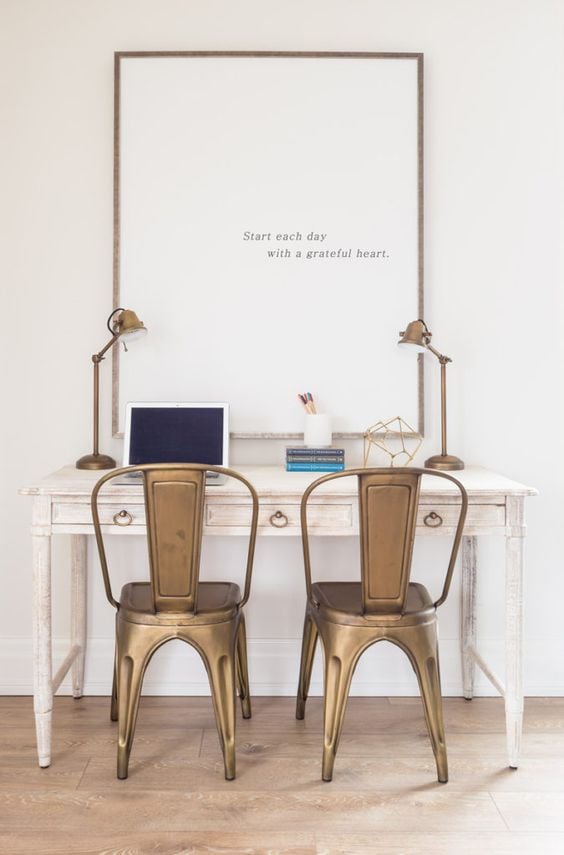
Look for desks with slim profiles, clean lines, and simple finishes such as white, light oak, natural bamboo, or matte taupe. These choices keep the station airy and bright. If floor space is tight, consider a floating desktop. It gives you legroom, looks lighter visually, and leaves room below for a stool, rolling cart, or small file box.
The chair matters just as much as the desk. Pick one that is comfortable enough for real work, but scaled to the space. A chair with good back support, a relatively narrow footprint, and an easy-to-clean finish is ideal. Upholstered seats can soften a neutral area, while wood or bent metal frames keep the look crisp. If you are using the station daily, ergonomics matter: feet should rest flat, the desk should not force hunched shoulders, and the screen should sit at a comfortable viewing height.
Go Vertical and Hide the Mess Like a Professional
Small homework stations succeed when the desk surface stays mostly clear. That means the real magic happens above, beside, and below the desk. Wall-mounted shelves, pegboards, rails, hooks, and narrow cabinets pull supplies upward instead of outward. Vertical storage frees the work surface, makes the station look bigger, and turns dead wall space into useful real estate.
A good formula is a mix of open and closed storage. Open storage keeps frequently used items visible and easy to grab: books, pencil cups, a clock, a basket for current papers, or a small plant. Closed storage hides the less photogenic stuff: chargers, extra notebooks, glue sticks, paper clips, and mystery cables that apparently reproduce at night.
Pegboards are especially helpful for a chic neutral setup because they can be customized without looking bulky. Add a small shelf, hanging cups, hooks, and clips in muted finishes. Use woven baskets, linen bins, or matte boxes to soften the look. A rolling cart is another smart small-space move. It can hold school supplies, art materials, or reference books and slide out of sight when homework time is over.
Easy storage wins that make a big difference
Use one tray for active papers, one file holder for folders, one cup for everyday writing tools, and one hidden bin for backups. That is it. Tiny spaces fall apart when there are too many containers. You are building a homework station, not a retail display for acrylic boxes.
Light It Like You Actually Want People to Use It
Lighting can make or break a homework station. Natural light is fantastic when you have it, especially near a window nook or bay window. It can make the area feel more open and uplifting. But natural light alone is not enough, particularly in the late afternoon or evening when actual homework tends to happen. Add a dedicated task light so the desk stays usable after sunset.
In a very small setup, wall-mounted sconces or swing-arm lamps are excellent because they free up desk space. If you prefer a table lamp, choose one with a slim base and a light fabric or metal shade. Adjustable window treatments help control glare, and screen brightness should match the light in the room so eyes do not have to work overtime. If the station includes a laptop, consider a riser plus an external keyboard and mouse for better posture during longer study sessions.
Warm, soft lighting works beautifully with a neutral palette, but the workstation still needs to be bright enough for reading and writing. Think cozy, not cave-like. “Chic” should never mean “too dim to find the pencil sharpener.”
Build a Neutral Palette That Feels Calm, Not Flat
The easiest way to design a neutral small-space homework station is to layer texture instead of color chaos. Start with a light base: white, ivory, oatmeal, greige, sand, or warm gray. Then add natural wood, woven materials, matte black, brushed brass, stone, or linen textures to give the area depth. This keeps the station interesting without overwhelming a small footprint.
A few combinations that work especially well include white and oak, beige and black, greige and natural rattan, cream and brushed brass, or taupe with soft charcoal accents. If the rest of your home is colorful, neutrals can still work as a visual pause. Add one quiet accent shade such as sage, dusty blue, clay, or muted blush through a pinboard frame, fabric bin, or art print. The overall impression should stay calm and cohesive.
Decor should be edited carefully. A framed print, one corkboard or upholstered bulletin board, one little plant, and a stylish lamp are often enough. Too many decorative objects make a small desk feel cluttered. Save the maximalism for a gallery wall somewhere else.
Make It Functional for Real Homework, Not Just Pretty Photos
A chic station still has to survive actual use. That means planning for the tools people really need: paper, pencils, chargers, books, calendars, and devices. Put the most-used items within arm’s reach. Group like with like. Label bins if more than one person uses the station. If siblings share the setup, create separate cubbies, trays, or drawer organizers so no one starts a household-level diplomatic dispute over the good scissors.
Think through the daily flow. Where does the backpack land? Where do completed papers go? Where does the laptop charge? Where do art supplies live when they are not needed? The smoother the routine, the less clutter will build up on the desk. A wall calendar, simple memo board, or clip rail can help keep deadlines visible without covering every vertical inch in sticky notes.
And yes, maintenance matters. A five-minute end-of-day reset is one of the most effective habits you can build. Toss trash, stack papers, return pencils, wipe the surface, and plug devices back in. That tiny reset helps the station stay chic instead of slowly transforming into a paper-based archaeological site.
Simple Style Formulas for Different Small Spaces
Bedroom corner station
Use a slim desk in white or light wood, a neutral upholstered chair, a single framed print, and wall shelves above. Keep supplies hidden in drawers or lidded baskets so the room still feels restful.
Hallway homework nook
Choose a narrow desk or floating surface, pair it with an armless chair or stool, and add vertical shelves. Matching storage boxes and a wall sconce help it feel intentional instead of squeezed in.
Kitchen-adjacent study zone
Coordinate finishes with nearby cabinetry. A compact desk, upper shelves, and one rolling cart create a tidy mini command center that fits naturally into the room.
Closet homework station
Install a desktop, add shelving above, paint or wallpaper the back wall in a soft neutral, and use a task light. Close the doors when the workday ends and enjoy your very own disappearing act.
Common Experiences People Have When Creating a Chic Neutral Small Space Homework Station
One of the most common experiences is realizing that the “perfect” homework station was never going to be a separate room with custom built-ins, matching baskets, and angelic children who always put the scissors back. For most people, the project starts with an awkward corner, a blank wall, or a neglected closet, and that is exactly why it works. Once they stop chasing perfection and start using the space they actually have, progress happens fast.
Another experience people often share is how dramatic the mood shift feels once the clutter is controlled. Before the station is set up, homework tends to migrate across the house: dining table today, couch tomorrow, kitchen island by Thursday, and somehow three pencils end up in the laundry room. Afterward, there is a sense of relief because the work has a home. Not a giant home. Not a glamorous penthouse office. Just a clear, calm, reliable place where supplies live and tasks get done.
Many also discover that neutral does not mean plain. In fact, the softer palette usually makes the whole setup feel more expensive and more peaceful. A light oak desk, creamy wall, linen bin, matte lamp, and corkboard in a simple frame can look surprisingly refined. People often expect they will need bold color to make a small area interesting, then realize texture, shape, and good lighting are doing most of the heavy lifting. The result is chic without trying too hard, which is frankly the dream.
There is also usually a moment of revelation around vertical storage. The second baskets, shelves, or a pegboard go up, the workstation suddenly starts behaving itself. The desktop clears. The chair tucks in. The room breathes again. People who once swore they had “no space at all” often realize they had wall space, under-desk space, or hidden cabinet space all along. It was less a square-footage problem and more a “we forgot to look up” problem.
Families with kids often say the biggest benefit is not just organization but routine. A homework station creates a visual cue: this is where reading happens, this is where the laptop charges, this is where tomorrow’s worksheet goes. That predictability can reduce friction at the end of the day. It also makes it easier for adults to help without fully sacrificing the dining table to math homework and glitter glue.
Finally, people tend to notice that once the station looks good, everyone treats it better. When a workspace feels intentional, it is easier to maintain. The lamp gets switched off, the pencils go back in the cup, the surface gets wiped, and the rolling cart slides into place. A chic neutral small-space homework station does not magically solve procrastination, but it does remove a lot of the visual and functional chaos that makes studying harder than it needs to be. And in a small home, that kind of quiet competence is a beautiful thing.
Conclusion
Creating a chic neutral small-space homework station is less about square footage and more about smart editing. Choose a compact desk, use vertical storage, layer in good lighting, keep the palette soft, and make room for real routines. Whether your station lives in a bedroom corner, hallway, kitchen edge, or closet nook, it can be stylish, calm, and surprisingly hardworking. Small spaces do not need more chaos. They need better ideas, fewer visible cords, and one really good pencil cup.
Note: This HTML contains only the <body> content, uses standard American English, is ready for web publishing, and has been cleaned of unnecessary citation-artifact text.