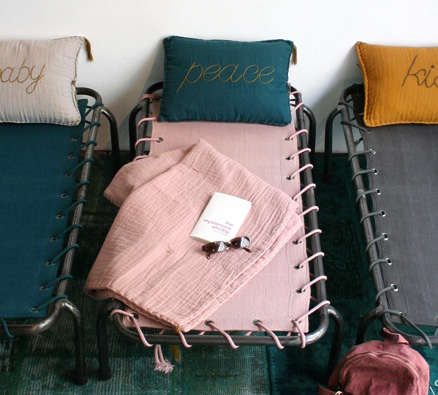
Some furniture pieces whisper. Others politely clear their throat. Then there are colorful camp beds from Serendipity, which stroll into a room wearing teal canvas, pale pink charm, and just enough French nonchalance to make a standard twin bed feel like it forgot to accessorize.
The original buzz around Serendipity’s camp beds came from a simple but clever idea: take the practical shape of a folding camp cot and reinterpret it as a stylish piece for children’s rooms, guest corners, play spaces, and design-minded homes. Instead of treating a camp bed like something dragged from the garage only when relatives overstay Thanksgiving, Serendipity made it feel intentionallight, colorful, movable, and surprisingly grown-up.
At the heart of the appeal is contrast. Camp beds are humble by nature. They are built for utility, portability, and “please do not make me sleep directly on the floor” emergencies. Serendipity’s version adds a boutique twist with soft canvas colors such as teal, gray, and pale pink. The result is furniture that feels relaxed but not sloppy, playful but not childish, and compact without looking temporary.
What Makes Serendipity Camp Beds Special?
Serendipity, the Paris shop associated with these colorful camp beds, understood something many children’s furniture brands miss: kids’ rooms do not have to look like a plastic rainbow exploded during a sugar rush. A child’s space can be cheerful, flexible, and imaginative while still fitting into a beautifully designed home.
The camp bed design is especially smart because it does more than provide a place to sleep. It creates a small zone. In a child’s bedroom, it can become a reading lounge by day and a sleepover bed by night. In a playroom, it can become a soft landing spot after heroic blanket-fort construction. In a guest room, it can act as an extra perch without taking over the floor plan like a bulky sofa bed with commitment issues.
One of the most memorable details of the original Serendipity camp bed coverage was the compact scale. The small camp bed was described as 44 inches long, making it especially suited to young children, dolls, play areas, or decorative lounging rather than adult overnight sleeping. That size matters. A smaller bed can fit under a window, beside a bookcase, or at the foot of a larger bed, giving parents more layout options in rooms where every inch is already negotiating for territory.
The Beauty of Color: Teal, Gray, and Pale Pink
The phrase “colorful camp beds” may sound like a carnival tent waiting to happen, but Serendipity’s palette was more refined than loud. Teal brought depth and energy. Gray offered calm neutrality. Pale pink added warmth without tipping into overly sweet territory. Together, these colors made the beds adaptable rather than theme-bound.
Teal: The Confident Choice
A teal camp bed works beautifully in rooms with white walls, natural wood, rattan baskets, brass lighting, or navy accents. It has enough personality to become a focal point, but it is not so bright that it argues with everything else in the room. For a child who loves color, teal feels adventurous. For a parent who loves tasteful interiors, teal feels civilized. That is a rare diplomatic victory.
Gray: The Flexible Neutral
Gray is the easiest choice for homes that already lean minimalist, Scandinavian, industrial, or modern farmhouse. A gray canvas camp bed can sit quietly in a nursery, playroom, or guest nook and let pillows, quilts, or wall art do the talking. It is also a practical color for families who know that children and pristine fabric have a complicated relationship.
Pale Pink: Soft Without Being Silly
Pale pink brings a gentle glow to a child’s bedroom. Paired with cream, oak, muted green, or warm white, it becomes sophisticated rather than sugary. The trick is restraint. Instead of matching pink walls, pink curtains, pink rugs, and pink toy bins until the room resembles a cupcake boutique, let the camp bed be the blush note in an otherwise balanced space.
Why Camp Beds Work So Well in Kids’ Rooms
Children’s rooms have to do a lot. They are bedrooms, libraries, art studios, toy-storage battlegrounds, imaginary castles, and occasionally quiet places to cry because a sock “feels weird.” Furniture in these rooms has to be flexible. That is where the camp bed shines.
Unlike a traditional bed frame, a camp bed has a lighter visual footprint. Its raised structure keeps the room feeling airy, while the canvas sleeping surface adds texture. Because the form is simple, it can blend with many styles: vintage, coastal, bohemian, Parisian, rustic, or modern. Add a striped pillow and it feels nautical. Add a quilt and it feels cottage-inspired. Add a sheepskin-style throw and it suddenly wants to be photographed next to a latte.
A camp bed also encourages multi-use living. In small homes and apartments, a child’s room may not have space for both a bed and a reading chair. A colorful camp bed can serve as both. During the day, it becomes a lounge for picture books, stuffed animals, or quiet time. At night, it can become a place for an occasional sleepover guest or a cozy rest spot for a younger child, depending on the product’s size and safety suitability.
Design Ideas for Styling Colorful Camp Beds from Serendipity
The best thing about a colorful camp bed is that it gives you a strong design starting point without requiring a full room makeover. You do not need to repaint the walls, buy a new rug, or explain to your budget why it should “just trust the process.” Start with the bed color, then layer around it.
1. Create a Reading Corner
Place the camp bed near a window, add a wall-mounted reading light, and stack a few books in a low basket nearby. Use one lumbar pillow, one square pillow, and one lightweight throw. The goal is cozy, not pillow avalanche. A teal bed looks especially good with cream textiles and natural wood shelves.
2. Build a Sleepover Station
If the camp bed is used for guests, keep a folded blanket and fitted cover nearby. A small stool can act as a nightstand for a water bottle and bedtime book. For older children, this setup makes sleepovers feel special without requiring a permanent second bed.
3. Add It to a Playroom
In a playroom, a camp bed can become a rest zone. Children need places to pause between big bursts of energy, and a small bed or cot gives them a defined place to decompress. Style it with durable, washable textiles and avoid anything too precious. If it cannot survive juice, crumbs, or a toy dinosaur stampede, it may not belong in a playroom.
4. Use It as a Guest Nook
For a small guest area, a gray camp bed can look surprisingly polished. Add a neutral throw, a small wall shelf, and a plug-in sconce. The mood becomes “casual European weekend house” rather than “we found this in the basement five minutes before you arrived.”
5. Pair It with Vintage Pieces
Camp beds look wonderful beside vintage trunks, old schoolhouse chairs, painted dressers, or antique maps. The canvas-and-frame construction naturally has a nostalgic feel, so vintage accessories make it look collected instead of catalog-perfect.
How to Choose a Camp Bed Inspired by Serendipity
If you are shopping for a similar look today, focus on five features: size, frame quality, fabric durability, portability, and comfort. The prettiest camp bed in the world is still a problem if it wobbles like a nervous giraffe.
Check the Size First
Measure the space where the bed will live. Then check the actual sleeping length and width, not just the product’s overall footprint. Some camp beds are decorative or child-sized, while others are designed for adults. A small child’s cot may work beautifully for a reading nook but may not be suitable for an older child’s overnight sleep.
Look for a Sturdy Frame
A good camp bed should feel stable when weight is placed on it. Wood frames bring warmth and style, while metal frames can offer durability and a more utilitarian feel. If the bed folds, check the hinges and locking mechanism. A folding bed should open smoothly and stay open securely.
Choose Durable Fabric
Canvas is part of the Serendipity charm. It feels casual, natural, and slightly adventurous. For family use, look for tightly woven fabric that can handle regular sitting, lounging, and cleaning. Removable or spot-cleanable fabric is a major advantage, especially in children’s spaces where mystery smudges appear as if summoned by magic.
Think About Comfort
A camp bed is not always as cushioned as a mattress, so consider how it will be used. For lounging, pillows and a folded quilt may be enough. For sleeping, a thin mattress topper or pad may improve comfort. The goal is support without adding so much bulk that the clean camp-bed silhouette disappears.
Keep Safety Practical
For children, always match the bed to the child’s age, size, and activity level. Avoid placing a camp bed where a child could roll into sharp furniture corners, cords, heaters, or unstable shelves. If the bed folds, make sure children cannot pinch fingers in moving parts. For infants, use only sleep products specifically designed and approved for infant sleep; decorative camp beds are not a substitute for a safe crib, bassinet, or play yard.
Why This Look Still Feels Fresh
The reason colorful camp beds from Serendipity still feel relevant is that they fit several major home design trends at once. They are compact. They are flexible. They bring color without overwhelming a room. They also celebrate a slightly nostalgic idea of childhood: reading under blankets, hosting sleepovers, building forts, and turning furniture into part of the adventure.
Modern families increasingly want children’s furniture that does not look disposable. Parents are drawn to pieces that can move from bedroom to playroom, from one child to another, or from everyday use to occasional guest use. A camp bed checks those boxes. It feels less permanent than a built-in bunk and less bulky than a trundle. It is the furniture equivalent of a well-packed weekend bag: useful, charming, and ready for anything.
Colorful Camp Beds vs. Traditional Kids’ Beds
A traditional kids’ bed is the obvious choice for everyday sleep, especially when paired with a proper mattress and supportive bedding. But a camp bed is not trying to replace every standard bed. Its strength is flexibility. Think of it as a supporting actor with scene-stealing potential.
Compared with a standard bed, a camp bed is usually lighter, easier to move, and more casual in appearance. Compared with a sofa bed, it is simpler and often more visually playful. Compared with a floor mattress, it feels more finished and keeps bedding lifted away from the floor. That raised profile can make a child’s room feel tidier, even when the rest of the room is actively auditioning for a toy tornado documentary.
The Serendipity version adds one more advantage: color. A bed in teal, gray, or pale pink can anchor a room’s palette without requiring a huge commitment. If tastes change, swap the pillow covers, rug, or wall art. The bed still works.
Best Rooms for a Serendipity-Style Camp Bed
A colorful camp bed can work in more places than you might expect. In a nursery, it can be a parent rest spot, as long as it is not used as an infant sleep surface. In a toddler room, it can become a supervised reading lounge. In an older child’s room, it can support sleepovers and quiet time. In a vacation home, it can add flexible sleeping space without making the room feel crowded.
It is also excellent for shared sibling spaces. When two children share a bedroom, every extra piece of furniture must earn its keep. A compact camp bed can serve as seating, guest bedding, or a soft divider between zones. Place it at the end of a bed or under a window to create a mini retreat inside the larger room.
How to Make the Look Feel High-End
The easiest way to elevate a camp bed is to avoid overdecorating it. Because the form is already distinctive, it does not need twelve pillows, three throws, and a garland spelling “DREAM” in letters large enough to be seen from space.
Instead, choose a limited palette. For a teal bed, try ivory, camel, navy, and warm wood. For a gray bed, try mustard, rust, cream, and black accents. For a pale pink bed, try sage green, oatmeal, brass, and soft white. Add one patterned pillow or quilt to create movement. Keep the rest simple.
Lighting also matters. A wall sconce, paper lantern, or small table lamp can make the bed feel like a deliberate corner rather than leftover furniture. Add art above it, but keep the scale appropriate. One framed print or a small gallery pair is usually enough.
Care and Maintenance Tips
Canvas camp beds are charming, but they need basic care. Vacuum the fabric regularly with an upholstery attachment to remove dust and crumbs. Spot-clean spills quickly with a mild cleaner suitable for the fabric. Avoid soaking the canvas unless the manufacturer specifically allows it. If the bed has a wooden frame, wipe it with a dry or slightly damp cloth and avoid harsh cleaners that can damage the finish.
If the bed folds, inspect it occasionally. Tighten loose screws, check hinges, and make sure the frame still locks properly. For children’s use, this is especially important. Furniture that moves, folds, or supports weight should be checked more often than a stationary dresser or bookshelf.
Experience Section: Living with Colorful Camp Beds from Serendipity
The real charm of colorful camp beds from Serendipity is not just how they look in a photograph. It is how they behave in daily life. A well-placed camp bed has a way of becoming everyone’s favorite unofficial seat. Children use it for reading, lounging, whispering secrets to stuffed animals, and recovering from the emotional devastation of being asked to put on socks. Adults use it as a place to fold laundry, sit during bedtime stories, or drink coffee while pretending the playroom is under control.
In one family-style setup, a teal camp bed placed beneath a sunny window can become the most-used corner of the room. Add a striped cushion, a soft quilt, and a basket of books, and suddenly the bed is not just furniture. It is a destination. Children naturally gravitate to spaces that feel slightly enclosed, slightly special, and clearly theirs. A camp bed offers that feeling without building a permanent structure or sacrificing half the room.
Another practical experience comes from sleepovers. Parents often underestimate how much children love having a “special bed” for guests. A colorful camp bed feels more exciting than a basic air mattress and more intentional than a pile of blankets on the floor. It gives the visiting child a defined place to sleep, and it makes the hosting child feel like the room has transformed for the occasion. That small ritual can make ordinary weekends feel memorable.
For design lovers, the experience is also visual. A pale pink camp bed in a neutral room can soften the entire space. A gray camp bed in a colorful room can calm things down. A teal camp bed can act as the bold accent that pulls the room together. Unlike painting a wall, choosing a colorful bed is less permanent. If the room evolves, the bed can move, the textiles can change, and the overall look can shift without starting over.
There is also a lesson in simplicity. Children do not always need elaborate themed furniture to feel inspired. A camp bed is simple enough to become whatever the day requires. On Monday, it is a pirate ship. On Tuesday, it is a library sofa. On Wednesday, it is a veterinary clinic for plush rabbits with mysterious stomachaches. By Friday, it may be a quiet island for a child who needs a break from the noise of the house.
The best experience comes when the bed is treated as useful, not precious. Let it be sat on. Let it host books, blankets, and the occasional upside-down child. Choose washable layers and forgiving colors. The Serendipity spirit is not about creating a museum-perfect room. It is about giving practical furniture a sense of joy, color, and imagination.
Conclusion
Colorful camp beds from Serendipity prove that small furniture can have a big personality. With their canvas surfaces, compact scale, and refined colors, they blend the practicality of a cot with the charm of boutique children’s design. They are useful in kids’ rooms, playrooms, guest spaces, and vacation homes, especially when flexibility matters as much as style.
The best way to use this idea today is to borrow the principle behind it: choose furniture that is light, adaptable, colorful, and beautiful enough to stay visible. Whether you find an original Serendipity piece, source a similar camp cot, or style a modern daybed with the same relaxed spirit, the goal is the same. Create a space that invites rest, play, reading, and imaginationwithout letting the room look like it was assembled during a cartoon thunderstorm.
In the end, a colorful camp bed is more than a place to stretch out. It is a small invitation to slow down, curl up, and let the room feel a little more magical. And honestly, any piece of furniture that can handle a bedtime story, a sleepover, and a stuffed-animal emergency deserves a round of applause.
Note: This article is an original, source-based synthesis prepared for web publication. External source links and autogenerated citation markers have intentionally not been inserted into the article body.