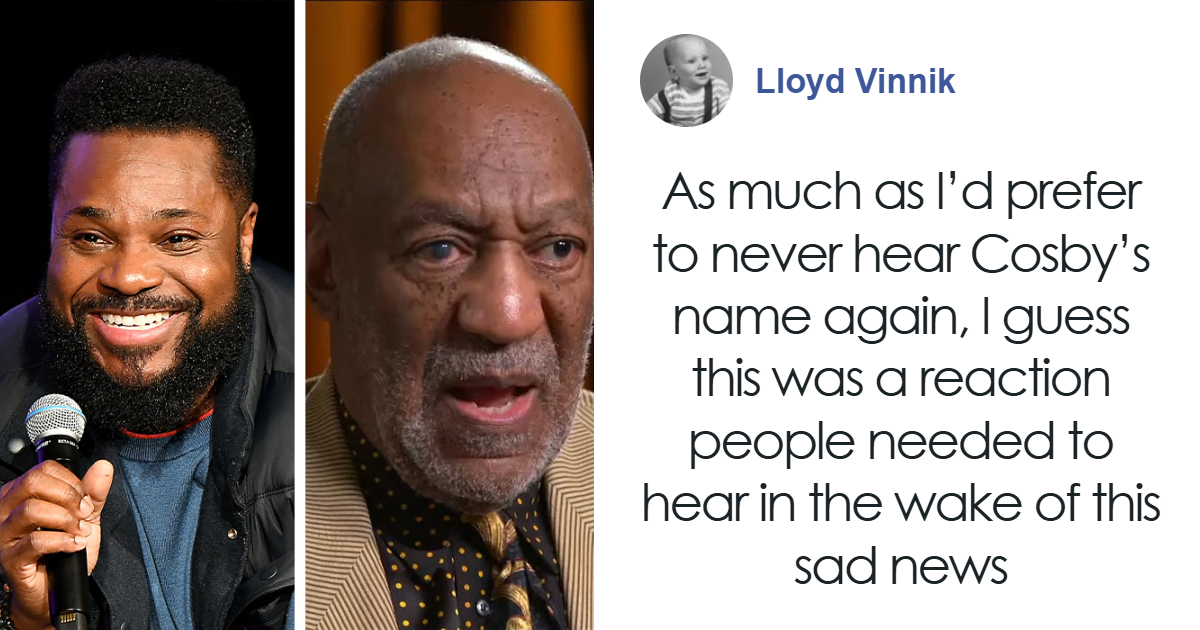
There are celebrity deaths that dominate the news for a day, and then there are losses that hit like a strange, deeply personal text from the past. The death of Malcolm-Jamal Warner belongs in the second category. For millions of viewers, Warner was not just an actor on a famous sitcom. He was Theo Huxtable, the charming, flawed, funny, growing-up-in-public son who made The Cosby Show feel less like television and more like a weekly visit with a family you somehow knew.
So when news broke that Warner had died in a tragic accident while on a family vacation, the reaction was immediate and emotional. Fans mourned the actor. Fellow entertainers shared tributes. And then Bill Cosby, the man who played Warner’s TV father for eight seasons, publicly responded. In celebrity-news language, “breaks his silence” can sound like a phrase wearing too much cologne. Here, though, it fit. Cosby’s reaction was brief, somber, and deeply tied to memory, grief, and a television legacy that remains as influential as it is complicated.
This story is bigger than one statement. It is about how audiences remember Malcolm-Jamal Warner, why Bill Cosby’s response drew attention, and what Warner’s death reveals about the emotional afterlife of iconic television. It is also about the uncomfortable truth that some cultural legacies do not sit neatly on a shelf. They arrive carrying brilliance in one hand and baggage in the other.
A Sudden Loss That Reopened a Powerful Chapter of TV History
Malcolm-Jamal Warner’s passing was especially jarring because he had long represented something rare in entertainment: a child star who grew into adulthood with dignity, range, and a steady sense of self. He became a household name in the 1980s as Theo Huxtable, the only son in the Huxtable family and the character many viewers saw as the emotional bridge between the show’s grown-up wisdom and teenage reality.
The role mattered. It mattered culturally, socially, and emotionally. At a time when television still offered narrow portrayals of Black family life, The Cosby Show presented a warm, educated, ambitious Black household to mainstream America. Theo, in particular, felt human in a way that made him memorable. He was not a symbol in sneakers. He was goofy, insecure, lovable, sometimes overconfident, sometimes lost, and very often funny in the way real teenagers are funny: unintentionally.
That relatability helps explain why Warner’s death hit such a nerve. For many Gen X viewers and older millennials, Theo was the TV cousin, neighbor, classmate, or version of themselves they rarely saw represented with such softness and humor. When Warner died, people were not simply reacting to a headline. They were reacting to the loss of someone whose face had been stitched into their memory of growing up.
That emotional weight also explains why so much attention turned to Bill Cosby’s reaction. Whatever one thinks of Cosby today, and there are serious reasons for the public’s complicated view, he was still the actor who played Cliff Huxtable, Theo’s father, on one of the most culturally significant sitcoms in American history. When he spoke, people listened not because the story became about him, but because his connection to Warner was central to how audiences understood that TV family in the first place.
What Bill Cosby Said, and Why It Resonated
Cosby’s public comments were direct and mournful. He described Warner’s death as shocking and emphasized that the two had remained close after The Cosby Show ended. He spoke warmly about Warner’s professionalism, discipline, and reliability as a young actor, essentially painting a portrait of someone who came to work prepared and took his craft seriously long before adulthood arrived.
That part matters, because it reinforces something many colleagues later echoed: Malcolm-Jamal Warner was respected not only for being famous, but for being grounded. In an industry that often rewards noise, Warner built a reputation around steadiness. No circus. No chaos. No daily plea to the algorithm. Just work, evolution, and grace.
Cosby’s reaction drew even more notice because it reportedly touched a personal nerve. The comparison to the loss of his son, Ennis Cosby, gave the moment an extra layer of sadness. Theo was famously shaped in part by that father-son dynamic, and over time the line between fictional family and real affection appears to have blurred in a way that often happens on long-running shows. Eight seasons is a long time. That is not just a cast. That is a chapter of life.
Still, the public response to Cosby’s comments was not simple, because nothing attached to The Cosby Show is simple anymore. His statement landed in a cultural space where grief for Warner, nostalgia for the show, and discomfort over Cosby’s off-screen legacy all coexist at once. It was one of those rare moments where people were not debating whether the loss was sad. They were wrestling with how to process sadness inside a story that has been morally complicated for years.
And yet, Warner himself had spent years navigating that exact tension. In some ways, Cosby’s statement mattered because Warner’s life had already taught audiences how to hold two truths at once: a show can be culturally important, and its legacy can also be wounded.
Malcolm-Jamal Warner Was Never Just Theo
One of the biggest mistakes in writing about Warner is stopping at The Cosby Show, as if his career froze in a cardigan sometime around the late 1980s. Yes, Theo made him famous. But Warner spent decades proving he was far more than an iconic child actor from a landmark sitcom.
He built a substantial television career with roles in Malcolm & Eddie, Reed Between the Lines, The Resident, Suits, Community, and other projects that reminded audiences he could do more than play nostalgia. He also directed television, pursued spoken word and music, and won a Grammy for his work as a musician. That is not the résumé of someone living off an old catchphrase. That is the résumé of an artist who kept moving.
In recent years, Warner also stepped into a more reflective public role. Through interviews and his podcast work, he showed a growing interest in identity, culture, community, and the many ways Black life is flattened or oversimplified in public conversation. His podcast Not All Hood reflected that curiosity. The title alone carried a whole essay’s worth of argument: Black life is not one story, one image, one aesthetic, one social script. It contains multitudes, contradictions, textures, and realities that deserve room to breathe.
That broader body of work makes his death feel even heavier. Warner was not simply a beloved actor from the past. He was still building. Still thinking. Still creating. Still offering a version of adulthood that looked thoughtful instead of frantic. In an era where celebrity often feels like performance about performance about performance, Warner came across as refreshingly real.
The Cosby Show Legacy Was Complicated, and Warner Knew It
Any serious article about Bill Cosby’s reaction to Malcolm-Jamal Warner’s death has to confront the obvious: the legacy of The Cosby Show cannot be discussed in 2026 the way it was discussed in 1992. Bill Cosby’s legal controversies and the many allegations against him permanently changed the cultural conversation around the show. What was once a nearly universal symbol of family sitcom excellence became something more uneasy, more fractured, and harder for many viewers to revisit.
Warner did not ignore that reality. Over the years, he acknowledged that the public view of the show had changed. At the same time, he also remained proud of the series’ impact, especially its influence on Black representation and American culture more broadly. That position may have frustrated people who wanted a cleaner answer, but it also felt honest. Warner seemed to understand that the significance of the Huxtables did not disappear simply because history got messier.
That may be one reason his death has triggered such a complex wave of commentary. People are not just remembering an actor. They are revisiting what he stood for in the culture. Theo represented a kind of Black boyhood and Black family life that many viewers had rarely seen centered with warmth, intelligence, and everyday humor. Warner knew that mattered. He also knew the legacy around that work had been bruised.
In that light, Cosby’s statement becomes more than a simple tribute. It becomes part of a larger conversation about ownership, memory, and the difference between a show’s creator and the many artists who gave it life. Warner helped make The Cosby Show what it was. So did Phylicia Rashad, Tempestt Bledsoe, Keshia Knight Pulliam, Lisa Bonet, Sabrina Le Beauf, Geoffrey Owens, and others. When audiences grieve Warner, they are not just revisiting Cosby’s legacy. They are reclaiming Warner’s place inside a cultural phenomenon that belonged to more than one person.
Why Fans Took This So Personally
Grief around public figures is often dismissed as overreaction, but that misses how memory works. Television enters homes weekly. It arrives during dinner, after homework, in living rooms filled with family conversations, arguments, laughter, and routine. Over time, actors become part of the architecture of ordinary life. You may never meet them, but they still take up emotional space.
That is exactly what happened with Malcolm-Jamal Warner. He was part of an era when sitcom characters felt like recurring guests in your house. Theo Huxtable was funny without being cruel, cool without trying too hard, and vulnerable without becoming a lesson plan. He gave viewers room to laugh at adolescence while still respecting it.
That kind of connection survives longer than people expect. It survives ratings, fashion trends, cast reunions, and the passage of decades. And when the actor behind that character dies unexpectedly, grief can feel weirdly personal. Not because viewers are confused, but because stories really do help shape identity. People remember what they were eating, where they were sitting, and who they were becoming when they first watched certain shows. Lose the actor, and suddenly you feel as though a piece of your own timeline has been disturbed.
That is why Warner’s death prompted tributes that sounded less like formal condolences and more like people talking about a cousin, a classmate, or an old friend. He represented continuity. He was a reminder that some child stars can grow into wise, decent adults. Frankly, Hollywood does not always provide many examples of that. Warner did.
Bill Cosby’s Silence Ended, but the Real Story Is Warner’s Legacy
The headline may be about Bill Cosby breaking his silence, but the heart of this story belongs to Malcolm-Jamal Warner. Cosby’s statement drew attention because of history, because of television memory, and because audiences instinctively returned to the father-son dynamic that helped make The Cosby Show a cultural landmark. But the deeper takeaway is not that Cosby spoke. It is why Warner’s death made so many people stop.
Warner’s career reminds us that early fame does not have to become a trap. His public life suggests that success and decency can coexist. His work shows that representation is not just about who appears on-screen, but how they are allowed to exist once they get there. And the reaction to his passing proves that audiences still hunger for artists who project intelligence, steadiness, and soul without turning every moment into spectacle.
In the end, Bill Cosby’s tribute added one more layer to a story already heavy with memory. It underscored the closeness they appeared to maintain and reminded the public that, for all the cultural debate surrounding The Cosby Show, the relationships formed through that series were not purely fictional. But the more enduring truth is this: Malcolm-Jamal Warner’s legacy stands on its own. Theo may have introduced him to the world, yet grace, talent, and longevity are what kept the world watching.
And that is why this loss feels so large. A familiar face is gone. A gifted artist is gone. A piece of television history is gone. But the warmth he brought to the screen, and the dignity he carried beyond it, are not going anywhere.
Additional Reflections: The Experience of Losing Malcolm-Jamal Warner as a Viewer, a Fan, and a Cultural Witness
There is a particular kind of sadness that comes with losing someone like Malcolm-Jamal Warner. It is not exactly the same as grieving a family member, and it is not as distant as losing a stranger either. It lives in the in-between space, where memory, routine, culture, and personal identity all get tangled together. That is the experience many people have been describing since the news broke, and honestly, it makes perfect sense.
For viewers who grew up with The Cosby Show, Warner was part of the weekly rhythm of childhood. He was there during the years when television still gathered families in one room instead of scattering everybody to their own screens. He was there when parents used sitcoms as soft lectures, when siblings argued over the couch, when commercials were unavoidable, and when a character like Theo could become shorthand for growing pains, teenage logic, and lovable mistakes.
That experience creates a bond. Not a delusional one. A human one. We connect actors to the periods of life in which we watched them. Maybe Theo reminds one person of after-school reruns at a grandparent’s house. Maybe he reminds another person of being a Black kid who finally saw a version of himself on-screen that felt joyful, smart, and ordinary at the same time. Maybe he reminds someone else of laughing with a parent who is now gone. When the actor dies, all those memories get stirred at once.
There is also the experience of watching Warner grow up without becoming a cautionary tale. That mattered more than people sometimes admit. Audiences saw him move from child star to adult artist with unusual steadiness. He did not seem trapped by Theo, even though the role never stopped following him. Instead, he appeared to make peace with it, build beyond it, and eventually speak about it with nuance. For fans, that felt reassuring. It felt like seeing someone survive fame with his character intact.
Then there is the broader cultural experience. Warner represented more than an individual career. He was part of a generation of Black actors who expanded what mainstream television allowed Black family life to look like. For many viewers, that representation was not theoretical. It was personal. It challenged stereotypes, widened expectations, and made room for tenderness where television had too often preferred caricature. Losing Warner, then, does not just feel like losing a performer. It feels like losing a keeper of a certain kind of cultural memory.
That is why so many reactions to his death have sounded intimate, even from people who never met him. The experience is not just sorrow. It is gratitude mixed with disbelief. It is remembering a smile, a voice, a scene, a lesson, a laugh, and suddenly realizing the person who carried those things into the world is gone. For a lot of fans, that is the real story beneath the headlines. Malcolm-Jamal Warner was part of their growing up, part of their idea of what warmth on television looked like, and part of their memory of when representation finally felt a little more human. That kind of impact does not disappear with one tragic accident. It lingers, and it lingers hard.
Conclusion
Bill Cosby’s public response to Malcolm-Jamal Warner’s death drew headlines, but the lasting significance of this moment lies in Warner’s life, not the shock value of a statement. He was a beloved actor, a thoughtful artist, and a lasting symbol of what television can mean when it reflects people with honesty and heart. His death has reopened conversations about grief, legacy, representation, and the messy afterlife of iconic shows. But above all, it has reminded audiences how much Malcolm-Jamal Warner mattered on his own terms. That is the legacy worth holding onto.