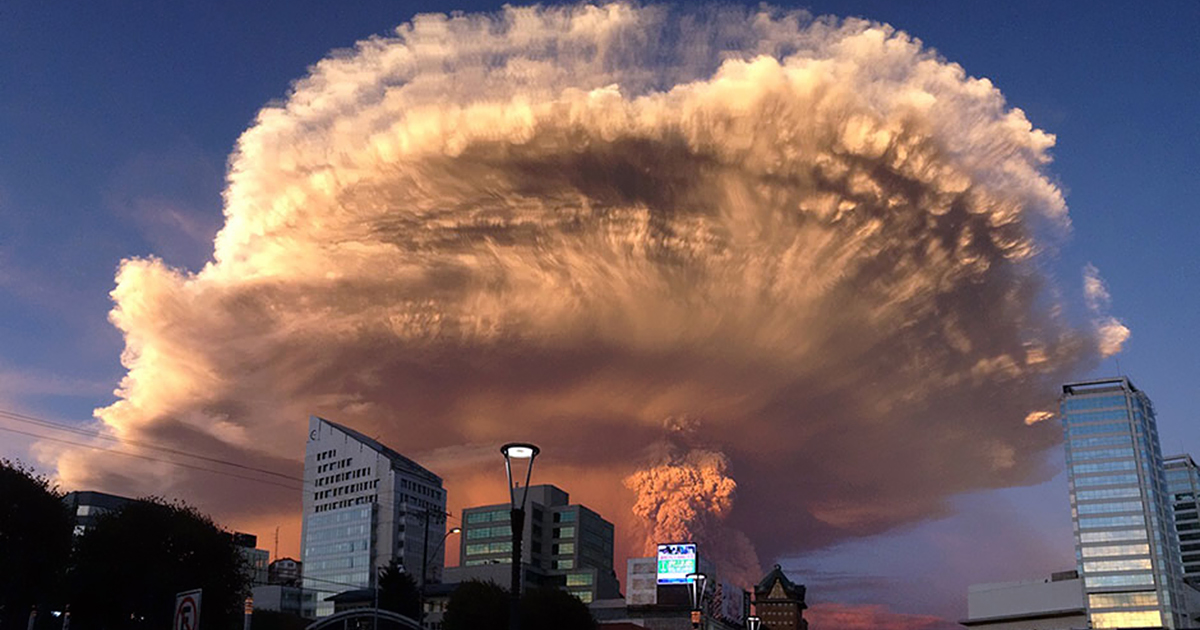
Some photo collections are pretty. Some are powerful. And then there are the kinds of images that make you stop scrolling, blink twice, and quietly whisper, “Well, that does seem larger than my weekend plans.” The eruption of Chile’s Calbuco volcano in April 2015 belongs squarely in that last category.
When Calbuco roared back to life after more than four decades of relative silence, it did not do so with a polite puff. It blasted ash high into the sky, lit up the darkness with volcanic lightning, turned familiar towns into gray, dusty landscapes, and forced roughly 4,000 people to evacuate in the early phase of the emergency. The result was one of the most visually dramatic natural events of the decade, captured in a series of unforgettable images that looked part disaster film, part science documentary, and part reminder that Earth still has a flair for theatrical entrances.
But the story behind those 34 breathtaking pictures is bigger than a fiery skyline. It is also about the people who had to leave home fast, the communities that woke up under falling ash, the roads and roofs buried in gritty debris, and the strange tension between awe and fear that only a volcanic eruption can create. In other words, yes, the pictures are stunning. They are also a record of a real emergency.
When Calbuco Woke Up, Chile Got Very Little Warning
Calbuco volcano sits in southern Chile in the Los Lagos region, near scenic destinations like Puerto Varas and Puerto Montt. On an ordinary day, it is the kind of mountain that adds drama to the horizon in the photogenic, postcard-approved way. On April 22, 2015, however, it switched genres.
The volcano erupted for the first time since 1972, catching many residents off guard. Authorities quickly raised alerts and set up an exclusion zone around the volcano. Evacuations followed, with early reports placing the number of displaced residents at about 4,000. Schools were canceled, access roads were restricted, and emergency teams moved in as the eruption sent massive plumes of ash and smoke upward.
What made the event especially alarming was how little warning there appeared to be. Later scientific reporting noted that Calbuco showed only a short period of increased seismic activity before erupting. That matters because a volcano with a long nap and a short temper is not exactly the neighbor anyone wants.
The first eruption was followed by another major pulse less than a day later, which only added to the urgency and drama. Suddenly this was not a one-off explosive tantrum. It was an unfolding volcanic episode, and the whole region had to respond in real time.
Why These Volcano Photos Look Almost Unreal
The reason those 34 pictures spread so quickly is simple: they do not look like ordinary disaster photos. Calbuco’s eruption produced the kind of visual contrast photographers dream about and emergency planners absolutely do not.
A Sky Painted in Ash, Fire, and Static
One of the most remarkable things about the eruption was the color. In some images, the sky glows orange and red behind thick columns of ash. In others, the cloud rises like a dark mushroom over lakeside towns and forested hills. At night, the eruption becomes even more surreal, with bright flashes cutting through the plume like nature accidentally hired a special effects team.
That lightning was not just for dramatic flair. Volcanic lightning can form when ash particles collide, separate charges, and create powerful electrical activity inside the plume. In photos, it makes the eruption look almost too cinematic to be real. Unfortunately for everyone nearby, it was very real.
Scale That Hits You in the Chest
Great volcano photographs do one thing especially well: they make human beings look tiny. In these pictures, roads, rooftops, cars, trees, and entire neighborhoods seem dwarfed by the size of the ash cloud. That sense of scale is part of what makes the Calbuco images so breathtaking. You are not just seeing a mountain erupt. You are seeing an entire landscape momentarily reorganized around one violent event.
And then there is the ash plume itself, rising high enough to disrupt aviation and spread across a much wider area than the immediate evacuation zone. The eruption was beautiful in the way thunderstorms over the ocean can be beautiful: magnificent from afar, deeply inconvenient if you are under it, and impossible to ignore either way.
What The 34 Pictures Really Capture
If you look past the visual shock, the photo set tells a layered story. These are not just “wow” images. Together, they work almost like a timeline of a volcanic crisis.
Some photos capture the first explosive burst, with the column climbing fast into the sky while people stare from towns that had, until then, been living perfectly normal lives. Other images show the eruption after dark, when the plume becomes more dramatic and every flash of lightning makes the scene look apocalyptic in the most literal sense of the word.
Then come the aftermath shots, and this is where the emotional tone changes. Streets are coated in ash. Roofs sag under the weight. Cars wear a powdery gray blanket. Trees, lawns, and signs lose their color under layers of fine debris. In some of the most haunting images, familiar places no longer look familiar at all. They look paused, muffled, and abandoned.
There are also pictures of cleanup, which may be less flashy than the eruption itself but are arguably more revealing. Residents sweep, shovel, inspect, and return cautiously to damaged areas. That is the part many spectacular photo galleries only hint at: after the dramatic cloud drifts on, somebody still has to clear the roof, check the livestock, protect the water supply, and figure out whether home is still home.
In that sense, the 34 photos do more than document a natural event. They show the full arc from eruption to disruption to resilience. That is why they stick with people.
The Evacuation Was Not Just a Number
“4,000 evacuated” is the kind of headline number that reads quickly and disappears even faster. But on the ground, it means hurried packing, uncertain routes, worried parents, canceled routines, and the uneasy realization that nature has just rewritten your schedule without asking.
Residents living within the danger zone around Calbuco had to leave because of multiple risks, not just the dramatic explosion itself. Ashfall can make breathing harder, contaminate water, reduce visibility, damage machinery, and weaken roofs if it piles up in heavy layers. There was also concern about lahars, the destructive mudflows that can occur when volcanic material mixes with water and rushes through valleys and river channels.
That combination of hazards is what made the evacuation necessary. It was not simply about the volcano looking menacing. It was about the very real possibility that conditions on the ground could worsen quickly.
For towns like Ensenada, the eruption was both immediate and eerie. Reports from the time described neighborhoods that looked almost ghostly under the ash, with only a handful of people returning briefly to inspect property, clear debris, or feed animals. That eerie quiet shows up in the photographs too. Even when the volcano is not visible, its presence is everywhere.
How The Eruption Disrupted Everyday Life In Chile And Argentina
Volcanic eruptions do not respect borders, and Calbuco proved that quickly. Ash drifted into Argentina, affecting communities on the other side of the Andes and contributing to flight disruptions in the region. Nearby airports canceled flights, and the ash plume became a concern not just for people on the ground, but for aviation authorities tracking where the cloud would travel next.
The disruption also hit agriculture, livestock, and local industry. Southern Chile is not just scenic; it is economically active. Ashfall can blanket pastures, stress animals, contaminate water sources, and complicate transport. In parts of the region, cleanup became a major task almost immediately. For farmers and workers, the eruption was not a distant natural spectacle. It was a direct threat to income, safety, and daily life.
Some of the most striking aftermath photos showed ash-covered fields, damaged infrastructure, and concerns about longer-term economic consequences. That contrast is worth remembering. The same event that produced jaw-dropping images for global audiences also created exhausting, expensive work for the people living nearby.
Why Chile Lives With This Kind Of Risk
Chile is one of the most volcanically active countries on Earth, thanks to its position along the Pacific Ring of Fire. That means towering peaks and stunning landscapes often come bundled with geological fine print. Calbuco itself had a history before 2015, and scientists already considered it one of Chile’s more dangerous volcanoes.
That danger is not always obvious in quiet periods. Dormant volcanoes have a sneaky way of looking harmless right up until they are not. Calbuco’s eruption became a stark reminder that a calm mountain is not necessarily a retired mountain. Sometimes it is just between plot twists.
Chile’s monitoring systems, emergency agencies, and scientific institutions have long experience dealing with seismic and volcanic hazards. Even so, events like Calbuco show how difficult it can be to predict the exact timing and intensity of an eruption. You can study a volcano carefully, monitor it constantly, and still get a very rude surprise.
The Strange Power Of Beautiful Disaster Photography
There is always a tension in photo-driven disaster stories: how do you acknowledge that something is visually stunning without forgetting that it was frightening and disruptive for the people affected?
That is exactly why the Calbuco image set is so compelling. The pictures are breathtaking, yes, but they are not empty spectacle. They contain fear, urgency, displacement, uncertainty, and the unsettling stillness that follows heavy ashfall. They are beautiful because nature can create astonishing visuals. They are memorable because those visuals came with consequences.
In fact, the very best images from the eruption do both jobs at once. A lightning-streaked ash cloud may stop you in your tracks, but a second look reveals a town beneath it. A glowing plume may seem otherworldly, but then you notice the road, the rooftops, the people, the cars, the scale of what is at risk.
That double effect is why these 34 photos still resonate. They are not just pretty in a dramatic way. They are meaningful in a human way.
What Makes The Calbuco Eruption So Memorable Even Years Later
Plenty of volcanoes erupt. Not all of them become iconic. Calbuco did because several rare storytelling elements collided at once: a long-quiet volcano, a sudden awakening, accessible viewing points, dramatic night skies, volcanic lightning, immediate evacuation, heavy ashfall, and a flood of images that captured both grandeur and disruption.
It was, in visual terms, the complete package. In human terms, it was a reminder that disasters do not always arrive looking ugly. Sometimes they arrive looking spectacular. That can make them easier to photograph, but not easier to live through.
The enduring value of those 34 pictures is that they preserve more than a moment. They preserve scale, mood, and the fragile edge between normal life and emergency. One hour a place is a calm Southern Chilean town. The next hour it looks like the sky has opened a furnace door.
Conclusion
The eruption of Calbuco volcano in Chile was one of those rare events that managed to be visually astonishing and deeply disruptive at the same time. The 34 breathtaking pictures that circulated afterward captured fire-lit ash clouds, eerie lightning, and a landscape transformed in a matter of hours. But behind every striking image was a more grounded reality: evacuations, ash-covered homes, disrupted flights, worried families, and communities suddenly forced into emergency mode.
That is what makes the story so compelling. The photos pull you in with spectacle, but the context keeps you there. Calbuco was not just putting on a dramatic show for cameras. It was reminding everyone, in unmistakable fashion, that nature still has the power to interrupt, intimidate, and astonish all at once.
So yes, these pictures are breathtaking. But they are also a visual archive of resilience, disruption, and the kind of raw planetary force that makes even the most confident human schedule look adorably provisional.
Extended Experience Section: What A Volcano Eruption Like This Feels Like
To understand why the Calbuco eruption photos hit so hard, it helps to imagine the experience from ground level. Not as a movie scene, and not as a thrill-seeking fantasy, but as a normal day that suddenly stops being normal.
Picture a quiet evening in southern Chile. The mountain is part of the background, the way mountains often are when people live near them long enough. You notice it, you appreciate it, maybe you even brag about the view a little. Then something changes. The air feels tense. People start looking in the same direction. A column rises. It keeps rising. And in a matter of minutes, the mountain that usually behaves like scenery becomes the main character.
At first, there is disbelief. The plume looks too tall, too fast, too dark. Then the color shifts. Sunlight catches ash and smoke in strange oranges, reds, and browns. Night approaches, and what should be darkness starts glowing instead. Lightning flickers inside the plume. It does not feel like weather. It feels like the sky has developed opinions.
Then comes the practical part, which is never nearly as glamorous as the photographs. Phones ring. Messages arrive. People ask whether they should leave, where they should go, what to take, whether the roads are open, whether older relatives are safe, whether animals can be moved, whether the ash will get worse. The adrenaline rises fast, but so does the confusion. An evacuation is not a cinematic sprint with dramatic music. It is a thousand quick decisions made while trying not to panic.
If ash begins to fall, everything changes texture. Cars dull. Roofs fade gray. The air feels heavier. Walking outside becomes uncomfortable. Every surface seems coated, and every sound seems softened. Towns can look strangely quiet under ash, almost as if someone turned the volume down on the whole landscape. That eerie stillness is one of the reasons ashfall photographs feel so haunting. They show not just mess, but silence.
And then there is the emotional contradiction. Even while people are scared, the eruption can still look astonishing. That is part of what makes volcanic disasters so psychologically strange. Your eyes tell you it is magnificent. Your common sense tells you it is dangerous. Both things are true at the same time.
Later, when the plume drifts and the immediate shock passes, the work begins. Sweeping ash. Checking roofs. Looking for cracks, leaks, and damage. Wondering when life will feel ordinary again. That is the part the camera catches less often, but it matters just as much. The eruption is the headline. The cleanup is the lived experience.
So when people look at those 34 breathtaking photos, they are not just reacting to color and scale. They are responding to the feeling inside the images: awe mixed with anxiety, beauty mixed with disruption, wonder mixed with the very human question of what happens next. That emotional mix is why the Calbuco eruption remains unforgettable. It was not merely something people saw. For those nearby, it was something they had to live through, minute by minute, breath by breath, under a sky that suddenly looked like another planet.