There are two kinds of pool owners: the brave souls who cannonball into chilly water and the rest of us, who dip one toe in, make a dramatic face, and suddenly remember “urgent indoor chores.” A good pool heater solves that problem. The best pool heaters of 2025 make swimming more comfortable, stretch the season, and help you enjoy the pool you already paid to build, maintain, skim, shock, vacuum, and occasionally defend from leaves with the energy of a medieval knight.
This guide focuses on solar-powered pool heaters and electric pool heaters, including electric heat pumps, tankless electric units, and solar panel systems for above-ground and inground pools. Gas heaters can be powerful, but many homeowners are looking for lower operating costs, cleaner energy options, quieter performance, and fewer fuel-line headaches. Solar pool heaters shine in sunny climates with enough installation space, while electric heat pump pool heaters are often the sweet spot for reliable warmth and better efficiency.
Below, you’ll find eight standout picks for 2025, plus practical buying advice, sizing tips, and real-world experience notes to help you choose the right heater instead of accidentally buying a very expensive backyard decoration.
Quick Comparison: Best Pool Heaters of 2025
| Rank | Pool Heater | Type | Best For |
|---|---|---|---|
| 1 | Hayward HeatPro 140,000 BTU Low Ambient Heat Pump | Electric heat pump | Large inground pools and coastal homes |
| 2 | Raypak Crosswind V Heat Pump | Electric heat pump | Efficient heating with multiple size options |
| 3 | Pentair UltraTemp High Performance Heat Pump | Electric heat pump | Smart pool systems and automation |
| 4 | FibroPool FH270 70,000 BTU Heat Pump | Electric heat pump | Above-ground pools and smaller inground pools |
| 5 | EcoSmart Smart Pool 27 | Electric tankless heater | Compact installations and booster heating |
| 6 | SunHeater S601P Solar Pool Heater | Solar panel heater | Inground pools with roof or rack space |
| 7 | SunHeater S120U Universal Solar Pool Heater | Solar panel heater | Above-ground pools and DIY installation |
| 8 | GAME SolarPRO Curve | Compact solar heater | Small above-ground pools |
How to Choose the Best Pool Heater
1. Match the heater to your pool size
Pool heaters are not one-size-fits-all. A tiny solar dome on a large inground pool is like trying to heat a bathtub with a birthday candle. For larger pools, you’ll usually want a high-output electric heat pump or a solar panel system with enough collector area. For smaller above-ground pools, compact solar heaters or mid-size heat pumps may do the job beautifully.
2. Think about your climate
Electric heat pump pool heaters pull warmth from the air and transfer it into the water. That makes them efficient in warm and mild climates, especially when outdoor air temperatures stay comfortably above chilly conditions. In cooler regions, they can still work, but performance drops as the air gets colder. Solar pool heaters, meanwhile, love sunshine. If your backyard gets strong sun for much of the day, solar heating can be wonderfully low-cost after installation.
3. Consider operating cost, not just purchase price
A cheaper pool heater is not always cheaper to own. Electric resistance heaters can be compact and fast in certain situations, but they usually use more electricity than heat pumps. Heat pumps typically cost more upfront but can be much more efficient over time. Solar heaters often have the lowest day-to-day operating cost, though they depend on sunlight and require enough panel space.
4. Do not skip the pool cover
A pool heater without a pool cover is like running the air conditioner with the windows open and then blaming the thermostat. A solar cover or insulated cover helps reduce heat loss, especially overnight. If you want warmer water without turning your utility bill into a horror movie, cover the pool when it is not in use.
Best 8 Solar-Powered and Electric Pool Heaters of 2025
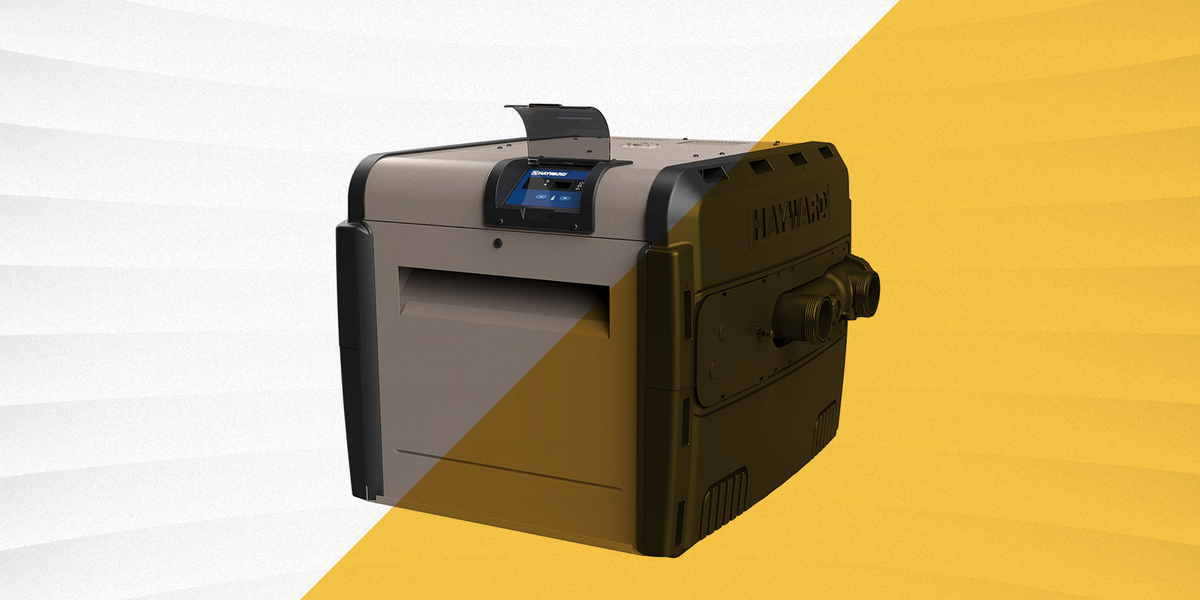
1. Hayward HeatPro 140,000 BTU Low Ambient Heat Pump Best Overall Electric Pool Heater
The Hayward HeatPro is a strong choice for homeowners who want dependable electric pool heating for a larger inground pool. With a 140,000 BTU heating capacity, titanium heat exchanger, corrosion-resistant evaporator coil, and low-ambient operation, it is built for serious backyard use. It is especially appealing for saltwater pools and coastal areas where corrosion can quietly destroy lesser equipment while pretending everything is fine.
This model is not the cheapest option, and installation should be handled by a qualified professional. However, for homeowners who want quiet performance, strong heating power, and a trusted pool-equipment brand, the HeatPro earns its place near the top. It is best for medium-to-large inground pools, homeowners with 230V electrical service available, and anyone who wants electric heating without relying on gas.
Best for: large inground pools, saltwater pools, coastal environments, and long swim seasons.
2. Raypak Crosswind V Heat Pump Best High-Efficiency Heat Pump Lineup
The Raypak Crosswind V series is one of the most flexible electric pool heater choices because it comes in multiple sizes, from smaller models around 85,000 BTU/h to larger units around 138,000 BTU/h. Depending on the model, the Crosswind V offers strong coefficient-of-performance ratings, 208-230V operation, and a vertical-discharge design that fits well on many equipment pads.
This is a smart pick for homeowners who want a modern heat pump pool heater with enough sizing options to avoid underbuying or overbuying. The Crosswind V also has heat-only and heat/cool variations, which can be useful in very hot climates where pool water occasionally turns into soup. Nobody wants “refreshing swim” to feel like “lukewarm noodle broth.”
Best for: homeowners who want efficient electric heating, model flexibility, and a professional-grade heat pump.
3. Pentair UltraTemp High Performance Heat Pump Best for Smart Pool Automation
The Pentair UltraTemp is an excellent choice for pool owners who care about automation and control. It features digital controls, dual thermostats for pool and spa combinations, AutoSet temperature control, automation compatibility, and self-diagnostic software. Translation: it is designed for people who enjoy comfortable water but do not want to babysit the heater like it is a moody houseplant.
The UltraTemp works especially well in pool setups that already use Pentair control systems. It is also a good option for homeowners who want dependable performance, quiet operation, and a polished control experience. Like most full-size heat pumps, it requires proper electrical setup and professional installation, but the payoff is a more hands-off swimming season.
Best for: pool/spa combinations, automation users, and homeowners who want precise temperature control.
4. FibroPool FH270 70,000 BTU Heat Pump Best Value Electric Heat Pump
The FibroPool FH270 is a favorite for homeowners who want an all-electric heat pump without stepping into commercial-size pricing. It offers 70,000 BTU output and is designed for above-ground pools up to about 27 feet round or 18 by 33 feet oval, as well as inground pools up to around 15,000 gallons. It runs on a 220V circuit and uses a titanium heat exchanger, making it friendly to many residential pool setups.
This is not the right unit for a huge pool in a cold climate, but it is very attractive for moderate-size pools where efficiency, simplicity, and value matter. It is the kind of heater that says, “I am practical,” but in a way that still lets you float around with a drink and pretend you are at a resort.
Best for: smaller inground pools, larger above-ground pools, and value-focused electric heating.
5. EcoSmart Smart Pool 27 Best Compact Electric Tankless Pool Heater
The EcoSmart Smart Pool 27 is a 27 kW electric tankless pool heater designed for compact installation and on-demand heating. It uses 240V power, requires substantial amperage, and includes digital thermostat control. Unlike heat pumps, this style of electric heater does not depend on warm outside air, which makes it useful as a booster heater or for smaller pools and spas where space is limited.
The tradeoff is energy use. Electric tankless pool heaters can be convenient, but they are generally not as efficient as heat pumps for maintaining a large pool over a long season. Before choosing this unit, check your electrical panel, local code requirements, and installation cost. Your electrician should not discover the plan after the delivery truck leaves.
Best for: compact equipment areas, small pools, spas, and booster-heating situations.
6. SunHeater S601P Solar Pool Heater Best Solar Heater for Inground Pools
The SunHeater S601P is a solar pool heating system with two 2-foot by 20-foot panels, giving you 80 square feet of solar collector area per box. The panels are made from UV-resistant polypropylene and are designed for inground pools. They can be installed on a roof or rack, and they use the existing pool pump to circulate water through the panels.
This system is ideal for sunny homes where roof or rack space is available. It will not heat as fast as an electric heater, and cloudy weather will affect performance. But once installed properly, a solar pool heater can warm water with very low operating cost. It is the backyard equivalent of letting the sun pick up part of the utility bill.
Best for: inground pools, sunny climates, and homeowners who want lower operating costs.
7. SunHeater S120U Universal Solar Pool Heater Best DIY Solar Heater for Above-Ground Pools
The SunHeater S120U is a universal solar pool heater with one 2-foot by 20-foot panel. It is designed for above-ground pools and can be mounted on the ground, on a rack, or on a roof. The tube-web-tube design helps capture solar energy as pool water moves through the panel.
This is a practical pick for homeowners who want an entry-level solar heating setup without committing to a larger roof system immediately. The S120U is best when paired with good sun exposure and a solar cover. It is also expandable in spirit: once you understand how your pool responds, you can decide whether additional panels are worth the space.
Best for: above-ground pools, DIY-friendly solar heating, and budget-conscious pool owners.
8. GAME SolarPRO Curve Best Compact Solar Heater for Small Above-Ground Pools
The GAME SolarPRO Curve is a compact solar pool heater made for above-ground pools. Its curved design helps maximize sun exposure, while the clear cover helps trap heat as water passes through the collector. It is designed to connect to many popular above-ground pool systems, including Intex and Bestway-style setups, and multiple units can be connected for larger pools with the proper bypass kit.
This is not a miracle machine for huge pools, but it is a clever solution for smaller backyard pools where a full panel array is unrealistic. If your pool is modest and your yard space is limited, the SolarPRO Curve gives you a solar-powered boost without turning your lawn into a science fair project.
Best for: small above-ground pools, limited space, and affordable solar assistance.
Solar Pool Heater vs. Electric Heat Pump: Which Is Better?
Choose a solar pool heater if you live in a sunny climate, have enough roof or rack space, and want the lowest possible operating cost. Solar heaters are excellent for gradual warming and season extension, but they are not instant heaters. They work best when the sun is strong, panels are properly sized, and the pool is covered at night.
Choose an electric heat pump pool heater if you want more consistent temperature control, faster recovery than solar, and better efficiency than standard electric resistance heating. Heat pumps are ideal for homeowners who swim often and want predictable comfort across spring, summer, and fall.
Choose an electric tankless pool heater if you need compact equipment, ambient-air independence, or supplemental heating for a spa or small pool. Just remember that electrical requirements can be serious, and operating costs may be higher for large pools.
Common Mistakes to Avoid When Buying a Pool Heater
Buying too small
An undersized pool heater may technically work, but it will run longer, struggle during cool nights, and leave you wondering whether the box contained a heater or an optimistic suggestion. Always size based on pool volume, surface area, climate, wind exposure, target temperature, and how quickly you want the water heated.
Ignoring installation costs
The purchase price is only part of the story. Heat pumps may need electrical upgrades, breakers, pads, plumbing adjustments, and professional setup. Solar systems may need mounting hardware, roof planning, plumbing runs, and bypass valves. Budget for the full installation, not just the shiny unit photo.
Forgetting about maintenance
Keep filters clean, maintain proper water chemistry, winterize equipment when needed, and make sure water flow stays within manufacturer recommendations. A pool heater is tough, but it is not magic. Treat it well and it will return the favor with warmer water and fewer dramatic repair bills.
Real-World Experience: What It Is Actually Like to Own a Pool Heater
On paper, buying a pool heater is about BTUs, voltage, flow rate, collector area, and efficiency. In real life, it is about whether your family uses the pool more often, whether the water feels inviting after dinner, and whether opening the pool in spring feels exciting instead of emotionally risky. The biggest lesson from pool-heater ownership is simple: comfort changes behavior. When the water is cold, people admire the pool from a chair. When the water is warm, they get in.
For many homeowners, an electric heat pump becomes the most satisfying upgrade because it creates a predictable swimming routine. Instead of waiting for three sunny days in a row, you can set a target temperature and let the system maintain it. The experience is especially nice for families with kids, evening swimmers, and anyone who wants to use the pool beyond the hottest weeks of summer. The heater does not make maintenance disappear, but it makes the pool feel less seasonal and more like a real outdoor living space.
Solar heaters offer a different kind of satisfaction. They are slower, but there is something deeply pleasing about warming pool water with sunlight. The experience is best when expectations are realistic. A solar heater may not rescue a cold pool overnight, but over several sunny days it can noticeably improve comfort. The trick is consistency: run the system when the sun is strong, use a solar cover at night, and do not expect one small panel to perform like a full heat pump. Solar works beautifully when the setup is sized correctly and the homeowner understands that the sun is powerful, but not on-call customer support.
One practical lesson is that wind matters more than many people expect. A breezy backyard can steal heat quickly, especially from uncovered water. If your pool sits in an open area, a heater may need more time and energy to maintain the same temperature. Landscaping, fencing, and covers can make a surprising difference. The heater warms the water; the rest of the backyard either helps keep that heat or lets it escape like a teenager avoiding chores.
Another real-world point: the “best” temperature is personal. Some swimmers are happy around the upper 70s. Others want the low-to-mid 80s. Small children and relaxed floaters usually prefer warmer water than lap swimmers. Every extra degree can increase energy demand, so it helps to find a comfortable setting rather than automatically cranking the heater as high as possible. A pool does not need to feel like soup to be enjoyable.
Installation planning also matters. Heat pumps need good airflow, stable placement, proper electrical service, and access for maintenance. Solar panels need strong sun exposure and enough collector area. Tankless electric units need serious electrical capacity. The smoothest projects happen when the homeowner talks to a qualified installer before buying the heater, not after. That conversation can prevent mismatched equipment, surprise panel upgrades, and the classic backyard sentence: “Well, this is going to cost more than we thought.”
The final experience-based tip is to pair any heater with a cover. This is the least glamorous advice in the pool world, but it may be the most useful. A cover helps retain heat, reduces evaporation, and makes the heater’s job easier. It is not exciting, but neither is paying to heat water that immediately cools overnight. Think of the cover as the heater’s best friend: not flashy, but extremely loyal.
Final Verdict: The Best Pool Heater for Most Homes
For most homeowners who want strong, reliable, electric pool heating, the Hayward HeatPro, Raypak Crosswind V, and Pentair UltraTemp are the top premium choices. They are powerful, efficient, and built for serious residential pools. For smaller pools or better value, the FibroPool FH270 is a practical all-electric option. If compact electric heating is your priority, the EcoSmart Smart Pool 27 is worth considering with the help of a qualified electrician.
For solar-powered pool heating, the SunHeater S601P is the strongest pick for inground pools with adequate space, while the SunHeater S120U is a friendly DIY option for above-ground pools. The GAME SolarPRO Curve is best for small above-ground pools where compact size and affordability matter most.
The best pool heater of 2025 is not simply the biggest or the most expensive. It is the one that fits your pool, climate, electrical setup, budget, and swimming habits. Choose wisely, use a cover, keep the system maintained, and you may finally stop doing the “toe test” like your pool is a suspicious bowl of soup.
SEO Tags
Note: Product specifications, compatibility, and availability can change by retailer, region, and installation requirements. Before purchasing, confirm current model details with the manufacturer or an authorized pool professional and verify that your electrical system, plumbing, and local code requirements support the heater you choose.