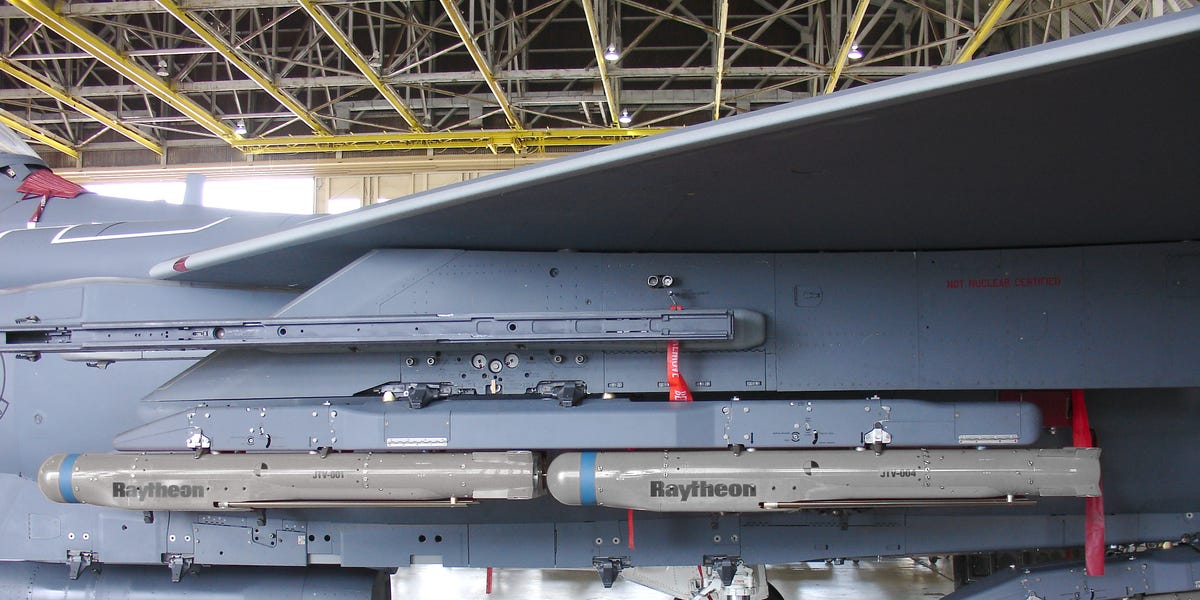
StormBreaker, officially known as the GBU-53/B Small Diameter Bomb II, is one of those defense technologies with a name that sounds borrowed from a superhero movie and a job description that is much more practical: find and hit moving or fixed targets when the weather is doing its best impression of a wet blanket. The headline “Bad Weather ‘Stormbreaker’ Bomb Enters Testing” first captured the weapon’s big promiseprecision strike even when rain, smoke, dust, fog, or darkness make traditional targeting harder.
That promise matters because modern air combat is not fought in postcard weather. Real missions may unfold through clouds, over cluttered terrain, near coastlines, or in fast-changing battlespaces where targets move, hide, or blend into background noise. Older precision weapons were impressive, but many were still heavily dependent on clear target coordinates, laser designation, or conditions that cooperated. StormBreaker was built for the days when the sky says, “Absolutely not,” and the mission says, “Unfortunately, yes.”
Since its early operational testing phase, StormBreaker has moved from ambitious program to fielded weapon. It has been approved for operational use on the F-15E Strike Eagle, fielded on the Navy’s F/A-18E/F Super Hornet, and continues integration work across other U.S. aircraft, including the F-35 family. The story is no longer just about a bomb entering testing. It is about how a compact, network-enabled munition became a case study in what modern precision strike requires: sensors, software, data links, aircraft integration, cybersecurity, reliability, and a lot of patient testing that rarely looks glamorous on a poster.
What Is the StormBreaker Bomb?
The StormBreaker is a 250-pound-class, air-launched glide bomb developed by Raytheon, now part of RTX. It is the second increment of the Small Diameter Bomb family, which was created to give combat aircraft more precision weapons per sortie without loading them like flying moving trucks. Its small size lets aircraft carry more munitions than they could with larger bombs, improving flexibility for missions that require multiple engagements.
Unlike a rocket-powered missile, StormBreaker is an unpowered glide weapon. After release, pop-out wings allow it to travel toward a target area from standoff range. That standoff concept is important: aircraft can launch from a distance rather than flying directly over heavily defended areas. In plain English, it gives aircrews more room to work and fewer reasons to loiter where the welcome committee may be composed of surface-to-air missiles.
Why “Bad Weather” Is the Big Deal
The key selling point is not simply that StormBreaker is small or smart. It is that it is designed to work when visibility is poor. The weapon uses a tri-mode seeker, combining millimeter-wave radar, imaging infrared, and semi-active laser guidance. Each sensor brings a different strength. Radar can help in bad weather and through obscurants. Infrared helps distinguish objects by heat signature. Laser guidance can be useful when a target is designated by an aircraft or another source.
Think of it like giving the weapon three different pairs of eyes. If one pair is squinting because the battlefield is cloudy, smoky, or dusty, another may still help. That does not make warfare simplenothing in defense testing ever doesbut it does give pilots and mission planners more options than a single-sensor weapon.
From Operational Testing to Real-World Fielding
StormBreaker entered operational testing years ago with the goal of proving that it could do what PowerPoint slides had promised without sweating through the laser pointer. Operational testing is where a system leaves the cozy world of controlled development and faces the messy reality of aircraft, weapons racks, data links, software loads, weather windows, safety restrictions, mission planning tools, and human operators.
The Air Force approved Small Diameter Bomb II for operational use on the F-15E Strike Eagle after extensive development and flight testing. The 391st Fighter Squadron later became the first operational unit to use the GBU-53/B during a weapons event at the Utah Test and Training Range. That milestone showed the weapon was no longer just a lab project with an intimidating name; it was moving into the hands of operational aircrews.
The Navy’s path centered on the F/A-18E/F Super Hornet. The Super Hornet became the first Navy aircraft approved to carry StormBreaker, and the Navy later declared initial operational capability for SDB II on the platform. This matters because carrier aviation adds its own layer of difficulty. A weapon that works from a land-based fighter still has to prove it can fit into naval operations, maintenance routines, shipboard logistics, and the wonderfully unforgiving world of aircraft carrier life.
How StormBreaker Works Without Turning This Into a Physics Lecture
StormBreaker begins with aircraft-provided targeting information and uses GPS-aided inertial navigation to reach the general target area. During flight, it can receive target updates through a weapon data link. Near the target, its seeker modes help locate, identify, and guide the weapon. In normal attack mode, the aircraft or another source may update target cues in flight, which is especially valuable against moving targets.
The phrase network-enabled weapon sounds like something that should require a password reset every Tuesday, but it is a major part of the weapon’s value. Modern air operations depend on sensors and shooters sharing information. A pilot, another aircraft, or a controller may help refine what the weapon is looking for after release. That flexibility supports missions where targets do not politely remain parked with their hazard lights on.
StormBreaker’s warhead is described publicly as a multi-effects design intended for a range of target types. In defense terms, that means it is not simply a one-trick tool. It was designed to engage different categories of surface targets while keeping the munition compact enough for dense aircraft loadouts.
Why the F-15E, F/A-18E/F, and F-35 Matter
Integrating a weapon onto an aircraft is not like plugging a phone charger into the wall. Every platform has its own software, racks, mission computers, flight envelopes, safety rules, and operational concepts. The F-15E Strike Eagle gave StormBreaker its first major operational home. That aircraft’s strike role and payload capacity made it a logical early platform.
The F/A-18E/F Super Hornet brought StormBreaker into the Navy’s carrier air wing. That fielding expands precision strike options for naval aviation, especially in maritime and littoral environments where targets may be moving, weather may be unpredictable, and ships do not get to reschedule geography.
The F-35 integration effort is especially important because the aircraft’s internal carriage, sensor fusion, and networked role could make StormBreaker more valuable in contested environments. But it has also been more complicated. Public test reports have noted software delays and integration challenges that affected operational testing timelines. That is not unusual for sophisticated weapons on sophisticated aircraft. When advanced sensors meet advanced software inside an advanced jet, “just make it work” is not an engineering plan; it is a cry for coffee.
The Testing Story: Successes, Snags, and Why Both Matter
StormBreaker’s testing history shows both progress and friction. Public oversight reports have noted successful demonstrations against static and moving targets, as well as concerns involving data-link performance, mission planning, cryptographic key loading, range restrictions, and aircraft-specific integration. Those details may sound painfully bureaucratic, but they are exactly the details that separate a promising weapon from a dependable fielded capability.
For example, if a weapon relies on secure communication links, then key loading and network entry are not minor housekeeping chores. They are mission-critical steps. If a weapon is meant to receive in-flight updates, then the aircraft, the weapon, and the broader network have to speak the same digital language at the right time. If testing is limited by weather, range safety rules, or aircraft software availability, schedules can slide even when the core technology is sound.
This is one reason defense testing looks slow from the outside. A successful test is not simply “bomb dropped, target hit.” It may involve verifying aircraft compatibility, confirming safe separation, checking software behavior, evaluating operator workload, validating data links, testing cyber survivability, assessing maintenance procedures, and documenting everything thoroughly enough to make auditors nod instead of developing a facial twitch.
Why StormBreaker Is Important for Modern Airpower
StormBreaker fits into a broader shift in U.S. airpower: more precision, more networking, more flexibility, and more emphasis on survivability. Large weapons still have roles, but smaller precision munitions allow aircraft to carry more shots and engage more targets in a single sortie. That can be valuable when aircrews face multiple moving targets, mobile air-defense systems, patrol craft, or other time-sensitive threats.
The weapon’s all-weather design also supports operational tempo. Bad weather can delay or complicate air operations. A munition that can engage through difficult visibility conditions gives commanders more options and reduces dependence on perfect skies. It does not eliminate the fog of war, but it helps reduce the “fog ate my targeting plan” problem.
StormBreaker also reflects the growing importance of software-defined combat systems. Its performance is not just about metal, wings, and explosives. It depends on algorithms, mission planning software, aircraft interfaces, secure communications, and sensor fusion. That makes the weapon powerful, but also means upgrades, testing, and troubleshooting are continuous parts of the story.
Challenges Ahead
The most important challenges are not dramatic; they are practical. Full integration across the F-35 variants remains a major milestone. Cyber survivability evaluation and network performance also matter because a network-enabled weapon must remain dependable in contested environments. Production, component updates, and sustainment will become increasingly important as the services buy more weapons and more aircraft are cleared to carry them.
Another challenge is cost-effectiveness. StormBreaker is not a cheap dumb bomb with a guidance kit slapped on and sent off with encouragement. It is a sophisticated smart weapon. That sophistication must justify itself through operational value: higher probability of success, fewer sorties needed, better performance against moving targets, and better options in bad weather. In defense procurement, “cool technology” is not enough. The bill eventually arrives, wearing a suit and carrying a spreadsheet.
Examples of StormBreaker’s Role in a Modern Mission
Imagine a strike aircraft tasked with engaging several mobile targets on a cloudy day. Traditional planning might depend heavily on exact coordinates, clear visibility, or persistent target tracking. With StormBreaker, the aircraft can carry multiple small precision weapons and use networked target updates to support engagements against targets that may move after release. That does not mean the weapon acts magically or independently of human command. It means the system gives aircrews more flexibility when the situation changes.
In a maritime setting, a Super Hornet operating from a carrier might need to engage small moving surface targets. A compact all-weather weapon gives the air wing another option beyond larger munitions. In a land campaign, an F-15E could carry a large number of StormBreakers to address multiple targets in one sortie. In a future F-35 scenario, internal carriage could preserve stealth characteristics while adding precision strike options. Each platform adds a different flavor to the same basic capability.
Experience Notes: What Following StormBreaker Testing Teaches Us
Watching the StormBreaker program evolve is a useful reminder that defense technology rarely moves in a straight line. From the outside, it is tempting to think testing is a ceremonial step: build the weapon, drop the weapon, celebrate with a dramatic video clip and maybe a soundtrack that sounds like a trailer for a submarine movie. In reality, testing is where every assumption gets invited to a very long meeting.
The most interesting experience related to StormBreaker is how it shows the human side of advanced weapons development. Engineers may design the seeker, but pilots have to employ the weapon. Maintainers have to load it. Software teams have to make it communicate with aircraft systems. Test range crews have to create realistic events safely. Program managers have to track cost, schedule, and performance. Then operational users get involved and say, politely or not, “This is what actually happens when we use it.” That feedback loop is where a system matures.
StormBreaker also teaches that “bad weather capability” is not just about weather. It is about uncertainty. Rain and clouds are obvious obstacles, but a modern mission may also involve smoke, dust, electronic congestion, moving targets, changing coordinates, and limited time. The weapon’s tri-mode seeker is a technical answer to a very old battlefield problem: the target you planned for is not always the target you find when you arrive. The more ways a system has to sense, confirm, and adjust, the more useful it becomes.
Another experience from following this topic is patience. Public reports show that even after successful early milestones, integration continued to face delays and test limitations. Some attempts were affected by weather at the test range, hardware issues, cryptographic loading problems, and data-link complications. Ironically, a weapon designed to defeat bad weather still had to live with bad weather affecting scheduled tests. Aviation has a sense of humor; it is just not always kind.
The program also highlights why aircraft integration is often harder than casual observers expect. A munition can be excellent on one fighter and still require years of work on another. The physical shape must fit. The weapon must separate safely. The mission computer must understand it. The pilot interface must make sense. The data links must behave. The safety case must be proven. Every platform is a new relationship, and some relationships require counseling, software patches, and additional flight tests.
For readers who follow military aviation, StormBreaker is a good example of modern airpower becoming less about brute force and more about information. The bomb’s value comes from combining compact size, multiple sensors, network updates, and aircraft compatibility. That is the trend line across many defense programs: weapons are becoming nodes in a system, not isolated objects. The aircraft, sensors, data links, operators, and weapons all matter together.
The practical takeaway is simple: StormBreaker’s testing story is not just a weapons story. It is a systems story. It shows how today’s precision strike depends on dozens of hidden details working correctly under pressure. When the public sees “smart bomb enters testing,” the real translation is: a large team is about to spend years proving that smart stays smart when the weather is ugly, the target moves, the network is busy, and the clock is not feeling generous.
Conclusion
The “Bad Weather ‘Stormbreaker’ Bomb Enters Testing” headline marked the beginning of a significant chapter in precision-strike technology. StormBreaker promised a compact, all-weather, network-enabled weapon that could engage moving and fixed targets when conditions were far from perfect. Years later, that promise has matured through operational testing, Air Force approval, Navy fielding, Super Hornet integration, and continuing work across the F-35 fleet.
Its story is not only about a bomb with a dramatic name. It is about how modern military capability is built: sensor by sensor, test by test, software update by software update. StormBreaker represents the future of air-launched precision weaponssmaller, smarter, more connected, and designed for the messy reality of real-world operations. Bad weather may not care about mission schedules, but StormBreaker was built to make sure bad weather gets less of a vote.
Note: This article is an informational defense-technology analysis based on publicly available U.S. military, government oversight, defense industry, and aviation reporting. It does not provide operational instructions or tactical guidance.