A gorgeous closet is not always a rich-person closet. Sometimes it is just a regular closet that finally got its life together. You know the kind: the hangers match, the shelves are not one dramatic sweater avalanche away from disaster, and your shoes are not hiding like fugitives under a pile of tote bags. It looks polished, calm, and strangely expensive, even when half the tools came from a practical aisle and not a luxury showroom.
That is the magic of an organized closet. It is not about owning fewer things than a minimalist influencer who wears oatmeal-colored linen seven days a week. It is about using the right closet organization tools so your space works harder, looks cleaner, and saves you time every morning. When every item has a clear home, your closet stops acting like a chaotic storage unit and starts behaving like a helpful assistant.
If you want to steal this look, do not start by buying seventeen random storage gadgets that promise inner peace. Start with the essentials that professional organizers, home editors, and closet system experts keep recommending because they actually solve problems. The best organized closet ideas are usually simple: create zones, use vertical space, make small items visible, and choose tools that are easy to maintain. In other words, do not build a system that needs its own system.
Why Some Closets Always Look Better Than Others
The best-looking closets are not necessarily the biggest. They are the most intentional. An organized closet usually has three things going for it: consistent visual order, smart storage categories, and tools that fit the items being stored. That means slim matching hangers instead of a weird family reunion of plastic, velvet, and dry-cleaner wire. It means bins for soft accessories, shelf dividers for folded clothes, and shoe storage that keeps pairs together instead of turning the floor into a scavenger hunt.
Most closet mess comes from one of two problems. Either the space does not have enough structure, or the structure does not match your real life. A closet with only one rod and one top shelf asks a lot from gravity and pure optimism. A closet with ten tiny compartments can also fail if you mostly wear long dresses, boots, or bulky sweaters. The trick is to build around how you actually dress, not how a catalog model pretends to live.
So before you buy anything, take inventory. Do you hang most of your clothes? Fold sweaters and denim? Own more shoes than common sense recommends? Need a better spot for bags, belts, jewelry, or hats? Once you know what deserves prime real estate, picking the right closet storage solutions becomes a lot easier.
The Tools That Create the “Steal This Look” Closet
1. Slim, Matching Hangers
If your closet could have a glow-up with one tool, this would be it. Matching slim hangers instantly make a closet look calmer, neater, and more intentional. They also save space. Chunky hangers eat up rod room, while mismatched hangers create visual noise that makes even a tidy closet look busy. Velvet slimline hangers are especially popular because they grip lightweight tops and dresses well, while sturdy wood hangers work beautifully for coats, blazers, and heavier pieces.
Use one main hanger style for most garments and reserve specialty hangers only where they make sense, such as clip hangers for skirts or structured hangers for suits. Your closet will look more uniform, and your clothes will stop slipping off like they are trying to escape a Monday.
2. Shelf Dividers
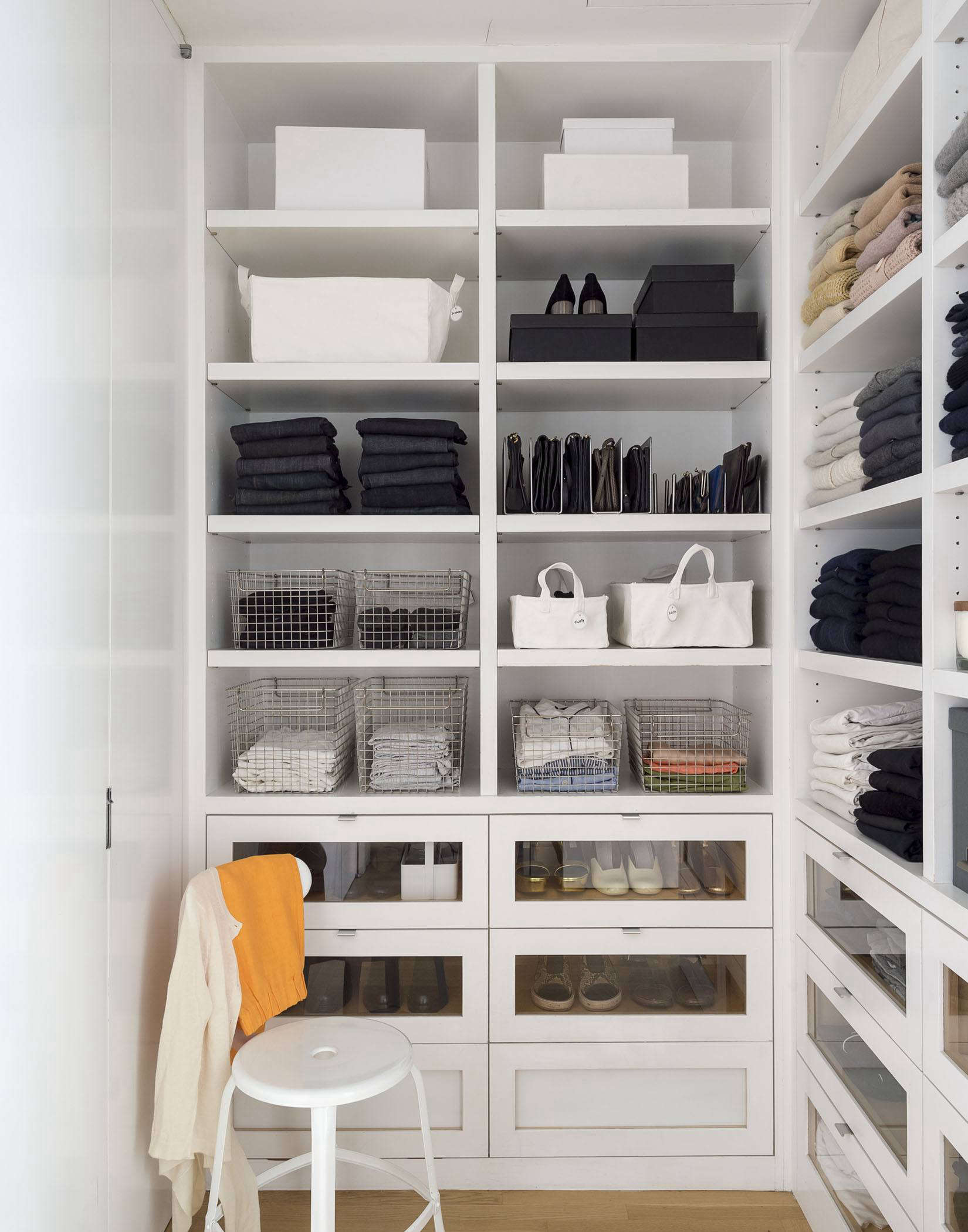
Shelf dividers are the quiet heroes of closet organization. They slide onto shelves and create boundaries for sweaters, jeans, handbags, and even linens. Without them, folded stacks slowly lean, wobble, and eventually collapse into what can only be described as textile lasagna. With them, each category stays upright and easy to grab.
This is one of the easiest ways to make open shelving look crisp. Clear acrylic dividers are especially useful because they keep the look airy while still doing the hard work of separating stacks. If you have deep shelves, pair dividers with front-facing labels so you can actually remember what lives where.
3. Bins, Baskets, and Boxes
An organized closet almost always uses containers, but smartly. Bins and baskets work best for categories that are awkward to fold, too small to stack, or too seasonal to keep front and center. Think scarves, swimsuits, clutches, belts, out-of-season accessories, and extra pajamas. Clear bins make it easy to see what is inside, while woven or fabric baskets can soften the look and make a closet feel more finished.
The important part is not just owning bins. It is assigning each bin a job. One bin for workout gear. One for winter accessories. One for travel items. One for small bags. When containers have a purpose, your closet becomes easier to reset because you are not making storage decisions from scratch every single day.
4. Labels That Keep Everybody Honest
Labels are not just for people with alphabetized spice racks and suspiciously calm personalities. In a closet, labels help maintain the system you worked to build. They create a visual reminder of where categories belong, which matters a lot when you are tired, in a rush, or feeling rebellious after laundry day.
You do not need to label everything like a museum archive. Just label bins, baskets, boxes, and shelves that hold similar items. The goal is not to make your closet feel corporate. The goal is to make it obvious where your swimsuits go so they do not migrate to the sweater shelf and start socializing where they do not belong.
5. Over-the-Door Organizers and Hooks
The back of the closet door is prime storage territory, and too many closets leave it doing absolutely nothing. Over-the-door organizers are excellent for shoes, scarves, hats, small handbags, and assorted grab-and-go items. Hooks and door racks also work beautifully for robes, tomorrow’s outfit, or accessories you wear all the time.
This is one of the best small closet organization tools because it uses vertical space without taking up precious shelf or rod room. Just be selective. If you overload the door, it goes from “smart storage” to “chaotic percussion section” every time it opens.
6. Shoe Storage That Matches Your Real Shoe Situation
Shoes are often the first thing to colonize the floor. That is why dedicated shoe storage matters so much. Depending on your space, that can mean a low shoe rack, clear stackable shoe boxes, hanging shoe shelves, or an over-the-door organizer. The best option depends on how many pairs you wear regularly and what kind of footwear you own.
Flats, sandals, and everyday sneakers do well in visible, easy-access storage. Tall boots and special-occasion shoes can live higher up or in labeled boxes. The main rule is simple: keep pairs together and make them easy to return. If your shoe system feels annoying, your floor will become the backup plan.
7. Hanging Shelves and Soft Closet Cubbies
Hanging organizers are especially useful in closets that do not have enough built-in shelving. They can add compartments for folded knits, handbags, jeans, or shoes without requiring a full renovation. These are perfect for renters, dorm rooms, kids’ closets, and anyone who wants more structure without drilling into walls.
The key is not to overload them with heavy items. Think of them as flexible support players, not weightlifting champions. Used well, they create tidy vertical storage and make underused hanging space far more efficient.
8. Drawers, Sliding Baskets, and Inserts
Open shelves are great until you need to store small things that love to scatter. That is where drawers, sliding baskets, and shelf inserts shine. They act like drawers in closets that were not lucky enough to be born with drawers. Use them for socks, undergarments, handbags, workout gear, belts, and accessories that are too messy to leave out in the open.
Sliding baskets are especially handy because they keep everything accessible. Instead of excavating the back of a deep shelf like an archaeologist, you can pull the basket out and actually see your belongings. A miracle, honestly.
9. Adjustable Shelving and Double-Hang Rods
If you are serious about stealing that polished closet look, structure matters as much as accessories. Adjustable shelving and closet rods let you customize the layout instead of forcing your wardrobe to fit a bad design. Double-hang rods are especially useful for shirts, blouses, folded pants, and shorter garments because they create two levels of hanging space where there used to be one.
Meanwhile, higher shelves are great for less-used items and seasonal storage. If your closet always feels full, the problem may not be the amount of stuff. It may be that your space is not divided well. A better framework can make an average closet feel dramatically more functional.
10. Valet Rods, Accessory Racks, and Small Finishing Touches
These are the details that make a closet feel thoughtfully designed instead of merely contained. A valet rod gives you a spot to stage outfits, air out dry cleaning, or pack for a trip without throwing everything on the bed. Tie and belt racks keep small accessories visible and untangled. Purse dividers stop handbags from slumping into one another like exhausted commuters. Motion-sensor lighting can also make a huge difference, especially in dark reach-in closets.
These tools are not always necessary on day one, but they are often what transforms a functional closet into one that feels easy and luxurious to use.
How to Copy the Look in a Real Closet
Here is a simple organized closet formula that works in many reach-in spaces:
- Top shelf: labeled bins for seasonal items, travel accessories, keepsakes, or rarely used bags.
- Main rod area: matching slim hangers with clothes grouped by type, then color.
- Second rod or lower section: shorter hanging items like shirts, skirts, and folded pants.
- Shelves: sweaters, denim, and handbags separated with shelf dividers.
- Floor: a low shoe rack or clear shoe boxes.
- Back of the door: hooks or a hanging organizer for accessories and small essentials.
- Small-item zone: drawer inserts, baskets, or sliding bins for socks, scarves, belts, and undergarments.
This layout works because every type of item gets the kind of storage it needs. Nothing is left to wander. Nothing is balanced precariously on the edge of a shelf like it is considering a dramatic exit.
How to Shop for Closet Tools Without Wasting Money
The easiest way to overspend on closet organization is to buy products before editing your wardrobe. Do not organize clutter more beautifully than necessary. Declutter first, then measure, then shop. Buy the “bones” before the fancy extras: hangers, dividers, bins, shoe storage, and basic shelving. Once those are in place, you can add finishing tools like accessory trays, drawer inserts, and boutique-style touches.
It is also smart to choose storage that can adapt. Adjustable systems, stackable boxes, removable dividers, and collapsible organizers tend to age well because your wardrobe will change over time. The closet that works for you now may need a different setup in a year, and the best storage solutions can evolve without demanding a complete do-over.
The Real Secret: An Organized Closet Has to Be Easy to Maintain
The prettiest organized closet is not the one that photographs well for one glorious afternoon. It is the one you can maintain when life gets busy. That means storing frequently used items at eye level, keeping the system simple enough to reset quickly, and giving yourself obvious drop zones for the things you wear most. Everyday jeans should not require mountaineering equipment to access. Your favorite handbag should not be buried behind a bin of beach towels in February.
A five-minute reset helps more than a weekend panic. Put shoes back. Return hangers to the rod. Refold one shelf before it becomes six. Move dry cleaning bags out. Empty the donation bag when it is full. Good closet organization is less about perfection and more about reducing friction. When the system is easy, you will actually use it. Fancy concept, I know.
Experience: What an Organized Closet Actually Feels Like in Real Life
Here is the part people do not always mention when they talk about closet organization tools: the best result is not just a nicer-looking closet. It is a calmer morning. It is the oddly satisfying feeling of opening the door and not being immediately judged by a collapsing pile of sweaters. It is realizing you can get dressed faster because you can finally see what you own, which means you stop defaulting to the same three outfits like a sitcom character with a very limited wardrobe budget.
Anyone who has gone from a cluttered closet to a functional one usually notices the same thing first: less decision fatigue. Before the closet is organized, every small task takes longer. Finding matching shoes takes too long. Looking for a black belt turns into a side quest. Pulling out one cardigan causes two tops and a scarf to hit the floor in protest. The closet becomes a tiny daily inconvenience machine. Once the right tools are in place, the space becomes cooperative. You do not have to negotiate with it anymore.
There is also a surprising emotional shift. A messy closet can make people feel like they are behind before the day even begins. An organized closet gives the opposite energy. It says, “Relax, your navy blazer is exactly where it should be.” That sounds dramatic until you have lived both versions. When your shelves are divided, your accessories are contained, and your hangers match, the room feels quieter. Even if the rest of the day gets messy, at least your closet is not adding to the plot.
Another real-life benefit is that you start using more of your wardrobe. Clothes that used to disappear into the dark corners of the closet suddenly re-enter the conversation. That sweater you forgot you owned? Found. The bag that was flattened behind a pile of jeans? Back in rotation. The shoes you stopped wearing because one always went missing? Reunited at last. Good closet storage does not just hide things neatly; it helps your wardrobe function better.
People also tend to shop differently after organizing a closet well. When you can see how much denim you already own, buying another pair on impulse loses some of its sparkle. When every accessory has a home, you become more selective about what earns space. You stop buying mystery organizers too. That is because the closet teaches you what kinds of tools actually help. You learn that a labeled bin beats a random decorative box, that a sturdy hook is more useful than a gimmicky gadget, and that matching hangers pull off more visual magic than they have any right to.
And then there is maintenance, which sounds boring until you realize how much easier it gets once the structure is right. In a good system, putting laundry away is no longer an hour-long exercise in avoidance. You know where the T-shirts go. You know where the workout clothes go. You know which shelf belongs to sweaters and which basket holds winter accessories. It becomes quick, almost automatic. Not thrilling, of course. Let us not get carried away. But definitely less annoying.
That is why the “steal this look” closet keeps showing up in magazines, home tours, and organizer tips. It is not only attractive. It is useful. It makes daily life smoother. It gives your clothes a better home and gives you a little more breathing room in the process. And honestly, if a few shelf dividers, slim hangers, and labeled bins can make your morning less chaotic, that is not just organization. That is a public service.
Conclusion
If you want an organized closet that looks polished and works hard, focus on tools that create structure instead of clutter. Start with matching hangers, shelf dividers, bins, labels, and a shoe system. Add over-the-door storage, drawers, or adjustable shelving as needed. Build around your actual wardrobe, keep everyday items easy to reach, and choose solutions simple enough to maintain. The result is a closet that looks better, feels better, and quietly saves you time every single day. That is a look worth stealing.