Your medicine cabinet should not double as a tiny museum of half-used antibiotics, mystery cough syrup, and pain pills from a dental procedure you barely remember. If you have expired, unwanted, or leftover medications at home, proper disposal matters more than most people think. Done the right way, it helps prevent accidental poisoning, reduces the risk of misuse, protects pets and kids, and keeps medicines out of places they do not belong.
This guide focuses on household prescription and over-the-counter medications, plus a few related items people often forget about, like patches, liquids, inhalers, and sharps. The good news is that safe drug disposal is not complicated. The even better news is that you do not need a chemistry degree, a hazmat suit, or a dramatic soundtrack. You just need the right method.
Why Proper Drug Disposal Matters
People tend to hold onto old medicines for all kinds of reasons: “I might need this later,” “It was expensive,” or the classic “I forgot it was even there.” But leftover medication can create real problems. Children can swallow it. Pets can get into it. Guests or teens may misuse it. And expired medication is not something you should casually save for a rainy day just because it still looks official in the bottle.
There is also an environmental angle. Flushing or dumping medicine the wrong way can send drug residues into water systems. That is why safe disposal guidance in the United States follows a clear hierarchy: use a take-back option first, use the FDA flush list only in limited cases, and use household trash disposal carefully when take-back is not available.
The Best Option for Most Medications: Use a Take-Back Program
If you remember only one thing from this article, make it this: the preferred way to dispose of most unused or expired medicines is a drug take-back option. That means a secure collection method designed for safe destruction.
Drug take-back kiosks and drop boxes
Many pharmacies, hospitals, clinics, and law enforcement locations offer year-round drug disposal kiosks. These are often the easiest choice because you can drop off medicines anonymously and move on with your day feeling like an unusually responsible adult. Some communities also have permanent drop boxes in police departments.
Mail-back envelopes
Some pharmacies and health systems offer prepaid drug mail-back envelopes. These are helpful if getting to a kiosk is inconvenient, especially for caregivers, older adults, or people managing multiple medications from home.
National Prescription Drug Take Back Day
The DEA also hosts National Prescription Drug Take Back Day events, typically in the spring and fall. These events are especially useful when you have a drawer full of leftover medications and finally decide it is time for a clean sweep instead of another year of avoidance.
Before you go, check the collection site’s rules. Many sites accept tablets, capsules, patches, and sealed liquids, but not every site accepts every item. Sharps, inhalers, vaping devices, and certain non-medication materials may require separate disposal steps.
What to Do Before Dropping Off Medication
A take-back trip is simple, but a little preparation helps:
- Keep liquids tightly sealed in their original containers unless the site says otherwise.
- Scratch out or remove personal information on prescription labels and packaging.
- Check whether the site has restrictions on needles, syringes, inhalers, or aerosol products.
- Look for site-specific guidance if you are bringing patches or unusual dosage forms.
If you are disposing of medicine after the death of a loved one, or while helping someone in hospice or assisted living, the same general rules apply: ask the care team first, then use a take-back option whenever possible. That small step can prevent confusion, accidental use, and unsafe storage at a difficult time.
No Take-Back Option Nearby? Use the Home Trash Method Correctly
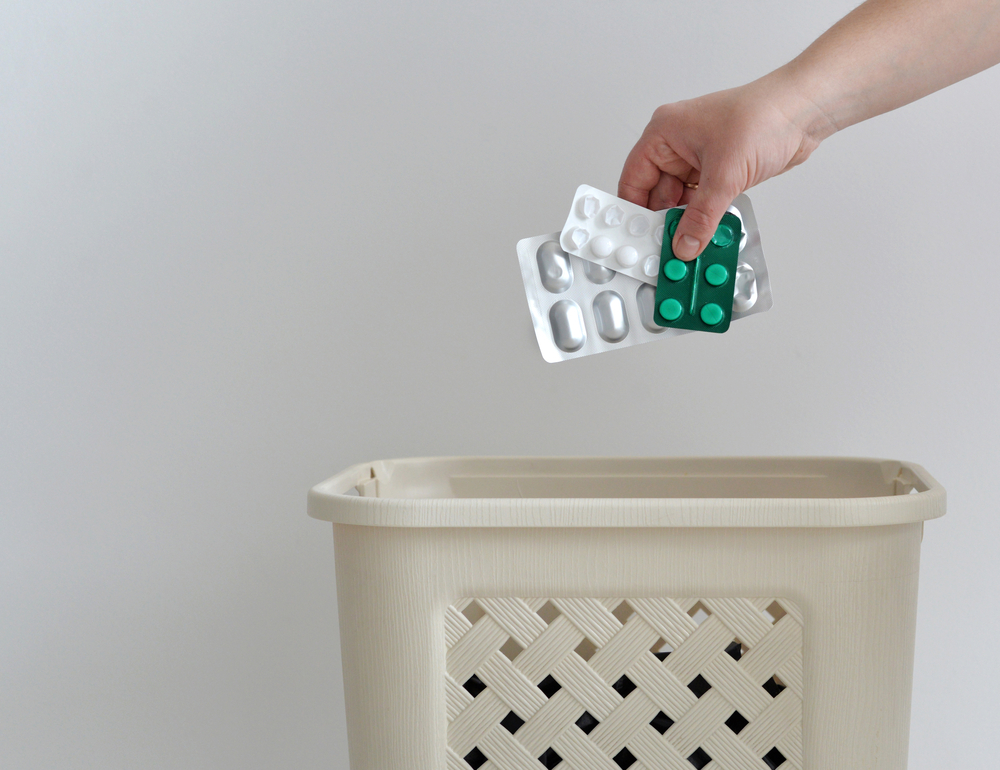
Sometimes there is no kiosk nearby, no mail-back envelope in sight, and no time to wait for a take-back event. In that case, many medicines that are not on the FDA flush list can be disposed of in your household trash, but only after careful preparation.
How to throw away non-flush-list medicines at home
- Remove the medicine from its original container.
- Mix it with something unappealing, such as used coffee grounds, dirt, or cat litter.
- Do not crush tablets or capsules.
- Place the mixture in a sealed bag or other closed container.
- Throw that sealed container in your household trash.
- Scratch out personal information on the empty medicine bottle or packaging before trashing or recycling it.
This method helps make the medication less recognizable and less appealing to children, pets, or anyone tempted to go rummaging through trash. It is the backup plan, not the gold medal winner, but it is still far better than tossing pills into the garbage loose or leaving them in a bottle on the counter.
When Flushing Is Appropriate and When It Is Not
Most medications should not be flushed. That part is important. The FDA and EPA both make it clear that take-back programs are preferred for most medicines. But there is an exception for a limited group of drugs on the FDA flush list.
These are medicines considered especially dangerous if someone accidentally takes, touches, or misuses them. If a take-back option or mail-back envelope is not readily available, the FDA says these specific medicines should be flushed right away rather than kept in the home or thrown in the trash.
Common examples on the flush list include certain drugs containing fentanyl, hydrocodone, oxycodone, buprenorphine, methadone, morphine, and meperidine. The reason is simple: for some of these products, even one accidental exposure can be devastating.
Fentanyl patches deserve special attention
Used fentanyl patches can still contain enough medication to harm or kill a child, pet, or another adult who is accidentally exposed. The recommended method is to fold the patch in half with the sticky sides together and flush it, following the product’s instructions. This is one of those rare moments when flushing is not a lazy shortcut. It is the safety move.
If your medication came with disposal instructions from your pharmacist, prescriber, or package insert, follow those instructions first. Product-specific labeling always matters.
Special Items That Need Their Own Disposal Rules
Sharps: needles, syringes, lancets, and auto-injectors
Sharps are not regular trash, and they definitely are not “wrap it in a tissue and hope for the best” items. Used needles and similar devices should go immediately into a sharps disposal container. FDA-cleared sharps containers are ideal, though a heavy-duty plastic household container may sometimes be used if a proper container is not available and local guidance allows it.
Loose sharps should never go in household trash, public trash cans, recycling bins, or the toilet. Community rules vary, so check with your local health department, trash service, pharmacy, or household hazardous waste program for the correct next step.
Inhalers and aerosol products
Inhalers and other aerosol-style products may be dangerous if punctured or thrown into fire or incineration. Read the labeling and follow local trash and recycling instructions. This is not the moment for improvisation.
Liquids, creams, sprays, and oddball dosage forms
Many take-back programs accept liquids if they are tightly sealed. Products such as sprays, lozenges, gels, rectal products, and patches may have specific instructions in the package insert or medication guide. When in doubt, ask a pharmacist. Pharmacists are underappreciated heroes in comfortable shoes.
Pet medications
Pet medicines should also be disposed of safely. Do not assume that “it is for the dog” means it can be handled casually. Follow the same take-back-first approach unless your veterinarian provides different instructions.
Common Drug Disposal Mistakes to Avoid
- Keeping leftovers “just in case.” That old prescription is not a backup plan; it is clutter with consequences.
- Flushing everything. Only flush drugs that are specifically on the FDA flush list or come with instructions telling you to do so.
- Throwing bottles away as-is. Loose pills in a labeled bottle are a bad idea for privacy and safety.
- Forgetting about patches. Patches can still contain medicine after use.
- Tossing sharps into regular trash. This puts sanitation workers, family members, and pets at risk.
- Ignoring package instructions. Some medications have special disposal directions for a reason.
A Simple Routine for Safer Medication Cleanup
If you want to make proper drug disposal part of normal household life, create a quick check-in every three or four months. Open the medicine cabinet, the bathroom drawer, the kitchen “junk drawer that somehow contains cold medicine,” and any travel bags. Separate what is expired, what is discontinued, and what is no longer needed.
Then sort items into categories:
- Take-back eligible: most pills, capsules, patches, and many liquids
- Flush-list medicines: only if take-back is not readily available
- At-home trash disposal: non-flush-list medicines when no better option exists
- Special handling: sharps, inhalers, aerosols, and products with unique labeling instructions
That simple routine can reduce risk without taking over your weekend. Think of it as spring cleaning with fewer dust bunnies and more public health.
What Real-Life Disposal Situations Often Look Like
The topic of drug disposal sounds dry until it shows up in everyday life, which it often does. One common situation happens after surgery. A person is prescribed pain medicine, uses only a few tablets, feels better, and tosses the rest into a bathroom drawer. Months later, nobody remembers what the bottle is for, but everyone assumes it must be important because it has a pharmacy label. That is exactly how old medications stay in circulation far longer than they should. The better move is to get those leftovers to a kiosk or take-back event as soon as the acute need is over.
Another everyday scenario involves families with children or pets. A toddler does not know the difference between candy and a bright capsule, and a curious dog will not pause to read the warning label. Parents and caregivers often realize during a cabinet cleanout that the bigger danger is not just expired medicine. It is accessible medicine. Proper disposal becomes less about housekeeping and more about prevention. The relief people feel after finally clearing out old medications is real. A safer home tends to feel lighter, less cluttered, and a lot less stressful.
Caregivers for older adults run into a different challenge: medication changes. A doctor switches a dose, stops one prescription, adds another, and suddenly there are duplicate bottles, outdated pill organizers, and half-finished supplies everywhere. In those cases, safe disposal is also part of medication management. It helps reduce mix-ups and makes it easier to know what the person should actually be taking now. For families juggling appointments, refill schedules, and pillboxes, getting rid of unneeded medication is not a minor chore. It is a practical safety step.
People managing chronic conditions often have more complicated disposal questions. Someone with diabetes may have insulin pens, lancets, test supplies, and sharps to deal with. Someone with asthma may have old inhalers. Someone using pain patches may not realize used patches still contain enough drug to be dangerous. These experiences are common, which is why the best disposal advice is not one-size-fits-all. The right method depends on the item. Pills are one thing. Sharps are another. Patches and aerosols have their own rules. A little sorting prevents a lot of risky guesswork.
There is also the emotional side. People cleaning out a loved one’s home after an illness, hospitalization, or death often discover bags or drawers filled with medications. That can be overwhelming. In that moment, clear steps matter. Use the care team or pharmacist as a guide, use take-back programs whenever possible, and avoid the urge to keep medicines “just in case someone needs them later.” Safe disposal in these moments is not only practical. It can also bring a sense of closure. One small, orderly task helps restore control during a time that may feel anything but orderly.
Final Thoughts
Proper drug disposal is one of those small habits that pays off in a big way. It lowers the risk of accidental poisoning, reduces the chance of misuse, protects kids and pets, and helps keep medicine out of the environment. The simplest rule is also the best one: use a take-back or mail-back option first. If that is not available, follow the FDA’s at-home trash instructions for non-flush-list medicines. Flush only the limited medicines that are specifically supposed to be flushed when no take-back option is available. And for sharps, inhalers, and special products, follow the separate rules that apply to them.
In other words, do not let old medicine linger like an awkward houseguest. Show it the door safely.