Note: This article is written for web publication and synthesizes real research, developer documentation, and current 3D capture trends into original, reader-friendly content.
There was a time when exploring a photorealistic 3D scene on a phone sounded like asking a toaster to run a Hollywood visual effects pipeline. Cute idea, wrong appliance. Then neural radiance fields, better known as NeRFs, came along and changed the conversation. Suddenly, a handful of ordinary photos could become a navigable 3D scene with realistic lighting, depth, reflections, and that “wait, am I inside the picture?” feeling.
The catch, because technology enjoys giving us one tiny dragon to fight, was speed. Traditional NeRF rendering was beautiful but computationally hungry. It could make a scene look magical, but often only after a powerful GPU did a workout that sounded like a leaf blower wearing a lab coat. Real-time exploration, especially on smartphones, was the dream. Today, that dream is getting very real.
Thanks to breakthroughs such as SMERF, MobileNeRF, MERF, Instant-NGP, neural light fields, and 3D Gaussian Splatting, researchers and developers are pushing radiance-field experiences into browsers, laptops, mobile devices, and creator tools. The result is a fast-moving field where real-time neural rendering is not just for research demos anymore. It is inching toward virtual tours, e-commerce, digital twins, games, education, robotics, and social media content that makes flat photos look like postcards from the Stone Age.
What Are Neural Radiance Fields?
A neural radiance field is a machine learning method for representing a 3D scene from 2D images. Instead of building a scene in the old-school way, with hand-modeled meshes, textures, and lighting rigs, a NeRF learns how light behaves throughout a space. It predicts color and density at points in 3D space, then uses those predictions to render new views.
In plain English, you feed the system images of a room, object, street corner, garden, sculpture, or snack that looks suspiciously photogenic. The model learns where things are, how surfaces reflect light, and what the scene should look like from angles that were never directly photographed. Then you can move through the reconstructed scene as if the camera had become a tiny drone.
This is why NeRF technology has become such a big deal in computer vision and graphics. It bridges photography and 3D modeling in a way that feels natural. Instead of needing an expert artist to rebuild a location by hand, the scene can be captured with ordinary imagery and transformed into an immersive digital space.
Why Real-time NeRF Rendering Is So Hard
The original NeRF approach delivered stunning view synthesis, but it was not designed for lightweight real-time interaction. To render a single frame, the system often needs to sample many points along each camera ray and query a neural network repeatedly. Multiply that by hundreds of thousands or millions of pixels, and suddenly your phone is looking at you like, “Absolutely not.”
Real-time rendering demands speed, predictable memory use, efficient streaming, and graceful performance across different devices. A desktop GPU can brute-force many problems. A phone cannot. Phones must balance graphics, battery life, heat, memory, network conditions, and the user’s impatience. Nobody wants a virtual tour that loads one frame per philosophical era.
That is why newer radiance-field systems focus on optimization. Some “bake” the neural representation into a format that is faster to render. Others use grids, sparse structures, textured polygons, hierarchical partitioning, or splatting. The goal is the same: keep the photorealistic magic while avoiding the computational equivalent of carrying a refrigerator up a staircase.
SMERF: The Big Step Toward Phone-friendly Exploration
SMERF, short for Streamable Memory Efficient Radiance Fields, is one of the most exciting developments for real-time scene exploration. It was designed to let users navigate large NeRF-like scenes in a web browser, even on commodity smartphones and laptops. That matters because the browser is the most universal 3D platform in the world. If it runs in a browser, people can share it with a link instead of asking everyone to install an experimental research stack and sacrifice a weekend.
SMERF builds on the idea that high-quality radiance fields can be distilled into a more efficient representation. It uses hierarchical model partitioning to manage capacity while keeping computation and memory under control. It also emphasizes streamability, meaning the system can deliver the parts of the scene needed for the current view instead of dumping a giant digital warehouse onto the device all at once.
The practical result is full six-degrees-of-freedom exploration. Users can move forward, backward, sideways, up, down, and rotate their view naturally. Instead of watching a fixed video flythrough, they can inspect a space at their own pace. For architecture, museums, real estate, tourism, product showcases, and education, that interactivity is the difference between “nice clip” and “I feel like I am there.”
MobileNeRF and the Power of Using Existing Graphics Hardware
MobileNeRF takes a clever approach: rather than forcing phones to render radiance fields through expensive volumetric ray marching, it uses representations that fit better with the traditional graphics pipeline. Modern phones already have graphics hardware built for rasterization, the same broad family of techniques that powers mobile games and interactive apps.
By representing NeRF content through textured polygons, MobileNeRF makes rendering more compatible with widely deployed hardware. This is not just a technical footnote. It is a major design philosophy. If you want real-time neural rendering on everyday devices, you cannot pretend every user is carrying a workstation GPU in their pocket. You need to meet the hardware where it already is.
This is why MobileNeRF helped shift the discussion from “Can NeRFs look beautiful?” to “Can NeRFs be used by normal people on normal devices?” Beautiful research demos are wonderful, but the web and mobile ecosystems demand accessibility, stability, and speed.
MERF, SNeRG, and the Art of Baking the Magic
Another important idea in real-time NeRF rendering is baking. In this context, baking means precomputing parts of the neural scene into a structure that can be rendered quickly later. Think of it like preparing ingredients before dinner service. The chef still makes the dish, but they are not peeling potatoes from scratch while twenty hungry customers stare through the kitchen window.
SNeRG, or Sparse Neural Radiance Grid, showed that a trained NeRF could be converted into a compact representation capable of real-time rendering on commodity hardware. MERF, or Memory-Efficient Radiance Fields, continued this direction by reducing memory requirements while supporting large-scale browser rendering.
These systems matter because memory is often as important as raw speed. A scene that renders fast but requires massive storage is not friendly to phones, browsers, or mobile networks. Efficient radiance fields need to fit into real-world pipelines, where users may be on cellular connections, mid-range devices, or laptops that are already juggling twenty browser tabs and one mysterious fan noise.
Instant-NGP: Training Speed Enters the Chat
NVIDIA’s Instant Neural Graphics Primitives, commonly called Instant-NGP, helped make NeRF experimentation feel dramatically faster. It introduced highly efficient neural graphics primitives and popularized the idea that training a NeRF-like scene could be quick enough for practical workflows.
Speeding up training is different from speeding up rendering, but both are essential. If it takes hours or days to create a scene, casual creators will wander off and make coffee. If it renders slowly, viewers will do the same. Instant-NGP helped energize the field because it made iteration faster. Researchers, artists, and developers could capture, train, inspect, and improve scenes with less waiting and more experimenting.
For real-world adoption, that matters enormously. A real estate agent, game artist, educator, or museum technologist does not want a science project that only works after a graduate student whispers to CUDA at midnight. They want a toolchain that feels closer to taking photos, uploading content, and sharing an interactive result.
Where 3D Gaussian Splatting Fits In
No discussion of real-time radiance-field exploration is complete without 3D Gaussian Splatting. While it is not exactly the same as classic NeRF, it belongs to the same broader revolution in view synthesis and neural scene representation. Instead of relying on dense ray marching through a neural field, Gaussian Splatting represents scenes as many semi-transparent 3D blobs, or “splats,” that can be rendered efficiently.
The appeal is obvious: photorealistic scenes, fast rendering, and practical creator workflows. Gaussian Splatting has become especially popular for captures of real places, objects, foliage, messy interiors, and other scenes where traditional meshes can be awkward. It also tends to feel immediately impressive because users can move around a scene at interactive frame rates.
For everyday users, the distinction between NeRF, MERF, SMERF, MobileNeRF, and Gaussian Splatting may be less important than the experience: upload photos or video, generate a 3D scene, open it on a device, and explore. Under the hood, the methods differ. On the screen, they are all part of the same shift from flat media to spatial media.
Why Phones Are the Real Test
If a neural rendering technique runs well on a high-end desktop, that is impressive. If it runs well on a phone, that is transformative. Phones are where cameras live. Phones are where people browse, shop, share, message, learn, and doom-scroll with Olympic commitment. Bringing NeRF-like exploration to phones means the capture device and the viewing device can become one seamless platform.
Imagine scanning a hotel room before booking, inspecting the texture of a vintage chair before buying it, walking through a museum exhibit from another country, or sharing a 3D memory of a wedding venue with family members who could not attend. A phone-friendly radiance field turns 3D capture from a specialized workflow into something closer to taking a panorama.
There are still challenges. Battery life matters. Heat matters. Network speed matters. File size matters. Touch controls need to feel intuitive. Scenes must load quickly, avoid visual artifacts, and preserve detail without making the device sweat like it just joined a spin class. Still, the progress is remarkable.
Practical Use Cases for Real-time Neural Radiance Fields
Virtual Tours
Real estate, hospitality, event venues, and tourism are natural fits. A real-time radiance-field scene can make a space feel more truthful than a wide-angle photo gallery. Users can look behind corners, inspect materials, and understand scale. It is harder to hide a tiny bathroom when the viewer can glide through it like a polite ghost.
E-commerce and Product Visualization
Products with complex materials can benefit from neural rendering. Think furniture, shoes, jewelry, collectibles, electronics, handmade crafts, and anything shiny enough to confuse normal photography. NeRF-style captures can show how an object looks from different angles under real lighting, helping shoppers build confidence before buying.
Games and Interactive Media
Radiance fields and Gaussian splats are opening new possibilities for game environments, especially when creators want realistic scanned spaces. Indie developers can capture real locations and transform them into navigable scenes without modeling every brick by hand. The technology is not a magic replacement for game engines, collision systems, animation, or lighting control, but it is becoming a powerful asset pipeline.
Education and Cultural Preservation
Schools, museums, and archives can use real-time 3D captures to preserve places and objects in an immersive format. Students could explore archaeological sites, historical rooms, engineering labs, or biological specimens from a browser. That is a lot more exciting than squinting at a flat image labeled “Figure 7,” which has never once improved anyone’s lunch break.
Robotics and Spatial Understanding
NeRFs are also relevant to robotics and computer vision because they offer a rich way to model scenes. A robot that understands geometry, appearance, and view-dependent detail can potentially navigate and reason about spaces more effectively. Real-time performance matters here because robots do not have the luxury of rendering a hallway three minutes after they needed to avoid a chair.
How to Capture Better NeRF-like Scenes
Whether you are using a research tool, a mobile app, or a Gaussian Splatting platform, capture quality makes a huge difference. The model can be smart, but it cannot invent reliable geometry from chaos, blur, and three photos taken while sprinting.
Start with good lighting. Soft, even light usually works better than harsh glare or deep shadows. Move slowly and capture many overlapping angles. Avoid sudden camera jumps. Include close, medium, and wide views. For objects, circle around the subject at different heights. For rooms, cover corners, doorways, surfaces, and details that help the system understand geometry.
Reflective and transparent surfaces remain tricky. Mirrors, glass, glossy metal, water, and screens can confuse reconstruction because their appearance changes dramatically with viewpoint. Dynamic scenes are also harder. People walking through the capture, trees blowing in the wind, or pets conducting surprise inspections can introduce artifacts. Yes, the cat is adorable. No, the model does not appreciate the tail photobomb.
What Still Needs Improvement?
Real-time NeRF exploration is advancing quickly, but it is not perfect. The biggest limitations include dynamic objects, editing, relighting, compression, compatibility, and creator-friendly workflows. Capturing a static room is one thing. Capturing a busy street, a moving performer, or a reflective car showroom is much harder.
Editing is another challenge. Traditional 3D assets can be modified with established tools. You can move a chair, change a material, add lighting, or animate a character. Radiance fields are more like captured reality than editable geometry. Researchers are working on better ways to segment, edit, relight, and combine neural scenes, but the workflow is still maturing.
There is also the issue of standards. The web became powerful because content could be shared widely. For radiance fields to become everyday media, creators need reliable formats, viewers, compression methods, export options, and integrations with game engines, design tools, and augmented reality platforms.
The Experience: Exploring Neural Radiance Fields On A Phone
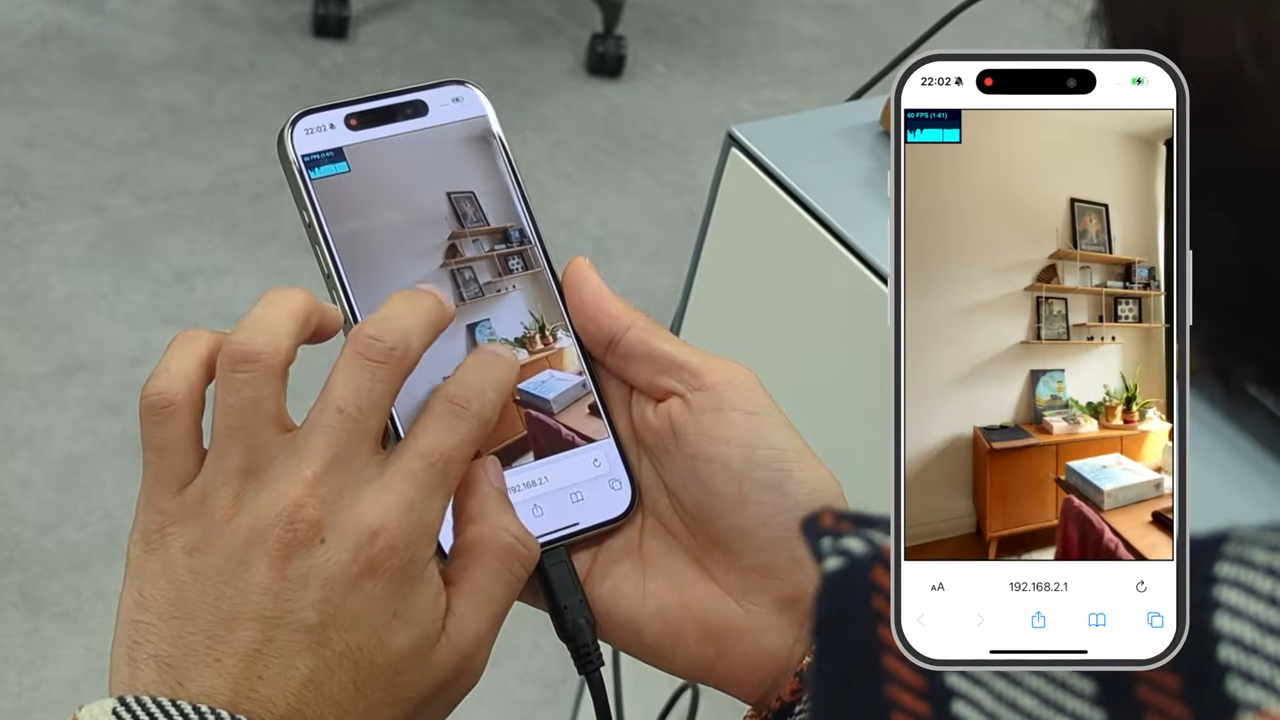
The first time you open a real-time radiance-field scene on a phone, the experience feels oddly futuristic and familiar at the same time. You are still holding the same device you use for messages, maps, photos, and ordering noodles. But now the screen is not just showing a picture; it is acting like a window into a reconstructed space.
Touch controls make the experience feel personal. You pinch, drag, rotate, and glide through the scene. Instead of passively watching a video, you decide where to look. That small shift creates a big psychological difference. The brain starts treating the scene less like media and more like a place.
In practical testing, the best scenes are the ones with clear geometry, rich textures, and strong capture coverage. A cozy room with bookshelves, furniture, wall art, and varied surfaces often looks more convincing than a blank white hallway. Detail helps the model and helps the viewer. The eye enjoys having anchors: a chair leg, a plant leaf, a picture frame, a door handle, a slightly suspicious coffee mug.
Outdoor captures can be spectacular, especially when the lighting is consistent and the scene has strong structure. Courtyards, gardens, monuments, and storefronts often make great candidates. However, moving leaves, pedestrians, vehicles, and changing sunlight can create visual hiccups. The scene may shimmer, blur, or develop ghostly fragments. This is where the technology reminds you it is brilliant, not supernatural.
One of the most enjoyable parts of exploring NeRF-like scenes on a phone is the feeling of discovery. In a normal video, the creator chooses the route. In an interactive radiance field, you choose the route. You can inspect the ceiling, peek around an object, move closer to a texture, or step back to understand the whole space. It feels less like watching a tour and more like borrowing someone else’s camera position in 3D.
Performance varies by device, browser, scene size, and connection. A lightweight object capture may load quickly and feel smooth. A large multi-room scene may need smarter streaming and more patience. The most successful mobile experiences hide this complexity. They stream what is needed, reduce unnecessary memory pressure, and keep navigation responsive enough that the user does not think about the machinery underneath.
For creators, the phone experience also changes expectations. If viewers can explore a scene instantly, then 3D content becomes shareable in the same way photos and short videos are shareable. A designer can send a room concept. A seller can share a product capture. A traveler can share a place. A teacher can share a lab setup. The phone becomes both a capture device and a pocket-sized portal.
There is also a delightful “science fiction became boringly practical” quality to it. A few years ago, real-time photorealistic 3D scenes from casual photos sounded like a conference demo. Now, people can create and view similar experiences through mobile apps, browser demos, and cloud processing platforms. The future did not arrive with dramatic orchestra music. It arrived as a link you can open while standing in line for coffee.
The best way to experience the technology is to start small. Capture a textured object or a tidy corner of a room. Move slowly. Use plenty of overlap. Avoid reflective chaos. Then view the result on your phone and pay attention to what works. Sharp textures, stable lighting, and full coverage usually reward you. Motion blur, missing angles, and shiny surfaces usually punish you with artifacts that look like reality sneezed.
As real-time neural rendering improves, the phone may become the main stage for spatial media. Not because it is the most powerful device, but because it is the most available. The winning technology is often not the one that performs best in a lab; it is the one people can use without reading a 47-page setup guide and questioning their life choices.
Conclusion: NeRFs Are Moving From Research Wonder To Everyday Media
Neural radiance fields began as a dazzling research breakthrough for novel view synthesis. Now, with systems like SMERF, MobileNeRF, MERF, Instant-NGP, neural light fields, and Gaussian Splatting, the field is moving toward real-time, browser-based, mobile-friendly experiences. That shift is enormous.
Real-time NeRF exploration on a phone means spatial content can become easier to capture, share, and understand. It can make online shopping more visual, virtual tours more honest, education more immersive, and digital memories more alive. The technology still has rough edges, especially around dynamic scenes, editing, relighting, and standards. But the direction is clear: the web is becoming more three-dimensional, and the phone is coming along for the ride.
For creators, developers, and curious users, this is the perfect time to experiment. The tools are improving, the research is accelerating, and the gap between “cool demo” and “useful product” is shrinking. Neural radiance fields are no longer just something to admire in a paper. They are becoming something you can open, explore, and share from the device already in your pocket.