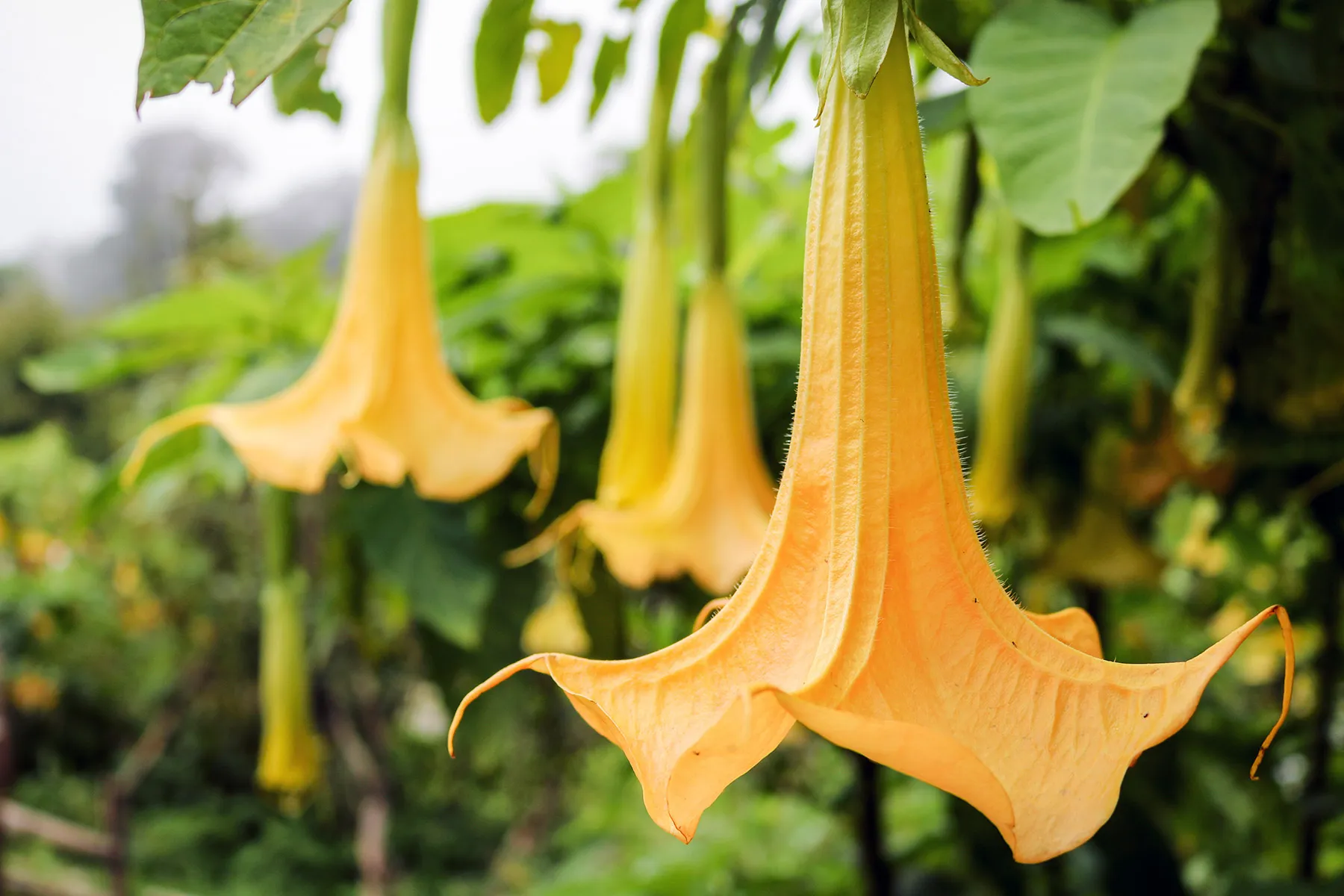
Angel’s trumpet looks like something a garden fairy would use as a chandelier. Its huge, dangling flowers can be white, peach, yellow, pink, or orange, and they often smell especially sweet at night. Charming? Absolutely. Safe to snack on? Absolutely not. Angel’s trumpet, also known as Brugmansia, is a beautiful ornamental plant with a very serious toxic side.
Angel’s trumpet poisoning can happen when someone eats any part of the plant, mistakes it for an edible flower, drinks a homemade plant “tea,” gets sap in the eyes, or handles plant material and then touches the face. Children, pets, curious guests, and adventurous gardeners are the most common “uh-oh” characters in this story. The plant contains powerful compounds that can affect the brain, heart, eyes, mouth, skin, digestion, and bladder. In plain English: this is not a plant to experiment with.
This guide explains the common symptoms of angel’s trumpet poisoning, what to do right away, when to seek emergency help, and how to prevent accidents in the garden without turning your yard into a botanical crime scene.
What Is Angel’s Trumpet?
Angel’s trumpet is the common name for plants in the Brugmansia genus. These shrubs or small trees are popular in warm climates and container gardens because they produce large, trumpet-shaped flowers that hang downward like bells. They are often confused with Datura, another toxic plant sometimes called devil’s trumpet. Both belong to the nightshade family, and both deserve respect.
Gardeners love angel’s trumpet because it is dramatic, fragrant, and tropical-looking. Unfortunately, that drama continues if the plant is swallowed. The flowers, leaves, seeds, bark, and sap may contain toxic tropane alkaloids, including atropine, scopolamine, and hyoscyamine. These compounds can block normal nerve signals in the body, causing a cluster of symptoms known as anticholinergic poisoning.
Here is the simplest safety rule: admire angel’s trumpet with your eyes, not your mouth. If that sounds obvious, remember that many plant poisonings happen because someone assumes “natural” means “safe.” Nature, as it turns out, did not sign that agreement.
Why Angel’s Trumpet Poisoning Is Dangerous
Angel’s trumpet poisoning is dangerous because the toxic compounds can affect both the mind and the body at the same time. A person may become confused, agitated, overheated, thirsty, unable to urinate, unable to see clearly, or unable to explain what happened. In more serious cases, poisoning may lead to seizures, dangerous heart rhythm changes, coma, or death.
Another problem is unpredictability. The amount of toxin in a plant can vary depending on the species, plant part, age of the plant, season, growing conditions, and how the plant material was handled. One flower, leaf, or seed pod is not automatically equal to another. That is why “just a little” is not a safe idea.
People sometimes underestimate this plant because it is sold as an ornamental. But garden-center beauty does not cancel chemical reality. Oleander, foxglove, lily of the valley, and castor bean plants can also look lovely while being dangerous. Angel’s trumpet belongs in that same “pretty but please do not taste-test it” category.
Common Symptoms of Angel’s Trumpet Poisoning
Symptoms can appear after ingestion, eye exposure, heavy handling, or accidental contact with plant sap. Not everyone will have every symptom, and severity can range from mild irritation to a medical emergency. Any suspected ingestion should be treated seriously.
Early Symptoms
Early symptoms of angel’s trumpet poisoning may include:
- Dry mouth or intense thirst
- Blurred vision
- Dilated pupils
- Flushed, dry, or hot skin
- Headache or dizziness
- Nausea, vomiting, or stomach discomfort
- Fast heartbeat
- Restlessness or unusual behavior
One of the classic clues is a very dry mouth. A person may keep asking for water, complain that their throat feels strange, or struggle with swallowing. Their pupils may look unusually large, even in normal light. They may also seem “off,” like they are awake but not fully connected to reality.
Mental and Neurological Symptoms
Angel’s trumpet poisoning can strongly affect the brain. Symptoms may include confusion, agitation, anxiety, disorientation, unusual speech, memory problems, hallucinations, delirium, or picking at imaginary objects. These symptoms can be frightening for the person and everyone nearby.
This is not the same as a harmless “funny garden story.” A person experiencing delirium may not understand where they are, may walk into danger, may resist help, or may be unable to answer basic questions. Calm supervision is important while emergency advice is being obtained.
Serious Warning Signs
Call emergency services immediately if the person has any of the following:
- Seizure
- Trouble breathing
- Chest pain or irregular heartbeat
- Extreme confusion or severe agitation
- High fever or very hot, dry skin
- Loss of consciousness
- Cannot be awakened
- Signs of severe dehydration
- Inability to urinate with increasing discomfort
When in doubt, act quickly. Poisoning is not the time to wait for “one more symptom” like you are unlocking a level in a video game.
What to Do Immediately After Possible Exposure
If you suspect angel’s trumpet poisoning, stay calm and take practical steps right away. The goal is to reduce further exposure and get expert guidance as soon as possible.
Step 1: Remove Plant Material From the Mouth
If the person has plant material in their mouth, have them spit it out. Do not force anything into their mouth. If they are drowsy, confused, choking, having a seizure, or unable to cooperate, call emergency services immediately.
Step 2: Call Poison Help or Emergency Services
In the United States, call Poison Help at 1-800-222-1222 for expert guidance. If the person has collapsed, is having a seizure, is having trouble breathing, or cannot be awakened, call 911 right away.
Poison specialists may ask what part of the plant was involved, how much may have been eaten, the person’s age and weight, when the exposure happened, and what symptoms are present. If you do not know every answer, say so. Guessing with confidence is still guessing.
Step 3: Save a Sample of the Plant
If it is safe, place a small sample of the plant in a bag or take clear photos of the flowers, leaves, and seed pods. This can help with identification. Do not spend valuable time gardening like a detective if the person is severely ill. Medical help comes first.
Step 4: Do Not Try Home Remedies
Do not make the person vomit unless a poison specialist or medical professional specifically tells you to. Do not give alcohol, herbal remedies, random supplements, or “detox” drinks. Activated charcoal, antidotes, IV fluids, cooling measures, heart monitoring, and other treatments belong in medical hands when needed.
Step 5: Keep the Person Safe and Supervised
Someone who is confused or hallucinating should not be left alone. Keep them away from stairs, traffic, pools, sharp objects, stoves, balconies, and pets. Speak calmly. Avoid arguing about what they are seeing or feeling. Your job is not to win a debate with delirium; your job is to keep them safe until help arrives.
What Doctors May Do for Angel’s Trumpet Poisoning
Medical care depends on symptoms, timing, and severity. In an emergency department, doctors may monitor heart rate, blood pressure, temperature, breathing, hydration, and mental status. Treatment is often supportive, meaning the medical team helps the body stay stable while the toxin effects wear off.
Possible care may include IV fluids, cooling if the person is overheated, medications for severe agitation or seizures, bladder support if urinary retention occurs, and heart monitoring. In selected serious cases, a specific medication may be considered by trained clinicians, but this decision requires careful medical judgment. It is not a home-treatment situation.
Recovery time varies. Some people improve within hours, while others may need longer monitoring. Mental symptoms can be especially unsettling because the person may not remember what happened clearly afterward. That is one reason prevention matters so much.
Who Is Most at Risk?
Anyone can be poisoned by angel’s trumpet, but certain groups need extra caution.
Children
Children explore the world with their hands and mouths, which is adorable until the world includes toxic plants. A fallen flower, seed pod, or leaf can become a curiosity. If angel’s trumpet grows where children play, consider removing it or placing it in a restricted area.
Pets
Dogs, cats, and horses may chew plants out of boredom, curiosity, or because they believe every object on Earth is a snack with different branding. If a pet eats angel’s trumpet, contact a veterinarian or animal poison-control service immediately.
Older Adults
Older adults may be more vulnerable to confusion, dehydration, heart symptoms, and medication interactions. A mistaken plant exposure can be harder to recognize if someone already takes medications that affect alertness, vision, bladder function, or heart rate.
Gardeners and Landscapers
Pruning, cutting, or handling angel’s trumpet may expose skin or eyes to sap. Wearing gloves, washing hands, cleaning tools, and avoiding face-touching are simple precautions. Also, do not burn plant material, and keep cuttings away from children and animals.
Angel’s Trumpet vs. Datura: Why the Name Confusion Matters
Angel’s trumpet is often used for Brugmansia, while devil’s trumpet is often used for Datura. The easiest visual difference is flower position: Brugmansia flowers usually hang downward, while Datura flowers often point upward. But common names are messy, and plant labels are not always perfect.
The safety takeaway is simple: both plants can be toxic. If someone has eaten a trumpet-shaped flower or any unknown plant from the nightshade family, treat it as a possible poisoning and call for expert help.
How to Prevent Angel’s Trumpet Poisoning
Prevention is easier than emergency management. You do not necessarily have to panic-remove every ornamental plant in your yard, but you should be intentional about where and how angel’s trumpet is grown.
Label the Plant Clearly
If you keep angel’s trumpet, label it as poisonous. A small plant tag can help guests, babysitters, housemates, and future-you. Future-you, by the way, forgets where things were planted more often than current-you expects.
Keep It Away From Children and Pets
Do not plant angel’s trumpet beside play areas, patios where toddlers crawl, dog runs, school gardens, or places where fallen flowers collect on walkways. If you grow it in a container, place it where children and pets cannot reach leaves or fallen blooms.
Wear Gloves When Handling It
Use gloves when pruning, repotting, collecting fallen flowers, or cleaning up storm debris. Wash your hands afterward. Avoid touching your eyes or mouth while working with the plant.
Dispose of Cuttings Safely
Do not leave trimmings in piles where children, pets, or livestock can access them. Bag plant debris securely according to local yard-waste rules. Do not compost it in a bin that curious animals can reach.
Teach Without Scaring
For children, use a simple rule: “Some plants are for looking, not touching or tasting.” You do not need to deliver a dramatic lecture with thunder sound effects. Calm, repeated rules work better than one frightening speech.
Common Myths About Angel’s Trumpet Poisoning
Myth 1: “If It Smells Good, It Must Be Safe”
Nope. Pleasant fragrance is not a safety certificate. Angel’s trumpet can smell wonderful and still be poisonous. The nose is a charming organ, but it is not a toxicology lab.
Myth 2: “Natural Plants Are Safer Than Chemicals”
Plants make chemicals too. Some of the strongest toxins in the world come from plants, mushrooms, bacteria, and animals. “Natural” describes origin, not safety.
Myth 3: “A Small Taste Cannot Hurt”
With poisonous plants, a small taste can still be risky, especially for children, pets, and people with health conditions. The toxin level is unpredictable, and symptoms may not appear immediately.
Myth 4: “If Symptoms Are Mostly Mental, It Is Not Medical”
Confusion, hallucinations, severe agitation, and delirium can be signs of poisoning. They deserve medical attention, especially when paired with fast heartbeat, fever, dry skin, dilated pupils, or urinary retention.
When to Call Poison Control
Call Poison Help if anyone may have swallowed angel’s trumpet, gotten sap in the eyes, handled the plant and developed symptoms, or been exposed in a way that worries you. You should also call if a child or pet may have eaten an unknown part of the plant, even if they look fine at first.
Do not wait for severe symptoms to prove the plant “really did something.” Poison specialists can help decide whether home observation, urgent care, or emergency care is needed. Early advice is better than late panic.
Experience Notes: Real-World Lessons From Angel’s Trumpet Incidents
Most angel’s trumpet poisoning stories share the same beginning: nobody expected the plant to be a problem. It was just a pretty shrub near the fence, a potted patio showpiece, or a dramatic flower that dropped blooms like confetti after a warm night. Then a child picked up a fallen flower, a dog chewed a leaf, a gardener rubbed an eye after pruning, or a guest confused the plant with something harmless. The lesson is not that gardeners are careless. The lesson is that beautiful plants can become hazards when their risks are invisible.
One common experience involves families moving into a new home and inheriting mature landscaping. The angel’s trumpet is already there, tall and gorgeous, blooming like it is auditioning for a garden magazine. Nobody knows its name. A child plays nearby, fallen flowers gather on the ground, and only later does someone identify it as Brugmansia. In that situation, the best move is to label the plant immediately, clean up fallen flowers often, and decide whether the plant belongs in a child-accessible yard at all.
Another frequent scenario happens with pets. A puppy explores the patio and grabs a leaf before anyone can react. The owner searches online, finds conflicting comments, and loses precious time trying to decide whether the plant is “really toxic.” The safer pattern is simple: remove access, save a photo of the plant, and call a veterinarian or animal poison-control service. Pets cannot explain blurred vision, thirst, confusion, or a racing heart, so behavior changes after plant exposure should be taken seriously.
Gardeners also learn practical lessons the itchy, watery, uncomfortable way. Pruning without gloves, touching the face, or getting sap near the eyes can lead to irritation or unusual eye symptoms. Experienced gardeners often develop a routine: gloves on, tools cleaned, plant debris bagged, hands washed, and no snacks until cleanup is complete. It is not glamorous, but neither is explaining to a doctor that a shrub defeated you during routine maintenance.
For community gardens, rental properties, schools, and daycare-adjacent landscapes, angel’s trumpet deserves extra thought. A plant that is manageable in a locked ornamental courtyard may be a poor choice beside a playground or walkway. Good landscaping is not just about what blooms; it is about who uses the space. The prettiest plant in the wrong location can create unnecessary risk.
The most useful experience-based advice is this: make the safe choice before the emergency. Identify the plant, label it, teach household rules, supervise children and pets, and keep Poison Help information easy to find. Angel’s trumpet can be admired safely by informed adults, but it should never be treated casually. In the garden, beauty gets applause; toxicity gets boundaries.
Conclusion
Angel’s trumpet poisoning is serious because the plant contains powerful toxins that can affect the brain, heart, temperature control, vision, mouth, skin, digestion, and bladder. Common symptoms include dry mouth, intense thirst, dilated pupils, blurred vision, confusion, hallucinations, fast heartbeat, hot dry skin, fever, nausea, urinary trouble, agitation, and in severe cases, seizures or coma.
If someone may have swallowed angel’s trumpet or develops symptoms after exposure, call Poison Help at 1-800-222-1222 in the United States. Call 911 immediately for seizures, breathing trouble, collapse, severe confusion, or inability to wake. Do not rely on home remedies, do not induce vomiting unless instructed by a professional, and do not assume a “natural” plant is safe.
Angel’s trumpet is proof that a plant can be breathtaking and dangerous at the same time. Enjoy the flowers, respect the chemistry, and keep curious mouthshuman or furryfar away from the trumpet section.