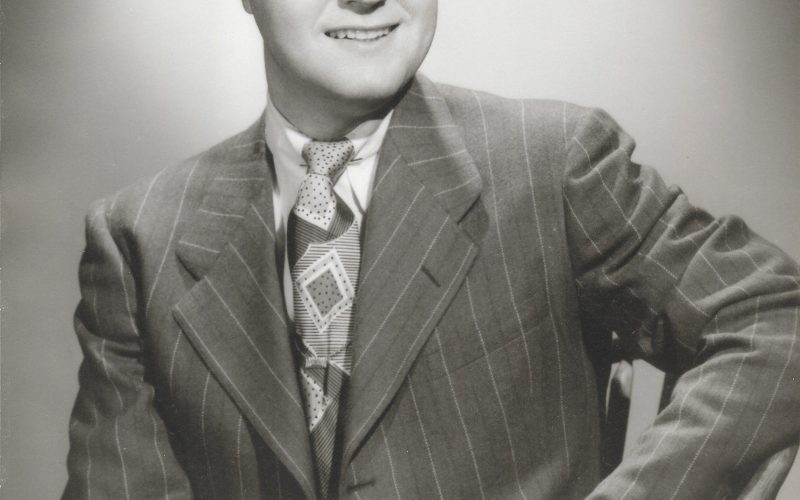
Every physician carries a few invisible instruments. There is the stethoscope, of course, the badge that flips backward at exactly the wrong moment, and the pen that disappears into the same black hole as hospital socks. But somewhere beneath the clinical tools, many doctors also carry a voice from home: a parent’s encouragement, a family story, a lesson repeated so often it becomes part of the pulse.
For a daughter who becomes a physician, a father can be more than the man who taught her how to ride a bike, balance a checkbook, or pretend she understood baseball statistics. He can become her first model of courage, tenderness, patience, humor, stubbornness, or all five before breakfast. A physician’s tribute to her father is not only a personal remembrance. It is also a quiet map of how love shapes the way a doctor listens, diagnoses, comforts, and keeps showing up.
This article explores the emotional meaning behind a physician daughter honoring her father, the role of family caregiving in medicine, and why personal grief often deepens professional compassion. It is a story about medicine, memory, and the surprising power of ordinary moments: a phone call, a hand on the shoulder, a familiar laugh, a father saying, “You can do this,” long before the world agrees.
Why a Physician’s Tribute to Her Father Resonates So Deeply
A tribute becomes powerful when it is specific. “My father was wonderful” is true, but it is the kind of truth that sits politely in a chair. The details stand up and walk across the room. Maybe he stayed awake during late-night study sessions, pretending not to worry. Maybe he carried groceries with one hand and hope with the other. Maybe he asked every week, “Are you eating?” which, in father-language, often means, “I love you, I am proud of you, and please stop surviving on coffee.”
For physicians, the bond with a parent often intersects with professional identity. Medical training is long, expensive, humbling, and occasionally powered by vending-machine crackers. A father’s belief can become emotional infrastructure. When exams are brutal, rotations are exhausting, and the first patient loss feels impossible to process, that early encouragement may return like a steady hand.
In many physician essays and narrative medicine reflections, family members appear not as background characters but as moral anchors. They remind doctors why medicine matters beyond lab values and treatment plans. The best physicians do not only treat bodies; they recognize lives. A father’s love can teach that lesson before medical school ever gets a chance to put it on a slide.
The Father Behind the White Coat
Behind every physician is a human being who once needed help tying shoes, finishing homework, and deciding whether a suspicious refrigerator smell was “still fine.” Fathers often shape their children through both grand sacrifices and ordinary rituals. They drive to interviews. They sit in waiting rooms. They offer advice that is half wisdom and half weather report. They may not understand every medical term, but they understand effort.
A father’s influence can show up in the doctor’s daily practice. The physician who sits down at eye level with a frightened patient may be remembering how her father never rushed hard conversations. The doctor who explains a diagnosis twice, then a third time with drawings, may be echoing the patience of a man who once helped her with algebra without throwing the pencil into the yard. The clinician who makes room for family questions may know, personally, that families are not visitors to illness; they are part of the room.
Lessons a Father Teaches Without a Lecture
Some fathers teach by talking. Others teach by fixing the sink, showing up early, staying late, and quietly doing the right thing when no one is applauding. For a physician daughter, these lessons can mature into clinical habits. Integrity becomes telling the truth with kindness. Discipline becomes reviewing the chart one more time. Humor becomes a small gift offered to a patient who needs a moment of normal life inside a medical crisis.
And then there is humility. Medicine has many opportunities to remind doctors that they are not superheroes. The body is complex. Illness is unpredictable. Outcomes are not always fair. A father who teaches humility gives a physician permission to be excellent without pretending to be invincible. That is a gift with a long shelf life.
When the Doctor Becomes the Daughter Again
One of the hardest role reversals happens when a physician must care for, worry about, or grieve a parent. The white coat may help with terminology, but it does not protect the heart. In fact, medical knowledge can make family illness more complicated. A doctor-daughter may understand the scan, the labs, the prognosis, and the unspoken look between specialists. Yet she is still someone’s child. She still wants more time.
Family caregiving in the United States is not rare or simple. Millions of Americans provide care for loved ones, and many caregivers help with complex tasks such as medication management, appointments, mobility, and daily activities. When the caregiver is also a physician, the family may naturally expect her to translate, advocate, decide, reassure, and somehow remain emotionally composed. This is where love can become heavy, even when it remains beautiful.
The physician daughter may become the family interpreter: “Here is what the doctor means.” She may become the emotional shock absorber: “Let’s take this one step at a time.” She may also become the person everyone assumes is fine because she knows the system. But knowing medicine is not the same as being immune to fear. Doctors do not grieve in Latin.
Grief Does Not Clock Out After Rounds
Grief has no respect for schedules. It may arrive during a patient visit, while signing a chart, while hearing a phrase her father used to say, or while passing a hospital cafeteria dessert that looks suspiciously like something he would have loved and complained about simultaneously. A physician may be skilled at composure, but memory has a way of slipping through the side door.
Healthy grief is not a failure of strength. It is evidence of attachment. The American Psychological Association describes grief as a natural response to loss, and many people adapt over time with support, healthy routines, and connection. In clinical life, however, grief can become complicated by constant exposure to illness and death. Physicians may witness families saying goodbye while privately carrying their own unfinished goodbyes.
That overlap can hurt, but it can also deepen empathy. A doctor who has lost a father may better understand why a daughter asks the same question three times in the ICU. She may recognize why a son cannot absorb discharge instructions yet. She may see that beneath “difficult family” is often a terrified family trying to love someone through uncertainty.
Narrative Medicine: Turning Memory Into Meaning
Narrative medicine emphasizes the importance of listening to stories, not merely collecting symptoms. This matters because illness is never just biological. It changes family roles, identities, finances, routines, and future plans. A physician’s tribute to her father fits naturally within this tradition because it transforms private memory into shared understanding.
When a doctor writes about her father, she is not abandoning science for sentiment. She is restoring context. She is saying that medicine happens inside human lives, and human lives are made of stories. A blood pressure reading matters. So does the person who used to remind you to check your oil, call your mother, and keep your feet warm because “cold feet cause everything,” which is not peer-reviewed but is very father-certified.
Writing can also help the physician organize grief. A tribute gives shape to feelings that might otherwise remain scattered. It allows gratitude to sit beside sorrow. It lets the physician say, “This is what he gave me. This is how I carry it forward.”
How a Father’s Love Can Shape Patient Care
A physician influenced by a loving father may practice medicine with a particular sensitivity to family bonds. She may understand that patients are not isolated cases. They are parents, children, spouses, friends, neighbors, and keepers of recipes nobody wrote down correctly. Their illness affects entire circles of people.
More Patience at the Bedside
Patience is one of the quiet superpowers of good medicine. A doctor who remembers her father’s patience may bring that same steadiness to the exam room. She may pause before interrupting. She may notice when a patient says “I’m fine” in a voice that clearly means “I am absolutely not fine, but I am testing whether you are safe enough to hear the truth.”
More Respect for Caregivers
Caregivers often know the patient’s real baseline better than anyone. They know whether Dad is “a little confused” or “this is not him at all.” They know which medications were actually taken, which symptoms were minimized, and which meals were pushed around the plate. A physician who has stood on the family side of care may listen more carefully to these observations. She knows they are not interruptions. They are data with a heartbeat.
More Honesty With Compassion
Fathers often teach the value of plain speech. In medicine, plain speech is mercy. Patients and families do not need a fog machine of jargon. They need clarity. A physician honoring her father may choose words that are honest without being cold, direct without being harsh, and hopeful without being fake. That balance is not easy, but it is one of the highest forms of clinical respect.
The Hidden Weight of Physician Caregiving
Physicians are trained to care for others, but that training can make it harder for them to ask for care themselves. The physician daughter may feel she should know what to do, anticipate every complication, and manage every conversation perfectly. Meanwhile, she is also tired, sad, and possibly eating dinner at 10:47 p.m. over the sink like a raccoon with a medical degree.
Caregiver burnout is real. It can involve emotional exhaustion, physical strain, role confusion, unrealistic expectations, and the sense that one person must carry everything alone. Physician well-being organizations have increasingly emphasized that burnout is not merely an individual weakness; it is shaped by systems, workload, culture, documentation demands, and lack of support. When personal caregiving is added to professional caregiving, the emotional math becomes even harder.
A tribute to a father, then, can also be a call for gentleness toward physicians. Doctors are human beings with families, losses, birthdays, bills, and old voicemails they cannot delete. Patients benefit when physicians are allowed to be whole people, not just highly educated engines of productivity.
What We Can Learn From a Physician Daughter’s Tribute
The beauty of a physician’s tribute to her father is that it reaches beyond one family. It invites readers to think about their own first teachers. Who showed us how to endure? Who believed in us before our résumé became impressive? Who made sacrifices we only understood years later?
It also reminds us to say things while people can still hear them. Medicine teaches urgency in dramatic ways, but love often asks for ordinary urgency: make the call, write the letter, ask the question, listen to the story, save the recipe, take the photo even if everyone complains about their hair.
A father’s legacy does not have to be grand to be lasting. It may live in a physician’s calm voice, her careful hands, her refusal to give up on a patient, or her ability to laugh gently in a hard moment. It may live in the way she treats the elderly man who reminds her of him, or the nervous daughter sitting beside a hospital bed, asking whether she is doing enough.
Experiences Related to “A Physician’s Tribute to Her Father”
Many people imagine a tribute as something written after loss, but in real life, tributes begin much earlier. They begin in the car rides to school, the awkward teenage silences, the proud smiles at graduation, and the ordinary questions that become sacred after time has done its quiet editing. For a physician, these experiences can become woven into the emotional fabric of her career.
Consider the experience of standing in a hospital room as both doctor and daughter. The physician understands the monitors, the medication list, and the careful language of prognosis. But the daughter notices the hands: the same hands that once held hers in a parking lot, fixed a broken chair, or waved goodbye from the porch. The clinical mind and the loving heart do not cancel each other out. They stand side by side, sometimes awkwardly, sometimes painfully, but always honestly.
Another common experience is hearing a patient say something that sounds exactly like her father. Maybe it is a joke delivered at the wrong time but somehow perfectly. Maybe it is a stubborn refusal to admit pain. Maybe it is the classic father move of insisting, “I’m not hungry,” while clearly being hungry enough to eat the discharge papers. In those moments, memory enters the exam room. The physician may smile, pause, and offer a little more tenderness than the schedule technically allows.
There is also the experience of gratitude arriving late. Many adult children, physicians included, only fully understand their parents’ sacrifices after they have lived enough life to recognize the cost. The tuition payment, the second job, the quiet worry, the emotional restraint, the pride hidden behind practical advice: these become clearer with age. A physician’s tribute often carries this mature gratitude. It says, “I see it now. I know what you gave.”
Some experiences are beautifully small. A doctor may keep her father’s pen in a desk drawer, wear his old watch on difficult days, cook his favorite meal on his birthday, or repeat one of his sayings to her own children. These rituals are not attempts to stay in the past. They are ways of carrying love forward. In medicine, where days can be intense and outcomes uncertain, such rituals can offer grounding. They remind the physician that before she was “Doctor,” she was loved simply as a daughter.
Finally, there is the experience of becoming more compassionate because of personal loss. Grief can soften the edges of certainty. It can make a physician more aware that every chart contains a family story, every diagnosis rearranges someone’s world, and every goodbye deserves dignity. A father’s legacy may therefore continue in the care of strangers. That is the quiet miracle of a good tribute: it does not end on the page. It walks into the clinic, sits beside the hospital bed, and becomes part of the healing work.
Conclusion: The Love That Keeps Practicing Medicine
A physician’s tribute to her father is not only about remembering a man. It is about recognizing how deeply family love can shape professional purpose. A father may never hold a medical license, yet his influence can appear in every patient conversation, every act of patience, every honest explanation, and every moment when a doctor chooses compassion over hurry.
In the end, the most meaningful tribute may not be a perfect speech or polished essay. It may be a life lived with the values he planted. It may be the physician daughter who keeps listening carefully, keeps treating families with respect, keeps laughing when the day is absurd, and keeps doing the work with a heart that remembers where it came from.
Love, after all, is not erased by death or distance. Sometimes it changes form. Sometimes it becomes a habit of kindness. Sometimes it becomes a doctor’s steady hand. And sometimes, in the middle of a long clinic day, it returns as a memory so vivid that for one brief second, her father is there again, proud as ever, probably reminding her to eat something.