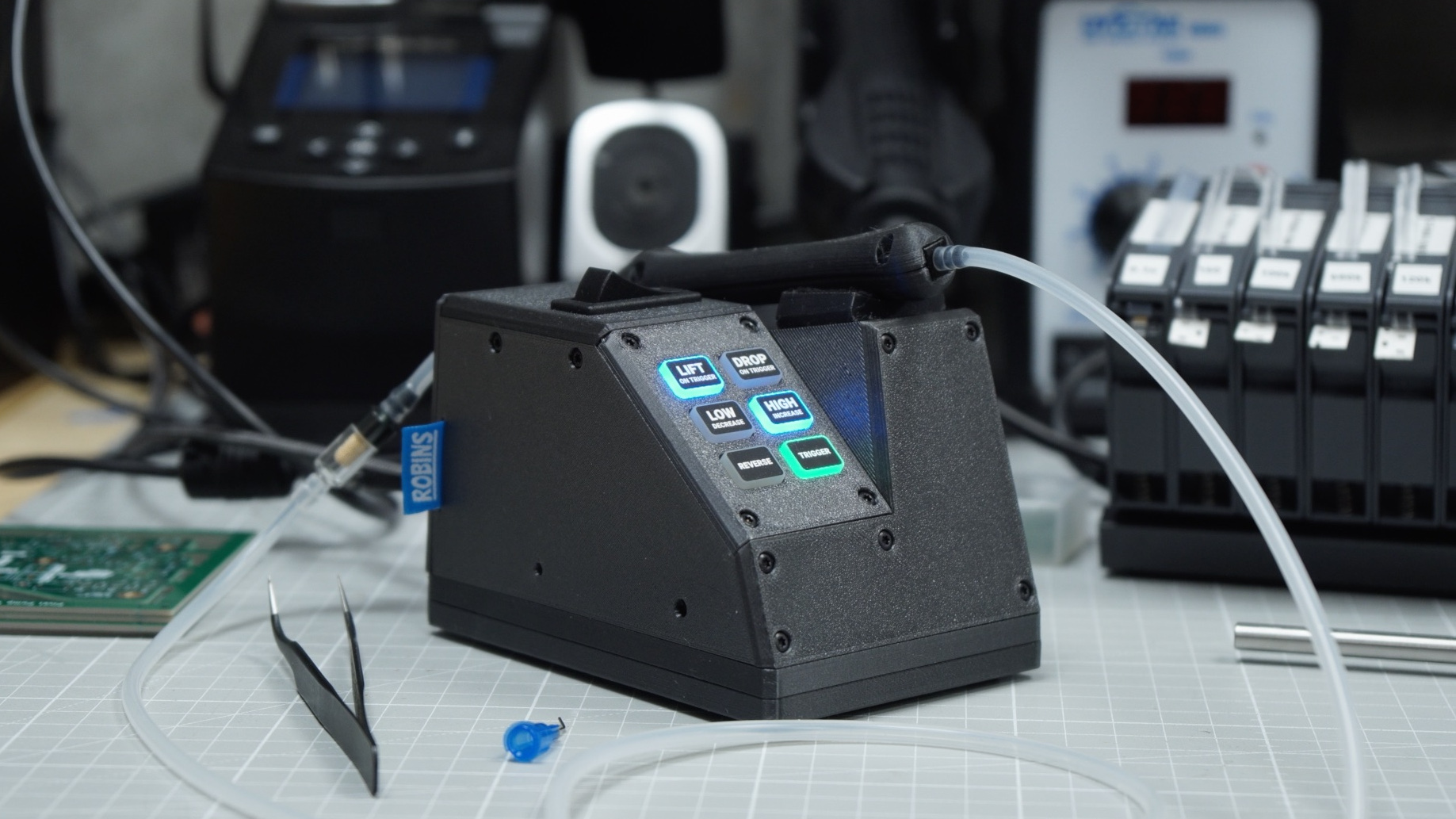
Some tools arrive on the workbench with fireworks. Others arrive quietly, save your sanity, and prevent a 0402 resistor from launching itself into the carpet dimension. Pixel Pump belongs to the second category. It is an open-source vacuum pickup tool designed for manual SMT assembly, and its arrival as a shipping product is a very big deal for makers, electronics hobbyists, hardware startups, and anyone who has ever tried to place tiny surface-mount components with tweezers while questioning every life decision that led to that moment.
At its core, Pixel Pump is a compact manual pick-and-place assistant. It uses vacuum suction to pick up small electronic components, then releases them precisely onto a printed circuit board. That sounds simple, but in the world of PCB prototyping, simple is often magical. A good vacuum pickup tool can turn the most annoying part of hand assembly into a controlled, repeatable workflow instead of a tiny-component wrestling match.
The phrase “Pixel Pump is now shipping” matters because open-source hardware does not become a finished product by accident. It has to survive prototyping, firmware development, sourcing, certification, packaging, assembly, and the emotional thunderstorm known as production. Pixel Pump crossed that line, and that makes it more than a neat gadget. It is a case study in how open hardware can move from a maker’s bench to real users’ benches.
What Is Pixel Pump?
Pixel Pump is an open-source vacuum pump for manual SMT assembly. It was created by Robin Reiter under Robins Tools and designed for people who assemble surface-mount PCBs by hand. The system includes a comfortable pen, a foot pedal, RGB LED buttons, flexible tubing, adjustable vacuum settings, and interchangeable nozzles for different component sizes.
The idea is beautifully practical: instead of gripping parts with tweezers, the user touches a vacuum nozzle to a component, lifts it, moves it over the correct pads, and releases it. The part drops into place without the springy tweezer drama that can send capacitors into orbit. If tweezers are chopsticks, Pixel Pump is a calm little robot assistant that does not judge your caffeine intake.
Pixel Pump is especially useful for prototype builds, small production runs, engineering samples, repair work, and low-volume hardware development. It does not replace an automated pick-and-place machine in a factory. Instead, it fills the gap between “I am manually placing every part with tweezers” and “I have purchased a serious SMT assembly line and possibly need a bigger garage.”
Why Vacuum Pickup Matters in SMT Assembly
Surface-mount technology has made electronics smaller, cheaper, and more powerful. It has also made many components so tiny that they look like dust with part numbers. Modern boards often use 0402, 0603, QFN, LQFP, and other compact packages. These parts are great for efficient product design, but they are not always friendly to human fingers.
Manual SMT assembly usually involves solder paste, a stencil or syringe, tweezers, magnification, patience, and a reflow process. Placement accuracy matters because a part that starts crooked can bridge, tombstone, slide, or create rework later. Solder surface tension can help align components during reflow, but it is not a miracle worker. Place a part badly enough and even molten solder will shrug.
A vacuum pickup tool improves control at the most delicate moment: moving the component from tape or tray to PCB. Because the nozzle holds the part from above, it reduces side pressure, scraping, and accidental movement through the solder paste. This is especially helpful for fine-pitch ICs, tiny passives, LEDs, and components with surfaces that do not behave nicely with tweezers.
Key Pixel Pump Features
Adjustable Vacuum Power
Pixel Pump includes adjustable suction levels, which is important because not every component wants the same treatment. A large inductor needs more holding power than a tiny resistor. Too little suction and the part falls off early. Too much suction and tiny parts may cling like they have formed an emotional bond with the nozzle.
Foot Pedal Control
The foot pedal keeps both hands available for board positioning, magnification, and steady movement. Pedal control also makes pickup and release more natural. For users assembling a board with dozens or hundreds of parts, this small ergonomic improvement can make the workflow feel much smoother.
Vacuum Relief Valve
One of Pixel Pump’s most useful details is its vacuum relief behavior. When the user releases the part, the vacuum needs to disappear quickly. A slow release can drag a component out of alignment or leave it stuck to the nozzle for one extra terrifying second. Pixel Pump’s pressure-relief approach helps parts drop cleanly where the user intends.
Reverse Mode for Nozzle Cleaning
Solder paste is useful, but it is also sneaky. If a nozzle accidentally picks up paste or debris, airflow can suffer. Pixel Pump’s reverse mode creates pressure instead of suction, helping clear the nozzle. This is the kind of feature that sounds small until the day it saves a build session from becoming a cleaning ritual with tweezers and regret.
Open-Source Hardware and Firmware
Pixel Pump’s open-source nature is one of its biggest strengths. The project makes design resources such as firmware, schematics, and 3D-printable parts available through public repositories. For the average user, that means transparency and repairability. For advanced users, it means the tool can be studied, modified, improved, or integrated into custom workflows.
Why Open Source Makes Pixel Pump More Interesting
Open-source hardware is not just a slogan printed on a sticker next to a penguin. It changes the relationship between the user and the tool. With a closed product, users can only use what they are given. With an open-source product, curious users can inspect how things work, repair parts, adapt firmware, and learn from the design.
For makers and electronics educators, this is valuable. Pixel Pump is not only a tool for placing parts; it is also a learning object. Users can study how the pump is controlled, how the interface works, how the firmware is organized, and how the mechanical design supports manufacturing. That kind of transparency is powerful in a world where many devices are glued shut, encrypted, or designed to be replaced rather than repaired.
Open-source design also helps long-term ownership. If a 3D-printed part wears out, a user may be able to print a replacement. If firmware needs to be customized, experienced developers can experiment. If a workshop wants to adapt the tool for a special process, the open files provide a starting point. Pixel Pump is not a black box; it is more like a glass box with a vacuum pump inside.
Pixel Pump vs. Tweezers
Tweezers are still essential. Nobody should throw away their tweezers and declare a new world order. However, tweezers are not always ideal for placing tiny SMT parts on paste. They can squeeze components, magnetically attract parts, scrape solder paste, or release a component at an awkward angle. The smaller the component, the funnier this becomes to observers and the less funny it becomes to the person doing the assembly.
Pixel Pump changes the motion. Instead of pinching from the sides, it lifts from the top. That makes it easier to lower the part straight down. It can reduce the chance of nudging paste around the pads, and it can make repeated placement less tiring. For people building multiple copies of a PCB, the comfort improvement may matter as much as the accuracy improvement.
The real advantage is rhythm. With tweezers, users often pause to regrip, rotate, adjust, and hope. With a vacuum pickup pen, the sequence becomes more consistent: pick, move, align, release. Add a good component organization system, and the bench starts to feel less like a scavenger hunt.
Pixel Pump and SMD Magazines
Pixel Pump becomes even more useful when paired with organized SMD component storage. SMD tapes are notoriously annoying. They curl, spill, hide, and multiply in drawers like electronic spaghetti. Pixel Pump’s ecosystem includes SMD magazines that hold component tape and present parts for easier pickup.
This matters because placement speed is not only about the pickup tool. It is also about finding the right part quickly. A builder who spends thirty seconds placing a resistor and three minutes searching for the resistor is not assembling a PCB; they are starring in a very small mystery film. SMD magazines help turn loose strips into a repeatable setup where parts are visible, accessible, and ready for pickup.
For small-batch production, organization is often the hidden productivity multiplier. A vacuum tool improves the placing motion, while magazines improve the feeding process. Together, they make manual assembly more predictable.
Who Should Use Pixel Pump?
Hardware Startups
Early-stage hardware teams often build several board revisions before reaching production. Pixel Pump can help engineers assemble prototypes in-house without waiting for every test board to go through external assembly. That can shorten iteration cycles and make design debugging faster.
Electronics Hobbyists
For hobbyists moving from through-hole kits into SMT projects, Pixel Pump offers a friendlier way to handle small packages. It does not remove the need for practice, but it can reduce frustration and make the process feel more professional.
Repair Technicians
Repair work often involves replacing small components in tight spaces. A vacuum pickup tool can help lift and place parts without applying side pressure. It is not a universal repair wand, but it is a useful bench companion.
Educators and Makerspaces
Because Pixel Pump is open source, it fits well in educational environments. Students can learn both SMT assembly and product design principles. A class can discuss ergonomics, firmware, mechanical design, pneumatic control, documentation, and manufacturability using one compact device.
What Makes Pixel Pump Different From Cheap Vacuum Tools?
Low-cost vacuum pickup tools exist, and some are perfectly usable for occasional work. Pixel Pump aims higher by combining practical electronics assembly features with an open-source design and a polished workflow. The difference is not simply suction. It is control, usability, documentation, repairability, and the ability to adapt.
Features such as adjustable vacuum, foot-pedal operation, reverse airflow, serviceable filtering, USB-C software updates, RGB button feedback, and open design files push Pixel Pump beyond the most basic pickup tools. It is designed as a bench instrument, not just a pump with a tube attached.
That said, Pixel Pump is not the cheapest path into vacuum pickup. Its value is strongest for users who regularly assemble SMT boards, care about workflow quality, and appreciate open-source hardware. If someone places three large components per year, tweezers may still win. If someone builds prototypes every month, Pixel Pump starts looking less like a luxury and more like a productivity tool.
The Shipping Milestone: Why It Matters
Many open-source hardware projects look fantastic in prototype form. Fewer make it through production. Shipping means the project has passed through the unglamorous but critical stages: ordering parts, building units, testing, handling packaging, managing documentation, dealing with logistics, and supporting customers.
For Pixel Pump, shipping also validates the demand for better manual assembly tools. The electronics community has plenty of people working between the extremes of hand tweezers and industrial machines. Pixel Pump speaks directly to that middle ground: serious enough to need better tools, small enough to stay flexible.
This is where the open-source hardware movement shines. Not every workshop needs factory automation. Sometimes the best tool is a clever, repairable, transparent device that helps one skilled person work more accurately.
Real-World Workflow Example
Imagine assembling a small sensor board with thirty components: resistors, capacitors, a regulator, a microcontroller, a few LEDs, and connectors. The PCB has solder paste applied with a stencil. The parts are arranged in labeled strips or magazines. With tweezers, the builder picks each part, checks orientation, places it, adjusts it, and repeats. The work is possible, but the smaller components become progressively more annoying.
With Pixel Pump, the process becomes cleaner. The user selects the proper nozzle, sets vacuum strength, picks a part from tape, moves it above the footprint, aligns it under magnification, and releases it with the pedal. For repeated values, the motion becomes quick and consistent. The builder still needs skill, but the tool removes some of the hand strain and part-handling chaos.
After placement, the board goes through reflow. If the paste was applied correctly and the parts were placed close to their pads, surface tension can help final alignment. The result is not automatic assembly, but it can be a meaningful improvement over fighting tweezers for every placement.
Limitations to Keep in Mind
Pixel Pump is not magic. It will not fix poor solder paste application, incorrect footprints, messy component organization, or a board design that forgot basic assembly clearances. It also does not remove the need for magnification, lighting, steady hands, and practice.
Very tiny components still require careful nozzle selection. Oddly shaped parts may not lift perfectly. Some packages have surfaces that are difficult for vacuum pickup. Users should expect a learning curve, especially when choosing suction levels and release timing.
The best way to understand Pixel Pump is as a precision helper. It improves the manual process rather than replacing the human operator. The user remains responsible for orientation, alignment, inspection, and quality control. In other words, Pixel Pump gives you a better spoon, but you still have to cook the soup.
Experience Notes: What It Feels Like to Use a Tool Like Pixel Pump
Using a vacuum pickup tool for the first time changes how the bench feels. The first surprise is psychological: tiny components suddenly seem less hostile. A resistor that once behaved like a caffeinated flea can be lifted, moved, and placed with a calm vertical motion. That alone can make SMT assembly feel less intimidating.
The second surprise is that workflow matters more than raw speed. At first, a user may not place parts dramatically faster. There is setup time: choosing the nozzle, adjusting vacuum, arranging parts, positioning the PCB, and learning the pedal rhythm. But after a few boards, the process becomes smoother. The biggest gain is not always seconds saved per part; it is fewer mistakes, less fatigue, and fewer moments where a part disappears into the unknown.
The third experience is the importance of organization. Pixel Pump works best when parts are presented cleanly. SMD magazines, labeled strips, trays, and a placement list can make the tool feel excellent. Without organization, even the best vacuum pen cannot help if the builder keeps picking up the wrong capacitor. Good assembly is a dance between tool, parts, board, and process. Pixel Pump handles one part of the dance very well, but the music still needs a beat.
Another practical lesson is that nozzle choice matters. A nozzle that is too large may interfere with neighboring parts or grab more than intended. A nozzle that is too small may fail to hold larger components securely. Builders quickly learn to match nozzle size to the component package. This becomes second nature, similar to choosing the right soldering tip or tweezers.
Vacuum strength also becomes a feel-based setting. For tiny passives, gentle suction may be enough. For larger ICs or heavier parts, more force helps. The goal is to hold the part securely without making release awkward. A clean release is one of the most satisfying parts of the process. The part lands on the paste, stays aligned, and the nozzle lifts away without drama. It is a tiny moment, but when repeated across a board, it feels like progress.
For people who assemble boards often, the comfort factor is real. Holding tweezers tightly for long sessions can strain the hand. A pen-style pickup tool encourages a lighter grip and more controlled movement. The foot pedal also helps separate hand motion from suction control. That makes the work feel less cramped and more deliberate.
The best experience comes when Pixel Pump is treated as part of a complete SMT setup: good lighting, magnification, organized components, clean paste application, a stable PCB holder, and a reliable reflow method. In that environment, it is not just a gadget. It becomes a workflow upgrade. The bench feels calmer. The build feels more professional. And the tiny components, while still tiny, finally start acting like they got the memo.
Conclusion
Pixel Pump shipping is good news for anyone who loves building electronics but does not love chasing microscopic parts across the workbench. It brings open-source thinking to a practical SMT assembly problem and offers a thoughtful middle ground between basic tweezers and automated pick-and-place machines.
Its strongest appeal is not one single feature. It is the combination: adjustable vacuum, foot-pedal control, interchangeable nozzles, reverse cleaning mode, compact bench footprint, open-source files, and a workflow designed around real manual assembly pain points. Pixel Pump does not make PCB assembly effortless, but it can make it more controlled, more comfortable, and a lot less ridiculous.
For hardware makers, small studios, educators, and prototype builders, Pixel Pump is a reminder that great tools do not always need to be huge. Sometimes the best upgrade is a small box, a smart pen, a pedal, and the ability to place a tiny resistor exactly where it belongs.