Headlines love drama, and this one arrives wearing combat boots. But the real story behind Germany, Ukraine, and the Taurus cruise missile is not a simple yes-or-no plot twist. It is a long-running argument about deterrence, escalation, alliance politics, military capability, and the uncomfortable fact that in modern war, every “maybe” can sound like a cannon blast. Germany has moved much closer to the idea of enabling longer-range Ukrainian strikes, yet Berlin has remained deliberately vague about whether Taurus itself is actually on the way. That ambiguity is not a bug. It is the policy.
Still, the Taurus debate matters because it reveals something bigger than one missile. It shows how Europe is rethinking its role in Ukraine’s defense, how Berlin’s political center has shifted, and how every new weapons discussion now doubles as a referendum on German leadership. In other words, this is not just about hardware. It is about whether Germany is ready to stop clearing its throat and finally speak in a full geopolitical sentence.
Why the Taurus cruise missile matters so much
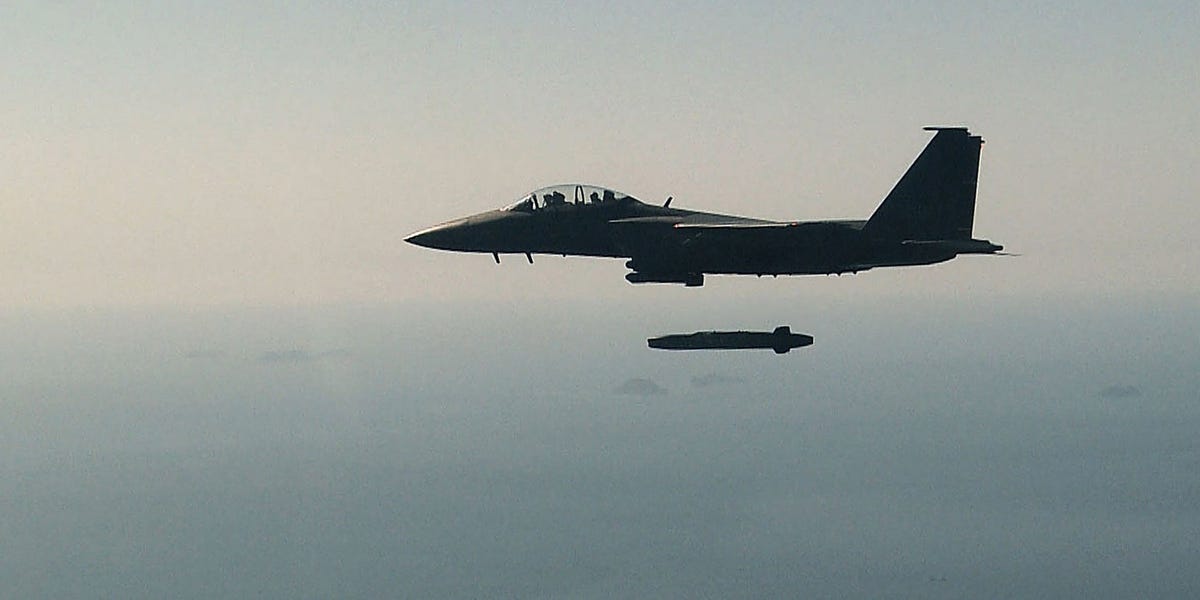
The Taurus KEPD 350 is not just another box on a military shopping list. It is a long-range, air-launched cruise missile designed to strike hardened, high-value targets from a distance. Analysts and policymakers focus on Taurus because it represents a capability Ukraine has wanted for a long time: the ability to hit logistics hubs, command nodes, bridges, ammunition sites, and deeply buried infrastructure well behind the front line.
That matters because wars are not won only by pushing trenches forward one muddy field at a time. They are also shaped by what happens far behind the front: supply routes, fuel storage, rail choke points, air bases, and the kind of military plumbing that keeps an army alive. The attraction of Taurus is that it could complicate Russian planning by putting more of that rear-area network at risk. For Ukraine, that is not symbolic. It is operational.
For Germany, however, Taurus has always carried political weight far beyond its military profile. Berlin has treated the missile as one of the most sensitive items in its arsenal. That caution has come from several concerns: the fear of escalation with Russia, questions about targeting support, worries over how many missiles Germany can spare, and the broader domestic argument over how far one NATO power should go in helping Ukraine strike at depth. In short, Taurus became the missile with a diplomatic aura. It flies through the air, but it also drags a committee meeting behind it.
Why Berlin has hesitated for so long
Under former Chancellor Olaf Scholz, Germany consistently resisted calls to send Taurus. Scholz’s reasoning rested on a familiar formula: support Ukraine, but avoid steps that could make Germany look like a direct participant in the war. That balancing act defined Berlin’s approach for months. Germany was a major military donor, yet it refused the one system that many hawks believed would prove Berlin had truly embraced a harder strategic posture.
This was never only a military calculation. It was also a political one. Germany’s post-Cold War strategic culture has long favored caution, multilateral coordination, and gradual escalation over bold unilateral moves. Sending Taurus risked crossing psychological and political lines that tanks and air defense systems, for all their importance, did not cross in quite the same way.
Another issue was the question of control and targeting. Critics of delivery argued that such a sophisticated long-range weapon could raise complicated questions about planning, mission data, and support from German personnel. Supporters dismissed some of those fears as exaggerated, but the concerns were politically potent. Once the argument becomes “Would this make Germany look like a co-belligerent?” the discussion is no longer technical. It becomes existential, at least in political terms.
Then came the leaked discussion among German officers in 2024 about hypothetical Taurus use in Ukraine. That episode embarrassed Berlin and intensified Russian threats. It also reinforced a central truth of the Taurus debate: the missile had become a symbol. In politics, symbols are dangerous because they are easy to attack, easy to fear, and very hard to quietly compromise on.
What changed under Friedrich Merz
When Friedrich Merz became chancellor, expectations rose quickly. As opposition leader, he had taken a tougher line on Ukraine than Scholz and had been more open to the idea of Taurus. That led many observers to assume that once he entered office, the missile question would be settled with one dramatic announcement and several stern-looking podium photos.
Reality, naturally, chose the scenic route.
Merz’s government signaled a sharper posture on Ukraine almost immediately. Berlin emphasized expanded support, endorsed deeper long-range cooperation, and publicly indicated that range restrictions on weapons supplied to Ukraine were no longer in place. That was a significant shift in tone and policy environment. Germany also moved toward more strategic ambiguity, meaning officials stopped publicly detailing every weapons transfer in the way the previous government had often done.
That ambiguity has fueled speculation that Taurus could be closer than ever. And to be fair, the political atmosphere is more favorable than it was under Scholz. Merz appears more willing to frame support for Ukraine in strategic rather than purely defensive language. He has shown less interest in publicly dramatizing escalation fears and more interest in projecting resolve. Germany has also expanded aid packages and backed broader efforts to strengthen Ukraine’s long-range strike capacity.
But there is still a major caveat. A friendlier climate is not the same thing as a confirmed delivery decision. Public reporting has repeatedly shown that Merz declined to say outright that Taurus would be sent, even as his government toughened policy elsewhere. So yes, Germany may be closer in a political sense. But “closer” and “confirmed” are not twins. They are cousins who do not speak enough at family gatherings.
Why some experts say Taurus could be a game changer
Supporters of a Taurus transfer argue that Ukraine needs more than defensive endurance. It needs the means to degrade Russian military infrastructure at range. In that argument, Taurus is not merely another Western weapon system; it is part of a larger strategy of pressure. The logic is straightforward: if Russia can launch strikes from relative sanctuary, Ukraine needs tools that raise the price of those operations.
This school of thought also argues that Western caution often follows a pattern. First a weapon is considered too escalatory. Then it is debated for months. Then it is delivered. Then the sky stubbornly refuses to fall. Tanks, air defense systems, and longer-range fires have all passed through some version of that cycle. Seen from that perspective, Taurus looks less like a unique red line and more like the latest chapter in a familiar Western hesitation story.
There is also a strategic signaling argument. Sending Taurus would communicate that Europe is prepared to shoulder more responsibility for Ukraine’s war effort, especially at a time when uncertainty over U.S. policy has pushed European capitals to think more seriously about military leadership. For Germany in particular, such a move would signal that its much-discussed strategic awakening is no longer a PowerPoint presentation with patriotic footnotes.
Why critics still warn against the move
Opponents of a Taurus transfer are not all doves, and that distinction matters. Some simply believe that the military upside is overstated or that Ukraine has already diversified its strike options through drones, domestically produced systems, and other Western capabilities. From that perspective, Taurus is useful but not magical. It is a weapon, not a wizard.
Others remain worried about escalation. Russia has repeatedly warned that supplying Taurus would make Germany a direct party to the conflict. Those warnings may be coercive theater, but they still influence policymaking. Berlin must assess not just what Moscow says, but what risk it is prepared to tolerate. Even governments that reject Russian intimidation do not ignore it entirely.
Another practical concern is inventory. If Germany sees Taurus as one of its most important deep-strike capabilities, it may be reluctant to transfer large numbers during a period when European defense planners are simultaneously trying to rebuild their own arsenals. The discussion is therefore not just “Can Ukraine use this?” but also “What does Germany lose by sending it?” That question becomes even sharper as Europe prepares for a more demanding security environment across NATO’s eastern flank.
So, is Germany actually close?
The honest answer is: politically, yes; publicly, not quite; strategically, maybe. Germany is closer than it was a year ago because the overall framework has changed. The Merz government has adopted tougher rhetoric, loosened the logic around range restrictions, leaned into strategic ambiguity, and expanded support for Ukrainian long-range capability. All of that narrows the distance between debate and decision.
But the latest verified public record still does not show a clear, announced Taurus transfer. That is the key distinction. If the phrase “close to giving” means the old objections are weakening, then the headline works. If it means Berlin has publicly committed to shipment, it gets ahead of the evidence.
That may sound like semantic hair-splitting, but on security policy, semantics are half the battlefield. Governments often move in layers: first the rhetoric changes, then the doctrine shifts, then the procurement language gets fuzzier, then the briefings become more selective, and only later does the final decision emerge. Germany appears to be somewhere in that middle zone, where policy is warming up, but the official curtain has not fully gone up.
What this means for Ukraine, Europe, and Russia
For Ukraine, the Taurus debate is about more than one system. It is about whether Europe is prepared to back a strategy of deeper pressure on Russian military infrastructure rather than simply helping Ukraine absorb strikes and hold ground. More range means more options, and in war, options are oxygen.
For Europe, the debate has become a test of political maturity. Europe has spent years talking about strategic autonomy, defense industrial capacity, and a bigger continental role in hard security. The Taurus issue compresses all of those themes into one difficult choice. If Berlin eventually moves, it will not simply be shipping missiles. It will be shipping a message about European responsibility.
For Russia, even the possibility of Taurus matters because it forces attention onto vulnerability, escalation messaging, and alliance cohesion. Moscow has tried to turn Western caution into a weapon of its own, using threats to slow decisions before equipment ever reaches the battlefield. That strategy has had some success. The Taurus saga shows both the effectiveness of those pressure tactics and their limits.
Experiences from the Taurus debate: what this saga has taught everyone involved
If there is one experience that keeps repeating throughout the Taurus debate, it is this: modern coalition warfare is political long before it is tactical. Ukraine’s supporters do not simply decide whether a weapon is useful; they decide what story the weapon tells. Taurus tells a big story. It says Europe may be ready to move from carefully managed support to harder-edged strategic backing. That is why every rumor about the missile feels larger than the metal involved.
Germany’s experience has been especially revealing. Berlin has learned that being a major donor is not the same as being seen as a decisive leader. Germany could spend billions, deliver air defense systems, fund aid packages, and still face criticism because one especially symbolic capability remained off the table. In foreign policy, perception matters almost as much as volume. A government may believe it is acting responsibly, while critics see delay, drift, or timidity. The Taurus saga has exposed that gap with painful clarity.
Ukraine’s experience has been different but just as instructive. Kyiv has become remarkably effective at pressing allies for systems that initially seem politically impossible. It has learned that persistence matters, public diplomacy matters, and strategic patience matters. Again and again, Ukrainian officials have pushed allies beyond what those allies first considered acceptable. The lesson is not that every request succeeds immediately. It is that the argument never really ends. In Ukraine’s case, today’s “absolutely not” often becomes tomorrow’s “we are reviewing options” and next season’s “for operational-security reasons, we will not discuss details.”
Europe’s wider experience is also changing. The old model, in which Washington made the hard call and Europeans slowly aligned behind it, looks less certain than before. That has pushed Germany, France, the United Kingdom, Poland, and the Nordics to think more seriously about what independent European military responsibility actually requires. The Taurus debate has become part of that education. It has forced uncomfortable questions: Who leads? Who pays? Who takes political heat? Who accepts escalation risk? And who keeps the ammunition flowing when speeches get louder than stockpiles?
Even Russia has drawn lessons from the episode. Moscow has seen that threats, leaks, and intimidation can complicate Western decision-making, at least for a while. But it has also seen that pressure does not always stop movement; sometimes it merely slows it. That matters because the long-term trajectory of European support has generally moved toward more, not less, capability for Ukraine, even if each step arrives after weeks or months of theatrical hand-wringing.
The biggest experience of all may be psychological. The Taurus debate has shown that Europe is gradually adapting to a harder world. The language has changed. The taboos have weakened. The old instinct to whisper every strategic decision is giving way to a rougher, more confident tone. Not every red line disappears, but many start to look suspiciously like pencil marks. That is why the Taurus argument remains so important. It is not only a missile story. It is a story about how democracies learn, hesitate, argue, and eventually adjust when history stops being polite.
Conclusion
Germany may indeed be closer to giving Ukraine the Taurus cruise missile than at any earlier point in the debate, but the best reading of the current landscape is still cautious. Berlin has changed the tone, widened the framework for long-range support, and embraced ambiguity. Yet ambiguity is not confirmation. For now, Taurus remains the most famous missile Germany has not publicly sent.
And that may be the most revealing detail of all. Europe’s security future is being shaped not just by what is delivered, but by what is discussed, delayed, signaled, and strategically withheld. In that sense, the Taurus argument is not a side story to the war in Ukraine. It is one of the clearest windows into how the West now thinks about risk, deterrence, and leadership. Missiles may travel fast. Democracies, as always, prefer a slower taxi to the runway.