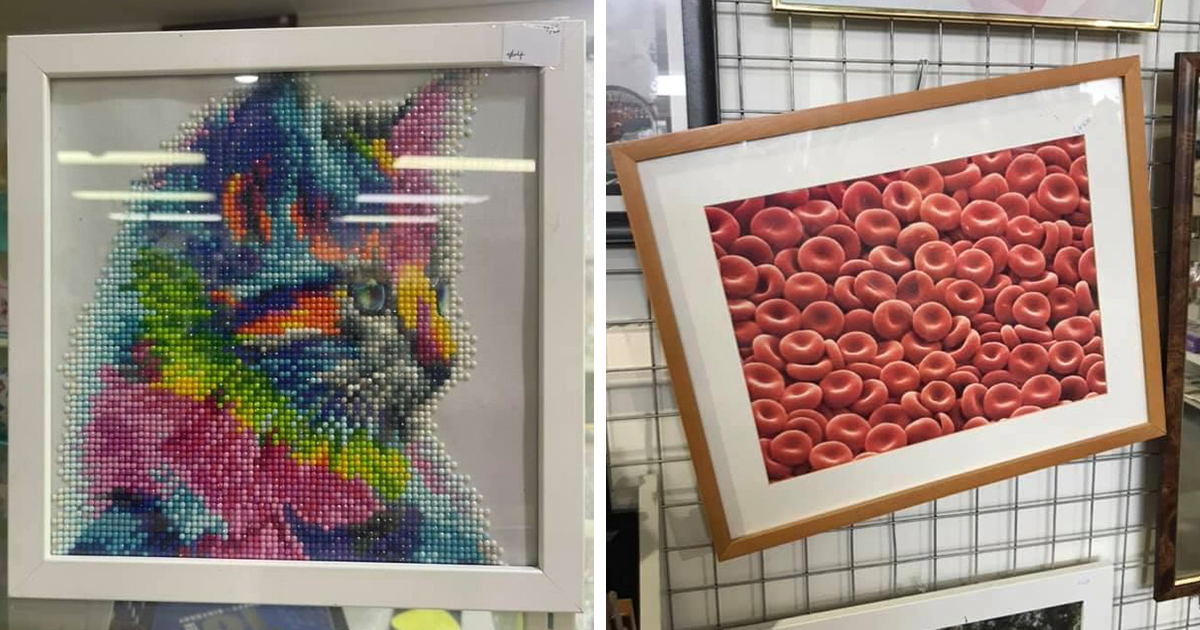
There are few thrills in modern life more reliable than wandering into a charity shop, drifting past old mugs and mystery fondue sets, and suddenly locking eyes with a painting so baffling it practically whispers, “Take me home, coward.” In the United States, we usually call them thrift stores. In the United Kingdom, they’re charity shops. Either way, the art aisle is often where good taste goes on vacation and comes back wearing sequins.
That is exactly why terrible art in charity shops has become such a beloved little corner of internet culture. Some pieces are awkward. Some are cursed. Some are so weirdly sincere that you end up admiring them against your better judgment. And some are proof that somewhere, sometime, a painter looked at a perfectly normal subject and said, “What this deer portrait really needs is the emotional energy of a tax audit.”
This article celebrates that wonderfully off-kilter world. Not to mock people for making art, but to appreciate the glorious chaos of secondhand paintings, offbeat portraits, accidental surrealism, and those unforgettable masterpieces that are somehow awful, charming, and impossible to ignore all at once.
Why “bad” charity shop art is so weirdly irresistible
The appeal of bad art is not always about laughing at something ugly. A lot of the time, it is about spotting sincerity gone slightly off the rails. That is what makes these pieces memorable. They are not mass-produced posters pretending to have a soul. They are earnest attempts at beauty, drama, romance, or symbolism that somehow took a wrong turn at Albuquerque and ended up in a donation pile.
There is also the thrill of discovery. Charity shops and thrift stores are full of one-off objects with no algorithm, no targeted ad, and no trend forecaster hovering over your shoulder. You find a painting of a swan with the face of a disappointed aunt, and suddenly your day is better. Maybe not more elegant, but definitely better.
And then there is the frame. Let us all be honest: half the time, the frame is doing the heavy lifting like an underpaid intern. A terrible painting in a gorgeous vintage frame is the charity shop version of someone showing up to a cookout in a tuxedo and Crocs.
30 supreme examples of terrible art in charity shops
-
The Portrait With One Eye Looking at Destiny
You know the one. One eye stares into your soul, and the other seems to be monitoring traffic. The artist clearly aimed for emotional depth and accidentally invented a new genre: haunted side vision.
-
The Child Who Looks 48 Years Old
Nothing says “family keepsake” like a cherubic child painted with the forehead of a regional bank manager. Somehow the kid has both baby cheeks and the exhaustion of a man reviewing spreadsheets at 11:47 p.m.
-
The Dog With Human Regret
This is technically a pet portrait, but spiritually it is a full confession. The dog appears to know what happened in 2009 and is not prepared to discuss it.
-
The Cat That Looks Like It Pays Rent
Some painted cats look whimsical. Others look like they are between jobs, behind on utilities, and judging your life choices from a recliner. Those are the elite finds.
-
The Horse Built Entirely Out of Panic
Every line says “galloping freedom,” but the final effect says “someone described a horse over a crackly phone line.” Bonus points if the legs appear to be operating under separate management.
-
The Landscape With One Illegal Tree
The lake is fine. The mountains are acceptable. But then there is one tree leaning at an angle that feels both physically impossible and morally suspicious.
-
The Cottage Scene With Unexpected Doom
At first glance, it is just a sweet little cottage. Then you notice the sky is the color of expired mustard, the chimney smoke resembles a warning signal, and no one in that house is getting good news.
-
The Still Life of Fruit and Quiet Despair
A bowl of pears should not radiate existential dread, and yet here we are. The banana is bruised, the grapes look defensive, and the apple has clearly seen things.
-
The Floral Explosion That Feels Aggressive
Technically, flowers are supposed to be cheerful. In terrible charity shop art, however, they often look like they are trying to take over the dining room by force.
-
The Sailboat Floating on Gravy
Water is difficult to paint. That much is obvious when a peaceful seascape turns into a vessel navigating brown, glossy soup under a deeply confused sunset.
-
The Ballerina Mid-Exorcism
Graceful? Not exactly. Memorable? Absolutely. Limbs in six directions and a smile from another dimension make this one a true wall statement.
-
The Religious Painting With Sports Energy
Every so often you find a devotional scene that somehow looks like a halftime motivational poster. Reverence meets recreational league intensity, and the result is impossible to forget.
-
The Angel With DMV Vibes
Wings? Check. Robe? Check. Expression of someone who has explained the same policy nineteen times today? Also check.
-
The Romantic Couple Who Clearly Need Counseling
They are standing together in moonlight, but absolutely nothing in their posture suggests affection. It is less “timeless love” and more “we said we’d stay for the wedding photos.”
-
The Cowboy Made of Elbows
This Western scene has hats, boots, and a horse, but the anatomy was apparently negotiated in a hurry. The cowboy looks like he was assembled from coat hangers and determination.
-
The Deer That Knows Your Browser History
Animal art can be charming, but sometimes a deer portrait hits you with the stare of an all-knowing forest accountant. Majestic, yes. Comfortable, no.
-
The Wolf That Is Somehow Somebody’s Uncle
You walk up expecting wildlife art and leave wondering why the wolf resembles a middle-aged man named Gary. It is a rare talent to paint fur and still end up with “has opinions about lawn fertilizer.”
-
The Clown Nobody Asked For
There are no casual clown paintings. They are either nostalgic or a direct threat. Charity shops specialize in the second category.
-
The Nude Portrait That Forgot Several Key Details
Human anatomy is complicated. This piece proves it. Knees are missing, shoulders are optional, and gravity appears to be merely a suggestion.
-
The Giant-Eyed Child of Victorian Chaos
Some portraits are meant to look innocent and timeless. This one looks like it knows the house is haunted and is waiting for you to figure it out.
-
The Abstract Beige Emergency
At first, it seems tasteful and modern. Then you keep staring, hoping it will reveal meaning, and realize it is just several shades of expensive confusion.
-
The Ocean Wave Made of Upholstery
Texture matters, and this one somehow gives “grandma’s sofa” instead of “power of nature.” Congratulations to the sea for becoming fully decorative.
-
The Tiger With Housecat Confidence
Big cats should look powerful. In terrible thrift art, they often look like they just got startled by a toaster.
-
The Elvis-Adjacent Lounge Legend
Is it Elvis? Is it a local magician? Is it a man who owns three identical white belts? The mystery is part of the value.
-
The Still Life Featuring One Furious Fish
Dead fish in art are already a strong choice. But add muddy color, dramatic brushwork, and accidental menace, and suddenly dinner has become a crime scene.
-
The Victorian Lady With No Neck
Elegant dress, lovely earrings, no visible structural support between head and shoulders. Fashion can be painful, but this feels excessive.
-
The Barnyard Scene With One Demon Chicken
Everything is fine until you spot a poultry-based jump scare in the corner. Good charity shop art always rewards close inspection with at least one deeply upsetting detail.
-
The Paris Street Scene Painted Entirely From Memory and Vibes
There is a café, maybe. There is a lamppost, probably. There is also an atmosphere of romance filtered through three glasses of cheap merlot.
-
The Unnamed Masterpiece in a Frame Worth More Than the Art
This is a classic. The painting is bewildering, the matting is questionable, but the carved wood frame is so beautiful you briefly consider adopting the whole thing out of respect.
-
The Painting You Buy Because It Is Too Weird to Leave Behind
This is the final form of terrible art in charity shops. You laugh. You step away. You come back. Suddenly it is in your car, and you are explaining to friends that it has “character.” That, my friend, is how the collection begins.
What terrible art in charity shops says about taste
The funniest thing about terrible art is that it often exposes how slippery the idea of “good taste” really is. One person sees an awkward portrait and laughs. Another sees camp, charm, originality, and a conversation starter for the hallway. The same strange secondhand painting can be a joke, a collectible, a design accent, or an accidental masterpiece depending on who is looking at it.
That is part of why thrift store paintings and charity shop finds have become so popular online. They sit at the crossroads of kitsch art, home décor, nostalgia, and outsider creativity. Even when a painting is technically clumsy, it can still be unforgettable. In a world packed with polished sameness, a weird little oil painting of a goose with emotional baggage can feel refreshingly human.
Terrible art also wins because it tells stories. Who made it? Why did they choose that subject? Why is that child blue? Why is that horse melting? Why does that fruit bowl feel passive-aggressive? Perfect art can be admired. Bad art can be discussed for forty minutes over snacks.
How to appreciate awful charity shop art like a pro
First, do not rush. The best weird paintings are rarely obvious from ten feet away. Approach slowly, like a wildlife photographer who has stumbled upon something both fragile and unhinged.
Second, check the frame, the canvas, and the back. Sometimes the painting is awful but original, old, or handmade in a way that gives it real decorative or collectible value. Sometimes the frame is the true winner and the art is just along for the ride. That is still a valid relationship.
Third, ask the only question that matters: would this make my home more interesting? Not more elegant. Not more respectable. More interesting. If the answer is yes, then congratulations. You are no longer simply shopping. You are curating.
Experiences from the glorious world of terrible art in charity shops
Anyone who has spent enough time digging through charity shop art develops a sixth sense. You start out looking for a cheap frame or a harmless little landscape for the hallway, and then, without warning, you enter a parallel universe. The first sign is usually a stack of dusty canvases leaning behind a shelf. You crouch down, move aside a faded print of flowers, and there it is: a portrait of a woman whose face suggests both severe indigestion and unfinished revenge. Suddenly, the shopping trip has purpose.
One of the funniest parts of finding terrible art in charity shops is the public setting. You are standing there in broad daylight, trying to keep a straight face while examining a painting of three swans, except one of them appears to be a furious lawyer. Meanwhile, someone next to you is calmly shopping for teacups, unaware that history is happening in aisle four. There is something deeply joyful about discovering nonsense in such an ordinary place.
Then comes the internal debate. You tell yourself you do not need it. You already have enough odd décor. You are a reasonable person with limited wall space. But the painting keeps working on you. Maybe it is the color palette. Maybe it is the absurdity. Maybe it is the fact that no living algorithm would ever recommend this object to you, which somehow makes it feel more special. Charity shop art does not chase your preferences. It ambushes them.
The best experiences usually involve other people. Show a friend a terrible painting and you immediately get ten different interpretations. One person thinks the portrait is creepy. Another insists it is misunderstood genius. Someone else wants it purely because the frame is amazing. Bad art is social in a way that polished décor rarely is. A bland canvas gets a polite nod. A deranged countryside scene with a suspicious sheep gets a full group discussion, snack break included.
There is also a strange affection that grows over time. A painting that first seemed ridiculous can become weirdly lovable once it is hanging in your kitchen or entryway. Guests ask about it. You invent nicknames for it. You start defending it like a problematic cousin. What began as a joke becomes part of the house’s personality. And that may be the secret power of terrible art in charity shops: it creates attachment faster than expensive, carefully selected pieces ever could.
In the end, these paintings are more than cheap laughs. They are accidental storytelling devices, little survivors of other homes, other tastes, and other decades. Some are ugly. Some are fascinating. Some are both at once, which is the sweet spot. They remind us that art does not have to be flawless to be memorable, and that sometimes the most delightful thing you can hang on a wall is a painting so gloriously wrong that it becomes absolutely right.
Conclusion
Terrible art in charity shops endures because it is funny, human, affordable, unpredictable, and strangely heartwarming. These pieces live in the gap between failure and charm, where bad painting, thrift store culture, and pure visual chaos somehow join forces. Whether you collect weird paintings, love kitsch art, or simply enjoy the thrill of spotting a truly cursed portrait beside a stack of old board games, one thing is clear: secondhand art has a magic that polished showroom décor cannot fake. Beauty may be in the eye of the beholder, but glorious disaster gets everybody’s attention.