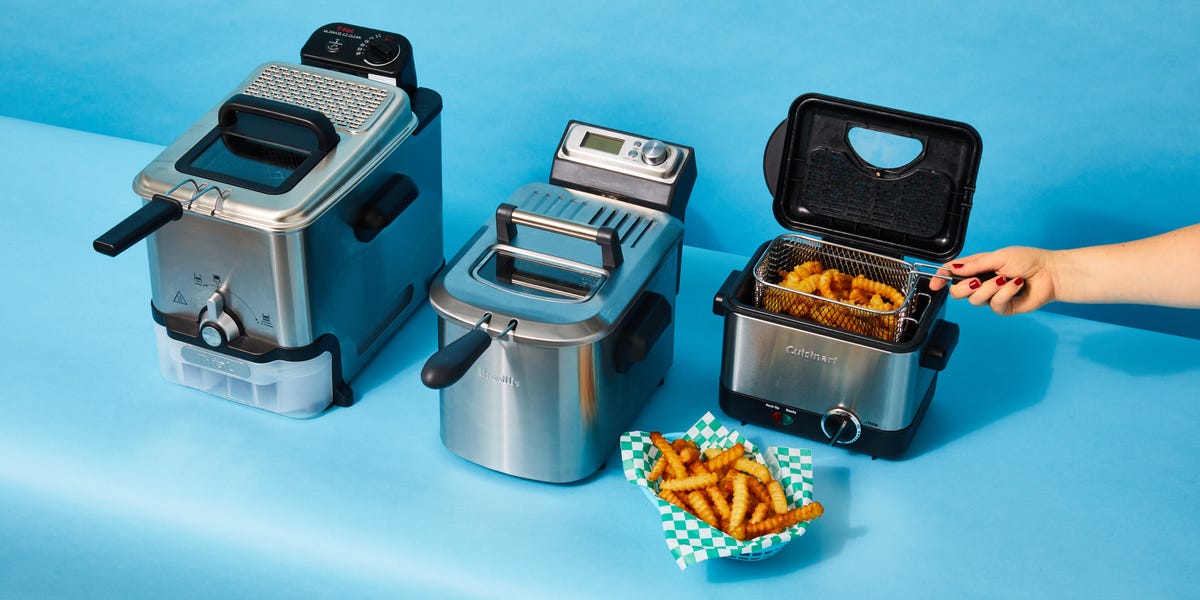
There are kitchen appliances that whisper, “I help with dinner.” Then there are deep fryers, which proudly announce, “I am here to make chicken wings happen.” If you love golden fries, crispy onion rings, doughnuts with real personality, or fried chicken that does not apologize for being delicious, a good deep fryer can be a surprisingly useful countertop tool.
The best deep fryers of 2024 are not just metal boxes full of hot oil. The better models heat quickly, recover temperature after food is added, include safety-minded lids or breakaway cords, and make cleanup less like a punishment from the kitchen gods. After reviewing expert testing trends, manufacturer specifications, real-world usability factors, and common buyer priorities, these six deep fryers stand out for different kinds of home cooks.
This guide focuses on electric deep fryers for home kitchens, not commercial fryers or outdoor turkey fryers. The goal is simple: help you choose the right model for crispy food without turning your kitchen into a county fair accident report.
Quick Comparison: The 6 Best Deep Fryers of 2024
| Rank | Deep Fryer | Best For | Key Strength |
|---|---|---|---|
| 1 | Cuisinart 4-Quart Deep Fryer | Best overall | Strong capacity, fast heating, classic design |
| 2 | Presto FryDaddy Electric Deep Fryer | Best value | Compact, affordable, simple to use |
| 3 | Breville Smart Fryer | Easiest to use | Digital presets and smart controls |
| 4 | Hamilton Beach Triple Basket Deep Fryer | Best for families | Multiple baskets and large food capacity |
| 5 | Cuisinart Compact Deep Fryer | Best small deep fryer | Small footprint for apartments and light use |
| 6 | T-fal Ultimate EZ Clean Deep Fryer | Best oil filtration system | Built-in oil draining and storage |
How We Chose the Best Deep Fryers
A deep fryer has one main job: keep oil hot enough to crisp food quickly without soaking it in grease. That sounds easy until a basket of frozen fries drops the oil temperature like a bad stock market day. The best home deep fryers recover heat quickly, maintain a stable temperature, and offer enough basket space so food can cook evenly.
We considered capacity, wattage, oil management, cleaning design, safety features, temperature control, basket style, countertop footprint, and the type of cook each fryer serves best. Some people need a big fryer for game-day wings. Others need a compact fryer for two servings of fries and a quiet evening of pretending ketchup is a vegetable.
1. Cuisinart 4-Quart Deep Fryer: Best Overall Deep Fryer
Why It Stands Out
The Cuisinart 4-Quart Deep Fryer is the best overall choice for many home kitchens because it balances capacity, power, and straightforward controls. With a 4-quart oil capacity, an 1800-watt immersion-style heating element, and a removable stainless steel oil container, it is built for cooks who want serious frying performance without needing a culinary degree or a separate garage.
This model is especially appealing for families or frequent entertainers. It can handle batches of fries, chicken tenders, shrimp, doughnuts, and vegetables better than tiny fryers that force you to cook in slow, sad rounds. The stainless steel look also feels more grown-up than some budget models, which is helpful if the fryer stays on your counter between weekend fry sessions.
Best Uses
Use the Cuisinart 4-Quart Deep Fryer for fried chicken, fish fillets, mozzarella sticks, onion rings, hush puppies, and homemade fries. It is large enough for satisfying batches but still compact enough for a normal kitchen.
Potential Drawbacks
It does not include built-in oil filtration, so you will need to strain and store oil manually if you plan to reuse it. It also uses more oil than compact fryers, which is not unusual for this size category but worth remembering before you casually pour half a grocery aisle into the tank.
2. Presto FryDaddy Electric Deep Fryer: Best Value Deep Fryer
Why It Stands Out
The Presto FryDaddy is the deep fryer equivalent of a reliable old pickup truck: not fancy, not digital, not trying to connect to Wi-Fi, but very good at its job. It uses about 4 cups of oil, has a compact footprint, and is designed for simple plug-in frying. There are no complicated settings, no screen, and no menu that makes you feel like you are programming a satellite.
Its biggest advantage is value. For small households, students, occasional fryers, or anyone who wants crispy food without investing in a large appliance, the FryDaddy remains a practical pick. It heats quickly, stores easily, and uses less oil than larger models.
Best Uses
The FryDaddy works well for small batches of fries, shrimp, chicken nuggets, jalapeño poppers, and other snack-style foods. It is ideal when you want enough fried food for one to three people without hauling out a big fryer.
Potential Drawbacks
The main limitation is control. With no adjustable temperature dial, it is less flexible for foods that need precise heat. The lid is for storage after the oil cools, not for frying. If you want digital presets or big family batches, this is not your fryer. If you want “plug it in and make fries,” it gets the assignment.
3. Breville Smart Fryer: Easiest-to-Use Deep Fryer
Why It Stands Out
The Breville Smart Fryer is the polished, tech-savvy member of the deep fryer family. It has a 4-quart capacity, digital controls, an LCD interface, and preset cooking functions for foods such as fries, fish, wings, calamari, doughnuts, and twice-cooked fries. That last feature is especially useful if you are chasing restaurant-style fries with a fluffy center and crisp exterior.
What makes the Breville special is convenience. It is designed for cooks who want guidance rather than guesswork. The presets help reduce the “Is this brown or burnt?” panic that sometimes occurs when frying at home. Its cool-zone design also helps trap crumbs below the main cooking area, which can reduce burnt bits and help keep oil cleaner during a session.
Best Uses
This is a great fryer for home cooks who enjoy variety: wings on Sunday, doughnuts on a lazy morning, fish and chips on Friday, and fries whenever life requires emotional support potatoes.
Potential Drawbacks
The Breville is more expensive than basic models, and not everyone needs digital controls. If you fry only once every few months, the premium price may be hard to justify. But if you want a user-friendly deep fryer with smart features, this is one of the most approachable options.
4. Hamilton Beach Triple Basket Deep Fryer: Best for Families
Why It Stands Out
The Hamilton Beach Triple Basket Deep Fryer is built for people who do not want to fry in tiny batches while hungry guests stare at them like disappointed raccoons. Its interchangeable basket system usually includes one large basket and two smaller side-by-side baskets, giving you flexibility for different foods and serving sizes.
The large basket is useful for wings, chicken pieces, and bigger batches of fries. The two smaller baskets are helpful when cooking foods with different timing needs, such as fish in one basket and fries in another. Because both baskets share the same oil tank, you cannot set two temperatures at once, but you can manage cook times more easily.
Best Uses
This model is excellent for game-day food, family dinners, parties, and anyone who likes the phrase “extra basket.” It handles fries, tenders, wings, vegetables, and dough-based snacks well when you avoid overcrowding.
Potential Drawbacks
The larger size means it needs more storage space and more oil. Like most multi-basket fryers, it rewards patience: food cooks best when the basket is not packed too tightly. If you overload it, you may get uneven browning and soggy patches, which is tragic when fries had such a promising future.
5. Cuisinart Compact Deep Fryer: Best Small Deep Fryer
Why It Stands Out
The Cuisinart Compact Deep Fryer is designed for small kitchens, apartments, couples, and anyone who wants real deep-fried texture without committing counter space to a large appliance. Its compact body and roughly 1-liter oil capacity make it easier to store, easier to clean, and less intimidating than full-size models.
This fryer is not trying to feed a football team. It is trying to help you make a controlled batch of fries, shrimp, or chicken bites on a weeknight without turning dinner into a construction project. The smaller size also means less oil to buy, strain, store, or dispose of.
Best Uses
Choose this model for small portions of fries, tempura vegetables, fried pickles, seafood bites, and snack foods. It is also a good option for testing recipes before scaling them up in a larger fryer.
Potential Drawbacks
Capacity is the obvious trade-off. If you regularly cook for four or more people, you will need multiple batches. Small fryers also lose heat faster when overloaded, so patience matters. Treat it like a compact specialist, not a buffet machine.
6. T-fal Ultimate EZ Clean Deep Fryer: Best Deep Fryer with Oil Filtration
Why It Stands Out
The T-fal Ultimate EZ Clean Deep Fryer earns its place because oil cleanup is the part of deep frying that makes many people suddenly remember they enjoy salads. Its built-in oil filtration system drains cooled oil into a storage container beneath the fryer, helping separate food particles and making reuse much easier.
With a 3.5-liter oil capacity and enough room for more than 2 pounds of food, the T-fal is practical for families and frequent fryers. The adjustable thermostat commonly ranges from 300°F to 375°F, which covers most fried foods, from delicate doughnuts to crisp chicken pieces.
Best Uses
This fryer is ideal for people who fry often enough to care about oil management. If you make fries, wings, fish, or fried snacks regularly, the filtration system can save time, reduce mess, and make the whole process feel less like a cleanup documentary.
Potential Drawbacks
The filtration system adds convenience, but it also adds parts. You still need to clean the basket, lid, oil pan, and storage container properly. Some wet-battered foods can stick if you lower them incorrectly or crowd the basket. Still, for oil reuse and reduced mess, T-fal remains one of the most practical home fryer choices.
Deep Fryer Buying Guide: What Really Matters
Capacity
Capacity determines how much food you can fry at once. A 1-liter fryer is convenient for small households, while 3.5- to 4.5-liter models are better for families. Bigger is not always better, because larger fryers require more oil and more storage space.
Temperature Control
Adjustable temperature control is important if you cook different foods. Fries usually do well around 325°F to 375°F depending on the method, while fish, chicken, and doughnuts may need slightly different settings. A fryer that recovers heat quickly after food is added usually produces better texture.
Cleaning and Oil Storage
Cleaning is the reason many deep fryers retire early to the cabinet of forgotten appliances. Look for removable oil tanks, dishwasher-safe baskets, pour spouts, and filtration systems. If cleanup is easy, you are more likely to actually use the fryer.
Safety Features
Hot oil deserves respect. Helpful safety features include breakaway cords, cool-touch handles, stable feet, lids that reduce splatter, and clear maximum-fill lines. Never overfill a fryer, never add wet food directly to hot oil, and never leave frying unattended.
Tips for Better Deep Frying at Home
Dry food thoroughly before frying. Water causes splatter and can make coating slide off. Fry in small batches so the oil temperature does not crash. Use neutral, high-smoke-point oils such as canola, peanut, vegetable, or refined sunflower oil. After frying, drain food on a wire rack instead of stacking it on paper towels, which can trap steam and soften the crust.
Season fried food immediately after it comes out of the fryer. Salt sticks best when the surface is hot. For extra-crispy fries, use a two-step method: fry once at a lower temperature to cook the potato, rest briefly, then fry again at a higher temperature for crunch. It sounds fussy, but the result is the kind of fry that makes silence fall over the table.
Experience Notes: What Home Cooks Learn After Using a Deep Fryer
The first thing most people learn after buying a deep fryer is that temperature recovery matters more than almost every shiny feature on the box. A fryer can claim a high maximum temperature, but the real question is what happens after you lower a basket of cold or frozen food into the oil. If the temperature drops too far and recovers slowly, fries turn limp, chicken absorbs more oil, and your beautiful dinner begins to taste like regret in a breadcrumb jacket.
In everyday use, a medium-to-large fryer like the Cuisinart 4-Quart, Breville Smart Fryer, Hamilton Beach Triple Basket, or T-fal EZ Clean feels more forgiving because there is more oil volume and more heating power. That means the oil can bounce back more quickly between batches. The difference is obvious with frozen fries. In a tiny fryer, they may need extra time and still come out uneven. In a stronger fryer, they crisp faster and taste closer to restaurant fries.
The second lesson is that cleanup determines whether you use the fryer again. Many people imagine the cooking part when they shop: golden chicken, crispy fries, applause from imaginary dinner guests. But the real test comes after the meal, when the oil is cool and someone has to deal with it. A fryer with a removable tank, pour spout, or filtration system makes a huge difference. This is where the T-fal Ultimate EZ Clean earns its popularity. Filtering and storing oil neatly can turn deep frying from a rare event into a practical weekend cooking method.
The third lesson is portion control. Even large home deep fryers are not restaurant fryers. Overcrowding the basket is the fastest way to ruin texture. Food needs space so oil can circulate. A basket packed with wings will steam more than fry, and nobody bought a deep fryer to steam wings. Cooking in smaller batches feels slower, but it usually saves the meal.
Another useful experience is learning which foods are worth frying at home. Fresh-cut fries, chicken tenders, shrimp, fish, doughnuts, and onion rings are excellent candidates. Very wet batters can be trickier because they may stick to the basket if dropped in too early or too aggressively. A good trick is to lower battered food slowly into the oil for a few seconds before releasing it fully. That helps the coating set before it meets the basket.
Finally, deep fryers are best treated as occasional joy machines, not everyday dinner engines. They are wonderful for parties, family nights, football snacks, birthdays, and “I survived this week” meals. Used thoughtfully, a deep fryer gives you texture that air fryers imitate but rarely duplicate. Air fryers are convenient, yes, but when you want that real shattering crunch, hot oil still knows the old magic.
Final Verdict: Which Deep Fryer Should You Buy?
If you want the best overall deep fryer for most kitchens, choose the Cuisinart 4-Quart Deep Fryer. It offers a strong combination of capacity, power, and practical design. If budget and simplicity matter most, the Presto FryDaddy is hard to beat. For cooks who want smart presets and a more guided experience, the Breville Smart Fryer is the friendliest premium option.
Families and entertainers should look closely at the Hamilton Beach Triple Basket Deep Fryer, while apartment dwellers and light users may prefer the Cuisinart Compact Deep Fryer. If cleanup and oil reuse are your top priorities, the T-fal Ultimate EZ Clean Deep Fryer is the smartest choice.
No deep fryer will make fried food healthy in the same way a salad is healthy, but that is not the point. The point is crispness, comfort, and the occasional basket of fries that makes everyone at the table suddenly behave like dinner is a major life event.
Note: Product pricing, availability, and model details can change over time. Before publishing or buying, confirm current specifications with the manufacturer or retailer.