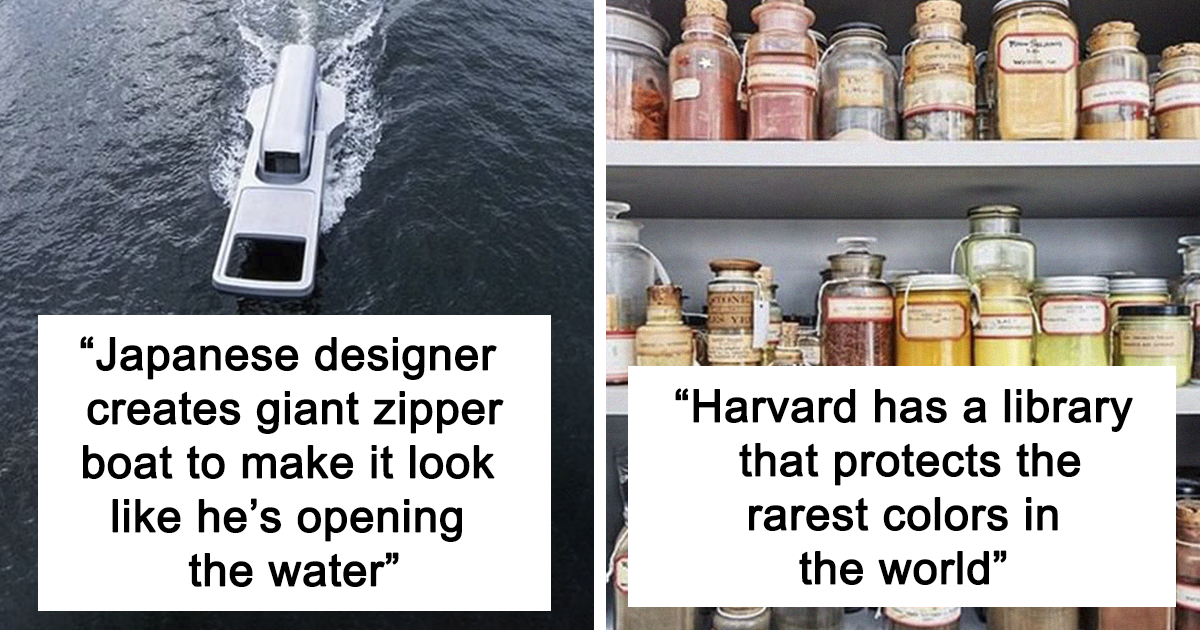
If you ever feel like you’ve seen every gadget on Amazon and every meme on the internet, the “Yup That Exists” Instagram page is here to gently say: “Nope. You really haven’t.” This wonderfully bizarre corner of social media, frequently featured on sites like Bored Panda, collects strange inventions, niche products, and odd facts that make you ask two questions in rapid succession: “Who thought of this?” and “…and why do I kind of want it?”
In this deep dive, we’ll explore the world behind posts like “50 Things You Probably Never Knew Existed Shared By ‘Yup That Exists’ Instagram Page”not by copying the list item by item, but by unpacking what makes these curiosities so irresistible. Think of it as a guided tour through the land of weird products, accidental inventions, and “I can’t believe that’s real” ideas. Buckle up; things are about to get delightfully strange.
Meet “Yup That Exists”: The Internet’s Museum of Oddities
“Yup That Exists” is a content project that lives primarily on Instagram, but you’ll also find it on Facebook, TikTok, and other platforms. Curators behind the account hunt for unusual inventions, offbeat services, and unexpected facts from around the world, then package them into snackable posts with simple captions and visuals that make you stop scrolling mid-doomscroll.
Sites like Bored Panda and other viral content outlets often round up these posts into collectionssuch as the well-known article titled something like “50 Things You Probably Never Knew Existed Shared By ‘Yup That Exists’ Instagram Page.” These roundups tend to feature a mix of:
- Gadgets that solve ultra-specific problems you didn’t realize anyone had.
- Services that sound like they came straight out of a sci-fi satire.
- Architecture, public spaces, or cities designed in totally unexpected ways.
- Food and drink experiments that probably either delight you… or haunt your dreams.
- Random facts that make you rethink how weird reality already is.
Instead of just laughing and scrolling on, we’re going to look at what these things say about creativity, consumer culture, and how the internet loves to collect the world’s strangest ideas in one place.
Why We Love Things We Didn’t Know Existed
There’s a reason lists of “things you never knew existed” go viral again and again. They push a very specific set of psychological buttons.
1. The Surprise Factor
Human brains are wired to notice novelty. We get a little dopamine kick when something unexpected pops upa gadget shaped in a way we’ve never seen, a product with a wild backstory, or a service that sounds too absurd to be real. That novelty hit is the same reason people love plot twists, magic tricks, or “before/after” transformations.
Odd gadgets and strange inventions also give us a break from the predictable. Your feed might be full of the same decor trends, the same “must-have” tech, and the same life hacks. Then suddenly you stumble upon a product that exists purely because one person somewhere refused to accept reality as-is. That surprise is refreshing.
2. The “I Kind of Want This” Effect
Pages like “Yup That Exists” live near the intersection of curiosity and consumerism. Many of these products are real items you can buyoften from novelty gift retailers or small inventors selling limited runs. Even when something looks silly or impractical, a little voice in your head whispers, “But imagine owning it.”
That’s why these posts do so well around the holidays or gifting seasons. They tap into the same impulse that drives stores and websites dedicated to unique, quirky, or “why does this exist but also it’s amazing” gifts. These objects are conversation starters. When someone comes to your home and spots one, you’re guaranteed at least five minutes of delighted confusion and follow-up questions.
3. Proof That Humans Are Wonderfully Weird
Beyond the shopping angle, there’s something quietly comforting about seeing such an eclectic set of human ideas in one place. You’re reminded that creativity doesn’t always mean world-changing tech. Sometimes it’s just a clever twist on everyday life, or an oddly specific solution to a specific person’s annoyance.
From bizarre technologies that never took off to inventions that started as jokes and somehow became real, the message is the same: people keep experimenting. Not every idea will reshape historybut plenty will earn a place in a “yup, that really exists” roundup.
Types of Things You’ll Find in a “50 Things You Never Knew Existed” Roundup
Without reproducing the original list (respect to the creators and curators!), we can still talk about the kinds of items that typically pop up in these viral collections. If you’re a fan of novelty gift sites, quirky science publications, and gadget blogs, you’ll recognize some of these categories.
1. Hyper-Specific Everyday Problem Solvers
Some inventions exist purely to make one tiny part of life more convenient. Think of items like:
- Household helpers designed for one oddly specific task.
- Desk gadgets that organize your stuff in unnecessarily elaborate ways.
- Kitchen tools that solve a problem you’ve only complained about once in your life.
Are they strictly necessary? Absolutely not. Do they make people smile, comment, and share? Absolutely yes. And sometimes, what starts as a “ridiculous” solution ends up being genuinely usefulenough that it finds a loyal niche audience.
2. Novelty Gifts and Gag Products
Then there are the items that exist mainly to make people laugh. These often show up in the same feed as “Yup That Exists” content and on novelty gift websitesthings designed for birthdays, white-elephant parties, or that one friend who loves offbeat décor. Think of items like:
- Unexpected mashups of practical objects and jokes.
- Wearables or accessories that make a statement before you even speak.
- Games or toys that seem to have been invented purely for chaos and fun.
These aren’t trying to win design awards. Their job is to generate laughter, surprise, and maybe a few confused relatives at your next gathering.
3. Astonishing Spaces and Architectural Ideas
“Yup That Exists” posts also highlight unusual places and built environments. That can include entire villages designed around a specific group’s needs, ultra-niche museums, or public spaces with incredibly unexpected themes. These examples remind us that “invention” isn’t limited to gadgets on a shelfsometimes the “product” is a whole experience.
Seeing these spaces lined up in a single feed makes you realize how many hidden corners of the world you’ll probably never visit in person, but can still marvel at online.
4. Scientific and Historical Oddities
Every so often, a “things you didn’t know existed” list veers into the territory of science and history. You’ll see references to long-burning lightbulbs, experimental technologies that never took off, or early gadgets that paved the way for modern life.
These posts give you bite-size glimpses into how innovation actually happensoften through mistakes, side projects, or ideas that seemed bizarre at the time. That kind of content pairs nicely with more in-depth science articles that dive into accidental discoveries and strange inventions from research labs.
How Lists Like These Go Viral
“50 Things You Probably Never Knew Existed” isn’t just a catchy headlineit’s a clever piece of SEO and psychology. Let’s break down what’s happening behind the scenes from a content and search perspective.
1. The Power of the Number 50
Large list posts perform well because they promise value. A 50-item list says, “There’s something here for everyone.” Even if you only find 10 of them truly fascinating, you’ll feel that the click was worth it.
From an SEO standpoint, list posts tend to generate longer on-page time because people keep scrolling to see what’s next. That sends positive engagement signals to search engines, which can help articles rank better for keywords like “things you never knew existed,” “weird inventions,” and “strange products.”
2. Curiosity-Driven Keywords
Headlines and descriptions around these collections are carefully structured around curiosity. Phrases like:
- “Things you never knew existed”
- “Weird but real inventions”
- “Strange products that actually exist”
- “Unexpected things from around the world”
These phrases act as both click-magnets and search magnets. They tap into the reader’s desire to know what they’re “missing” while also aligning with long-tail searches about weird products and unusual gadgets.
3. Visuals That Stop the Scroll
Instagram and viral sites are visual-first environments. A single image of a strange product can outperform a wall of text by miles. That’s why posts like those shared by “Yup That Exists” tend to feature clear, bright photos that instantly communicate the ideaeven if you don’t read the caption.
On a roundup page, dozens of these visuals stacked vertically create a sense of discovery. You scroll, find something surprising, scroll again, and repeat. That “just one more” loop is exactly what keeps engagement high.
What These “Yup That Exists” Posts Say About Modern Creativity
It’s easy to laugh at a weird gadget and move on, but there’s a deeper story running through these roundups.
1. The Democratization of Invention
Many of the things featured online come from independent creators, small businesses, or niche startups. Crowdfunding platforms, small-batch manufacturing, and online shops make it possible for one unusual idea to find its audience without needing a big corporation behind it.
Some products are clearly experiments that will never go mainstreamand that’s okay. The internet gives them a life beyond a small local market. Through accounts like “Yup That Exists,” they become part of a global gallery of quirky ideas.
2. The Blurred Line Between Useful and Absurd
One of the most entertaining things about these lists is how they stretch your sense of what counts as “useful.” At first glance, a product might look ridiculous. But then you imagine a very specific situation where it would be perfect.
We’ve seen this arc before: many now-common technologies and household items were initially considered strange or unnecessary. Some of today’s viral oddities might be tomorrow’s standard gearor at least the ancestors of something more refined.
3. A Reminder That Delight Matters
Not every invention needs to cure a disease or revolutionize industry. Some exist to spark joy, surprise, or a moment of laughter in a very serious world. There’s real value in that. Products that make people smile, start conversations, or break the ice at a party are performing a subtle social function.
In that sense, the “Yup That Exists” universe isn’t just about stuffit’s about the emotional reactions those things create.
How to Enjoy These Lists Without Just Doomscrolling
So how do you dive into a “50 Things You Probably Never Knew Existed” article or the “Yup That Exists” feed without losing an entire afternoon? (No judgment if you do, by the way.) Here are a few playful but practical tips.
1. Treat It Like a Mini Creativity Workshop
Instead of just reacting, ask yourself:
- What problem is this invention trying to solve?
- How would I improve this idea or make my own version?
- What’s the emotional reaction this product is designed to trigger?
Suddenly, the list becomes a brainstorming board. If you work in design, marketing, content creation, or product development, this kind of playful analysis can be surprisingly useful.
2. Use It as Gift Inspiration
When you hit an item that makes you think of a specific friend or family member, jot it down. You might not want that object for yourself, but it could be the perfect holiday or birthday surprise. These lists are basically curated catalogs of “I would never have searched for this, but now it’s all I can think about.”
3. Let It Expand Your Sense of What’s Possible
If someone could bring a hilariously hyper-specific gadget or mind-bending architectural idea to life, what’s stopping you from exploring your own weird ideas? You don’t have to start a global brand. You can start with a hobby project, a small online shop, or even a simple prototype.
The real magic of “Yup That Exists” isn’t that these things exist; it’s that they remind you that your strange, half-formed concepts might be worth trying, too.
Conclusion: The Joy of Discovering That, Yes, It Really Exists
The viral article “50 Things You Probably Never Knew Existed Shared By ‘Yup That Exists’ Instagram Page” captures a feeling many of us crave: the thrill of discovering that the world is still bigger, stranger, and more playful than we thought. Behind every bizarre object or surprising fact is a personor a teamwho decided to follow their curiosity and make something unusual real.
Whether you’re scrolling for entertainment, hunting for quirky gifts, or gathering inspiration for your own projects, these collections of weird inventions and unexpected ideas are more than just clickbait. They’re a highlight reel of human imagination at its most eccentric. And honestly? That’s something worth celebrating.
meta_title: 50 Things You Never Knew Existed from “Yup That Exists”
meta_description: Explore the wild world of “Yup That Exists,” where bizarre yet real inventions and products prove the internet will never run out of surprises.
sapo: Think you’ve seen it all online? Think again. The viral article “50 Things You Probably Never Knew Existed Shared By ‘Yup That Exists’ Instagram Page” pulls back the curtain on a world of bizarre inventions, quirky products, and surprising facts that actually exist. From hyper-specific problem solvers to delightfully absurd novelty gifts and mind-bending public spaces, these curiosities prove that human creativity is far strangerand more funthan we give it credit for. In this in-depth look, we dive into why these lists go viral, what they reveal about modern culture, and how exploring them can spark your own weird and wonderful ideas.
keywords: Yup That Exists, weird inventions, strange products, things you never knew existed, Bored Panda article, novelty gifts, unusual gadgets
Real-Life Experiences: Falling Down the “Yup That Exists” Rabbit Hole
Now let’s add one more layer: what it actually feels like to live with this kind of content in your daily life. Maybe you’ve already had a “Yup That Exists” moment without realizing it.
When a Random Post Changes Your Shopping List
Imagine scrolling through Instagram on a lazy Sunday morning. You’re half-awake, coffee in hand, promising yourself you’ll “just check a few posts.” Suddenly you see a clip of a wildly specific gadgetsomething you didn’t know existed but instantly recognize as the answer to a tiny annoyance you’ve been quietly dealing with for years.
At first, you laugh it off. Then your brain starts replaying all the times you grumbled about that exact issue. Five minutes later, you’ve clicked through to a shop, read the reviews, and added it to your cart. You went from “I didn’t know this was real” to “I absolutely need this” in record time.
That’s the “Yup That Exists” effect: it turns pure curiosity into genuine considerationsometimes even into a purchaseby revealing options you never would have searched for on your own.
The Conversation Starter You Didn’t Expect
Another classic scenario: you buy one of these “I can’t believe this exists” items as a joke or a curiosity. You put it on your desk, in your kitchen, or in your living room. It blends into the backgrounduntil someone comes over.
They spot it, stop mid-sentence, and ask, “Wait…what is that?” Suddenly you’re telling the story of how you discovered it through a viral list or an Instagram page. The object becomes an icebreaker, a social shortcut that turns small talk into a shared laugh.
Over time, you might even start to associate that odd product with a particular memory: a game night, a holiday gathering, or a long video call where everyone needed something to smile about. What started as a silly novelty becomes a tiny anchor for connection.
How Creators and Brands Use the “Yup That Exists” Energy
On the other side of the screen, creators and brands watch this phenomenon closely. If you make content, you’ve probably noticed how well posts about unexpected inventions or strange services perform. People tag friends, share in group chats, and leave long comment threads debating whether something is genius or ridiculous.
Many marketers now treat “things you never knew existed” as a creative prompt. They frame their new products or features through the same lens: highlight what’s surprising, ultra-specific, or delightfully unnecessary. Even serious brands occasionally lean into this energy by showcasing quirky limited editions or behind-the-scenes experiments that show off their playful side.
For small inventors or niche businesses, getting featured in a “Yup That Exists” style roundup is almost like winning a mini-lottery of attention. One viral post can send a flood of curious visitors to a product page, give them a burst of sales, and spark follow-up coverage on other sites.
Using “Yup That Exists” as Creative Fuel
If you’re a designer, writer, or entrepreneur, browsing a “50 things you didn’t know existed” article can actually become part of your creative routine. Instead of just scrolling, you can treat each odd product or fact as a prompt:
- Could I combine this idea with something in my own field?
- What’s the most unexpected problem my audience secretly has?
- If I exaggerated one everyday annoyance, what product might come out of it?
Some people even keep personal collectionsscreenshots, saved posts, or inspiration boardsof wild inventions and weird products. The goal isn’t to copy them, but to spark new thinking. When you see proof that other people have successfully launched outlandish ideas, your own “too weird” concepts suddenly feel a lot more possible.
When the Novelty Wears OffBut the Insight Stays
Like any viral trend, the rush of discovering yet another strange invention can fade. After a while, you may feel like you’ve seen enough. But even when the novelty feeling fades, the underlying insight tends to stick: the world is full of micro-ideas, tiny experiments, and odd projects that never make the news but absolutely exist.
The next time you catch yourself saying, “If this doesn’t exist, someone should invent it,” remember that somewhere out there, a person already has and it might be sitting in a “Yup That Exists” post waiting for you to stumble across it. That realization is oddly empowering. It means you’re not alone in your bizarre ideas, and you’re certainly not alone in wanting the world to be just a little stranger and more fun.
So whether you’re reading that Bored Panda article, scrolling the original Instagram page, or browsing your favorite novelty shop, you’re doing more than killing time. You’re participating in a global habit: celebrating the strange, the surprising, and the delightfully unnecessary. And in a world that often feels too serious, that habit might be one of the most refreshing ones we have.