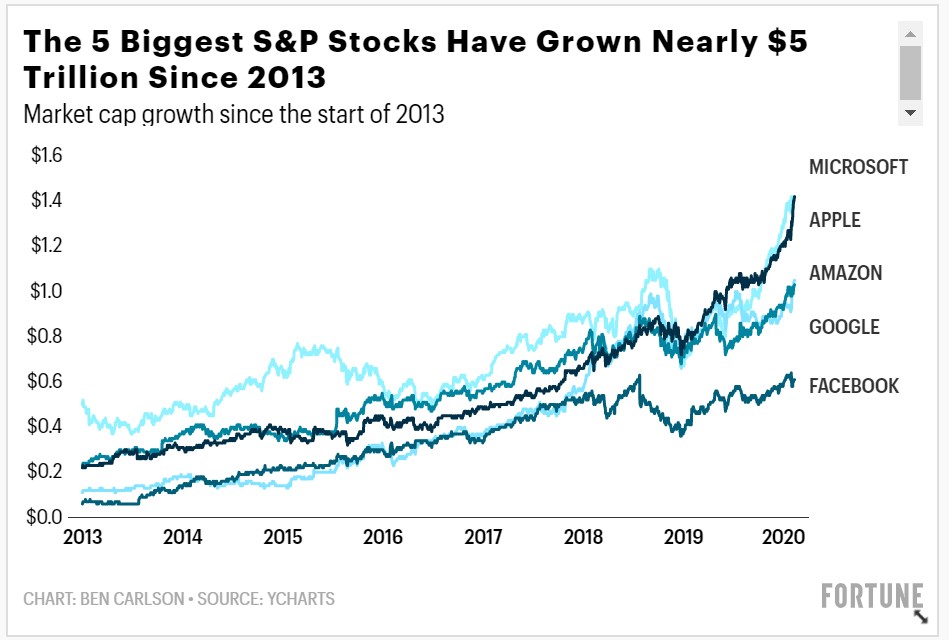
There are stock-market headlines that sound mildly concerning, and then there are stock-market headlines that sound like the opening scene of a financial disaster movie. “Five companies make up 18% of the S&P 500” definitely falls into category two. It makes investors picture a giant index balanced on five very expensive stilts while everyone pretends this is perfectly normal.
But here is the twist: that headline was eye-catching in 2020, and it looks almost quaint now. Market concentration has become even more intense since then. A small cluster of mega-cap companies has carried a huge share of index performance, investor attention, and dinner-table conversations from people who suddenly use phrases like “AI capex cycle” for fun. So yes, investors should care. No, they should not automatically panic.
The smarter answer sits in the wonderfully unsatisfying middle: concentration matters because it changes how diversification works, how risk shows up, and how index funds behave. But concentration alone is not proof that a crash is around the corner. Sometimes a market gets top-heavy because a few companies are wildly overhyped. Other times it gets top-heavy because those businesses are genuinely massive, profitable, and deeply embedded in the economy. The real question is not whether concentration exists. The real question is what it means for investors now.
Why This Headline Still Matters
When people say the S&P 500 is diversified, they are usually speaking in broad strokes. After all, it holds about 500 leading U.S. companies across multiple sectors. That sounds like diversification, smells like diversification, and is marketed like diversification. But the S&P 500 is not equal-weighted. It is a float-adjusted market-cap-weighted index, which means the larger a company becomes, the more influence it has over the index.
That structure is not a bug. It is the design. The index automatically gives more room to the biggest winners and less room to the smaller players. This helps it reflect the actual market, but it also means that when a few giants surge, they can start to dominate returns, valuations, and risk. Investors who think they own “the market” may actually own a portfolio that is heavily influenced by a handful of companies with oversized roles.
That is why the old “five companies make up 18%” warning still matters. It was never just about a scary number. It was about recognizing that broad-market investing can become less broad than advertised when leadership narrows.
How the S&P 500 Became So Top-Heavy
The short version is simple: size plus success equals bigger index weight. The longer version is more interesting. Over the past decade, a small group of mega-cap companies built enormous competitive advantages through software, cloud computing, digital advertising, semiconductors, e-commerce, smartphones, and platform economics. Then artificial intelligence arrived and poured jet fuel on the story.
These businesses did not just get popular. They got huge. Many of them produced extraordinary cash flow, expanded margins, repurchased shares, and convinced investors that they were not just tech companies, but the infrastructure layer of the modern economy. In a cap-weighted index, that combination can snowball. The bigger the market value, the bigger the weight. The bigger the weight, the more impact each price move has on the index. The more the stock rises, the more the weight climbs again. It is the financial equivalent of a karaoke singer getting louder because the audience already clapped.
That dynamic helps explain why a few firms have driven such a large chunk of recent S&P 500 returns. In one stretch of 2024, five companies accounted for roughly 60% of the index’s gain. That is not broad participation. That is a relay race where the same runner keeps grabbing the baton.
Should Investors Care? Yes, for Four Big Reasons
1. Index funds may be less diversified than you think
Many investors buy an S&P 500 fund expecting wide diversification. They do get exposure to hundreds of companies, but the economic reality is more concentrated. When the top five or top 10 names become unusually dominant, the index starts behaving more like a concentrated growth portfolio with a diversified supporting cast.
That matters because your portfolio can become more sensitive to a few earnings reports, regulatory headlines, antitrust actions, supply-chain hiccups, or AI spending disappointments. If one giant stock sneezes, the whole index can sound congested.
2. Concentration can increase downside vulnerability
When the biggest stocks trade at richer valuations than the rest of the market, the index becomes more vulnerable if expectations soften. Investors may accept premium valuations when growth looks unstoppable. But if revenue growth slows, margins compress, or the market simply decides to pay less for the same earnings, those heavyweights can pull the index lower fast.
This does not mean every concentrated market ends badly. It does mean the margin for error gets thinner. An index led by a handful of expensive companies is less forgiving than one with leadership spread across sectors, sizes, and business models.
3. Sector exposure may be more lopsided than the label suggests
Many of the biggest S&P 500 names are tied directly or indirectly to technology, communications, digital advertising, semiconductors, cloud infrastructure, or AI-related capital spending. So even if your fund is called a broad U.S. equity fund, your economic exposure may lean heavily toward a narrow set of themes.
That means a portfolio can become more correlated to one story: continued dominance by mega-cap innovation leaders. Great when the theme works. Less fun when the market rotates toward value, cyclicals, international equities, or smaller companies.
4. Breadth matters for market health
One useful way to judge the durability of a bull market is to ask how many stocks are participating. A rally powered by hundreds of companies across sectors often looks healthier than a rally led by a tiny club of giants. Narrow leadership can persist longer than skeptics expect, but it still raises the question of whether the rest of the market is truly strong or just being towed behind a few corporate aircraft carriers.
Why Investors Should Not Overreact
Now for the calming part. Concentration is not automatically a siren for imminent disaster. Sometimes the biggest companies are the biggest companies for excellent reasons. They can have stronger balance sheets, larger free cash flow, wider competitive moats, global scale, and genuine earnings power. In other words, today’s giants are not all vapor and vibes.
That distinction matters. The late-1990s bubble featured extreme concentration too, but many market leaders then had weaker profitability profiles than today’s mega-caps. By contrast, recent returns have been supported not only by enthusiasm but also by profits. In 2025, earnings growth played a much larger role in driving the S&P 500’s gains than in the previous two years. That does not make the market cheap, but it does make the story more fundamental and less fantastical.
There is another reason not to panic: concentration is a condition, not a market-timing tool. Investors have been warning about narrow leadership for years. Anyone who sold simply because the index looked top-heavy missed a powerful run. Markets can remain concentrated for longer than skeptics would prefer, and giant companies can keep getting bigger for entirely rational reasons.
The More Interesting Development: Broadening May Already Be Underway
One of the most important shifts in the market is that the earnings gap between the mega-caps and the rest of the S&P 500 appears to be narrowing. Analysts still expect the biggest names to grow, but the “other 493” are no longer just standing around holding the coats. Profit growth has started to spread into financials, industrials, utilities, materials, healthcare, and selected cyclicals.
That matters because a broadening earnings backdrop can reduce the market’s dependence on a single cluster of stocks. It can also create opportunities outside the usual superstar names, especially when solid businesses have been overlooked because they do not dominate every headline, podcast, and uncle-at-barbecue conversation.
Broadening does not mean the mega-caps stop mattering. It means the market may become less one-dimensional. For long-term investors, that is healthy. A market where earnings strength is shared more widely is generally more resilient than one relying on the same few corporate overachievers to do all the heavy lifting.
What Investors Can Actually Do
Know what you own
If a large portion of your retirement assets sits in an S&P 500 fund, understand that you have meaningful exposure to mega-cap growth companies. That may be fine. It just should be intentional.
Diversify beyond one index
Investors concerned about concentration can add exposure to other parts of the market, including mid-caps, small-caps, international equities, and value-oriented strategies. That does not mean abandoning the S&P 500. It means making sure one index does not become your whole investment personality.
Consider equal-weighting carefully
Equal-weight S&P 500 funds reduce concentration risk by giving each constituent the same weight. That can improve breadth and lessen dependence on giant names. But it also changes the portfolio’s character. Equal-weight strategies usually carry higher turnover, different sector tilts, more exposure to smaller constituents, and they can lag badly when mega-caps dominate. So this is not a magical fix. It is a tradeoff.
Rebalance like an adult
When a handful of winners swell in your portfolio, rebalancing can help keep risk from drifting higher than intended. Rebalancing is not glamorous. Nobody makes dramatic movies about it. But it is one of the few reliable ways to keep yesterday’s market winners from quietly rewriting your entire risk profile.
The Bottom Line
So, should investors care that five companies once made up 18% of the S&P 500? Absolutely. And they should care even more now that concentration has climbed well beyond that old headline. But caring and panicking are not the same thing.
Investors should care because concentration changes the meaning of diversification, magnifies the influence of a few stocks, and can make a broad-market fund feel a lot narrower than expected. They should also care because leadership built on strong earnings is very different from leadership built on pure speculation. Today’s market contains both genuine strength and real concentration risk. Pretending either side does not exist would be silly.
The smartest takeaway is this: the S&P 500 is still a powerful long-term investment tool, but it is not a neutral slice of everything. It is a living, breathing, cap-weighted machine that increasingly reflects the success of a few giant companies. Investors do not need to run from that reality. They just need to understand it before it surprises them.
Investor Experiences: What Market Concentration Feels Like in Real Life
Talk to real investors about market concentration and you will notice a funny pattern. Almost nobody worries about it while their account balance is rising. The concern usually shows up later, often after one rough week, two ugly earnings reports, or a market day where the index finishes red because one mega-cap stock had a public tantrum. Suddenly, people who thought they owned “the whole market” realize they may have been riding in a vehicle powered by a very small engine room.
A first common experience is surprise. An investor buys a low-cost S&P 500 fund because it feels simple, disciplined, and diversified. Then they look under the hood and discover that a huge portion of their returns has come from a few familiar names. The fund still owns hundreds of companies, of course, but emotionally it starts to feel like a bet on five or 10 giants with 490 backup dancers. That realization is not always bad. It is just eye-opening.
A second experience is envy mixed with fear. When mega-cap leaders are crushing the market, investors who diversify into small-caps, international stocks, or equal-weight funds often feel like they brought a salad to a barbecue. They know diversification is sensible, but it can feel painfully boring when the glamour stocks are doing all the partying. Then the leadership wobbles, and the same investors suddenly feel very smart for owning assets that do not move in lockstep with the index heavyweights. Concentration has a way of making investors question their plan in both directions.
A third experience is overconfidence. Some investors start to believe the largest companies are unstoppable because they have become so central to daily life. They assume size itself is safety. But history is littered with enormous companies that looked permanent until the market changed the script. Owning dominant firms can be wonderful. Worshipping them is usually less productive.
Then there is the experience of the long-term investor who stays calm. This person notices concentration, respects the risk, but does not turn every headline into a portfolio emergency. They review allocations, rebalance when needed, and keep adding diversified exposure over time. They do not confuse awareness with panic. In many cases, that investor ends up sleeping better than the person who keeps trying to guess the exact day concentration becomes dangerous.
That may be the most useful experience of all. Market concentration is real, and it deserves attention. But attention is different from obsession. Investors who understand what they own, why they own it, and how it fits into a larger plan are usually better positioned than those who swing between euphoria and doom every time five giant stocks decide to be dramatic. And let’s be honest, giant stocks do enjoy being dramatic.