Note: The situations below are composite, anonymized examples inspired by common diner complaints and food-service experiences. They are not allegations about any specific restaurant, chef, server, or brand.
Going out to eat is supposed to be a break from cooking, dishes, grocery-store parking lots, and the eternal question of whether there is anything in the fridge besides mustard. But sometimes a restaurant meal arrives with such baffling presentation that diners stop being hungry and start becoming amateur photojournalists.
There is a fine line between creative food presentation and a meal that appears to have lost a fight with a hardware store. A cocktail served in a tiny bathtub may be memorable. A burger balanced on a roof tile while fries spill directly onto the table? That is less “culinary theater” and more “insurance claim waiting to happen.”
Food presentation matters because diners judge a meal before the first bite. Research has found that people tend to rate food more positively when it is arranged attractively, which means plating can influence perceived taste as well as visual appeal. The catch is that attractive does not mean inconvenient, confusing, messy, or impossible to eat without borrowing a shovel.
When Restaurant Food Presentation Stops Being Fun
Restaurants have every reason to care about the experience surrounding a plate or drink. The National Restaurant Association emphasizes customer feedback, clear service, thoughtful handling of special requests, and consistent food quality as part of a strong guest experience. Presentation should support the food, not turn it into a puzzle that requires a map, a flashlight, and emotional support.
The best serviceware is usually invisible in the best possible way: it keeps food hot or cold, makes portions easy to share, protects the table, accommodates guests’ needs, and does not leave anyone wondering whether they are allowed to eat the container. Here are 30 moments when diners understandably reached for their phones before reaching for a fork.
30 Restaurant Service Fails That Deserved a Photo
- The burger on a wooden plank. A cutting board may look rustic, but when burger juice streams toward someone’s lap, the “farmhouse chic” concept becomes less charming.
- Fries served in a miniature shopping cart. Cute for approximately four seconds. Then the diner realizes the wheels are decorative, the basket is too narrow, and ketchup has nowhere sensible to go.
- A cocktail inside a lightbulb. Yes, it glows. No, that does not explain why the straw is six inches long and the opening is the size of a coin.
- Nachos piled into a metal construction helmet. It is hard to feel sophisticated while trying to retrieve melted cheese from protective headgear.
- Soup in a coffee mug. A mug is not automatically wrong, but when the handle is too hot to touch and the spoon cannot fit properly, the soup becomes an endurance sport.
- Pasta served in a shallow flowerpot. A garnish resembling a houseplant is one thing. Actual noodles in a vessel associated with potting soil are another.
- Steak placed directly on a slate tile. Slate has become the unofficial mascot of “we had plates, but we chose drama.” It is cold, heavy, and not particularly cooperative with steak knives.
- Drinks topped with a mountain of dry ice. A little theatrical fog can be fun. A drink that makes diners wonder whether it is safe to inhale near it is less relaxing.
- Salad served inside a giant wine glass. It looks elegant until the diner has to spear a crouton at the bottom like they are fishing for treasure.
- French fries delivered in a tiny metal bucket. The bucket is usually adorable, except it holds seven fries and a surprising amount of disappointment.
- A dessert presented on an upside-down umbrella. The visual idea may be whimsical, but no guest wants chocolate sauce traveling downhill toward the tablecloth.
- Chicken wings served in a birdcage. This is one of those ideas that probably sounded exciting during a brainstorm and immediately became awkward once someone needed a napkin.
- A drink balanced inside a hollowed-out pineapple with no stable base. Tropical fun ends quickly when the glass starts leaning like it has already enjoyed three cocktails.
- Mac and cheese served in a cast-iron skillet that is still volcanic. Cast iron can be great, but diners deserve a warning before their fork enters a temperature zone normally reserved for blacksmiths.
- Pizza served on a raised stand with no plate beneath it. The first slice slides, the cheese stretches, and suddenly the entire table is participating in a rescue mission.
- Mini pancakes stacked in a shoe-shaped dish. Breakfast should not make a person ask whether the serving vessel has ever been near a foot.
- Ice cream arriving in a tiny metal toolbox. Novelty is not the same as practicality, especially when condensation turns the “toolbox” into a slippery little freezer chest.
- Fish tacos served in a wire basket without paper lining. A wire basket is fine for holding bread. It is less useful when salsa and crema escape through every opening.
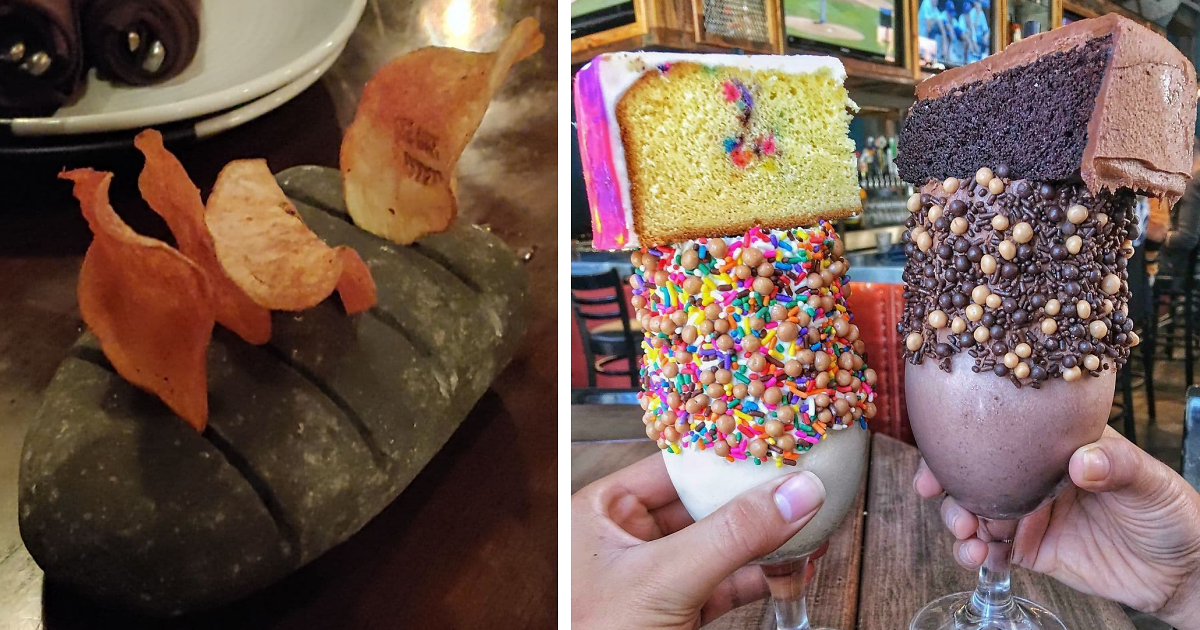
- Milkshakes decorated with half a bakery. One cookie, a brownie, whipped cream, a doughnut, and three candy bars may look impressive, but eventually the drink becomes a structural engineering project.
- Appetizers served in a wheelbarrow. At a certain point, the diner is no longer ordering snacks. They are apparently managing a small construction site.
- Ramen brought in a bowl too small for the broth. When noodles and broth are visibly attempting a prison break, the server may have chosen aesthetics over gravity.
- Cheese served on a mouse trap-shaped board. The restaurant may be making a joke. The diner may be wondering why their appetizer appears to contain a threat.
- A bloody mary topped with an entire lunch. A celery stalk is normal. A burger, fried chicken, shrimp, bacon, and a mini sandwich turn the drink into a meal wearing a hat.
- Oysters presented on a mound of decorative rocks. Ice keeps shellfish cold. Random pebbles create a game called “which one is food?” that nobody requested.
- Food served on a paper menu. A menu is meant to help people choose lunch, not absorb lunch. Grease and ink do not make a winning flavor combination.
- Sandwiches pinned together with giant skewers. A small toothpick is understandable. A skewer long enough to qualify as medieval equipment deserves a safety briefing.
- Beer served in a mason jar with a handle coated in condensation. Rustic is fine. Dropping an icy jar because it has become a tiny glass slip-and-slide is not.
- Spaghetti on a plate shaped like a face. The pasta becomes hair, the meatballs become eyes, and suddenly dinner is staring back.
- Hot food delivered on a board with a decorative paper liner that catches fire. Presentation should add style, not introduce a surprise bonfire at Table 12.
- A $16 drink served with mostly ice and a motivational garnish. A lime wheel cannot emotionally compensate for paying premium-cocktail money for frozen water.
Why These Restaurant Complaints Are More Than Just Social Media Material
Most weird food plating is harmless, even when it is deeply confusing. But some serving problems are more serious than a soggy table or a hard-to-hold glass. Food should be protected from contamination, held at appropriate temperatures, and served in containers or on surfaces intended for food contact. The FDA’s Food Code is designed to guide safe, honest food service, while the agency also regulates materials that come into contact with food, including cookware, packaging, and food-preparation surfaces.
Temperature matters, too. The USDA notes that cold foods should generally stay at 40°F or below, while food held between 40°F and 140°F can allow bacteria to multiply rapidly. That is why a “cute” presentation that leaves seafood warm, ice cream melting, or chicken sitting out too long is not merely annoying. It can cross into a legitimate food-safety concern.
Restaurants also need to take dietary needs seriously. A missing sauce may be irritating. A surprise allergen can be dangerous. The FDA identifies nine major food allergens in the United States, including milk, eggs, fish, shellfish, tree nuts, peanuts, wheat, soy, and sesame, and advises people with allergies to ask restaurant staff about ingredients.
How Diners Can Handle a Badly Served Meal Without Starting a Table-Side War
When a meal arrives looking like it was plated during an earthquake, the best first step is usually calm communication. Tell the server exactly what is wrong: the food is cold, the container is unsafe to handle, the drink is missing an ingredient, the order contains an allergen, or the plate makes the meal difficult to eat. Clear details give staff a chance to fix the problem quickly.
For safety concerns, be direct and specific. Ask for a replacement if food appears undercooked, contaminated, or improperly stored. The CDC recommends that diners pay attention to restaurant inspection information and take basic food-safety concerns seriously when eating out.
If the restaurant does not resolve the issue, a factual review can be helpful. Describe what happened, avoid exaggeration, include dates or order details when relevant, and focus on observable facts rather than personal attacks. Consumers have the right to share honest opinions about businesses, and federal consumer-protection rules prohibit certain deceptive review practices.
For drinks, value and accuracy matter just as much as appearance. In the United States, a standard alcoholic drink contains about 14 grams of pure alcohol, although cocktails can vary widely depending on ingredients and pour size. A decorative glass does not excuse a drink that is misleadingly weak, improperly made, or impossible to consume without wearing half of it.
Extra Experience Notes: Why People Remember the Plate Long After the Meal
People rarely remember an ordinary plate of fries. They remember the fries served in something that looked like a bird feeder. They remember the drink that required two hands, a straw, and the courage of someone crossing a rope bridge. They remember the dessert placed on a decorative shovel because apparently no utensil in the building was strange enough.
That is the strange power of restaurant presentation. It can become part of the story diners tell later. A perfectly grilled steak may earn a polite compliment. A perfectly grilled steak delivered on a roofing shingle may earn a group chat, six photos, and a caption involving the phrase “architectural appetizer.”
For restaurants, the lesson is not that creativity is bad. Creative service can be brilliant when it matches the food, the setting, and the customer. A beachside restaurant serving seafood in a practical shell-shaped dish may feel playful. A dessert served in a vintage teacup can be charming. A tiki drink with an elaborate garnish can make a vacation meal feel festive. The problem begins when the gimmick makes the food colder, harder to share, tougher to identify, or more likely to spill onto someone’s clothing.
Guests also bring different needs to the table. One diner may enjoy a tall cocktail tower because it is fun and photo-friendly. Another may have limited hand mobility and need a stable glass with an easy grip. One guest may appreciate a sizzling skillet. Another may be dining with a child, managing an allergy, or simply trying not to burn their fingertips before the entrée arrives. Good hospitality makes room for all of those experiences.
Takeout has added another layer to the conversation. A meal can look wonderful when it leaves the kitchen but arrive at home as a damp, sideways mystery. Packaging needs to protect texture, temperature, and customized orders. The National Restaurant Association has reported that diners place real value on packaging that helps food arrive in restaurant-quality condition. Nobody wants to open a delivery bag and discover that their salad has become soup, their fries have become noodles, and their drink has chosen independence.
Ultimately, the best restaurant service feels effortless. The plate is the right size. The food stays where it belongs. The drink is easy to hold. The garnish does not require a permit. The guest can focus on eating, talking, laughing, and perhaps stealing one fry from a friend without first conducting a risk assessment.
Conclusion
Restaurant food presentation should make a meal more enjoyable, not more complicated. A little creativity can turn dinner into an experience, but diners draw the line when their food is served on construction materials, unstable decorations, questionable containers, or anything that requires advanced problem-solving before the first bite.
The funniest restaurant service fails are usually the ones that are almost practical. Almost. When restaurants combine visual flair with comfort, cleanliness, food safety, accessibility, and common sense, everyone wins. Diners get a meal they can actually enjoy, and restaurants avoid becoming famous online for serving nachos out of a hard hat.