Every new year arrives carrying a suitcase full of predictions. Some are sensible, some are optimistic, and some sound as though they were written by a science-fiction screenwriter during a triple-espresso emergency.
Looking back at the forecasts surrounding 2025, the year was expected to deliver everything from flying taxis and household robots to a cashless economy and an artificial intelligence takeover. Technology certainly moved forward, but reality remained stubbornly attached to regulations, engineering limits, budgets, consumer habits, and the mysterious human desire to keep using passwords such as “Fluffy123.”
The following 12 predictions were not impossible. Most were simply too large, too complicated, or too expensive to become ordinary life within a single year. Here is why these futuristic promises were unlikely to fully arrive in 2025and why slower progress is not necessarily failure.
1. Astronauts Will Walk on the Moon Again
A human return to the lunar surface was one of the most exciting possibilities associated with the middle of the decade. NASA’s Artemis program was designed to send astronauts back toward the Moon, test new spacecraft, and eventually establish a sustainable lunar presence.
However, spaceflight schedules are unusually vulnerable to delays. Rockets, life-support systems, heat shields, communications equipment, launch infrastructure, and thousands of smaller components must all work together. “Mostly ready” is not considered a comforting phrase when a spacecraft is traveling hundreds of thousands of miles from Earth.
NASA initially targeted 2025 for Artemis II, a crewed journey around the Moon rather than a lunar landing. That mission later moved beyond 2025, while an actual astronaut landing remained further away. The Moon was not going anywhere, so engineers understandably chose testing over dramatic calendar promises.
Research basis: NASA Artemis scheduling and mission updates.
2. Flying Taxis Will Replace the Morning Commute
Electric vertical takeoff and landing aircraft, commonly called eVTOLs, appeared in countless presentations about the future of urban transportation. The basic idea is appealing: rise above traffic, fly across town, and land near the office without spending 45 minutes studying the bumper sticker on the car ahead.
The technology made meaningful progress, but replacing ordinary commutes required far more than building an aircraft that could leave the ground. Manufacturers needed certification, trained pilots, maintenance systems, vertiports, noise rules, air-traffic procedures, emergency plans, public acceptance, and prices that did not resemble a mortgage payment.
The Federal Aviation Administration continued creating rules and certification pathways for powered-lift aircraft. Its own planning suggested that early operations would resemble limited helicopter services rather than swarms of inexpensive airborne taxis. In other words, flying taxis were becoming more realistic, but not yet as common as rideshare cars or complaints about airport parking.
Research basis: FAA advanced air mobility guidance and powered-lift regulations.
3. Robotaxis Will Be Available Everywhere
Fully autonomous ride-hailing services were no longer laboratory fantasies by 2025. Driverless vehicles were carrying real passengers in selected American cities, showing that robotaxis could operate commercially under carefully controlled conditions.
That did not mean every town was about to receive a fleet. Autonomous driving systems depend on detailed mapping, extensive testing, local regulations, vehicle maintenance, remote assistance, favorable weather conditions, and an enormous amount of safety validation. A system that performs well in Phoenix cannot simply be dropped into a snowy mountain town and told to “figure it out.”
Waymo expanded during 2025, but its service remained geographically limited. The company announced that Washington, D.C., would receive public service in 2026, illustrating how deployment happened city by city rather than nationwide overnight. Robotaxis were real, impressive, and expandingbut still far from replacing every human driver.
Research basis: Waymo service expansion announcements and 2025 operating updates.
4. Artificial Intelligence Will Replace Most Office Workers
Few predictions generated more anxiety than the idea that artificial intelligence would eliminate enormous numbers of jobs almost immediately. Generative AI could write, summarize, code, analyze documents, create images, and occasionally invent a fact with the confidence of a relative arguing at Thanksgiving.
AI did affect employment. Some companies reduced particular roles, changed hiring plans, or automated repetitive tasks. Entry-level workers in several highly exposed occupations faced genuine pressure. Yet replacing an entire job is much harder than automating one portion of it.
Most occupations involve judgment, accountability, communication, institutional knowledge, physical action, or interaction with customers and coworkers. The U.S. Bureau of Labor Statistics described technological employment changes as gradual and continued projecting overall job growth through the following decade. AI was more likely to reorganize work in 2025 than erase the office workforce completely.
Research basis: U.S. Bureau of Labor Statistics AI and employment projections.
5. The Metaverse Will Replace the Regular Internet
The metaverse was once presented as the next version of online life. People would work in virtual offices, attend digital concerts, shop in simulated stores, and socialize through avatars wearing expensive imaginary sneakers.
Virtual and mixed reality continued improving, especially for gaming, training, design, and specialized professional uses. However, replacing ordinary websites, smartphones, and video calls required lightweight hardware, compelling applications, low prices, social acceptance, and a reason for users to wear a headset for hours.
Meta’s Reality Labs continued investing heavily in the field, but the division reduced the company’s 2025 operating profit by approximately $19.19 billion. That level of spending showed commitment, but it also revealed how far the industry remained from effortless mass adoption. The metaverse did not disappear; it simply failed to evict the regular internet from its apartment.
Research basis: Meta Platforms 2025 annual filing.
6. Fusion Energy Will Power American Homes
Fusion energy has almost everything people want from a futuristic power source: abundant fuel, low carbon emissions, and the potential to generate enormous amounts of energy. It also has one inconvenient requirementscientists must reliably control reactions that normally occur inside stars.
Researchers achieved important experimental milestones, while private companies attracted substantial investment. Nevertheless, producing a successful reaction in a research facility is different from constructing a commercial power plant that operates continuously, supplies electricity to the grid, survives intense conditions, and competes economically with other energy sources.
The U.S. Department of Energy’s fusion strategy focused on supporting commercial power during the mid-2030s, not illuminating neighborhoods in 2025. Fusion remained promising, but anyone expecting a tiny artificial sun behind the local grocery store needed to bring a longer calendar.
Research basis: U.S. Department of Energy Fusion Science and Technology Roadmap.
7. A Digital Dollar Will Replace Cash
Digital payments became increasingly convenient, encouraging predictions that physical cash would soon become obsolete. A government-issued central bank digital currency was sometimes described as the final step toward an entirely digital American economy.
The Federal Reserve, however, repeatedly stated that it had not decided to issue a U.S. central bank digital currency. It also indicated that authorization from Congress and support from the executive branch would be necessary before moving forward.
Cash continued serving people who preferred privacy, lacked reliable banking access, needed a backup during outages, or simply enjoyed knowing exactly how much money remained in a wallet. Digital payments grew, but cash did not receive an eviction notice. The dollar survived in both modern apps and the mysterious pile of coins living inside everyone’s kitchen drawer.
Research basis: Federal Reserve CBDC policy statements and consumer cash research.
8. The Four-Day Workweek Will Become the National Standard
The four-day workweek gained support because many pilot programs reported improved employee satisfaction, lower burnout, and stable or improved productivity. For workers, the proposal offered a revolutionary concept: a weekend long enough to complete errands and still remember what relaxation feels like.
Yet successful trials did not automatically create a national labor standard. Different industries faced different staffing requirements, and employers disagreed about whether the model meant four longer days, 32 hours with full pay, rotating schedules, or simply attempting to fit five days of meetings into Thursday afternoon.
Federal overtime rules still generally centered on a 40-hour workweek for covered, nonexempt employees. Individual companies could adopt shorter schedules, but a universal American four-day workweek remained unlikely in 2025. Workplace culture changes more slowly than a shared calendar invitation marked “mandatory fun.”
Research basis: American Psychological Association reporting and U.S. Department of Labor rules.
9. Apple Will Release a Foldable iPhone
Rumors about a foldable iPhone had circulated for years. Because competitors already sold folding smartphones, many technology watchers assumed Apple would eventually enter the category with a polished device and an advertisement featuring a person folding it beside an aggressively beautiful lake.
A foldable iPhone was technically plausible, but Apple traditionally waited until it believed a product category could meet its standards for durability, software integration, battery life, manufacturing scale, and profit margins. Folding screens still presented challenges involving creases, hinges, thickness, repair costs, and long-term reliability.
Apple’s official 2025 lineup included the iPhone 17, iPhone Air, iPhone 17 Pro, and iPhone 17 Pro Max. None folded in halfat least not while remaining covered by warranty. The foldable iPhone therefore remained a rumor rather than an everyday product.
Research basis: Apple’s official 2025 iPhone announcements.
10. Every Home Will Have a Humanoid Robot
Humanoid robots attracted enormous attention because their shape could theoretically help them navigate environments designed for people. A useful household robot might carry groceries, fold laundry, clean rooms, assist older adults, or locate the television remote hiding six inches from its owner.
Building such a robot was more difficult than producing a machine that performed a controlled demonstration. Homes contain pets, stairs, fragile objects, children, clutter, unpredictable requests, and socks that somehow become part of the floor. Robots also needed safe movement, reliable hands, long battery life, affordable manufacturing, and enough intelligence to operate without constant supervision.
Tesla’s 2025 annual filing still described its Optimus humanoid robot as being in development. Industrial and experimental deployments were possible, but placing a dependable general-purpose robot in every home was far beyond the year’s practical reality.
Research basis: Tesla’s 2025 annual report filed with the SEC.
11. Gas-Powered Cars Will Disappear
Electric vehicles became increasingly capable, with longer ranges, faster charging, and more model choices. Their growth inspired predictions that gasoline vehicles would rapidly vanish from showrooms and highways.
The transition was substantial but uneven. Buyers still considered vehicle prices, charging access, apartment living, towing needs, cold-weather performance, insurance costs, repair networks, and the distance between charging stations. Hybrids also attracted consumers who wanted lower fuel use without relying entirely on charging infrastructure.
According to the U.S. Energy Information Administration, battery-electric vehicles represented about 7.5% of American light-duty vehicle sales in 2025, while plug-in hybrids accounted for another 1.6%. Those numbers reflected a growing market, not the extinction of internal-combustion engines. Gas stations were not yet preparing to become artisanal coffee shops.
Research basis: U.S. Energy Information Administration vehicle sales analysis.
12. Passwords Will Finally Disappear
Passwords have been declared nearly dead so many times that they should qualify for a long-running television franchise. Passkeys, biometric authentication, security keys, and passwordless login systems all offered safer and more convenient alternatives.
Unfortunately, the internet is not one coordinated system. Banks, government agencies, retailers, workplace software, old websites, smart devices, and forgotten online forums all update at different speeds. Even when a service supports passkeys, users may still need passwords for recovery, compatibility, or older devices.
In 2025, the Cybersecurity and Infrastructure Security Agency continued advising organizations and consumers to use long, random, unique passwords along with multifactor authentication. Passwordless technology advanced, but passwords remained very much alive, hiding behind sticky notes, spreadsheets, and the dangerous phrase “I use the same one everywhere.”
Research basis: CISA password and multifactor authentication guidance.
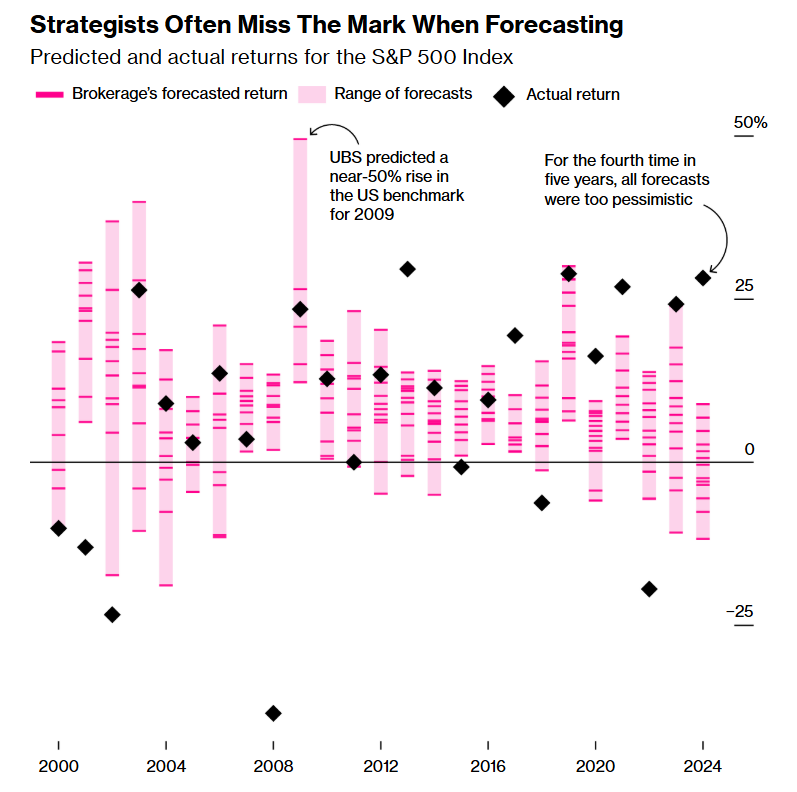
Why So Many 2025 Predictions Missed the Mark
Future predictions often confuse a successful demonstration with mass adoption. A robot performing one task on a stage is not the same as thousands of robots working safely in unpredictable homes. A driverless car completing a route is not the same as a nationwide transportation network. A fusion experiment producing encouraging results is not the same as a commercially competitive power station.
Real adoption depends on manufacturing, infrastructure, regulation, safety, affordability, public trust, maintenance, and demand. These factors move at different speeds. Software may improve every few weeks, while transportation laws, factories, power grids, and consumer behavior can take years or decades to change.
Predictions also attract attention when they are bold. “Technology will improve gradually and reach selected markets” may be accurate, but it does not produce the same excitement as “Your toaster will become sentient by August.”
Experience-Based Lessons from Watching 2025 Predictions
The Prototype Trap
One of the most useful experiences when evaluating future technology is learning to separate a prototype from a product. A polished demonstration can create the impression that commercial release is only months away. In practice, the final 10% of development may involve safety testing, supply chains, reliability, repairs, customer support, regulatory approval, and cost reduction.
This pattern appeared repeatedly in discussions about autonomous vehicles, humanoid robots, flying taxis, and fusion energy. The technology did not have to be fake for the timeline to be unrealistic. A prototype proves that something can work under certain conditions. A mass-market product must work repeatedly, affordably, and safely when ordinary people use it in ways the engineers never expected.
The “Available Somewhere” Problem
Another common experience was seeing a technology described as available when it was actually limited to a few locations, customers, or test programs. A person living in one neighborhood might hail a driverless car, while someone in another state could not access the service at all.
National headlines often flattened these differences. “Robotaxis are here” was technically true, but “robotaxis are available to most Americans” was not. The same distinction applied to four-day workweeks, virtual reality offices, advanced charging networks, and passwordless logins. Early availability represented progress, but geography and eligibility mattered.
The Cost Reality Check
Consumers frequently experienced the gap between what technology could do and what they could reasonably afford. A futuristic product might exist, but high purchase prices, subscriptions, specialized maintenance, accessories, or infrastructure could prevent widespread adoption.
This was especially relevant for electric vehicles, mixed-reality headsets, household robots, and air taxis. A technology becomes socially transformative only when enough people can obtain it without treating the purchase like a small corporate merger.
Human Habits Are Surprisingly Durable
People often assume that a superior technology will immediately eliminate an older one. Actual experience suggests that old and new systems coexist for long periods. Digital payments grew while cash remained useful. Passkeys expanded while passwords survived. Electric cars gained market share while gasoline vehicles continued selling.
Consumers value familiarity, reliability, compatibility, and convenience. They may resist changing a system that already works, even when a newer option appears more advanced. This is not always irrational. A cash payment does not require a battery, a gas vehicle may fit a rural driver’s needs, and a familiar password may work on devices that do not yet support newer authentication methods.
Progress Is Usually Less Cinematic Than Expected
The biggest lesson from 2025 was that progress often arrived quietly. AI tools assisted workers instead of instantly eliminating entire professions. Autonomous vehicles expanded one city at a time. Engineers refined spacecraft, aircraft, robots, and energy systems through repetitive testing rather than dramatic overnight breakthroughs.
That kind of progress can look disappointing beside ambitious predictions, but it is often healthier. Transportation, finance, energy, labor, and cybersecurity affect millions of people. Slower deployment allows organizations to identify failures, improve standards, train workers, build infrastructure, and earn public trust.
The experience of following 2025 forecasts therefore encouraged a more practical question. Instead of asking whether a futuristic technology would completely transform society within 12 months, it was more useful to ask where it would work first, who could access it, what obstacles remained, and what measurable improvement was realistic.
That approach may sound less thrilling, but it produces better expectations. It also reduces the chance of purchasing an expensive gadget because someone on the internet promised it would change civilization before the next software update.
Conclusion
Most of the ideas on this list were not foolish. Astronauts will travel farther into space, autonomous transportation will expand, AI will reshape employment, fusion research will continue, and robots will become more capable. The mistake was expecting complicated systems to become universal within one calendar year.
Technological change rarely follows a clean schedule. It advances through experiments, delays, regulations, failed products, unexpected breakthroughs, and meetings that could have been emails. The most reliable prediction about the future is that it will arrive unevenly.
So, what probably did not happen in 2025? The future did not arrive all at once. It showed up in pieces, asked for additional testing, and promised to circle back after the next funding round.
Note: This article is a retrospective, evidence-based analysis of predictions associated with 2025. Speculative claims are presented as forecasts rather than guaranteed outcomes.