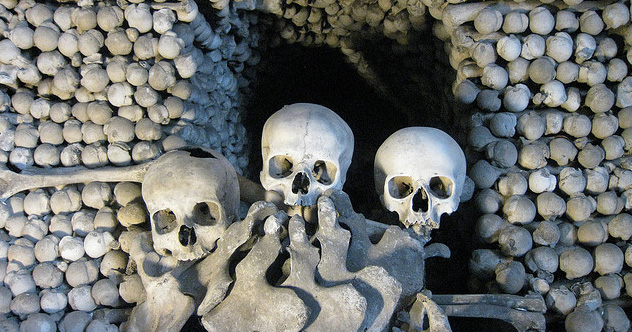
Note: This article discusses religious artifacts respectfully. Many relics are sacred objects of devotion for believers, while their historical provenance and authenticity can vary by tradition, documentation, and scholarly interpretation.
Churches are famous for stained-glass windows, choirs, candlelight, and the occasional organ that could wake a sleeping medieval king. But some churches also preserve relics so unusual that first-time visitors may briefly wonder whether they walked into a cathedral, a history museum, or the world’s most solemnly decorated curiosity cabinet.
For centuries, Christian relics have connected believers with saints, martyrs, biblical events, and the physical history of faith. A relic may be a bodily remain, an object owned by a saint, or an item associated with a sacred event. To many pilgrims, these objects are not spooky souvenirs from the past. They are tangible reminders of sacrifice, devotion, courage, healing, and spiritual memory.
Still, modern visitors can be forgiven for doing a double take when a church displays a preserved tongue, a skull wearing flowers, a heart in a gold reliquary, or chains believed to have restrained an apostle. The stories behind these objects are often stranger than fiction, except they are rooted in real places, real religious traditions, and centuries of human history.
Here are 10 of the strangest church relics on public display, along with the stories that make them much more meaningful than their initial shock value.
Why Church Relics Fascinate People
Relics have occupied an unusual place in religious history. They are deeply spiritual for believers, historically valuable for scholars, and undeniably intriguing for travelers. In Catholic and Orthodox traditions, relics are often associated with saints whose lives were considered examples of faith, service, endurance, or martyrdom.
In the Middle Ages, relics also shaped cities. A church that possessed an important relic could attract pilgrims, donations, artists, merchants, and enough visitors to make the local innkeeper feel spiritually blessed by the tourism economy. Some relics were carefully authenticated and documented; others became subjects of debate, legend, or skepticism.
Today, the most striking relics are often displayed in ornate reliquaries made of gold, silver, glass, crystal, wood, or carved stone. These containers turn an object into a focal point for prayer and remembrance. The result can feel solemn, beautiful, odd, emotional, and slightly surreal all at once.
10 Of The Strangest Church Relics On Public Display
1. The Tongue of Saint Anthony of Padua
At the Basilica of Saint Anthony in Padua, Italy, visitors can see one of Christianity’s most famous and unusual relics: the tongue of Saint Anthony. Anthony was a 13th-century Franciscan preacher renowned for his sermons, theological knowledge, and ability to communicate with ordinary people.
According to church tradition, when his remains were examined decades after his death, his tongue was found to be remarkably preserved. For believers, this became a powerful symbol of his preaching ministry. The relic is kept in an elaborate reliquary in the Basilica’s Treasury Chapel, alongside other remains associated with the saint.
It is hard to think of a more literal tribute to a gifted speaker. Most people leave behind speeches, books, or maybe a few awkward voicemail messages. Saint Anthony left behind a relic tied directly to the part of his body that made him famous.
2. The Head of Saint Catherine of Siena
The Basilica of San Domenico in Siena, Italy, houses the mummified head of Saint Catherine of Siena. Catherine was a Dominican mystic, writer, reformer, and influential religious figure during the 14th century. She is one of the patron saints of Italy and Europe.
Her body was buried in Rome, but Siena, her hometown, sought to preserve a significant relic connected to its beloved saint. The result is one of the most startling displays in European religious history: Saint Catherine’s head rests in a reliquary inside a chapel dedicated to her.
There is something almost medievally practical about it. Siena wanted a piece of its saintly hometown hero, and history responded with, “Well, this is going to be memorable.” The relic remains a major destination for pilgrims and visitors who want to understand Catherine’s lasting influence on faith, politics, and Italian religious culture.
3. The Right Arm of Saint Francis Xavier
The Church of the Gesù in Rome preserves the right forearm and hand of Saint Francis Xavier, one of the most famous Jesuit missionaries in history. Xavier traveled extensively across Asia during the 16th century and became known for his missionary work in India, Southeast Asia, and Japan.
The relic is displayed in a richly decorated reliquary near the altar of the Jesuit mother church. Tradition connects the arm to the countless baptisms Xavier performed during his missionary journeys. The rest of his body is associated with the Basilica of Bom Jesus in Goa, India, making his relics an international map of devotion.
It is one of those relics that makes history feel unexpectedly physical. You are not simply reading about a missionary who crossed oceans. You are standing near a relic associated with the hand that performed the rituals described in those histories.
4. The Body of Saint Bernadette of Lourdes
Saint Bernadette Soubirous, the young woman associated with the Marian visions at Lourdes, is displayed in a glass shrine at the Chapel of Saint Bernadette in Nevers, France. Her body has become one of the most widely recognized examples of an “incorrupt” saint in Catholic popular devotion.
Bernadette died in 1879, and her body was later exhumed as part of the canonization process. Her face and hands were covered with carefully made wax coverings for preservation and presentation, a detail sometimes missed in dramatic online descriptions of the shrine.
Even with that context, seeing a person from the 19th century resting in a glass coffin can be emotionally powerful. It is a reminder that relics are not abstract symbols. They belonged to real people whose lives, illnesses, hopes, and struggles were once as immediate as anyone’s today.
5. The Head of Saint Oliver Plunkett
At Saint Peter’s Church in Drogheda, Ireland, visitors can view the preserved head of Saint Oliver Plunkett. Plunkett was an Irish archbishop who was executed in 1681 during a period of severe religious and political conflict.
His head was rescued after his execution and eventually placed in a shrine at Saint Peter’s Church. Today, it remains one of Ireland’s most solemn and recognizable relics. The shrine is not presented as a horror attraction. Instead, it serves as a memorial to a man remembered for faith, endurance, and reconciliation.
That context matters. The relic may sound startling in a listicle, but standing before it is less like visiting a strange museum display and more like encountering a physical memorial from a painful chapter in Irish history.
6. The Skull of Saint Valentine
Valentine’s Day is usually associated with flowers, chocolates, dramatic restaurant reservations, and people pretending they enjoy heart-shaped candy. But in Rome’s Basilica of Santa Maria in Cosmedin, a relic traditionally identified as the skull of Saint Valentine sits behind glass, decorated with flowers.
The historical identity of Saint Valentine is complicated because several early Christian martyrs carried that name. Different churches claim relics associated with Valentine, and historians continue to sort through the traditions surrounding them.
Still, the Roman skull relic has become famous because it adds an unexpected gothic twist to February 14. Cupid may have a bow, but Saint Valentine’s relic has a flower crown and a considerably more dramatic origin story.
7. The Heart of Saint John Vianney
The Basilica of Ars in France preserves the heart of Saint John Vianney, also known as the Curé of Ars. Vianney was a 19th-century parish priest celebrated for his dedication to pastoral care, prayer, confession, and service to his village.
His heart is kept in a reliquary and has become one of the most important relics associated with the patron saint of parish priests. The object may sound medically unusual to modern ears, but its symbolism is straightforward within the religious tradition: the heart represents compassion, devotion, love, and spiritual commitment.
In a world where people use heart emojis for pizza, memes, and questionable dating profiles, this relic offers a much older and more serious meaning of the heart as the center of one’s moral and spiritual life.
8. The Chains of Saint Peter
Rome’s Basilica of San Pietro in Vincoli, which translates to Saint Peter in Chains, preserves chains traditionally associated with the imprisonment of the Apostle Peter. The relics are displayed beneath the church altar, where visitors can view the chains through protective glass.
The chains are linked by tradition to Peter’s imprisonment in Jerusalem and Rome. Whether every detail of the story can be historically verified is a separate question, but the relic has been central to the identity of the church for centuries.
Unlike a skull or preserved body part, chains may seem less visually shocking. Yet they may be among the most emotionally direct relics on this list. A chain does not need much explanation. It immediately suggests captivity, danger, endurance, and the cost of conviction.
9. The Manger Relic at Santa Maria Maggiore
Rome’s Basilica of Santa Maria Maggiore preserves wooden fragments traditionally believed to come from the manger in Bethlehem where Jesus was laid after his birth. The relic is sometimes called the “Holy Crib” and is associated with one of Christianity’s most familiar stories.
Unlike relics connected to saints’ bodies, these pieces of wood are strange in a quieter way. They are ordinary material connected to an extraordinary claim. A few aged fragments become meaningful not because they are visually impressive, but because tradition links them to the Nativity.
That is the mystery of relics in general. A piece of wood can be just wood. A chain can be just metal. A small bone can be just a fragment. But once a community connects an object to faith and memory, its meaning becomes much larger than its size.
10. The Body of Saint Rita of Cascia
At the Basilica of Saint Rita in Cascia, Italy, the body of Saint Rita is displayed in a glass shrine. Rita, who lived during the late Middle Ages, is widely known as the patron saint of difficult causes, troubled marriages, and seemingly impossible situations.
Her life story includes hardship, family conflict, widowhood, religious devotion, and a reputation for patience under difficult circumstances. Her preserved body became an important focus of pilgrimage after her death.
For visitors, Saint Rita’s shrine can be both startling and moving. It combines a visually unusual relic with a story that remains relatable: life can be difficult, people can disappoint you, and sometimes you need enough patience to qualify for sainthood before lunch.
What These Strange Church Relics Really Represent
It is easy to approach church relics with a mixture of curiosity, disbelief, and a healthy amount of raised eyebrow. Some relics are undeniably unusual by modern standards. Yet reducing them to “weird things in glass boxes” misses the deeper story.
These objects often represent memory. They preserve the legacy of people who were admired for courage, charity, scholarship, sacrifice, or devotion. They also reveal how communities have tried to keep history close. Before photographs, documentaries, podcasts, and social media archives, relics offered a physical link to the people and events communities wanted to remember.
Relics also reveal a great deal about art and craftsmanship. Many reliquaries are masterpieces of metalwork, carving, glassmaking, embroidery, and architecture. The container itself often tells a story about the era that created it. A saint’s relic might be housed in a gold arm, a jeweled skull, a crystal coffin, or a miniature chapel designed to inspire prayer.
Whether you view relics through faith, art history, anthropology, or curiosity, they remain powerful reminders that people have always searched for ways to make the past feel close enough to touch.
Experiences Related to Strange Church Relics: What It Feels Like to Encounter Them
Seeing a church relic in person is very different from scrolling past a photo online. On a screen, a reliquary can look like an unusual historical object or a strange travel fact designed to win a trivia contest. In a church, however, the atmosphere changes everything.
You may enter through a heavy wooden door, hear footsteps against stone floors, and notice candles flickering near a side chapel. The building may smell faintly of incense, old wood, wax, and centuries of dust that has somehow achieved seniority over everyone in the room. Then, after passing paintings, altars, statues, and stained glass, you find the relic.
For some visitors, the first reaction is surprise. A skull behind glass, a preserved hand, or a body in a shrine can feel startling because modern life usually keeps death hidden. Churches containing relics do the opposite. They place mortality directly in view, but not necessarily in a frightening way. The message is often about remembrance, courage, spiritual endurance, and the idea that a person’s life can continue to inspire others long after death.
For believers, a relic may become a focus for prayer. The experience can be deeply personal. Someone may stand quietly near a shrine, light a candle, whisper a prayer, or simply reflect on a saint’s life. A relic associated with Saint Rita may comfort someone facing a difficult family situation. A relic tied to Saint Anthony may mean something special to a person seeking hope, guidance, or help recovering something important.
For history lovers, relics create a different kind of experience. They make long-ago events feel startlingly close. Reading about a 13th-century preacher is one thing. Seeing a reliquary that holds an object associated with that preacher is another. Suddenly, the past is not just a chapter in a book. It is in the room with you, behind glass, surrounded by centuries of art and prayer.
For travelers, the best approach is respectful curiosity. Churches are active places of worship, even when they also welcome tourists. Speaking quietly, following photography rules, dressing appropriately, and avoiding jokes near people who are praying goes a long way. The relic may be strange to you, but it may be deeply sacred to someone standing nearby.
There is also a lesson in slowing down. Modern tourism often encourages people to rush from landmark to landmark, taking a photo, checking a box, and moving on before the next bus leaves. Relic chapels encourage the opposite. They invite pause. They make visitors think about history, belief, mortality, art, and the unusual ways humans preserve meaning.
Even skeptical visitors may leave with a new appreciation for the role relics have played in shaping cities, churches, pilgrimages, and cultural memory. You do not have to share a particular belief to recognize the emotional weight of an object that has drawn people for hundreds of years.
That is the strange magic of church relics. They can be unsettling, beautiful, confusing, moving, and unforgettable all at once. In a world full of temporary trends, they are objects that have survived because generations of people believed they were worth protecting.
Conclusion
The strangest church relics on public display are more than unusual artifacts. They are pieces of religious history, artistic tradition, and collective memory. From Saint Anthony’s preserved tongue to Saint Catherine’s head, Saint Valentine’s skull, and the chains associated with Saint Peter, these relics show how faith communities have remembered extraordinary lives and sacred stories across centuries.
Some visitors see mystery. Others see history. Others see devotion expressed in a form that feels almost impossible to ignore. Whatever your perspective, these church relics prove that the past is not always tucked safely inside textbooks. Sometimes, it is displayed beneath glass, surrounded by candles, and quietly asking you to pay attention.