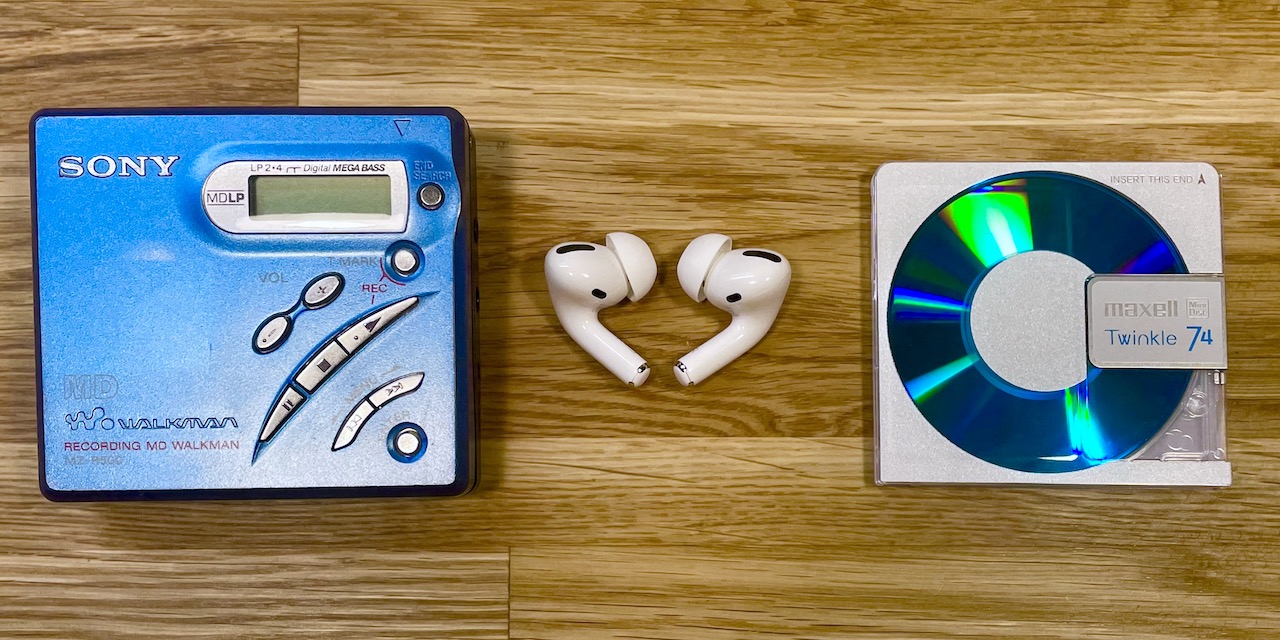
There are two kinds of people in the portable audio world: people who forgot MiniDisc existed, and people who still look at a tiny Sony MiniDisc Walkman and whisper, “This was the future.” The second group is correct, naturally. MiniDisc was compact, recordable, durable, weirdly stylish, and packed with that classic Sony confidence that made every button feel like it had been designed by a secret committee of tiny audio engineers wearing lab coats.
But time has a mischievous sense of humor. The MiniDisc Walkman was born into a world of wired headphones, line-in recording, optical cables, AA batteries, and backpacks full of mystery adapters. Today, many premium headphones and earbuds are wireless only. That creates a hilarious little problem: a device once considered futuristic now needs help talking to modern headphones. The solution? Put Bluetooth inside the MiniDisc Walkman itself.
The phrase “Wireless MiniDisc Walkman Has Bluetooth Inside” sounds like a retro-tech fever dream, but it is a real and surprisingly clever hardware modification. By placing a compact Bluetooth transmitter module inside a Sony MiniDisc portable player, a vintage Walkman can send audio wirelessly to Bluetooth headphones or speakers without an awkward dongle hanging from the headphone jack like a tiny electronic backpack.
Why Add Bluetooth to a MiniDisc Walkman?
The simplest answer is convenience. A MiniDisc Walkman already has excellent pocket appeal. It is smaller than a portable CD player, more tactile than a phone, and more charming than a playlist algorithm that keeps recommending the same three songs because you once listened to a sad indie track at 2 a.m.
External Bluetooth transmitters work, but they usually plug into the headphone output and dangle outside the player. That can make the setup bulky, fragile, and slightly ridiculous. The whole beauty of a MiniDisc Walkman is its tidy, compact design. Add a dangling adapter, and suddenly your elegant retro player looks like it is undergoing outpatient surgery.
An internal Bluetooth mod keeps the original silhouette mostly intact. The player still looks like a MiniDisc Walkman, but it can pair with wireless headphones. That makes it easier to carry, easier to use on the move, and much more compatible with today’s listening habits.
The MiniDisc Walkman: A Tiny Legend With Big Personality
Sony introduced MiniDisc in the early 1990s as a compact, recordable audio format. It used a small magneto-optical disc protected by a plastic cartridge, which made it feel sturdier than a naked CD and more futuristic than a cassette. The format stored audio using Sony’s ATRAC compression system, and later MiniDisc models supported extended recording modes such as MDLP.
The Sony MZ-R500 is a particularly interesting model for Bluetooth modification. It is a portable MiniDisc recorder with MDLP support, G-Protection anti-shock technology, optical and analog line input, and a 3.5 mm headphone output. It was affordable compared with some higher-end units, which makes it less terrifying to modify than a rare collectible model that should probably be handled with gloves and emotional support.
The MZ-R500 also has a practical layout for modification. Its front casing provides a small but usable space near the controls, and one of its buttons can be repurposed for Bluetooth pairing. That does not mean the project is easy. MiniDisc players are dense, delicate machines, and opening one can feel like disassembling a mechanical watch while a cat watches from the table.
How the Internal Bluetooth Mod Works
The basic idea is straightforward: take the audio signal from the MiniDisc player, feed it into a Bluetooth transmitter, power that transmitter from the player’s internal power system, and hide the transmitter board inside the casing. Once paired, the Walkman sends audio to Bluetooth headphones or a wireless speaker.
In practice, the project requires careful soldering, electrical planning, insulation, and patience. A compact Bluetooth transmitter board must be stripped down to reduce thickness. Extra components such as batteries, ports, LEDs, and casing parts may need to be removed so the module can physically fit inside the MiniDisc player.
The audio signal is usually tapped from points on the player’s circuit board, then wired into the Bluetooth transmitter’s input. Power may be regulated through a compact voltage regulator so the Bluetooth module receives a stable operating voltage. Kapton tape and careful wire routing help prevent shorts, because nothing ruins a retro audio afternoon faster than accidental smoke.
Repurposing a Button for Pairing
One clever part of the mod is reusing an existing button on the MiniDisc unit. On the Sony MZ-R500, the “End Search” button can be repurposed as a Bluetooth power or pairing button. This is elegant because it avoids drilling new holes into the casing. The Walkman keeps its original look, while one button quietly takes on a modern secret identity.
For the user, the result feels natural. Turn on the player, press or hold the reassigned button, pair headphones, and listen. No external transmitter. No extra cable. No adapter flopping around like a confused robot tail.
The Trade-Off: Recording May Be Sacrificed
Here is the part collectors will either understand or dramatically clutch their pearls over: some internal Bluetooth MiniDisc mods require removing the recording head and related hardware to make physical room for the Bluetooth module. That means the device may become playback-only.
For some users, this is a fair trade. Many MiniDisc fans already record discs using another deck or a separate NetMD machine, then use a portable player mainly for listening. For others, losing recording functionality defeats the purpose of owning a recorder. There is no universal answer. It depends on whether the Walkman is a daily-use listening device, a collector’s item, or a beloved gadget that must remain original at all costs.
If the MiniDisc unit is rare, pristine, or emotionally priceless, an external Bluetooth transmitter may be the smarter choice. If the unit is common, already worn, or destined to be a practical wireless player, an internal mod can make excellent sense.
Bluetooth Audio Quality: What to Expect
A Bluetooth MiniDisc Walkman is not about turning MiniDisc into a laboratory-grade hi-res audio source. It is about making a vintage format easier to enjoy with modern headphones. Bluetooth audio uses codecs to compress and transmit sound wirelessly. Common codecs include SBC, AAC, aptX, aptX HD, aptX Adaptive, and LDAC, depending on the transmitter and headphones.
Most small Bluetooth transmitters support basic stereo audio over A2DP. Some support better codecs, but compatibility depends on both the transmitter and the receiving headphones. If one device supports a fancy codec and the other does not, they will fall back to a shared option. Bluetooth is polite like that, but also slightly disappointing at parties.
For casual listening, a good transmitter can sound surprisingly enjoyable. MiniDisc audio already has a distinct character, especially on older ATRAC recordings. Sending that audio over Bluetooth adds another layer of compression, but in real-world listening, many users will care more about convenience than theoretical purity.
Latency Is Usually Not a Big Problem
Latency matters when watching video or gaming because audio needs to match on-screen action. With MiniDisc playback, latency is far less important. You are listening to music, not trying to sync dialogue with a movie. Even if Bluetooth adds a slight delay, the song still starts, plays, and ends normally. Your Walkman does not know it is late. It is too cool to care.
Why MiniDisc Still Has Fans
MiniDisc has never fully disappeared from the hearts of portable audio enthusiasts. Part of the appeal is tactile. You hold a physical disc. You label it. You load it into a player. You hear the mechanism wake up. It is a ritual, and rituals matter. Streaming is convenient, but it can feel invisible. MiniDisc is delightfully visible.
There is also the joy of limitation. A MiniDisc holds an album, a mixtape, a live recording, or a carefully selected collection of tracks. You do not have infinite choice. You have the disc you brought. That can make listening feel more intentional. Instead of skipping through 80 million songs, you settle into one tiny square of music history.
Adding Bluetooth does not erase that charm. It simply removes one modern obstacle. The disc still spins. The player still clicks. The display still looks wonderfully early-2000s. The difference is that your wireless headphones can now join the party.
Internal Bluetooth vs. External Bluetooth Adapter
Before anyone grabs a soldering iron with heroic confidence, it is worth comparing the two main options.
Internal Bluetooth Mod
An internal Bluetooth mod is cleaner, more compact, and more satisfying from a design perspective. It preserves the pocketable feel of the Walkman and creates a device that feels almost factory-made, assuming the work is done neatly. It is also a fantastic project for experienced electronics hobbyists who enjoy reverse engineering, soldering, and solving tiny spatial puzzles.
The downside is risk. You may damage the player. You may lose recording ability. You may introduce interference, battery drain, or noise if the wiring is not carefully planned. This is not a beginner project. It is the kind of project that rewards patience and punishes overconfidence with tiny screws rolling under the couch.
External Bluetooth Transmitter
An external Bluetooth transmitter is easier, safer, and reversible. Plug it into the headphone jack, pair your headphones, and enjoy. No surgery required. It also allows you to use the same transmitter with other devices, such as portable CD players, cassette players, old laptops, or anything else with a headphone output.
The downside is bulk. External transmitters can stick out from the player, strain the jack, or make the setup feel less elegant. For some users, that is perfectly acceptable. For others, it ruins the sleek MiniDisc magic.
What Makes the Mod Technically Interesting?
The magic is not just “Bluetooth inside old thing.” The interesting part is how the mod respects the original device while expanding its usefulness. The best retro-tech modifications do not turn vintage gear into something unrecognizable. They help old hardware survive in a world that changed around it.
The MiniDisc Walkman was never designed for Bluetooth. It was designed around wired output, physical media, and low-power portable operation. Integrating a Bluetooth transmitter means dealing with power constraints, audio signal levels, grounding, shielding, physical clearance, button mapping, and user control. Every millimeter matters.
Interference is another issue. Bluetooth modules can introduce audible noise if they are poorly isolated from the audio circuit. Some builders address this with careful grounding, physical separation, audio transformers, or revised wiring layouts. This is where the project moves from “fun gadget hack” to “serious small-electronics engineering.”
Who Should Try This Project?
This project is best for people who already have experience with electronics repair or modification. You should be comfortable opening small devices, reading board layouts, soldering fine wires, using a multimeter, insulating exposed connections, and troubleshooting unexpected behavior. A steady hand helps. So does the emotional maturity to walk away before midnight when one wire refuses to behave.
Beginners can still enjoy the idea, study the process, or start with simpler projects first. Practice soldering on scrap electronics. Learn how to identify power points and ground. Get comfortable with heat, flux, wire management, and continuity testing. A MiniDisc Walkman is not the ideal first patient.
Real-World Experience: Living With a Bluetooth MiniDisc Walkman
Using a wireless MiniDisc Walkman feels like stepping into an alternate timeline where the early 2000s made one extra leap before the iPod conquered the world. You slide a MiniDisc into the player, hear the mechanism spin, press play, and then the sound appears in your Bluetooth headphones. It is familiar and strange at the same time, like seeing a payphone accept Apple Pay.
The first experience most users notice is freedom. No headphone cable snagging on a jacket zipper. No wire catching on a backpack strap. No sudden earbud yank when you reach across a desk. A MiniDisc player was always portable, but Bluetooth makes it feel more relaxed in modern life. You can place it on a table and listen through a speaker across the room. You can walk around the house with wireless headphones while the Walkman sits safely on a shelf, looking smug and collectible.
The second experience is emotional. MiniDisc is not just another storage format. It has personality. The discs have labels, colors, cases, and handwritten memories. A Bluetooth MiniDisc Walkman lets that personality survive without forcing the user to abandon modern comfort. It keeps the ritual while removing one inconvenience.
There are quirks, of course. Pairing can take a moment. Some headphones reconnect more gracefully than others. Battery life may change depending on how the transmitter is powered. If the mod uses a hidden internal module, there may be no visible Bluetooth status light, so the user has to learn the button behavior by feel. That can be charming or annoying depending on your patience level and caffeine intake.
Sound quality is generally good enough for the spirit of the project. Is it the purest possible MiniDisc listening experience? No. A quality wired headphone connection is still the cleaner path. But the wireless version has its own appeal. It turns the Walkman into something you actually reach for more often. That matters. The best audio device is not always the one with the most perfect signal chain; sometimes it is the one that makes you want to listen.
In daily use, the Bluetooth MiniDisc Walkman becomes a conversation starter. People see the disc, the player, and the wireless headphones, then pause as their brain tries to reconcile decades of technology at once. It is retro, modern, practical, and slightly absurd. In other words, it is perfect.
The mod also changes how you think about old electronics. Instead of treating vintage devices as museum pieces, it invites you to see them as living tools. They can be repaired, adapted, and enjoyed. Not every device needs to be upgraded, and not every modification is worth the trade-off. But when done thoughtfully, adding Bluetooth inside a MiniDisc Walkman is not vandalism. It is a love letter written in solder.
Conclusion
A wireless MiniDisc Walkman with Bluetooth inside is more than a novelty. It is a smart bridge between physical media nostalgia and modern listening convenience. The project shows why retro tech still matters: old devices often have excellent design, satisfying controls, and a sense of character that newer gadgets sometimes lack.
Adding Bluetooth to a Sony MiniDisc Walkman can make the player easier to use with modern headphones, but it comes with real trade-offs. The mod requires skill, planning, and a willingness to alter the original hardware. For collectors, an external adapter may be safer. For tinkerers, the internal version is a beautiful little engineering challenge.
MiniDisc may no longer be mainstream, but it refuses to become boring. With Bluetooth hidden inside, the MiniDisc Walkman gets a second life: still spinning tiny discs, still making music feel physical, and now doing it without a headphone cable. Somewhere, a 2001 electronics catalog is smiling.