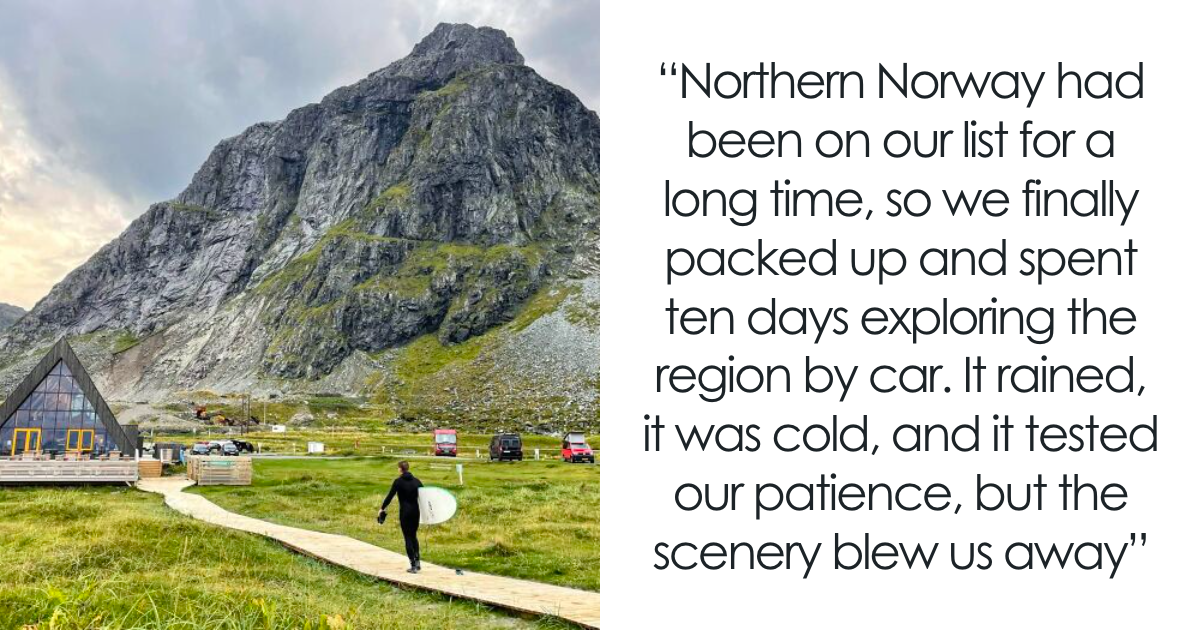
Northern Norway does not ease you gently into its scenery. It grabs the horizon, piles mountains on top of fjords, adds beaches that look suspiciously Caribbean, and then leaves the sun switched on at midnight. In winter, it replaces that endless daylight with snow, deep-blue twilight, and the possibility of green auroras cartwheeling above your cabin.
This is a region where a routine drive can become a three-hour photography session because every bend reveals another fishing village, granite ridge, mirror-still inlet, or sea eagle behaving as though it has been hired by the tourism board. From Tromsø and the Lyngen Alps to Senja, Andøya, and the Lofoten Islands, Northern Norway delivers scenery with theatrical confidence.
We rounded up 10 of the most magical Northern Norway views to help you build an unforgettable Arctic itinerary. Some require only a short walk from the car. Others involve a hike, cable-car ride, ferry, or boat trip. All of them provide a convincing reason to move this destination from your “someday” list to your “start checking flights” list.
Why Northern Norway Feels Like Another Planet
Northern Norway stretches across a vast section of coastline above the Arctic Circle. Its landscapes were shaped by glaciers, ocean weather, and mountains that frequently rise almost straight from the sea. Yet the region is not empty wilderness. Fishing villages, harbors, cafés, farms, galleries, and working communities are woven into the scenery.
That combination is what makes a Northern Norway road trip so memorable. You may spend the morning on a white-sand beach, eat lunch beside racks of drying fish, climb to a mountain viewpoint in the afternoon, and watch the midnight sun from a harbor after dinner. Your body may ask why it is hiking at 11:30 p.m. Your camera will have no objections.
10 Magical Views From a Northern Norway Adventure
1. Tromsø From Storsteinen
The panorama from Storsteinen is the perfect introduction to Northern Norway. From the mountainside above Tromsø, the city appears as a compact island settlement surrounded by channels, fjords, bridges, and layered peaks. The contrast is striking: urban streets and waterfront buildings sit in the middle of a landscape that looks gloriously untamed.
The Fjellheisen cable car offers the easiest route upward, while active travelers can use the seasonal Sherpa Steps when conditions permit. In summer, visit late in the evening to see warm sunlight slide across Tromsøya and the surrounding mountains. During the dark season, the elevated viewpoint may offer northern lights above the city, although clear skies and aurora activity are never guaranteed.
Bring an extra layer. The temperature at the top can feel considerably cooler than it did beside the harbor, because Arctic wind enjoys reminding visitors who is in charge.
2. Sommarøy and Hillesøy From Ørnfløya
About an hour from Tromsø, Sommarøy looks like someone dropped a handful of green islands into turquoise water and then decorated them with white beaches. The short hike to Ørnfløya provides a wide view across Sommarøy, Hillesøy, Brensholmen, distant Senja, and the open Norwegian Sea.
The elevation gain is modest compared with many Northern Norway hikes, making this an excellent choice for travelers who want a major panorama without signing an emotional contract with their quadriceps. From the top, small bridges connect the islands below, boats leave faint lines in the water, and mountain silhouettes stretch toward the horizon.
On a calm summer day, the colors can look almost tropical. Then you dip a hand into the water and remember that the word “Arctic” was not included for decorative purposes.
3. Bergsfjorden From the Bergsbotn Platform on Senja
Norwegian Scenic Route Senja is packed with dramatic stops, but the Bergsbotn platform delivers one of its finest wide-angle views. The long wooden structure projects above the slope, revealing Bergsfjorden, scattered islands, steep mountains, and narrow strips of settlement beside the water.
The viewpoint is especially rewarding because it does not demand a long hike. You can step out of the car, walk onto the platform, and immediately understand why Senja is often described as a less crowded alternative to Lofoten. The landscape feels enormous, yet fishing communities below add scale and a sense of human continuity.
Cloudy weather does not ruin this stop. Low clouds can wrap around the mountains, creating shifting curtains of mist. Sunshine produces blue water and sharp detail; storm light creates something moodier and arguably more cinematic.
4. The Okshornan Peaks From Tungeneset
A short drive from Bergsbotn, Tungeneset offers a completely different perspective. A wooden walkway leads across coastal rocks toward a clear view of the jagged Okshornan mountain range, sometimes called the Devil’s Teeth.
The dark peaks rise beyond the fjord like a stone crown. Tide pools and wet rocks reflect the mountains, particularly when the wind settles. At sunset, the sharp ridges may be outlined against pastel skies. In autumn or winter, fresh snow makes every tooth of the range appear even more dramatic.
This is also a place to slow down. Walk beyond the first photo position, listen to waves moving through the rocks, and watch how quickly the light changes. Northern Norway does not always present a single perfect moment. It often provides 20 different versions of the same view in half an hour.
5. Bleik Beach and Bleiksøya on Andøya
The west coast of Andøya faces the Norwegian Sea with little concern for subtlety. Along the Norwegian Scenic Route, mountains, wetlands, beaches, and open ocean appear in quick succession. Bleik is one of the most memorable stops.
The village sits beside a long pale beach, while the distinctive island of Bleiksøya rises offshore. On clear days, the view combines blue water, golden or white sand, green slopes, and distant mountain walls. When weather rolls in, the exposed coast becomes wild and energetic, with surf pushing toward shore under rapidly moving clouds.
Andøya is also known for seabirds and marine wildlife. Respect viewing distances and choose responsible local operators for wildlife excursions. The animals are not supporting actors in your vacation photos, even when they demonstrate suspiciously good timing.
6. Reine, Sakrisøy, and Hamnøy in Lofoten
Few landscapes symbolize Northern Norway as clearly as the fishing villages around Reine. Red and yellow cabins stand on rocky islands beneath steep mountains, while bridges cross water that may appear blue, silver, or nearly black depending on the weather.
Hamnøy is particularly famous for its red rorbuer cabins beneath Festhelltinden. Nearby Sakrisøy adds ocher-colored buildings and views across Reinefjorden. Reine itself sits among some of Lofoten’s most imposing peaks, creating a scene that seems designed for postcards, desktop backgrounds, and travelers who promised they were “not going to take too many photos.”
You do not need to climb Reinebringen to appreciate the area. Roadside pullouts, bridges, harbor walks, and lower viewpoints provide exceptional scenery. Use designated parking areas and never stop in the road, no matter how aggressively the mountain appears to be demanding a photograph.
7. Haukland and Uttakleiv Beaches
Haukland Beach is one of Lofoten’s most accessible coastal showpieces. Pale sand curves beneath green mountains, and clear water shifts from turquoise near shore to deeper blue farther out. The beach is close to Leknes and can be reached without a demanding hike.
An old coastal road connects Haukland with Uttakleiv, offering a scenic walk between two very different beaches. Uttakleiv combines sand, rounded stones, grassy fields, and open views toward the northern horizon. In summer, it is a celebrated place to watch the midnight sun. During the darker months, it offers an unobstructed sky for aurora watching when conditions cooperate.
Facilities and parking are managed locally, so follow posted instructions and pay required fees. A beautiful beach remains beautiful only when visitors avoid trampling vegetation, leaving trash, or treating private farmland as an improvised campground.
8. Henningsvær From the Festvågtinden Area
Henningsvær is built across small islands reaching into Vestfjorden. At street level, it is a lively fishing village with docks, galleries, cafés, historic buildings, and a harbor channel framed by mountains. From above, its unusual geography becomes even more impressive.
The route toward Festvågtinden includes a lower viewpoint near Heiavannet that can provide an excellent outlook without requiring every traveler to continue to the summit. Below, Henningsvær’s islands, bridges, harbor, and famous soccer field form an intricate pattern in the sea.
The village is a protected cultural environment and a real community, not an outdoor movie set. Respect homes, parking restrictions, drone rules, and local businesses. The best Henningsvær experience includes time on foot at harbor level, where the smell of saltwater and working boats adds context that aerial photographs cannot capture.
9. The Lyngen Alps Across Lyngenfjord
East of Tromsø, the Lyngen Alps form one of Northern Norway’s most powerful mountain skylines. Snow frequently remains high on the peaks well into summer, while glaciers, valleys, and narrow ridges rise above the fjord.
The range can be viewed from roads, ferries, villages, and shoreline stops around Lyngenfjord. Reflections are possible when the water is calm, but even rough weather creates spectacular scenes as clouds wrap around the summits. Winter transforms the mountains into a major ski-touring destination, although avalanche terrain requires experience, proper equipment, current forecasts, and often a certified guide.
For non-climbers, there is no need to head upward. Watching the mountains from the opposite shore can be just as memorable, especially when low sunlight turns snowfields pink and gold.
10. Trollfjord From the Water
Trollfjord is best experienced from a boat. The narrow fjord cuts between steep mountain walls in the Lofoten and Vesterålen region, producing a dramatic sense of enclosure as vessels move from open water into the tight entrance.
From deck level, the cliffs appear much larger than they do on a map. Waterfalls may spill down rock faces, sea eagles sometimes circle overhead, and patches of snow remain in shaded gullies. Boat trips commonly depart from ports such as Svolvær or nearby communities, with options ranging from larger sightseeing vessels to faster rigid-inflatable boats.
Choose a responsible operator, wear the provided safety gear, and pack windproof clothing. It can feel calm beside the dock and surprisingly cold once the boat accelerates. The Arctic is very good at finding the one tiny gap between your scarf and jacket collar.
How to Plan a Northern Norway Scenic Adventure
Choose the Season by the Experience You Want
Summer offers long days, greener landscapes, open hiking trails, and the midnight sun. It is the easiest season for a road trip, but popular areas in Lofoten can become busy, especially in July. Booking accommodation and rental cars well ahead is wise.
Late summer and early autumn bring changing colors, fewer visitors, and the return of darker nights. This period can offer a combination of hiking and northern lights, although weather becomes increasingly unsettled.
Winter delivers snowy mountains, blue twilight, and aurora opportunities, but driving is more demanding. Travelers without experience on snow and ice should seriously consider guided tours, public transportation, or professional drivers. Spring can provide longer daylight, snowy peaks, and excellent winter activities, but mountain conditions still require caution.
Allow More Time Than the Map Suggests
A Tromsø, Senja, Andøya, and Lofoten itinerary deserves at least 10 to 14 days. Driving distances may look manageable, but narrow roads, ferries, weather, construction, wildlife, and irresistible photo stops slow everything down.
Seasonal ferries can connect Tromsø with Senja and Senja with Andøya, creating an outstanding island-hopping route. Schedules and vehicle capacity can change, so verify departures before traveling and arrive early. Buses, express boats, and ferries also make portions of the region accessible without a rental car.
Pack for Several Seasons Per Day
Bring a waterproof outer layer, warm mid-layer, hat, gloves, sturdy footwear, and a small daypack even in summer. Temperatures can change quickly near mountains and open water. Sunscreen and a sleep mask are useful during the midnight-sun period, while winter travelers need insulated clothing and traction appropriate to local conditions.
For photography, carry a lens cloth, spare batteries, and rain protection. Cold weather drains batteries quickly, and sea spray has never respected an expensive camera.
Treat Safety as Part of the Adventure
Check current weather, road, ferry, trail, and avalanche information before setting out. Tell someone your hiking plan, choose routes that match your ability, and turn around when conditions deteriorate. Use official parking spaces rather than road shoulders, particularly on narrow scenic routes.
Norway’s right to roam provides generous access to nature, but it comes with responsibilities. Respect private homes, farmland, wildlife, fire restrictions, and local camping rules. Carry out everything you bring in.
Why Northern Norway Should Be Your Next Adventure
Northern Norway offers more than a checklist of famous viewpoints. It provides the feeling of moving through a landscape that is constantly changing scale. A village may appear tiny beneath a mountain, while a fishing boat becomes a bright speck in an enormous fjord. A beach that looks tropical from above feels unmistakably Arctic when the wind arrives.
The region also rewards different travel styles. Hikers can climb above fjords. Road-trippers can follow national scenic routes. Photographers can chase reflections and changing light. Families can enjoy beaches, museums, wildlife tours, and accessible viewpoints. Travelers without cars can combine flights, buses, ferries, and coastal boats.
Most importantly, Northern Norway encourages unhurried travel. The best moments often occur between scheduled attractions: sunlight breaking through rain over Senja, a quiet harbor before breakfast, sheep blocking a minor road, or a ferry crossing beneath mountains that were hidden by clouds 20 minutes earlier.
The Experience Beyond the Viewpoints: 500 More Words From the Road
Time Starts Behaving Strangely
One of the first things travelers notice in summer is that normal timekeeping becomes almost useless. At 10 p.m., the light may still resemble late afternoon. You finish dinner, look outside, and decide that the reasonable next activity is apparently a two-hour beach walk.
The midnight sun creates a quiet energy. Roads become less crowded late in the evening, mountain faces glow warmly, and fishing villages settle into a calm that daytime visitors often miss. A sleep mask becomes essential unless you enjoy waking at 3 a.m. convinced that breakfast has been served without you.
Winter reverses the rhythm. Daylight becomes precious, blue twilight lingers, and activities are organized around short windows of usable light. After dark, attention turns upward. Even when the aurora does not appear, standing beneath a clear Arctic sky can feel wonderfully remote.
The Weather Becomes Part of the Story
Northern Norway teaches flexibility more effectively than any productivity seminar. A mountain may disappear behind cloud just as you reach the viewpoint. Rain may arrive horizontally. A calm beach can become a wind tunnel before you finish your sandwich.
Yet imperfect weather often produces the most interesting scenes. Mist gives the mountains mystery. Rain darkens rocks and intensifies green hillsides. Sudden sunlight creates rainbows over the water. Instead of building an itinerary around rigid photo deadlines, leave buffer days and revisit nearby viewpoints when conditions change.
The Roads Demand Patience
Driving here is rarely about speed. Roads twist around fjords, pass through tunnels, cross narrow bridges, and squeeze between mountains and sea. Sheep wander beside the pavement. Camper vans search for parking. Ferries establish their own schedule for your day.
That slower pace becomes part of the pleasure. Pull into designated viewpoints, make coffee from a thermos, and watch clouds move across the peaks. A journey that appears to require two hours on a navigation app may easily occupy half a day, especially when every second corner looks like the cover of an outdoor magazine.
The Villages Give the Scenery Meaning
It is tempting to focus only on mountains, but Northern Norway’s fishing communities make the journey richer. Rorbuer cabins, drying racks, workshops, boats, farms, galleries, and small cafés reveal how people have adapted to the coast for generations.
Eat locally when possible. Try Arctic seafood, fish soup, cinnamon buns, waffles, or regional specialties. Stay in locally operated accommodations and listen when residents explain parking, weather, or trail conditions. Their advice is usually more useful than the confident opinion of someone who visited once during perfect weather and immediately became an internet expert.
The Best Moment May Be the One You Do Not Photograph
After several days, the camera can become a reflex. Every reflection, red cabin, and pointed peak seems to demand documentation. Eventually, it is worth putting the device away.
Sit beside the fjord. Listen to gulls and waves. Watch a ferry move between islands or sunlight creep down a mountain wall. Northern Norway is visually spectacular, but its deeper appeal comes from space, silence, weather, and the sensation of being small without feeling insignificant.
That is why this region stays with travelers. The photographs preserve the views, but the pauses between them become the real adventure.
Conclusion
From Tromsø’s island panorama and Sommarøy’s turquoise channels to Senja’s sculpted viewpoints, Andøya’s open coast, and Lofoten’s mountain-wrapped fishing villages, Northern Norway provides an extraordinary concentration of natural beauty.
The journey requires preparation, patience, and respect for rapidly changing conditions. In return, it offers midnight light, snowy ridges, quiet beaches, working harbors, unforgettable ferry crossings, and roads where the scenery makes normal travel time almost irrelevant.
Come for the 10 magical views, but leave room for unplanned moments. Northern Norway’s greatest trick is convincing you that the next bend, cloud break, or patch of golden light might reveal something even better.
Note: Weather, trail access, ferry schedules, road conditions, parking rules, and attraction operating hours may change seasonally. Confirm current local information before departure and use qualified guides for unfamiliar winter, marine, or avalanche terrain.