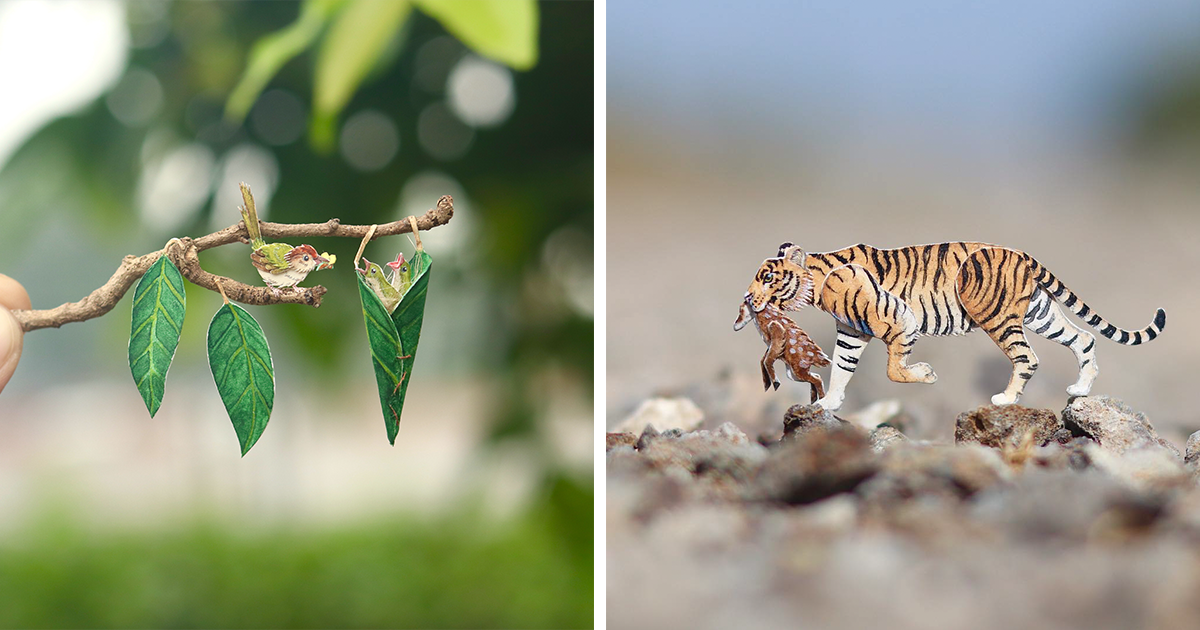
Paper art has been around for centuries, evolving from simple folding techniques to the intricate masterpieces we see today. One of the most fascinating and delicate forms of paper art is the creation of miniature paper animals. With precision and patience, artists create stunning creatures from simple sheets of paper. While the idea of creating paper cut art may sound simple, the process behind making these miniature animals can be quite the challenge. In fact, some designs can take anywhere from 4 to 6 hours to complete, and each piece is a true labor of love. So, what makes this form of art so unique? Let’s dive into the world of paper cut miniatures and explore the intricate process behind crafting these charming creatures.
Understanding the Art of Paper Cutting
Paper cutting is a craft that involves intricate and detailed cutting of paper to create stunning designs, usually by hand. It has been practiced in various cultures around the world, with roots in China, Mexico, and Europe, among other places. The technique involves using sharp tools to cut delicate shapes from a piece of paper. Artists can either use stencils or freehand designs to create their artwork. For miniature animals, precision and attention to detail are paramount, and the artist must have a steady hand and a sharp eye to bring their ideas to life.
Creating paper cut miniatures is different from regular paper cutting. These designs are much smaller in scale, and the level of detail required is far more advanced. These tiny animals often feature intricate details such as fur, feathers, and even tiny paws or beaks. It’s not just about cutting out a shape; it’s about layering the paper to bring texture and depth to the design.
The Time and Patience Behind Each Miniature
When creating these miniature animals, one of the most time-consuming aspects is the level of detail involved. Each tiny cut must be precise, and there is often a layering process where different cuts are made on multiple layers of paper. For example, to create the look of a fox’s fur, an artist might need to make several intricate cuts to represent the texture of its coat. Then, the different layers are stacked on top of each other to give the piece a three-dimensional effect. This process requires immense patience and a great deal of concentration.
On average, it takes between 4 to 6 hours to complete a single miniature animal. This includes the time to sketch the design, carefully cut out the shapes, and assemble the layers. The cutting itself can take several hours, as it’s not just about cutting out a shape but about adding fine details that capture the essence of the animal. Whether it’s the graceful wings of a bird or the tiny toes of a bunny, every small cut adds to the overall impact of the artwork.
Factors That Impact the Time Needed
- Size of the Animal: Larger animals may take more time to cut out, but the intricate details found in smaller animals often make them more time-consuming to craft.
- Detail of the Design: The more detailed the design, the longer it takes to complete. Artists often add layers to create shadows and textures, which can significantly extend the crafting time.
- Skill Level: While a novice might take longer to finish, an experienced paper cutting artist will have refined their techniques and tools, allowing them to cut more efficiently.
- Tools Used: The type of cutting tools used can affect the speed of the process. A well-maintained blade with fine tips will result in cleaner cuts and faster progress.
The Tools and Materials
To make these miniature paper cut animals, artists typically use high-quality paper, sharp craft knives, and fine-tipped scissors. The choice of paper is crucial since it needs to be sturdy enough to withstand detailed cutting but flexible enough to be manipulated. Many artists choose to work with cotton paper or specialized paper designed for cutting.
In addition to the tools, the environment plays an important role in the process. A well-lit workspace is essential for seeing the fine details of the cuts. Some artists even use magnifying glasses to ensure they can cut accurately, especially when working on such small designs. The use of precision cutting tools allows artists to achieve the fine, clean edges that give paper cuts their signature look.
Paper Cut Miniature Animals: A Creative Process
The creative process behind paper cut miniatures involves several stages, from conceptualization to completion. Here’s a closer look at the steps involved:
Step 1: Conceptualization and Design
Every paper cut animal starts with a concept. The artist might have a particular animal in mind, or they may draw inspiration from nature, photographs, or even other works of art. Some artists sketch their designs by hand before transferring them to the paper, while others might use digital tools to plan their artwork. This phase is crucial, as it sets the foundation for the entire piece. The artist decides on the pose, size, and level of detail for their miniature animal.
Step 2: Cutting the Paper
Once the design is ready, it’s time for the real work to begin: cutting. The artist carefully follows the design, cutting out the details with precision tools. This is where the most time is spent, and it’s not uncommon for artists to take frequent breaks to avoid straining their hands or eyes. The cutting process is methodical and often requires great patience.
Step 3: Layering and Assembly
After all the components of the animal are cut out, they are layered together to create the final piece. This is where the three-dimensional effect is achieved, as multiple layers of paper are stacked and glued together. The artist may use small amounts of glue or double-sided tape to attach the pieces, ensuring that the final animal holds its shape and looks as lifelike as possible.
Popular Paper Cut Animals
Some of the most popular animals that are created as paper cut miniatures include:
- Birds: Birds with intricate feather patterns and delicate wings make for beautiful paper cuts. Their lightness and grace are enhanced through the layering technique.
- Foxes: The subtle fur texture and soft shape of a fox can make it an ideal subject for paper cutting, often requiring multiple layers of paper to achieve a realistic effect.
- Owls: With their distinctive eyes and textured feathers, owls are a favorite subject for paper artists. Their large eyes can be a focus point in the design, capturing the essence of these mysterious birds.
- Deer: The majestic, elegant posture of a deer is often showcased through layered paper cuts, giving the animal a natural, three-dimensional appearance.
Why Paper Cut Animals Are So Special
What makes paper cut miniatures so special is the combination of skill, creativity, and patience involved in their creation. These animals are not just representations; they are works of art that showcase the artist’s dedication to capturing the beauty of nature. Each cut is a testament to the artist’s expertise, and the final product is often so intricate and delicate that it feels as though the animal could come to life at any moment.
Experiences with Creating Paper Cut Miniature Animals
As an artist who enjoys creating paper cut miniatures, the experience of crafting these tiny animals is incredibly rewarding. I’ve found that each piece is unique and offers a new challenge. The beauty of paper cutting lies in the freedom it offers to explore different textures, shapes, and layers. While the process can be time-consuming, there is a sense of satisfaction when you see the intricate details come together into a cohesive piece.
One of the most rewarding aspects of creating these animals is the connection I feel to the natural world. While I am cutting away at the paper, I find myself reflecting on the beauty and complexity of the animals I’m representing. The more time I spend crafting each piece, the more I realize the depth of detail that goes into nature’s creations. Each cut becomes a meditation on the subject, and the final result is often more than just a paper animal – it becomes a work of art filled with meaning.
Another challenge is the meticulous nature of the craft. As I work with such tiny pieces of paper, I have to make sure that each cut is precise. If I make a mistake, it can completely change the look of the animal, so I have to be cautious. The process is slow, but it’s this careful attention to detail that makes the work so rewarding. Despite the time it takes, I find that the end result is always worth it.
Conclusion
Creating paper cut miniature animals is a craft that requires patience, precision, and a deep appreciation for nature. While it takes between 4 to 6 hours to complete each piece, the result is a stunning, one-of-a-kind work of art. Whether you’re a seasoned artist or a beginner, there’s something incredibly satisfying about bringing a tiny animal to life through the delicate art of paper cutting. If you’re ready to try your hand at this intricate craft, just remember that every cut counts, and the process itself is just as rewarding as the final product.