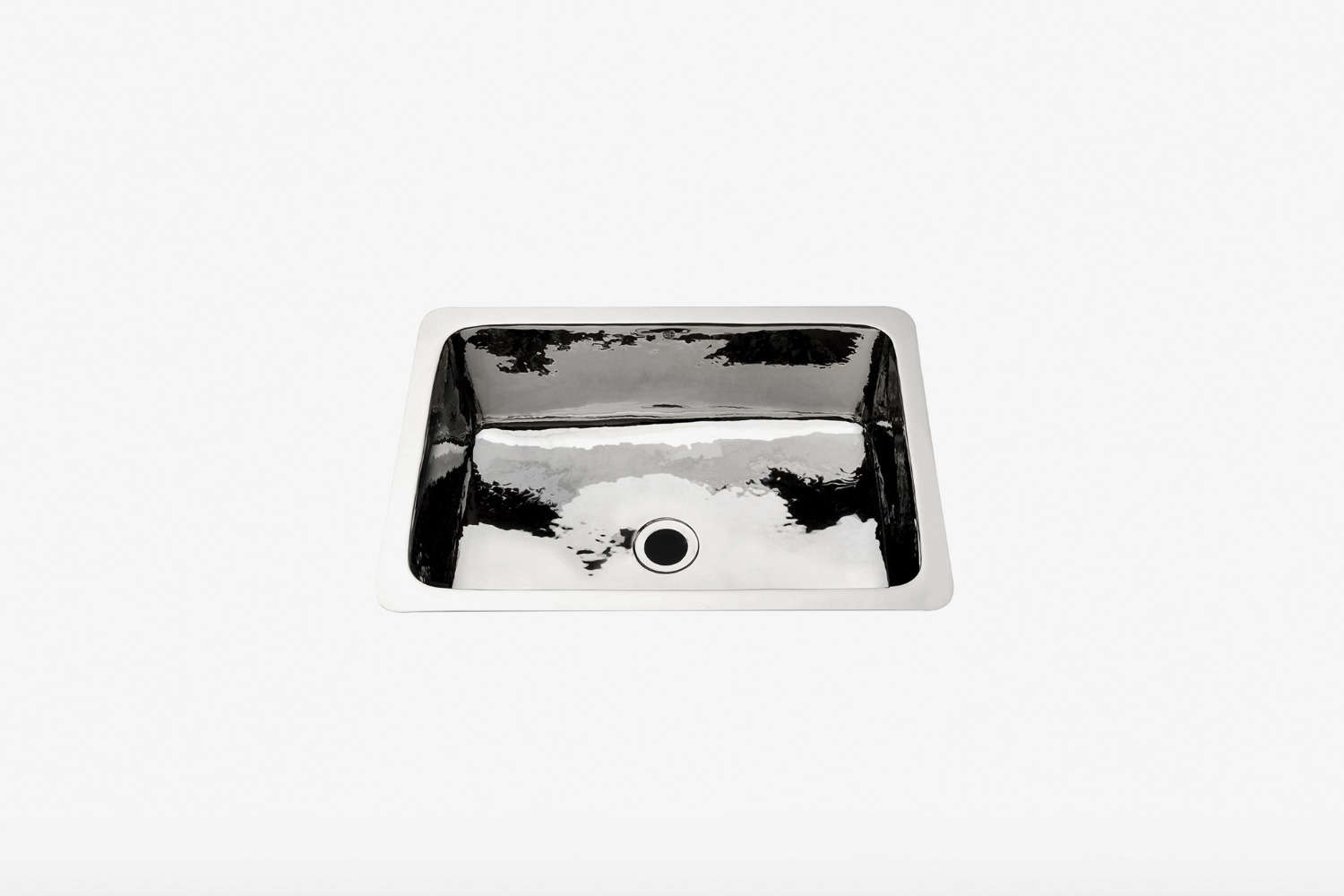
A bar sink is usually expected to perform a supporting role: rinse a lime, wash a cocktail shaker, catch a few melting ice cubes, and avoid attracting attention. Waterworks’ Normandy Undermount Rectangular Hammered Copper Bar Sink clearly missed that memo. This handcrafted fixture is less “quiet utility player” and more “small architectural centerpiece with excellent plumbing.”
Inspired by antique French copper cookware, the Normandy sink combines a rectangular basin, hand-hammered texture, polished metal, and a choice of decorative finishes. Its relatively compact footprint suits wet bars, beverage stations, kitchen islands, butler’s pantries, and secondary prep areas. Yet the substantial proportions make it more useful than the tiny round basins commonly installed in residential bars.
Luxury, however, does not eliminate practical questions. Will it fit the cabinet? Does copper require constant polishing? Is an undermount installation better than a drop-in installation? Will the finish change? Most importantly, can you rinse red wine out of it without initiating a household preservation project?
This guide examines the sink’s specifications, craftsmanship, installation requirements, design possibilities, maintenance needs, advantages, limitations, and expected ownership experience.
What Is the Waterworks Normandy Copper Bar Sink?
The Waterworks Normandy sink, model NOSK22, is a rectangular hammered-copper basin designed for either undermount or drop-in installation. Waterworks recommends it for bar and kitchen applications, making it suitable for both beverage service and secondary food-preparation zones.
According to the current manufacturer specification sheet, the nominal exterior dimensions are:
| Specification | Measurement or Detail |
|---|---|
| Overall length | 21 5/8 inches |
| Overall width | 15 11/16 inches |
| Overall height | 7 5/16 inches |
| Bowl shape | Rectangular |
| Drain location | Center |
| Primary material | Hammered copper |
| Installation options | Undermount or drop-in |
| Suggested applications | Bar or kitchen |
| Product style number | NOSK22 |
Because the sink is handmade, Waterworks notes that its dimensions are nominal and may vary slightly. That detail matters. A countertop fabricator should work from the actual basin and the current manufacturer template rather than cutting an expensive slab from dimensions copied out of an online article. Granite does not accept apologies.
Craftsmanship Inspired by French Copper Cookware
The Normandy collection draws inspiration from old French copper pots and pansthe substantial cookware traditionally displayed in grand kitchens rather than hidden in a lower cabinet beside an electric griddle.
Waterworks states that Normandy sinks are handcrafted in France from copper sheets formed in individual molds. Artisans finish each basin with a burnishing hammer and polish it by hand. The production process involves more than 40 steps, resulting in subtle variations from one sink to another.
Why the Hammered Surface Matters
Hammering is not merely decoration. The small facets break up reflected light, giving the basin a warmer and more complex appearance than a flat sheet of polished metal. They also make minor visual changes, water marks, and everyday wear less obvious than they might appear on a perfectly smooth, mirror-like surface.
The texture is intentionally irregular, so buyers should not expect machine-stamped uniformity. Small differences in hammer marks, tone, and surface character are part of the handmade design. Anyone seeking absolute sameness may be happier with stainless steel. Anyone who thinks perfection can be a little boring will understand the Normandy approach immediately.
Why Its Size Works Well for a Wet Bar
Many residential bar sinks are so small that washing a cocktail shaker becomes an advanced wrist exercise. At more than 21 inches long and roughly 15 11/16 inches wide, the Normandy provides noticeably more working room while remaining smaller than a conventional primary kitchen sink.
Its approximate 7 5/16-inch height gives the bowl enough depth for common secondary-sink duties, including:
- Rinsing glasses, bar tools, and reusable straws
- Washing fruit and fresh herbs
- Filling an ice bucket or water carafe
- Draining melted ice after entertaining
- Cleaning coffee equipment at a beverage station
- Handling light meal preparation on a kitchen island
The center drain supports a balanced, symmetrical appearance. It can also simplify cabinet planning when plumbing enters near the middle, although the drain and trap will occupy useful storage space below the basin.
Undermount Installation: The Most Refined Option
Although the Normandy can be installed as a drop-in sink, an undermount configuration creates the cleanest visual presentation. The rim sits beneath the counter, allowing the countertop edge and hammered interior to define the opening.
With no exposed lip surrounding the basin, crumbs and water can be wiped directly from the work surface into the sink. This is especially useful on a beverage counter, where citrus pulp, coffee grounds, sugar, and mysterious sticky droplets tend to gather as though they were invited.
Choose a Compatible Countertop
Undermount sinks work best with water-resistant, structurally solid countertop materials. Granite, quartzite, engineered quartz, soapstone, and many solid-surface products are commonly used. Conventional laminate is generally a poor match because the exposed cutout can be vulnerable to moisture and may not provide dependable support for undermount hardware.
The countertop edge becomes highly visible, so the fabricator must finish and polish the opening carefully. The revealthe relationship between the countertop cutout and the edge of the basinshould also be decided before fabrication.
Plan the Reveal
Common undermount reveals include:
- Positive reveal: A narrow portion of the sink rim remains visible.
- Zero reveal: The countertop edge aligns with the interior wall of the sink.
- Negative reveal: The countertop extends slightly over the basin edge.
A zero or slight positive reveal often complements a handcrafted copper sink because it respects the basin’s shape without creating a ledge that collects debris. The best option depends on Waterworks’ installation guidance, the actual sink dimensions, and the fabricator’s recommendations.
Do Not Rely on Sealant Alone
Professional undermount installation typically combines a continuous waterproof seal with mechanical clips, brackets, rails, or an independent support system. Silicone helps prevent water from entering the joint, but it should not be treated as the only structural support.
The installer should dry-fit the actual basin, verify faucet clearance, confirm cabinet space, align the center drain, and check the reveal before anything is permanently secured. After installation, the sealant must cure according to its manufacturer’s directions before the plumbing is tested and the sink enters service.
Cabinet, Faucet, and Plumbing Planning
A sink’s exterior dimensions are only the beginning of the fit calculation. The cabinet must also accommodate the basin walls, mounting system, drain assembly, P-trap, supply lines, and faucet hardware.
Measure the cabinet’s clear interior width rather than relying only on its advertised face-frame size. Confirm that drawers, shelves, beverage refrigerators, filtration equipment, and trash pullouts will not compete for the same space.
Faucet Proportion
A miniature faucet may look undersized beside a basin of this scale, while a towering commercial-style faucet can turn glass rinsing into an indoor rainfall demonstration. A compact or medium-height bar faucet with controlled reach is usually the most balanced choice.
The water stream should land near the drain or slightly forward of it. If it strikes a sloped wall, splashing may increase. The faucet handle also needs room to operate without hitting a backsplash, wall, window trim, or decorative shelf.
Finish Coordination
Waterworks offers the Normandy sink in multiple decorative finish families, including copper, antique copper, brass, antique brass, nickel, dark nickel, matte nickel, chrome, gold, and matte gold options. Availability and pricing can differ by finish.
A coordinating faucet does not have to be an identical color. In fact, forcing every metallic element to match can make a room feel like a plumbing showroom. Antique copper can work with aged brass, dark bronze, warm nickel, or blackened metal when those finishes are repeated elsewhere in the room.
How the Sink Changes a Room
The Waterworks Normandy hammered copper bar sink is best treated as a design feature, not merely an appliance. Its color and texture can introduce warmth into rooms dominated by stone, painted cabinetry, glass, and straight architectural lines.
Traditional Butler’s Pantry
Pair an antique copper finish with soapstone or dark granite, inset cabinetry, aged-brass hardware, and warm wood floors. The hammered basin reinforces the sense that the pantry has evolved over generations, even when the refrigerator sends an alert because someone left the door open.
Modern Entertaining Bar
Set a nickel or dark-nickel version beneath a pale quartzite countertop and surround it with flat-panel cabinetry. The rectangular shape keeps the composition crisp, while the hammered surface prevents it from feeling sterile.
Kitchen Island Prep Station
Use the sink as a secondary washing zone near a cutting board, beverage refrigerator, or coffee center. Its generous bar-sink size can improve workflow by keeping drink preparation and produce rinsing away from the main cleanup sink.
Mixed-Material Beverage Nook
Combine exposed copper with walnut cabinetry, handmade tile, and honed stone. The materials will age differently, producing a layered room that feels more collected than coordinated by spreadsheet.
Understanding Copper Patina
Uncoated or living copper finishes naturally react with air, water, minerals, oils, and household substances. Over time, the surface may darken, lighten, develop tonal variation, or temporarily display brighter areas. This process is called patination.
Patina is not necessarily damage. It is part of the appeal of a living metal and helps make each basin visually unique. However, the exact behavior depends on the selected Waterworks finish. Plated, polished, antiqued, or otherwise treated finishes may have different care requirements from exposed copper.
Acidic materialsincluding lemon juice, vinegar, tomato residue, wine, and certain cleanerscan temporarily alter exposed copper. A forgotten lime wedge may leave a bright mark shaped suspiciously like the forgotten lime wedge. The surrounding metal generally continues changing with use, making the contrast less obvious over time.
Cleaning and Maintenance
For routine care, guidance from copper-sink manufacturers and home-maintenance specialists is remarkably consistent: keep the cleaning process gentle.
Recommended Routine
- Remove food, fruit, drink residue, and standing debris promptly.
- Wash the basin with warm water, mild dish soap, and a soft cloth or nonabrasive sponge.
- Rinse thoroughly so soap does not remain in the hammered recesses.
- Dry with a soft towel when practical, especially in hard-water areas.
- Use only a finish protectant specifically approved for the selected Waterworks finish.
Products and Tools to Avoid
Unless Waterworks specifically approves them for the chosen finish, avoid steel wool, abrasive powders, harsh scouring pads, bleach, ammonia, strong solvents, aggressive lime removers, and acidic homemade cleaning mixtures.
Internet cleaning recipes involving vinegar, lemon, and salt may brighten bare copper cookware, but a luxury sink with a specialty finish is not the place for spontaneous chemistry. Follow the manufacturer’s current care document rather than advice intended for an untreated saucepan.
Advantages of the Waterworks Normandy Sink
Distinctive Handmade Character
Each basin has subtle variations created by hand forming, burnishing, and polishing. It brings depth and individuality that mass-produced sinks often lack.
More Useful Than a Typical Mini Bar Sink
The rectangular bowl offers practical space for glassware, coffee accessories, produce, ice buckets, and light prep work without demanding the footprint of a full kitchen sink.
Flexible Installation
Owners can choose the seamless appearance of an undermount installation or the more visible edge of a drop-in configuration, depending on the countertop and design plan.
Broad Finish Selection
The available metal finishes allow the same basic sink to work in traditional, transitional, industrial, and contemporary interiors.
Visual Warmth
Hammered metal reflects light softly and can make a small bar area feel designed rather than added as an afterthought.
Potential Drawbacks
Premium Cost
This is a luxury, artisan-made fixture. The purchase price, compatible drain components, specialty faucet, countertop fabrication, shipping, and professional installation can produce a substantial total project cost.
Finish Variation Requires the Right Mindset
Buyers who expect a living copper finish to remain perfectly uniform may find normal tonal changes frustrating. The sink rewards owners who appreciate patina rather than attempting to defeat it after every glass of cabernet.
Professional Coordination Is Important
Handmade dimensions, a visible undermount edge, finish protection, and costly countertop materials leave little room for improvised installation. The sink, countertop fabricator, cabinetmaker, designer, and plumber should all be working from the same specifications.
It Can Become the Room’s Main Attraction
The Normandy is visually assertive. In a room already filled with dramatic tile, bold stone, ornate lighting, and multiple metal finishes, it may compete rather than cooperate.
Who Should Buy This Hammered Copper Bar Sink?
The Normandy is a strong choice for homeowners who value craftsmanship, natural material variation, traditional metalworking, and custom design. It is especially compelling in a frequently used wet bar, butler’s pantry, beverage center, or island where the basin will be visible rather than hidden in a forgotten corner.
It may not be the right choice for a highly budget-sensitive renovation, a rental property requiring standardized replacements, a laminate countertop, or an owner who wants every surface to remain visually unchanged. A lower-cost stainless bar sink will perform similar washing duties. It simply will not make rinsing a martini glass feel like a scene from a beautifully restored French townhouse.
Questions to Ask Before Ordering
- Is model NOSK22 available in the preferred finish?
- What are the current lead time, shipping requirements, and return conditions?
- Which drain assembly is approved for this exact sink and finish?
- Does the selected finish develop a living patina?
- Which cleaning and protective products does Waterworks currently recommend?
- Will the cabinet provide adequate clearance for the bowl and plumbing?
- Which reveal does the countertop fabricator recommend?
- Will the installer use mechanical support in addition to sealant?
- Can the actual sink be delivered before the countertop opening is cut?
- How will the faucet’s reach and water stream align with the center drain?
Conclusion
Waterworks’ Normandy Undermount Rectangular Hammered Copper Bar Sink succeeds because it combines sculptural presence with genuinely useful proportions. Its French craftsmanship, hand-burnished texture, rectangular bowl, center drain, and extensive finish selection give designers unusual flexibility.
The sink is not a maintenance-free commodity, nor is it intended to be. Its appeal lies in material character, subtle variation, and the possibility of graceful aging. When installed correctly and cleaned gently, it can transform a wet bar or prep station from a convenient plumbing zone into one of the room’s defining features.
Extended Experience: What Living With a Normandy Copper Bar Sink May Feel Like
The most noticeable ownership experience begins before the faucet is turned on. A hammered copper basin changes throughout the day as lighting conditions shift. Morning daylight emphasizes its texture, overhead lighting creates hundreds of small highlights, and evening fixtures can deepen the finish into richer brown, gold, gray, or reddish tones. A flat stainless basin usually looks consistent. The Normandy tends to perform a quiet light show.
During entertaining, its size becomes particularly useful. Imagine preparing drinks for six guests. One side of the counter holds bottles and garnishes, while the sink handles melting ice, rinsed jiggers, sticky bar spoons, and a shaker that was apparently designed to leak only when guests are watching. A tiny round bar sink quickly feels crowded. The Normandy’s longer rectangular bowl provides room to place several items down without immediately blocking the drain.
The undermount edge also changes cleanup behavior. Instead of lifting crumbs and citrus seeds over a raised rim, the user can wipe them directly into the basin. That small convenience becomes more valuable in a coffee station, where stray grounds seem capable of teleportation. The absence of a top-mounted lip makes the counter easier to wipe and keeps the installation visually calm.
The first unexpected color change can be alarming for an owner unfamiliar with copper. A splash of lemon juice or wine may create a lighter patch, leading to the immediate conclusion that the sink has been ruined during its first social event. In many cases, however, this is normal surface evolution on a living copper finish. The better response is usually to clean gently, consult the finish-specific care instructions, and allow the appearance to rebalance naturally rather than attacking the mark with increasingly enthusiastic chemicals.
Daily maintenance tends to be simple but consistent. A soft sponge, mild soap, thorough rinse, and quick towel dry are more useful than an entire cabinet of specialty cleaners. Drying is especially worthwhile in homes with mineral-heavy water because pale deposits can collect around the drain and within the hammered texture. The task generally takes less than a minuteroughly the amount of time required to locate the dish towel someone moved three feet away.
Another ownership lesson involves expectations. A handcrafted sink will not necessarily have the visual precision of a factory-stamped basin. Hammer marks may vary, reflections may look asymmetrical, and exposed copper may develop uneven tones. These characteristics can make the fixture feel authentic and established, but only when the owner sees variation as character rather than a defect.
Good installation has an equally large effect on long-term satisfaction. A carefully aligned reveal looks intentional from every angle, while an uneven cutout can remain visible forever. Proper support prevents movement, and a clean silicone joint limits places where moisture and residue can collect. Owners rarely admire mounting hardware, but they become very interested in it the moment a sink shifts.
In practical use, the Normandy works best as a secondary basin rather than a miniature version of the primary cleanup sink. It is excellent for drinks, produce, coffee equipment, floral arranging, and light preparation. Loading it with greasy roasting pans every evening would miss the point and overwhelm the space. Used for the duties it was designed to handle, it can make a beverage area more efficient while adding the kind of material richness that ordinary fixtures struggle to provide.
The long-term experience is therefore a combination of utility and evolving appearance. The sink gradually records water, use, cleaning, and time. For the right homeowner, that evolution is precisely what makes it special: the Normandy does not merely occupy the room; it becomes part of the room’s history.