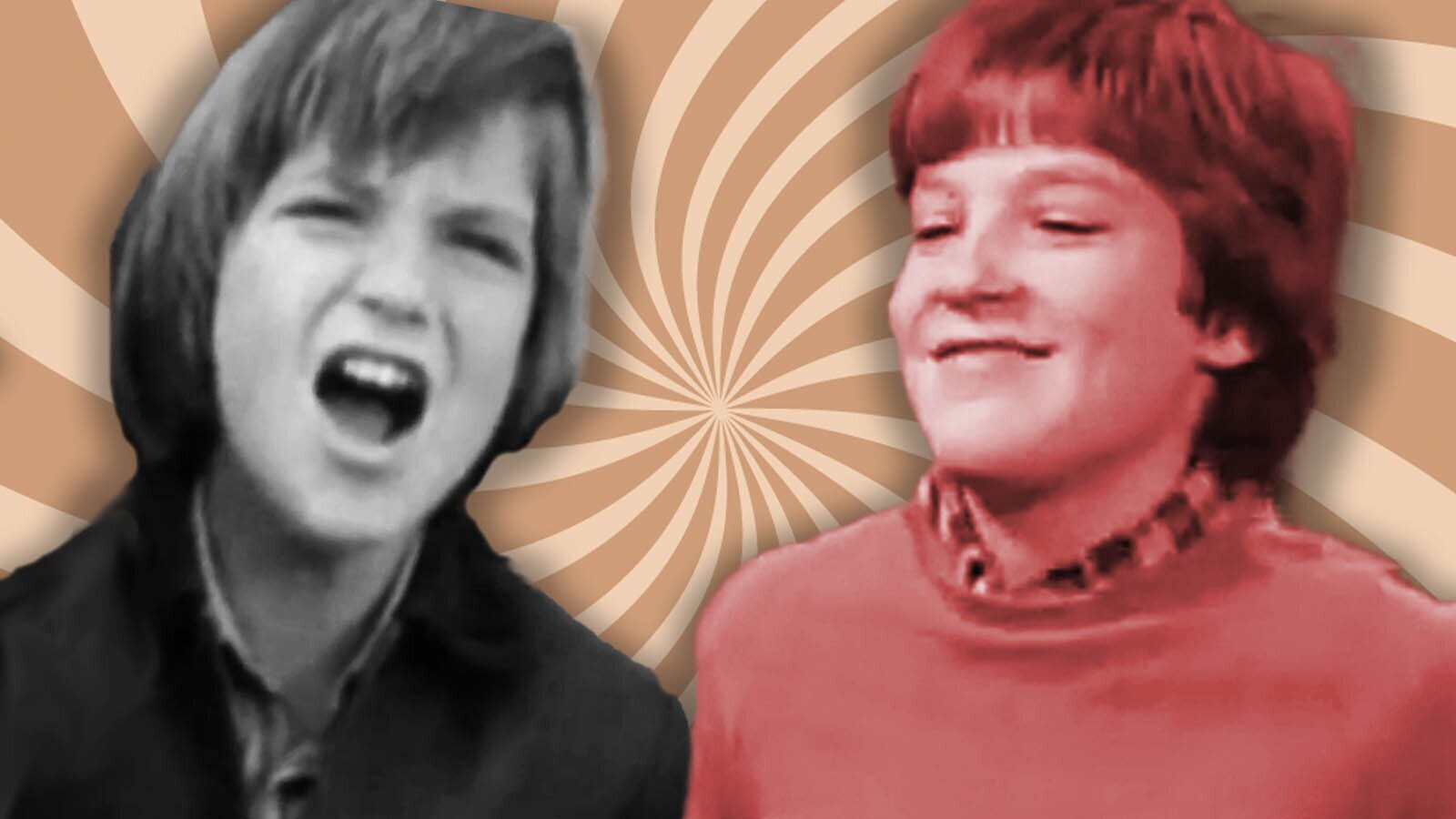
Was Jason Bateman the bully or the bullied as a kid actor? The funny answer is: a little less “schoolyard villain,” a little more “smart kid with excellent revenge timing.” Bateman’s early Hollywood years were not a glossy sitcom fantasy where every child actor rode a studio tram into eternal happiness. They were a mix of opportunity, pressure, mischief, money, family responsibility, and at least one very memorable hazing story from the set of Little House on the Prairie.
Today, Jason Bateman is known as the calmest man in rooms full of chaos. Whether he is playing Michael Bluth in Arrested Development, Marty Byrde in Ozark, or the dryly annoyed guy who looks like he has already read the bad news twice, his screen persona often suggests control. But before the awards, directing credits, and podcast success, Bateman was a working child actor navigating a grown-up business while still young enough to be the target of noogies.
Jason Bateman’s Child Actor Years Started Early
Jason Bateman was born in Rye, New York, in 1969 and entered television while still a kid. His first major TV exposure came through Little House on the Prairie, where he played James Cooper Ingalls, an orphan taken in by Charles and Caroline Ingalls. That role placed him inside one of America’s most beloved family dramas, a show that looked wholesome enough to make a lunchbox blush.
From there, Bateman moved quickly into sitcom territory. He appeared on Silver Spoons as Derek Taylor, Ricky Stratton’s slick, troublemaking friend. That role matters because it helped shape the early public image of Bateman as the charming kid who could sell a bad idea with a clean smile. If a teacher asked who started the cafeteria incident, Derek Taylor looked like the boy who already had three witnesses, two alibis, and a backup plan involving a bicycle.
He later starred in It’s Your Move as Matthew Burton, a teenage schemer, and then became a familiar face on The Hogan Family. These roles made Bateman one of the recognizable young TV actors of the 1980s. But the characters he played should not be confused with the kid he actually was. Acting like a wisecracking manipulator on camera is not the same thing as being a bully off camera. Hollywood sometimes forgets that distinction. So does the internet, usually before breakfast.
So, Was Jason Bateman Bullied on Set?
According to Bateman himself, yes, he experienced a form of hazing while working as a young actor on Little House on the Prairie. During a later interview, he recalled that older kids on the set pinned him down and gave him noogies on his chest. It sounds like the sort of rough kid behavior people once shrugged off as “just goofing around,” though from the receiving end, it probably felt less like wholesome prairie bonding and more like Walnut Grove Fight Club.
Bateman did not tell the story as a tragic confession. He told it with the deadpan comic timing that has become his trademark. The twist is that he got the last laugh. Instead of simply sulking, he went to the makeup department and asked for a fake bruise. Then he showed it to the other kids’ parents, making it look as if the hazing had gone much further than it had. The result: the older kids got in trouble.
That little move says a lot about young Bateman. He was not helpless, and he was not exactly a bully either. He was quick. He was observant. He understood performance, evidence, timing, and adult panic. In other words, he used the tools of television production to win a childhood courtroom case. Somewhere, a future director was taking notes.
Was He the Bully? The Role Confusion Problem
The idea that Bateman might have been “the bully” probably comes less from verified off-screen behavior and more from the types of roles he played. On Silver Spoons, Derek Taylor was not exactly the kid your parents wanted you inviting over during tax season. On It’s Your Move, Matthew Burton was a teenage con artist whose schemes could make Ferris Bueller look like a substitute teacher’s assistant.
Bateman was very good at playing young characters who were confident, sarcastic, and morally flexible. That is a dangerous combination for audiences because charisma can blur the line between “actor playing a brat” and “actor must be a brat.” But no serious reading of Bateman’s early career supports the idea that he was known as a bully in real life. If anything, the public anecdotes point toward a kid who was occasionally on the receiving end of older-child teasing and who learned to respond with wit rather than brute force.
It is also worth remembering that child actors often perform maturity they have not had time to develop. A 13-year-old actor can deliver a punchline like a nightclub comic and still go home needing help with homework, grades, work permits, and the strange emotional math of being a kid with adult responsibilities.
The Bigger Pressure: Being a Kid Who Had to Keep Working
The more serious part of Bateman’s child-actor story is not the noogie incident. It is the financial pressure. Bateman has spoken about how he and his sister, Justine Bateman, became important earners in their family. Their parents managed their careers, and Jason later described the family dynamic as nontraditional, with times of both function and dysfunction.
That changes the meaning of “bullied or bullied.” A child actor can be popular on television and still feel pushed around by the structure around him. The pressure may not come from a single mean kid on set. It can come from schedules, grades, auditions, money, adult expectations, and the fear that one canceled show could shake the household economy.
Imagine being a teenager whose report card affects whether he can legally keep working, while that work helps support the family. Most teens worry about acne, algebra, and whether their jeans are socially fatal. Bateman had those normal concerns plus a career pipeline running through network television. That is not a normal childhood; that is a board meeting with homework.
How the Little House Story Reveals Bateman’s Personality
The Little House on the Prairie hazing anecdote is funny because Bateman tells it like a neat sitcom scene: setup, discomfort, clever reversal, consequence. But underneath the joke is a useful character study. Young Bateman was not passive. He did not respond by trying to overpower the older kids. He responded by understanding the system better than they did.
That pattern shows up throughout his career. Bateman’s best-known adult characters often survive not by being the loudest person in the room, but by being the one who sees the room clearly. Michael Bluth survives the Bluth family by acting like the only adult at a circus. Marty Byrde survives danger by staying composed while everyone else emotionally catches fire. Even in comedy films, Bateman often plays the guy whose patience is being tested by people who seem allergic to good decisions.
His childhood comeback on the Little House set feels like an early version of that same Bateman energy. He did not become the monster. He became the strategist. He took an embarrassing situation and turned it into a controlled bit, complete with makeup, audience, and payoff. That is not bullying. That is production design with a grudge.
Michael Landon, Set Culture, and the Young Actor’s Education
Bateman has also spoken warmly about the influence of Michael Landon, the star, writer, director, and producer behind Little House on the Prairie. For Bateman, watching Landon manage so many parts of the production helped spark an interest in directing and in how a set functions behind the camera.
This matters because Bateman did not simply grow up wanting to be the face on the poster. He became interested in the machinery. Later, he directed episodes of television and eventually built a major directing career, including acclaimed work on Ozark. The kid who once asked makeup for a fake bruise became the adult who could direct a tense drama, guide performances, and manage the invisible architecture of a scene.
That is one of the most interesting parts of his story. Some child actors are trained only to hit marks and say lines. Bateman appears to have watched everything: leadership, pacing, tone, camera placement, adult behavior, and the strange politics of a set. If he was bullied in small ways, he also learned how power works in quiet ways.
The Child Star Trap Bateman AvoidedEventually
Bateman’s career did not move in a perfectly straight line from cute kid actor to respected adult performer. Like many child stars, he faced the awkward transition into adulthood. The 1990s brought professional uncertainty, and he has openly discussed a period of partying and career drift before his major comeback with Arrested Development.
That comeback is important to the question of whether he was bully or bullied because it shows the long-term result of his early experiences. Bateman did not build an adult career around victimhood, and he did not build it around aggression. He built it around restraint, timing, intelligence, and a dry comic voice that seems to say, “I have seen worse, and I have already made a spreadsheet about it.”
By the time Ozark arrived, Bateman had fully transformed from former child actor into actor-director-producer with serious industry credibility. He won an Emmy for directing and became associated with a style of controlled tension. That is a long way from being pinned down by older kids on a prairie set. It is also proof that early discomfort can become professional skill when filtered through discipline and self-awareness.
The Verdict: Bullied, Mischievous, or Both?
The fairest answer is this: Jason Bateman seems to have been the bullied in at least one documented childhood set incident, the mischievous survivor in his response, and the on-screen “bad influence” in several early roles. There is no strong public evidence that he was a real-life bully as a kid actor. There is evidence that he played troublemakers convincingly, handled pressure early, and developed a sharp sense of comic retaliation.
That combination explains why the question is so fun. Bateman was not the saintly little prairie orphan off camera, nor was he a terror with a call sheet. He was a working kid in an adult business, surrounded by older performers, family expectations, and the weird emotional climate of 1980s television. He was young, clever, occasionally hazed, and clearly capable of turning embarrassment into a bit.
In short, Jason Bateman was less “bully” and more “bullied kid with a director’s brain.” And honestly, that may be the most Jason Bateman answer possible.
Experiences Related to Jason Bateman’s Kid Actor Story
Bateman’s story connects with a larger experience many people recognize, even if they have never stepped onto a television set. Most kids learn early that social life is not always fair. There are older kids, louder kids, popular kids, and kids who seem to know the rules before anyone else receives the instruction manual. Some children respond by fighting back. Some withdraw. Some become comedians. Some, like young Bateman in the hazing story, appear to study the room and find the smartest possible exit.
That is why the story resonates beyond celebrity trivia. A child actor’s set is basically a schoolyard with better lighting and more adults pretending everything is under control. There are hierarchies: series regulars, guest stars, older kids, younger kids, parents, managers, teachers, crew members, and producers. A kid entering that world must figure out where he belongs fast. Bateman joined Little House on the Prairie after the show was already established. That means he was the new kid in a famous neighborhood. Anyone who has transferred schools midyear knows the feeling: everybody else already knows where to sit.
The hazing anecdote also shows how humor can become armor. Bateman’s fake-bruise revenge was not just a prank; it was a way of reclaiming the story. Instead of remaining the kid who got pinned down, he became the kid who made the older kids answer to their parents. That does not make the hazing acceptable, but it does reveal a survival skill. He turned a powerless moment into a performance, and the audience that matteredthe adultsbought the scene.
Many people have similar memories from childhood: a locker-room joke that went too far, a group of older students testing boundaries, a workplace initiation that was supposedly harmless, or a family dynamic where the youngest person had to be more mature than the adults around them. The details change, but the emotional structure is familiar. You feel small, then you search for leverage. Sometimes the leverage is a joke. Sometimes it is silence. Sometimes it is leaving the room. Sometimes it is asking the makeup artist for a fake bruise and delivering an Oscar-worthy complaint to the nearest parent.
Bateman’s later career makes that experience even more interesting. He became known for playing people who absorb chaos without instantly exploding. That kind of composure can be learned early. A child who works around adults, earns money, memorizes lines, meets deadlines, and navigates social pressure may develop a radar for human behavior. Bateman’s calm sarcasm, his precise timing, and his ability to play frustration without overacting all feel connected to someone who learned young that reacting too loudly is not always the winning move.
There is also a lesson here for parents, teachers, coaches, and entertainment professionals: kids can laugh off a lot, but that does not mean adults should ignore what happens between them. “Just kidding” is not a magic cleaning spray for bad behavior. Bateman’s story is funny because he survived it with style, but it also reminds us that children on sets, in classrooms, and in competitive environments need adults who are paying attention. A kid should not have to become a tiny courtroom strategist to feel protected.
Ultimately, the experience related to this topic is not only about whether Jason Bateman was bullied. It is about how children adapt when they are placed in adult systems too early. Bateman adapted with wit. He learned the business, watched leaders like Michael Landon, endured pressure, stumbled through young adulthood, and rebuilt himself into one of television’s most reliable actor-directors. That does not turn childhood pressure into a cute origin story, but it does show how a sharp kid can grow into a sharper adult without losing his sense of humor.
Conclusion
So, was Jason Bateman the bully or the bullied as a kid actor? Based on public accounts, he was more the bullied than the bullyat least in the famous Little House on the Prairie hazing story. But he was never simply a victim. His clever fake-bruise revenge showed the early instincts of a performer who understood timing, perception, and the power of a well-staged reveal.
His early roles as sarcastic, scheming, or rebellious boys may have made him look like the troublemaker of 1980s television, but the real story is more layered. Bateman was a young professional carrying adult pressure, family responsibility, and career uncertainty long before most teenagers had figured out how to survive gym class. The result was not a bully, but a resilient, observant, funny actor who turned childhood chaos into a long-lasting career.