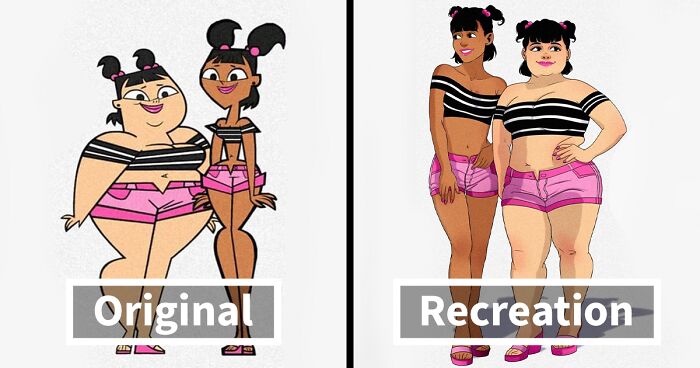
Imagine the chaos of Total Drama Island if the campers looked less like sharp-edged cartoon chaos gremlins and more like people you might actually see arguing over the last slice of pizza at summer camp. That is the fun behind Total Drama Island characters redrawn in a realistic way: it takes one of Cartoon Network’s most memorable animated competition shows and asks, “What if Gwen, Heather, Duncan, Owen, Courtney, Leshawna, and the rest of the cast stepped out of 2D exaggeration and into a more human-looking world?”
The answer is surprisingly charming. Also a little weird. Also completely addictive. The original show was designed to parody reality TV, teenage stereotypes, summer-camp nightmares, and elimination-show drama. Its character designs were bold, angular, expressive, and intentionally exaggerated. A realistic redraw keeps the personality but swaps the rubbery proportions for believable faces, natural anatomy, textured hair, practical clothing, and expressions that feel less like “animated scream” and more like “I have been awake for three days and Chris McLean just announced another disgusting challenge.”
Fan artists have had a field day with the concept, especially after artist Nora, known online as qcn.cellardoor, reimagined 20 Total Drama Island characters in a more realistic, human-like style. The project became popular because it did more than make the campers “pretty.” It showed how much of the show’s personality survives when the cartoon filter is turned down. That is the magic trick: the characters still feel like themselves, only now they look like they could have yearbook photos, awkward group chats, and a very suspicious camp waiver signed by their parents.
Why Total Drama Island Is Perfect for Realistic Redraws
Total Drama Island first arrived in 2007 as an animated spoof of survival-style reality shows. Created by Tom McGillis and Jennifer Pertsch, the series followed teenage contestants at the miserable, bug-filled Camp Wawanakwa. Hosted by the smug and endlessly unsafe Chris McLean, with Chef Hatchet serving as both cook and chaos enforcer, the show built its comedy around extreme challenges, confessionals, alliances, betrayals, crushes, eliminations, and enough bad decisions to power a full season of cable television.
The original cast worked because each camper was instantly readable. Gwen was the goth loner. Heather was the scheming queen bee. Owen was the lovable party guy. Courtney was the rule-following overachiever. Duncan was the rebellious delinquent with a soft spot hiding somewhere behind the skull shirt. Leshawna was bold, loyal, and impossible to ignore. Lindsay was sweet, glamorous, and occasionally on a different planet. These were broad archetypes, but the show gave them enough quirks, relationships, and comedic timing to make them memorable.
That clear visual and emotional identity is exactly why realistic redesigns work so well. If a character only exists because of one impossible hairstyle or one exaggerated body shape, realism can flatten them. But Total Drama Island characters have strong silhouettes, color palettes, attitudes, and story roles. A good realistic redraw can remove the giant cartoon eyes and toothpick limbs while keeping the emotional “read” intact.
What Makes a Realistic Redraw Successful?
A strong realistic redraw is not just a cartoon character with pores. Nobody needs hyper-detailed skin texture slapped onto a camp counselor nightmare. The best versions translate, rather than copy. They ask what each design element is doing and then rebuild it in a believable way.
1. Keeping the Character’s Core Personality
Gwen should still look guarded, creative, and slightly allergic to forced social bonding. Heather should still carry the confidence of someone who has already planned your elimination and chosen the lighting for her victory interview. Duncan needs a rebellious edge, but realistic Duncan cannot just be “green-haired guy with piercings.” He needs posture, expression, clothing, and attitude that suggest trouble before he says a word.
This is where fan art becomes character analysis. To redraw a character realistically, the artist has to understand what fans recognize first. Is it the hair? The eyes? The body language? The outfit? The attitude? With Total Drama Island, the answer is usually “all of the above, plus whatever emotional damage the challenge of the week has caused.”
2. Translating Cartoon Proportions Into Human Anatomy
The original Total Drama style uses extreme shapes: long limbs, tiny waists, oversized heads, sharp noses, exaggerated expressions, and silhouettes that look great in animation. In realism, those same proportions need adjustment. Heather’s famously narrow waist, for example, becomes more natural. Owen’s roundness becomes warmth and softness rather than a one-note gag. Leshawna’s confidence can be shown through stance and expression instead of only through exaggerated curves.
Realistic anatomy does not mean everyone has to look like a fashion magazine model. In fact, the most interesting redraws avoid that trap. A realistic cast should preserve body diversity, facial variety, age-appropriate styling, and the slightly messy quality of real teenagers. Camp Wawanakwa is not a luxury resort. Nobody should look like they just walked out of a skincare commercial unless the joke is that they are about to fall into a lake.
3. Updating Clothing Without Losing Recognition
Clothing is one of the easiest ways to bridge cartoon and realism. Gwen’s dark outfit, Heather’s confident styling, Bridgette’s laid-back surfer look, Duncan’s punk-inspired clothing, and Courtney’s neat, preppy look all communicate character quickly. A realistic redraw can add fabric texture, realistic fit, accessories, worn sneakers, layered pieces, or camp-appropriate details while keeping the original color language.
The trick is restraint. If the redesign changes too much, the character becomes an original person loosely inspired by the show. If it changes too little, the character can look like a cosplay photo with cartoon proportions. The sweet spot is recognizable but refreshed.
Character Examples: How Realism Changes the Cast
Gwen: The Goth Loner Becomes Believable
Gwen is one of the strongest candidates for a realistic redraw because her design already has a clear mood. Her dark hair, pale makeup, guarded expression, and alternative style make her instantly recognizable. In a realistic version, Gwen works best when the artist softens the cartoon sharpness but keeps her private, observant energy. She does not need to look miserable; she needs to look like she has already judged the group activity and found it spiritually exhausting.
A good realistic Gwen might have layered black hair, subtle under-eye darkness, a relaxed but defensive posture, and clothing that feels lived-in. The result is less “animated goth symbol” and more “teen who brought a sketchbook to camp and regrets not bringing noise-canceling headphones.”
Heather: From Cartoon Villainy to Human Confidence
Heather is fun because realism can make her more intimidating, not less. In the cartoon, she is exaggerated as the manipulative popular girl. In a realistic redraw, her power can come through in posture, eye contact, carefully styled hair, and a facial expression that suggests she has a five-step plan and you are step two.
What makes Heather interesting is that she cannot look like a generic “mean girl.” She needs intelligence, control, and polish. Realism gives her room to become more layered: still fierce, still competitive, still dangerous in a voting ceremony, but believable as an actual person rather than a walking drama alarm.
Duncan: Rebellion Without Cartoon Armor
Duncan’s original design screams delinquent in the loudest possible cartoon font. Green hair, piercings, skull imagery, sharp features, and a permanent smirk tell viewers exactly what kind of trouble he is bringing. In realism, the challenge is to avoid turning him into a costume. His look should feel like a teenager who carefully pretends not to care, which of course means he cares very deeply about looking like he does not care.
A strong realistic Duncan might keep the dyed hair and punk details but ground them with natural facial structure, realistic clothing, and a smirk that feels more human than caricature. The best versions remember that Duncan is not just “bad boy.” He is funny, strategic, occasionally loyal, and often more emotionally complicated than he wants anyone to notice.
Owen: The Heart of the Camp
Owen is easy to reduce to appetite jokes, but realistic redraws can highlight why fans like him. He is warm, enthusiastic, social, and often the emotional sunshine in a cast full of thunderclouds. A realistic Owen should not erase his size or reshape him into a standard hero type. His body is part of his identity, but his charm comes from expression, openness, and joy.
When redrawn well, Owen looks like the camper who knows everyone’s favorite snack by day three and somehow survives challenges through optimism, luck, and digestive courage. That is a rare skill set. Not useful on a résumé, perhaps, but powerful on reality TV.
Courtney: The Overachiever With a Human Face
Courtney’s realistic redesign depends on precision. She is organized, ambitious, competitive, and deeply convinced that rules exist for a reasonusually because she read them twice. Her original design communicates neatness and control. In realism, that can become polished hair, tidy clothes, alert posture, and a facial expression that says, “I have already filed a complaint.”
The danger is making Courtney look too stiff. She is not just a rulebook with legs. Her best moments come from the tension between control and emotion. A realistic redraw can show that by giving her expressive eyes, subtle frustration, or a smile that suggests she is trying very hard not to yell at everyone near the canoe.
Leshawna: Presence, Confidence, and Warmth
Leshawna deserves a realistic version that captures her confidence without flattening her into sass alone. In the show, she is funny, loyal, protective, and socially sharp. A realistic redraw can emphasize her expressive face, strong posture, stylish clothing, and sense of presence. She should look like someone who can win an argument before the other person realizes they entered one.
Good realism also gives her warmth. Leshawna is not just loud; she is emotionally intelligent. Her redesign should carry both power and approachability, the kind of energy that says she will defend her friends and also roast them lovingly if they make terrible choices.
Lindsay, Bridgette, Izzy, Trent, and the Rest
Lindsay’s realistic redraw works when it keeps her sweetness and glamor without turning her into a blank beauty shot. Bridgette benefits from natural, beachy styling and relaxed expressions. Izzy is a special challenge because her cartoon chaos is practically a weather event; realism has to show wild energy through eyes, hair, movement, and expression rather than impossible cartoon physics. Trent needs musician energy without becoming a stock photo of “guy with guitar.” Katie and Sadie need friendship chemistry. DJ needs gentleness and physical presence. Harold needs awkward confidence. Noah needs dry intelligence. Every character offers a different puzzle.
Why Fans Love These Realistic Versions
Part of the appeal is nostalgia. Many viewers met Total Drama Island when they were younger, then returned to it later with adult eyes and realized the show was sharper, stranger, and funnier than they remembered. Seeing realistic redraws turns that nostalgia into something fresh. It lets fans revisit the characters without simply replaying the same screenshots and quotes.
Another reason is curiosity. Cartoon designs are symbolic. Realistic designs feel personal. When fans see a human-like Gwen or Duncan, they start imagining the character’s real-world details: What music would they listen to? What would their Instagram look like? Would Heather run student council like a corporate takeover? Would Owen become everyone’s favorite camp counselor? Would Izzy be banned from three amusement parks and somehow proud of it?
Realistic fan art invites those questions. It expands the world without needing a new episode. It gives fans a new way to engage with characters they already know.
The Art Challenge Behind the Trend
Redrawing Total Drama Island characters realistically is harder than it looks. The show’s designs are simple on the surface, but they are carefully built around shape language. Each character has a silhouette and visual rhythm that communicates personality fast. When artists move toward realism, they must decide which features are essential and which are flexible.
For example, Gwen’s color palette is essential. Heather’s confident body language is essential. Duncan’s rebellious styling is essential. Owen’s warmth is essential. Courtney’s controlled neatness is essential. But exact cartoon proportions are not essential. Neither are the most extreme facial angles. That distinction separates a thoughtful redesign from a generic makeover.
The best fan artists also understand that realism does not always mean photorealism. Some redraws use semi-realistic digital painting, soft shading, and natural proportions while still keeping a stylized edge. That approach often works better because Total Drama Island is not a gritty crime drama. It is a comedy about teenagers being psychologically tested by marshmallows, raccoons, and a host with questionable safety standards.
Fan Art, Transformation, and Respect for the Original
Fan art thrives when it adds a new perspective. A realistic redraw is interesting because it transforms the original design language into another visual style. It does not replace the show’s official art, and it should not pretend to be official merchandise. Instead, it functions as tribute, interpretation, and creative exercise.
For artists, the smartest approach is to credit the original series, avoid misleading viewers, and be careful with commercial use. For viewers, the best approach is to appreciate the redraw as a conversation with the source material. The original cartoon designs are iconic because they are exaggerated. The realistic versions are fascinating because they reveal how durable those designs are. Both can exist without one stealing the other’s lunch money.
Why This Trend Still Feels Fresh
The realistic redraw trend continues to work because Total Drama Island itself is built on performance. The show is about people acting for cameras, hiding motives, forming alliances, and turning teenage insecurity into entertainment. Realistic art pulls those performances closer to the viewer. Suddenly, the smirk, glare, blush, or eye-roll feels less like a cartoon beat and more like a real emotional moment.
That is why these redesigns are so shareable. They make fans say, “That is exactly how I imagined them,” or “I never thought of the character that way.” Both reactions are valuable. A good redraw does not end the conversation; it starts one.
Experience: Seeing Total Drama Island Characters Redrawn In A Realistic Way
The first time you look at a realistic redraw of the Total Drama Island cast, there is a tiny mental delay. Your brain recognizes Gwen, but your eyes are processing a person. You know it is Heather, but now she looks like someone who could actually sit across from you in a cafeteria and ruin your afternoon with one sentence. You see Owen, and suddenly the cartoon goofball becomes the kind of friend who would bring extra snacks because he assumes everyone else forgot. That moment of recognition is what makes the experience so satisfying.
What stands out most is how much personality survives the translation. The original show uses big, loud design choices because animation needs immediate clarity. A realistic redraw has to work differently. Instead of giant expressions and impossible limbs, it relies on subtler signals: the set of the shoulders, the direction of the eyes, the texture of the hair, the confidence of the pose, the way a hoodie hangs, or the tension in a half-smile. When those details line up, the character feels alive in a new way.
It also changes how you think about the cast. In cartoon form, the campers are funny archetypes. In realistic form, they feel more vulnerable. Courtney’s perfectionism looks less like a gag and more like pressure. Duncan’s rebellious style feels like armor. Gwen’s distance feels protective. Lindsay’s sweetness feels more human when it is not attached to exaggerated cartoon beauty. Leshawna’s confidence feels grounded when shown through expression and posture rather than only through loud dialogue. Realism does not remove the comedy, but it adds a layer of empathy.
There is also a strange joy in comparing versions. Fans naturally start ranking which redesign “fits” best. Some characters translate smoothly because their visual identities are already close to real-world fashion types. Others are harder. Izzy, for instance, is pure chaos in animated form, and making her realistic without losing that energy is like trying to put a tornado in a cardigan. Harold’s awkwardness, Noah’s sarcasm, DJ’s gentleness, and Bridgette’s calm all require different artistic solutions. That variety keeps the redraw concept from feeling repetitive.
For artists, this kind of project is excellent practice. It teaches observation, anatomy, costume design, facial expression, and character interpretation. The artist must decide what to keep, what to soften, and what to reinvent. For fans, it is a fun way to revisit a beloved series without simply copying official screenshots. It feels familiar and new at the same time, which is basically the fan-art jackpot.
The best part is that realistic redraws remind us why Total Drama Island worked in the first place. The show was never only about wild challenges or dramatic eliminations. It was about characters who were simple enough to recognize instantly but strong enough to inspire years of discussion, memes, debates, ships, and fan art. When those characters can survive a complete visual makeover and still feel recognizable, that says something about the strength of the original designs. Camp Wawanakwa may be a terrible vacation spot, but as a source of artistic inspiration, it is oddly hard to beat.
Conclusion
Total Drama Island characters redrawn in a realistic way are more than a fun internet makeover. They are a reminder that great character design can travel across styles. The original cartoon designs are exaggerated, funny, and instantly readable. Realistic fan interpretations add texture, emotion, and believability while keeping the same personalities fans remember. Gwen still broods, Heather still plots, Duncan still smirks, Owen still radiates snack-powered joy, and Courtney still looks ready to correct the rulebook.
That balance is why the trend continues to attract attention. It satisfies nostalgia, rewards close character analysis, and gives artists a playground for creative translation. Whether you prefer the original animated designs or the more human-looking versions, one thing is clear: the Total Drama Island cast remains wildly drawable, endlessly debatable, and still capable of causing drama long after the campfire goes out.
Note: This article synthesizes public information from official Total Drama materials, entertainment references, fan-art discussions, character design resources, and widely known series details. It is written as original editorial content for web publishing.